
When choosing roof tiles, half the decision comes down to aesthetics, and half to compatibility. The underlying logic is actually quite simple: the type of roof structure dictates the type of tiles that should be used. Gable roofs feature classic symmetry and require efficient drainage, while hipped roofs with multiple ridges have complex shapes and numerous joints. Different roof structures impose vastly different requirements on tile weight, waterproofing, wind resistance, and installation difficulty.
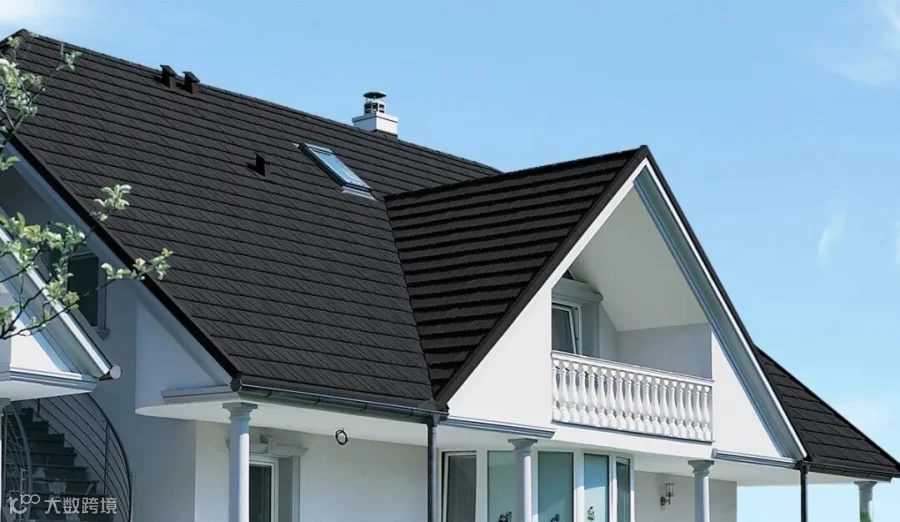
A gable roof (double-sloped roof) is the most common roof structure. The two slopes meet at the highest point along the ridge line, forming a classic “gable” shape. With its simple yet elegant design and excellent drainage performance, it is widely used in rural self-built homes, villas, and townhouses.
The key requirements for roofing tiles in this design are: efficient drainage, lightweight construction, and wind resistance, while also highlighting the roof’s symmetrical beauty.
The shortcomings of traditional roof tiles on gable roofs have long been apparent: clay tiles are heavy and fragile, weighing as much as 33–40 kilograms per square meter, which significantly increases the load on the roof structure; they are also cumbersome to install and prone to weathering and cracking over time. Cement tiles offer mediocre value for money, have poor breathability, are prone to leaks and moss growth during rainy weather, and do little to enhance the aesthetic appeal of a home.
Stone-coated metal roofing tiles perfectly meet all the requirements for gable roofs. With a metal substrate and a surface coated with high-temperature sintered natural colored sand, they weigh only 5–6 kilograms per square meter—equivalent to one-sixth the weight of traditional clay tiles. This significantly reduces the load on the roof trusses, eliminating the need for additional roof structure reinforcement and lowering construction costs.
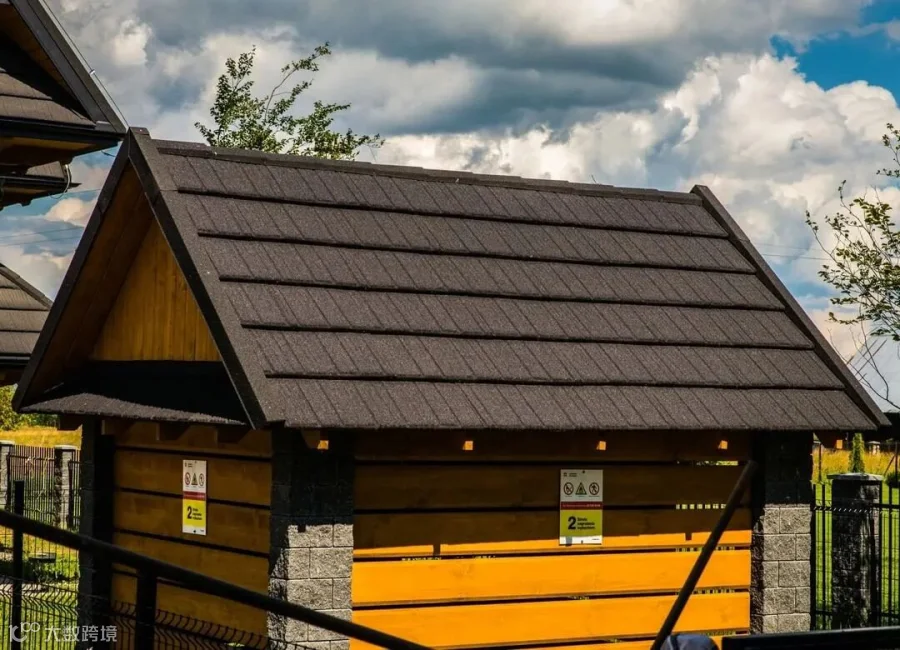
(Gable roof design)
In terms of drainage, the large-sized tiles cover a wide area with fewer overlap points, minimizing resistance to rainwater runoff. Combined with a scientifically designed interlocking system, they form a dual waterproof barrier, putting an end to leaks once and for all.
What’s more, stone-coated metal tiles come in a rich variety of colors—from the deep blue of the Yangtze Delta to the ochre of the North, and from traditional Chinese crimson to modern silver-gray. Each shade perfectly complements the classic gabled roof design, while the delicate, natural stone-like texture lends a touch of sophistication even to the simplest of roofs.
The four-sloped, five-ridge roof is a symbol of elegance and grandeur. Composed of four roof slopes (two trapezoidal and two triangular), it features five ridge lines at the top (one main ridge and four secondary ridges). With its complex shape and numerous joints, the requirements for the roof tiles are exceptionally demanding.
Its core requirements are: lightweight construction (to prevent structural overload), strong adaptability to irregular shapes (to accommodate complex joints such as sloping ridges and eaves), excellent waterproofing (as multiple joints are prone to leaks), and outstanding aesthetics (to highlight the building’s prestige).
The drawbacks of traditional roof tiles are particularly evident on four-sloped, five-ridge roofs: clay and cement tiles are excessively heavy, placing a massive load on complex roof truss structures and increasing safety risks. Furthermore, cutting and joining them at the intersections of sloping ridges and main ridges is difficult and labor-intensive, and these joints are prone to leaks, making future repairs costly and time-consuming. While glazed tiles are aesthetically pleasing and offer excellent waterproofing, they are expensive, extremely heavy, and complex to install, making them impractical for typical self-built homes.
Stone-coated metal roofing tiles are the perfect solution for four-slope, five-ridge roofs, effortlessly addressing all common challenges.
First, their lightweight design makes them an ideal choice for complex roofs, significantly reducing the load on the roof structure. No additional reinforcement is required, indirectly saving on structural costs. Second, they come with a comprehensive range of specialized accessories (ridge tiles, hip tiles, gutters, eave boards, etc.), ensuring a perfect fit for all complex joints—including hip joints, ridges, and gutters. The seamless joints and tight seals eliminate the risk of leaks at the source.
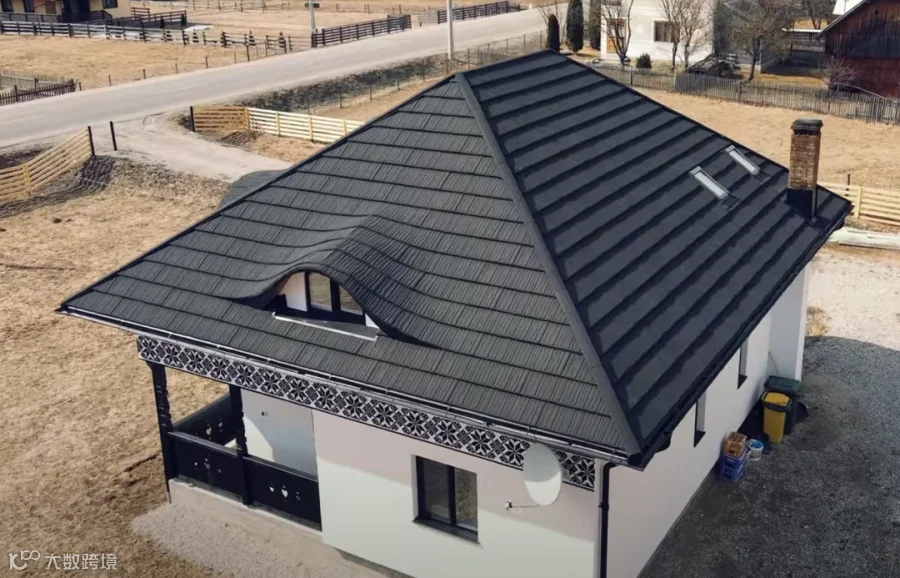
(Hip Roof Design)
Whether it’s the simplicity and practicality of a gable roof or the complexity and grandeur of a hipped-and-valley roof, the advantages of colored stone metal shingles go far beyond mere “compatibility”; they comprehensively enhance both the user experience and the architectural value of the roof.
The roof is the building’s “fifth facade.” Choosing the right shingles not only provides shelter from wind and rain but also enhances the building’s aesthetic appeal, extends its lifespan, and saves you countless headaches down the road.
No need to worry anymore about “which shingles to choose for a gable roof” or “how to select shingles for a hipped roof with five ridges.” Stone-coated metal shingles: one choice, a lifetime of protection.