Since we launched our polymer-based antique-style roof tiles, many customers have expressed a strong preference for and appreciation of this product, yet they still have questions about the material used in the tiles.
Many people often ask in the comments section: “Isn’t this just plastic roofing?” “How is it different from resin roofing?” “Is it durable? Will it fall apart after a few years?”
To be honest, seeing these questions makes us both happy and a little concerned. We’re happy because people are genuinely interested in our product; we’re concerned because many people are confusing it with resin shingles and plastic shingles.
Today, we’re dedicating this article to setting the record straight: Sangobuild polymer antique-style roof tiles are definitely not resin tiles, and they are certainly not plastic tiles!
When many people hear the term “polymer,” they instinctively think of plastic. This is actually a misconception.
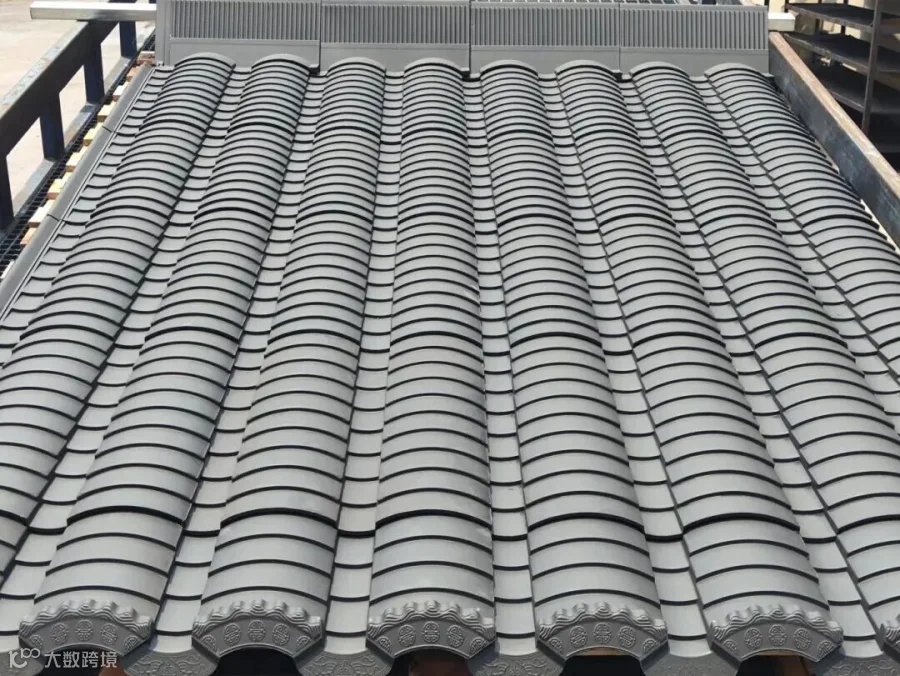
Polymer materials cover a wide range, and plastics are one type among them. However, our antique-style roof tiles are made from a blend of polymer composites and high-strength basalt fiber, produced using a special formula and manufacturing process. They are in a completely different league from ordinary plastic or resin roof tiles.
The most striking comparison is this: it weighs less than half as much as traditional clay tiles, yet is more than three times as hard.
Everyone is familiar with clay tiles: they’re heavy and bulky, exhausting to carry, and even more exhausting to install. Moreover, over time, they crack at the slightest touch and shatter with just a light step. Polymer antique-style tiles, on the other hand, are lightweight yet sturdy. They’re easy for installers to handle, and once on the roof, there’s no need to worry about accidentally stepping on them and breaking them. Their impact resistance and crack resistance far exceed those of clay tiles and ordinary resin tiles.
Some people feel that unless the tiles are made of clay, they just don’t have that certain charm. We’ve taken this into account as well.
Standard plastic shingles and resin shingles often have a glossy, smooth finish that looks fine from a distance but appears cheap up close.
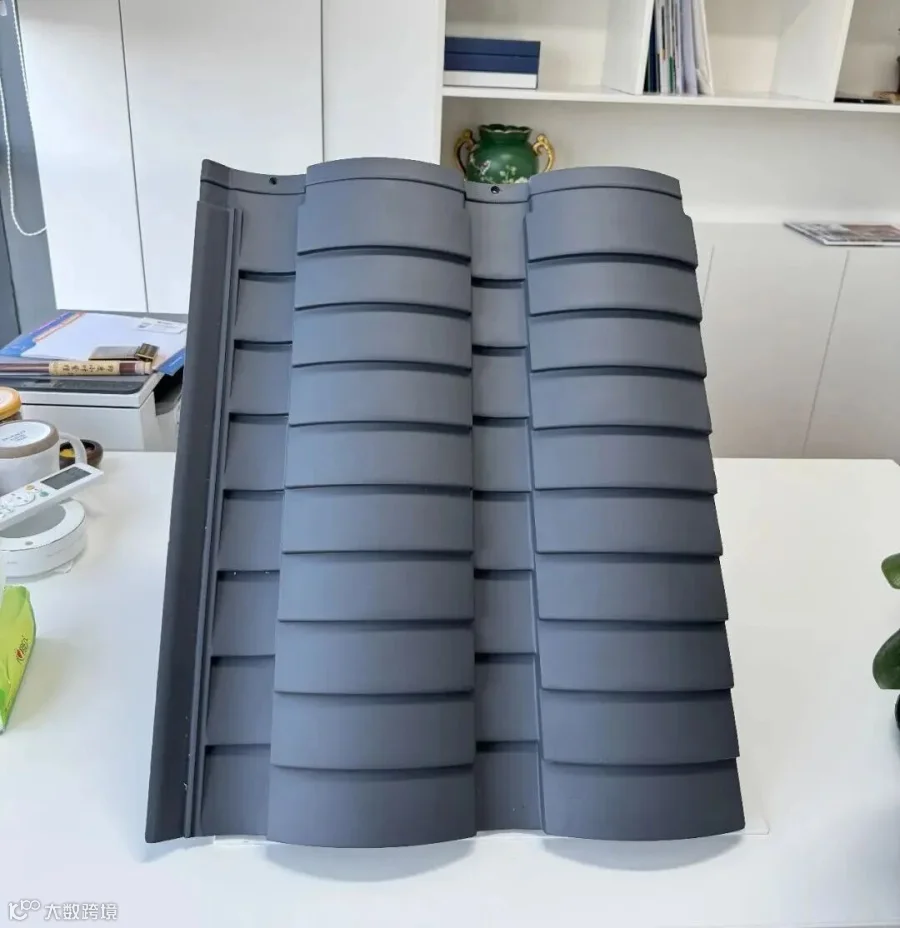
Our polymer-based antique-style roof tiles feature a specially designed matte, textured finish that recreates the rustic, substantial feel and appearance of traditional clay tiles. Additionally, the surface is coated with a double layer of nano-cold glaze to ensure long-lasting color retention.
To the touch, it doesn’t feel like slippery plastic, but rather has a vintage texture with a subtle grain. When laid on a roof, it instantly evokes the charm of traditional architecture when viewed from a distance. It combines the durability of modern materials with the timeless appeal of traditional roof tiles.
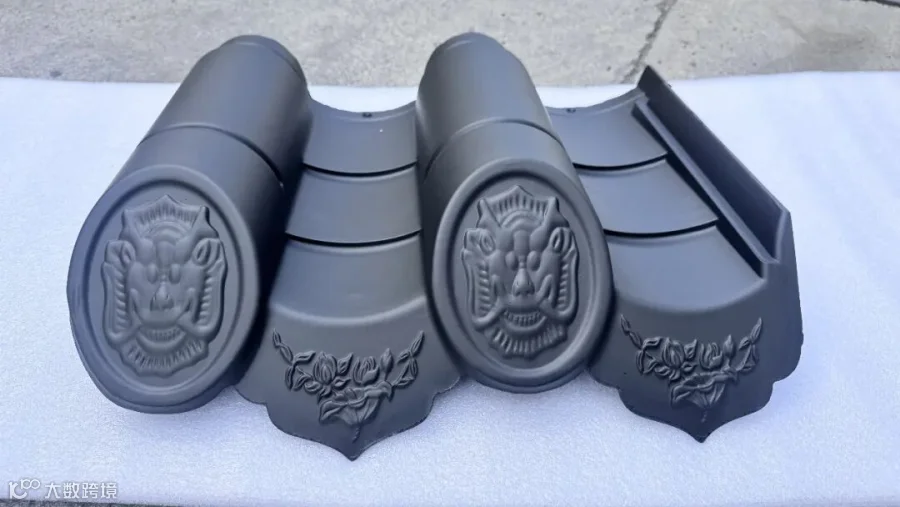
Traditional clay roof tiles are small in size; it takes dozens of them to cover just one square meter. With numerous overlapping joints, installation is slow and labor costs are high.
Polymer-based antique-style roof tiles are much larger in size and feature precisely marked overlap points, making installation as quick and neat as putting together building blocks. For the same roof area, construction time can be cut by more than half, naturally leading to significant savings on labor costs.
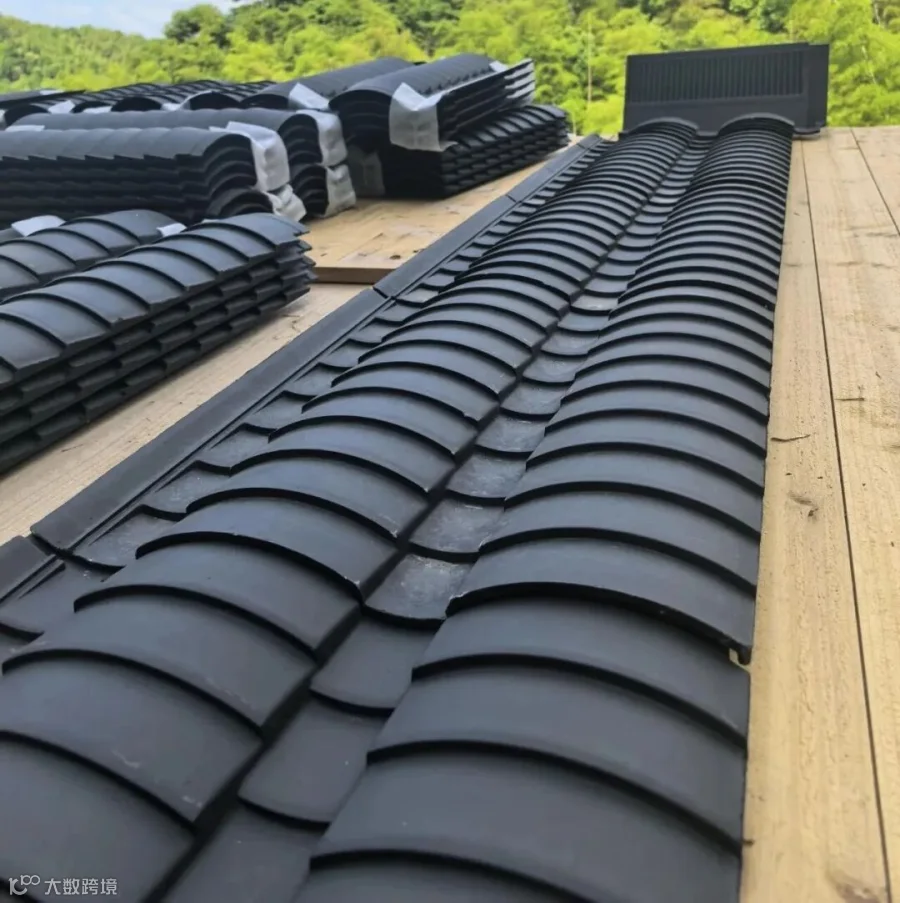
This is a concern for many people. With traditional tile installation, workers have to carry bucket after bucket of cement mortar up to the roof, which is both dirty and exhausting. Furthermore, once the cement dries, it expands and contracts with temperature changes, making it prone to cracking and water leakage.
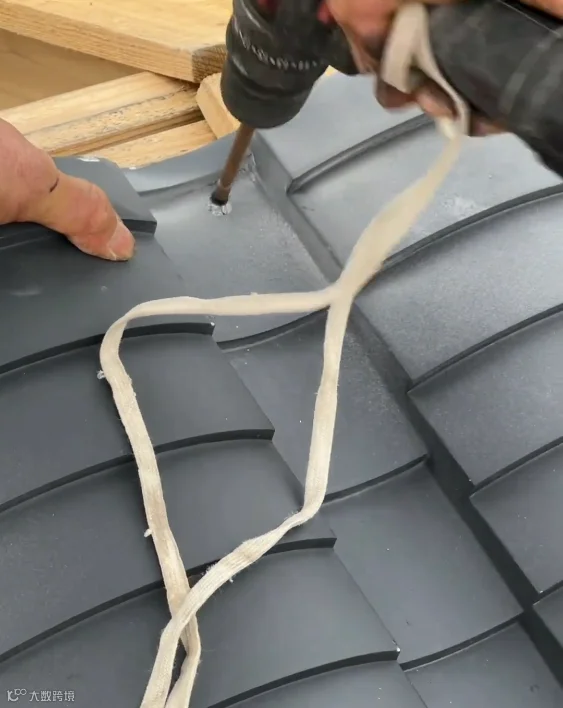
These polymer-based antique-style roof tiles are secured using specialized screws that are driven directly into the purlins, ensuring a clean, quick, and secure installation. Workers don’t need to mix cement, which keeps the construction site much cleaner and makes future maintenance much easier—if a tile does develop a problem, simply unscrew it and replace it; there’s no need to chisel away cement.
What do resin and plastic roof tiles fear most? Sunlight. When exposed to UV rays over time, they age, become brittle, fade, and warp.
These polymer-based antique-style roof tiles have been specially treated to enhance their weather resistance, with the addition of UV-resistant and anti-aging additives. They do not warp under intense summer heat, crack in cold winter temperatures, or fade when exposed to heavy rain. When used outdoors, they remain as stable as new for over a decade—a performance that ordinary plastic roof tiles simply cannot match.
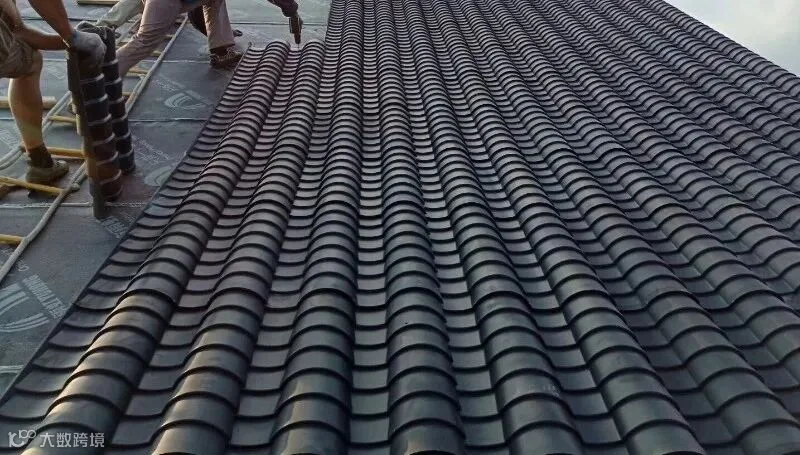
People in many regions know this all too well: traditional clay tiles and cement tiles have rough, porous surfaces that absorb water as soon as it rains, quickly becoming covered in moss in damp conditions. When moss builds up, the roof becomes slippery and dirty, and it can easily clog the drains.
Polymer-based antique-style roof tiles have an extremely low water absorption rate; water simply rolls off them like water off a lotus leaf, keeping the surface dry at all times. Without moisture, moss naturally cannot grow.
The roof stays clean and looking brand-new all year round, with unobstructed drainage, saving you a lot of cleaning hassle.
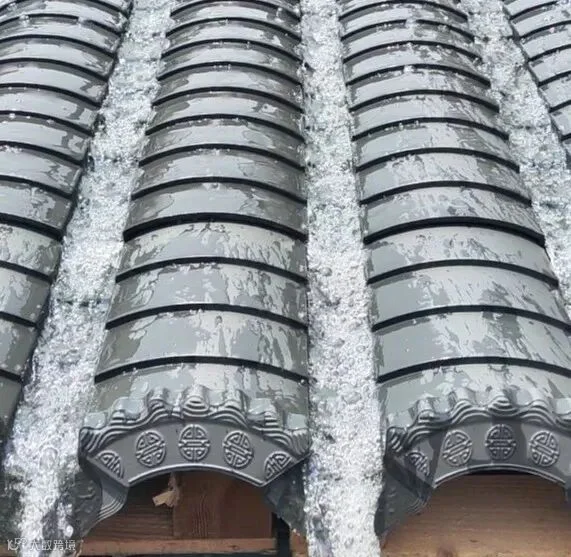
I’m not saying all this to brag, but simply to make sure you don’t get it wrong again.
Our polymer-based antique-style roof tiles are neither plastic nor resin tiles. They are a lightweight, durable, vintage-style, weather-resistant, and easy-to-install professional roofing material suitable for a wide range of applications, including the restoration of historic buildings, traditional-style architecture, bed-and-breakfasts, rural tourism sites, Chinese-style villas, and siheyuan courtyards.
If you’re planning to build a house or renovate your roof soon, why not give these truly “unique” polymer-based antique-style roof tiles a try? If you’re interested, contact me for a solution!