

Only by understanding the key differences between solar roof tiles and traditional photovoltaic systems can you better align with architectural requirements and avoid common selection pitfalls. Simply put, if you prioritize architectural aesthetics and seek integrated protection and power generation capabilities, solar roof tiles (BIPV) are the more suitable choice; if your primary goal is to maximize power generation and your roof conditions permit it, traditional photovoltaic systems can be considered as an alternative.
As the “Dual Carbon” goals advance, the application of photovoltaic technology in the construction sector is becoming increasingly widespread, and the concept of BIPV (Building-Integrated Photovoltaics) is gradually entering the public consciousness. Many people confuse the core BIPV product—solar roof tiles—with traditional photovoltaic systems, believing that while they differ in appearance, their functions are identical.
In reality, however, there are differences between the two in several key aspects, including design philosophy, product attributes, and installation methods. Sangobuild has deepened its expertise in the BIPV sector, focusing on the R&D and production of solar roof tiles. Today, drawing on industry experience, Sangobuild breaks down the core differences between the two in plain language to help you quickly understand BIPV and clarify your selection criteria.
First, we must clarify the core positioning: The essence of BIPV lies in the “integration of architecture and photovoltaics.” As the mainstream product of BIPV, solar roof tiles are, by definition, “building materials capable of generating electricity.” In contrast, the core of traditional photovoltaics (primarily solar panels) is “power-generating equipment attached to buildings.” This difference in positioning determines the variations in all subsequent functions and applications, and it represents the most fundamental distinction between the two.
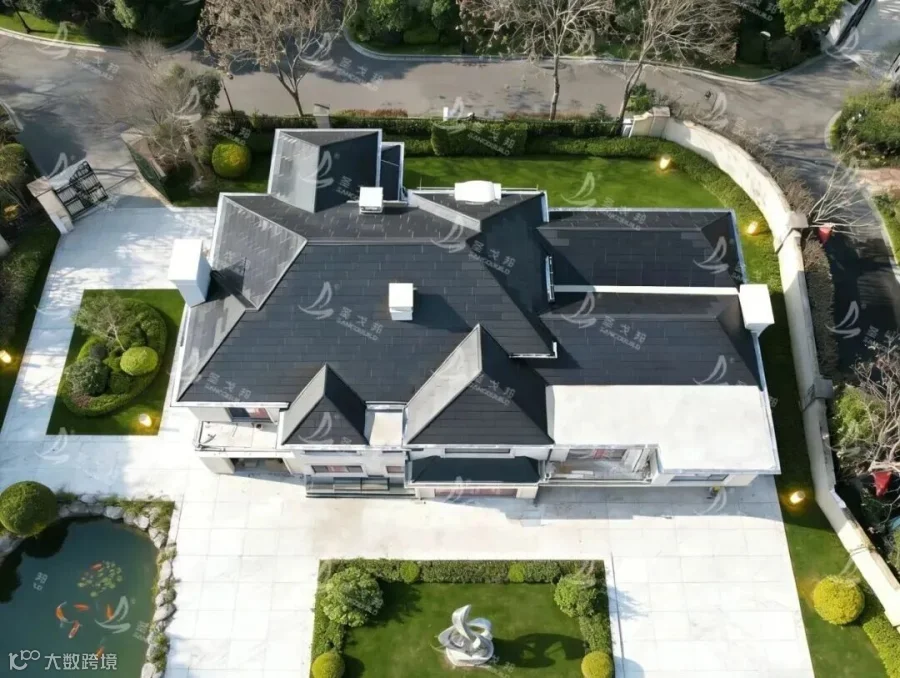
In terms of design philosophy, solar roof tiles adhere to the principle of “integration and adaptation,” while traditional photovoltaic systems follow the approach of “add-on power generation.” The design of solar roof tiles begins with architectural requirements, balancing power generation capabilities with architectural aesthetics and protective needs. Their appearance, dimensions, and tile profiles are tailored to the building’s roof design, allowing them to directly replace traditional roof tiles and blend seamlessly with the building’s overall style without appearing out of place. Conventional photovoltaic systems, on the other hand, prioritize power generation efficiency as their core design principle. They typically feature standardized flat-panel structures that do not require consideration of architectural aesthetics. Functioning solely as power-generating components, they are mounted on the building’s roof via mounting brackets and are classified as “retrofitted” equipment, remaining relatively independent from the building’s structural framework.
In terms of product characteristics, solar roof tiles combine “building material properties” with “power generation capabilities,” whereas traditional photovoltaic systems possess only “power generation capabilities.” In addition to converting solar energy into clean electricity, solar roof tiles perform basic functions such as waterproofing, thermal insulation, and protection for the roof. They offer the same durability, wind resistance, and weather resistance as traditional roof tiles and form an integral part of the building envelope. Traditional photovoltaic systems are solely responsible for power generation and do not provide any structural protection. Roof waterproofing and thermal insulation still rely on the original roofing materials; the photovoltaic system itself does not contribute to the structural integrity of the building but exists solely as a power-generating component.
In terms of installation methods, solar roof tiles utilize an “integrated installation” approach, whereas traditional photovoltaic systems employ an “external mounting” method. Solar roof tiles can directly replace conventional roof tiles; no additional mounting frames are required during installation. They are laid in accordance with standard roofing specifications, forming a tight bond with the roof structure. The installation process is similar to that of conventional roof tiles, eliminating the need for major modifications to the existing roof. Traditional photovoltaic installation, on the other hand, requires first erecting specialized metal mounting frames on the roof and then securing the solar panels to these frames. This not only adds to the number of construction steps but also places additional loads on the roof structure. In some cases, older roofs may need to be reinforced in advance to meet installation requirements.
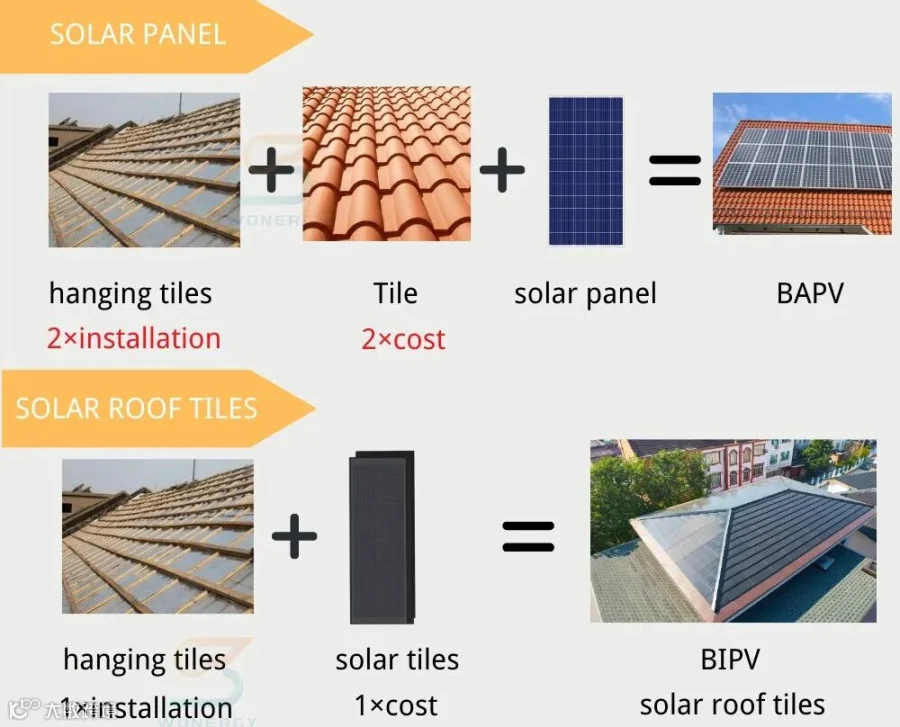
In terms of adaptability and practicality, the differences between the two are also quite evident. Solar roof tiles offer greater adaptability, providing a variety of tile styles and color options to match architectural styles and roof shapes. They are suitable for both new construction and retrofitting of older roofs, and do not require additional roof space, thereby maximizing space utilization. Traditional photovoltaic systems have relatively limited adaptability and are better suited for buildings with flat, structurally sound roofs. Additionally, the installation of mounting brackets occupies part of the roof space, and their design is often monotonous, making them difficult to integrate into architectural settings with aesthetic requirements.
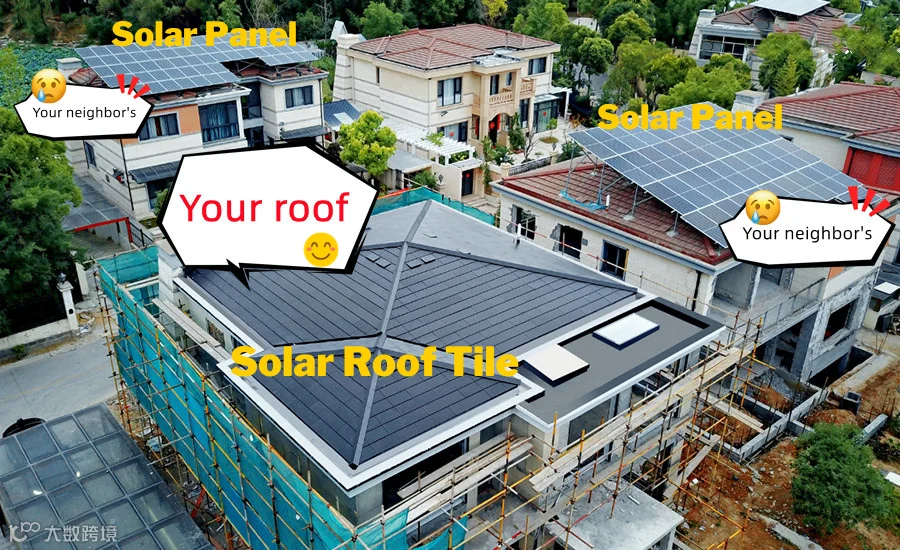
Many people focus on power generation efficiency. In fact, the difference in power generation efficiency between solar roof tiles and traditional photovoltaic panels stems from their product positioning rather than a technological gap. Because traditional PV systems focus solely on power generation, they achieve slightly higher power generation efficiency per unit area under the same lighting conditions. However, solar roof tiles can cover roof areas that traditional PV systems cannot accommodate by optimizing their installation layout. This results in a balanced increase in overall power generation while eliminating the procurement and installation costs of traditional roof tiles, offering a more advantageous overall cost-effectiveness.
Sangobuild has been deeply involved in the BIPV sector for many years, consistently adhering to the R&D philosophy of “architectural compatibility first, power generation performance second.” The solar roof tiles it produces retain the protective and aesthetic qualities of traditional roof tiles while delivering stable power generation performance, perfectly aligning with the core requirement of “integration and symbiosis” in BIPV. Unlike the “add-on power generation” approach of traditional photovoltaics, Sangobuild’s solar roof tiles utilize an integrated design that enables buildings to achieve energy self-sufficiency while maintaining overall aesthetics and structural safety, truly realizing a mutually beneficial relationship between architecture and photovoltaics.