


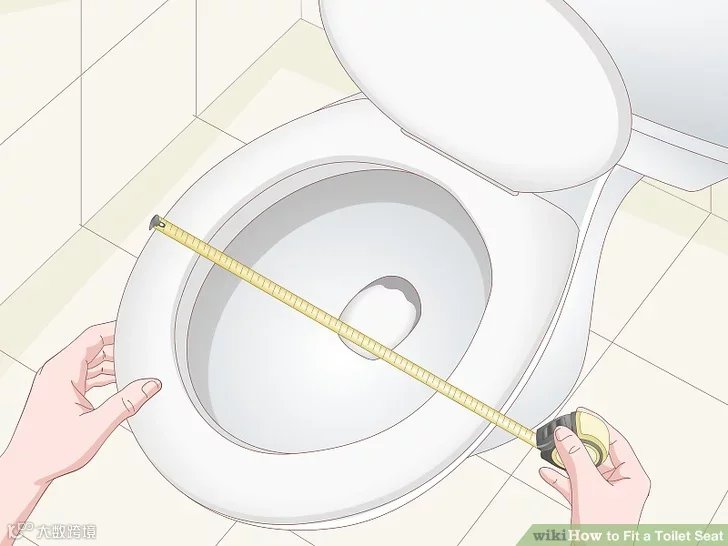
Use these measurements when shopping for attachments.
Some accessories may instead attach to the mounting bolts, in which case the bolt spacing measurement is of particular importance.

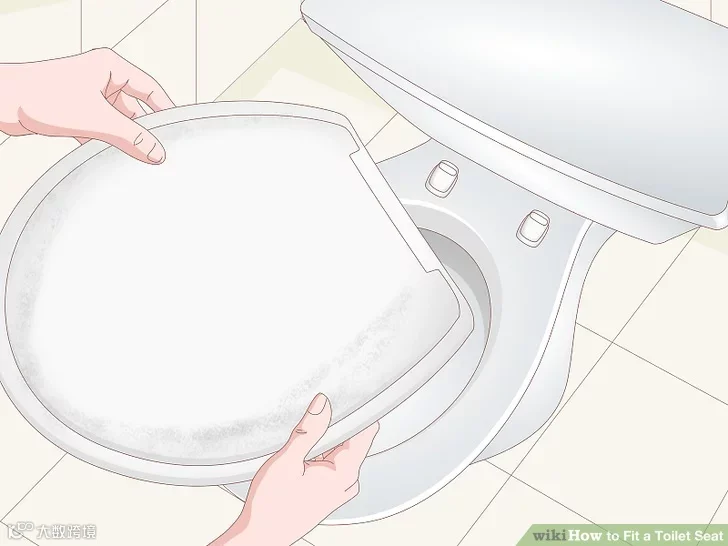
Lift the plastic caps at the back of the seat to expose the heads of the bolts. This is unnecessary if the heads are already visible.
Use pliers to loosen the nuts that secure the bolts to the underside of the bowl. If the head of the bolt spins when you do this, insert a screwdriver into the bolt head with your other hand to hold it still.
Lift away the seat once you've removed the nuts.
Keep the nuts in case you lose one of the nuts that come with the new toilet seat. If the bolts aren't permanently attached to the seat hinges, keep them just in case as well.

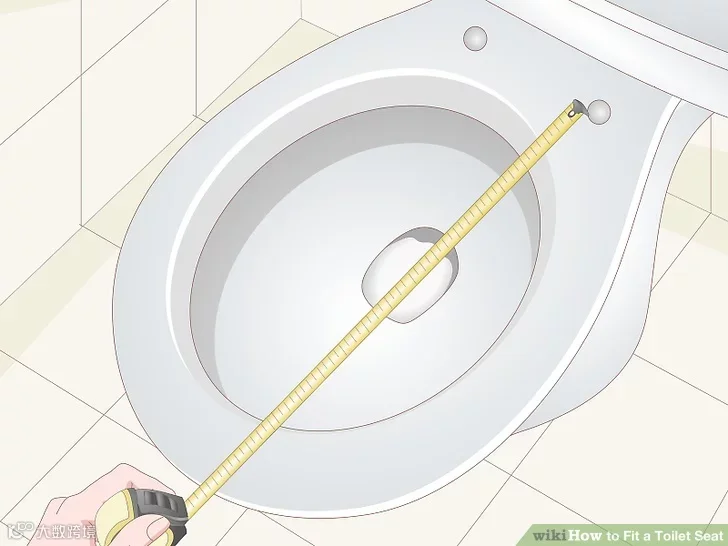
For a standard toilet in the U.S., this measurement will be in the range of 16–19 1⁄2 in (41–50 cm).
If you picture the bowl opening as a clock, you're measuring from 12 o'clock to 6 o'clock here.
Write down all your measurements to take with you to the hardware store, even if you're bringing the old seat along.

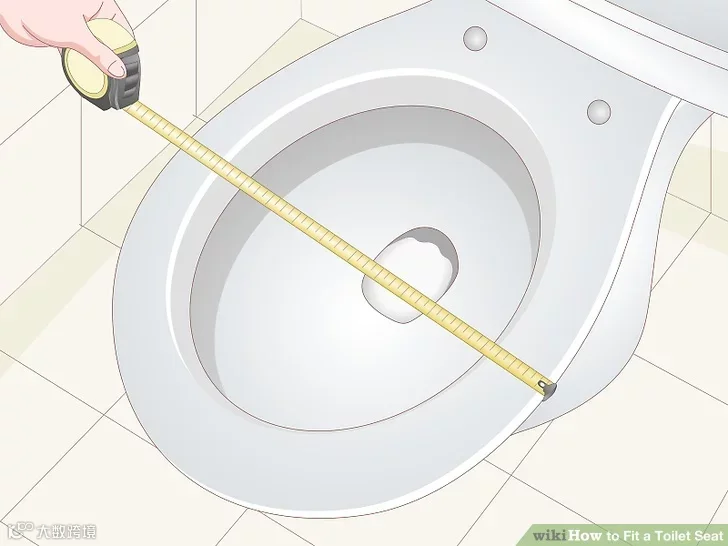
To make sure you're at the widest point, slide the extended measuring tape a bit toward the back of the bowl, then a bit toward the front of the bowl. Make sure to keep the tape parallel to the back of the toilet. Jot down the widest measurement you get.
Modern toilet seat widths are standardized, but there may be slight variations between brands. Taking a width measurement will make it easier to get a perfect fit.

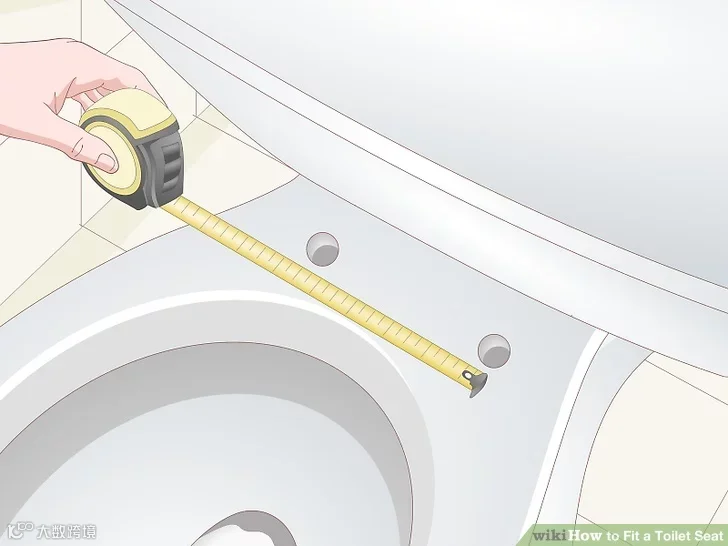
The standard bolt spacing in the U.S. is 5 1⁄2 in (14 cm), while in Europe the range is typically 6–6 1⁄2 in (15–17 cm).
Some toilet models may have spacing in the range of 7–10 in (18–25 cm). In this case, you may need to order a seat directly from the toilet manufacturer.

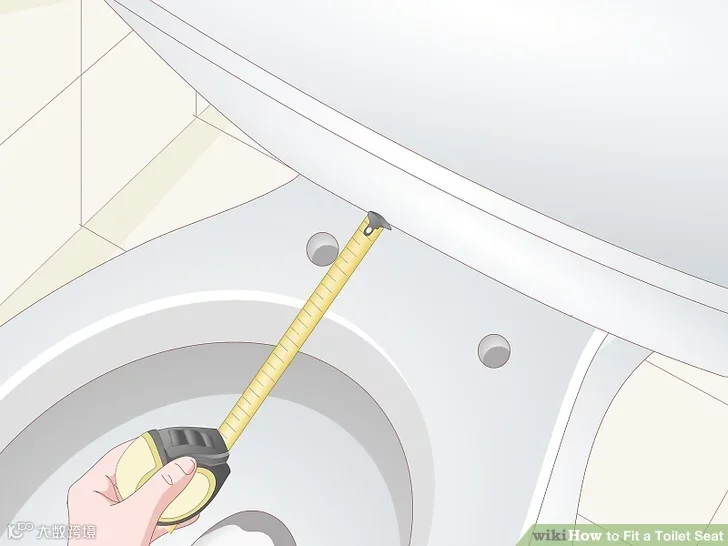
Use this measurement to make sure a particular specialty seat will fit on your toilet. Otherwise, you may install the seat and then not be able to lift the lid fully open!