As a bathroom & kitchen expert who is concerned much about users' health and living condition under the spread of coronavirus disease (COVID-19), we're gaining an in-depth understanding of a recent article written for the Water Quality & Health Council by Heather Murphy, assistant professor in the Department of Epidemiology and Biostatistics, and Barbara Soule, an infection preventionist consultant, that discusses the potential spread of COVID-19 through improperly connected bathroom sewage pipes.
On February 11, 2020, the World Health Organization (WHO) announced the official name for the disease that is causing the 2019 coronavirus epidemic, COVID-19. On the same day, a 307-unit high-rise tower in Hong Kong was partially evacuated as a precaution due to concerns that the virus could have spread through the sewage pipes of the building’s bathroom plumbing system. The public health implications of this form of transmission of the COVID-19 virus, if confirmed, could be substantial.
Details Of The Linked Coronavirus Cases
According to the article, two residents living on different floors of a high-rise apartment tower called Hong Mei House had been infected with coronavirus according to Hong Kong health officials. The first to be infected was a 75-year-old man. About 10 days later, a 62-year-old woman in the same building became infected. That woman’s son and daughter-in-law who share the apartment were later diagnosed with COVID-19.
In the tower, the first two persons with coronavirus lived 10 floors apart, but were located in the same vertical block of apartments. For this reason, health authorities conducted an initial investigation and evacuated all residents living directly above and below each other in block seven across all 30 floors because their toilet and vent pipes were all connected (see figure).
How Could Bathroom Sewage Pipes Spread Coronavirus?
The COVID-19 virus could have spread through the Hong Mei House through close human contact or the shared use of elevator buttons. But because the two first patients lived above and below one another in the tower, and because an initial inspection found that a vent pipe had been disconnected from the bathroom’s waste (soil) pipe, the building was partially evacuated. Although a full investigation is ongoing, based on the initial investigation, health officials declared the Hong Mei House’s sewage pipe system to be safe.
 Preliminary studies of the COVID-19 virus have suggested it is present in fecal matter, though it is still unclear whether the coronavirus could be transmitted and infect others by some type of fecal-oral route (via exposure from hands to nasal passages and eyes not through ingestion). Toilets (as well as sinks and floor drains) have a “U-“ or “P-shaped” pipe that prevents sewer gases from entering the home and that allows wastewater and odors to escape. To work properly, the sharply curved pipe, also known as a “trap,” needs to hold water in its bend. These connect to a soil pipe, which washes the waste down and away from the toilet, sink, or drain. The soil pipe also needs to be connected to a vent pipe to remove sewer gases and odors—usually through roof vents. The vent pipe also ensures that wastewater keeps flowing freely.
 One local microbiologist suggested at a press conference that the improperly sealed vent pipe “could have resulted in a virus transmission, by carrying infected feces into the building’s ventilation system and blowing it into people’s bathrooms”, but this theory has not been confirmed.
Coronavirus Infection Prevention
One local microbiologist suggested at a press conference that the improperly sealed vent pipe “could have resulted in a virus transmission, by carrying infected feces into the building’s ventilation system and blowing it into people’s bathrooms”, but this theory has not been confirmed.
Coronavirus Infection Prevention
As we know, toilet’s “U-“ or “P-shaped” pipe can prevent sewer gases from entering the home, thereby stop the viruses. But how about the floor drain in which the same risk exists?
In order to help users better avoid coronavirus spread in the bathroom, JOMOO launched a new product -- JOMOO Anti-Odor Floor Drain.
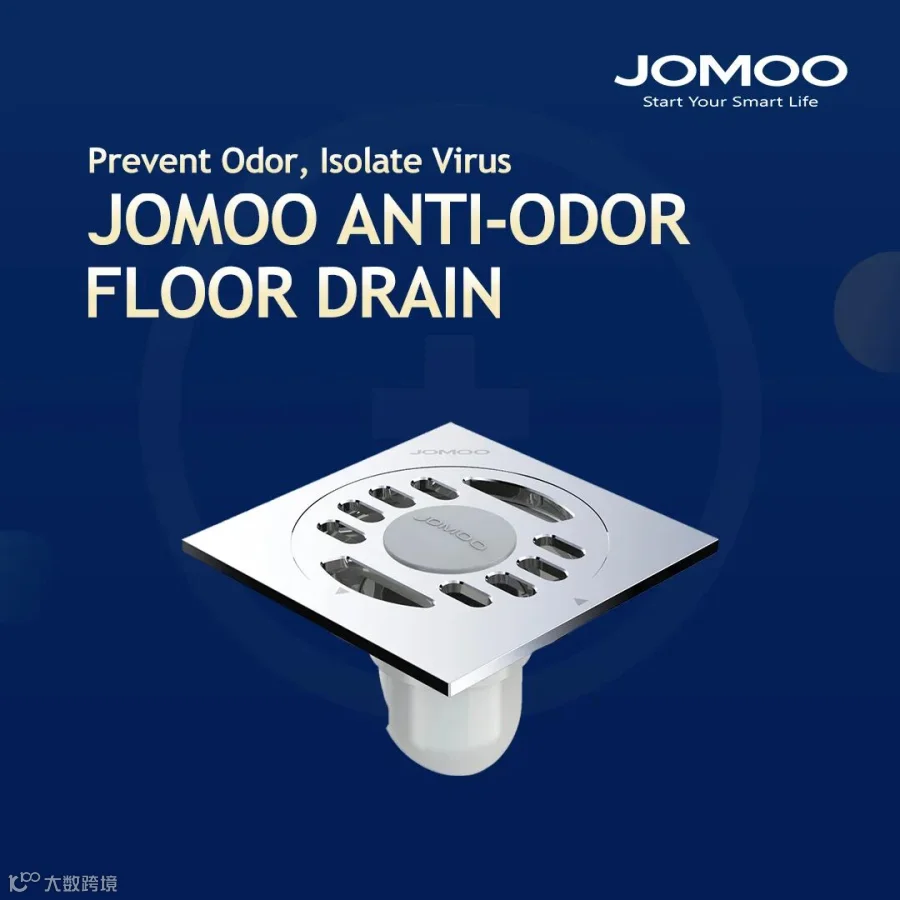
Designed with the Unique Magnetic Straight-through Deodorant Core, JOMOO Anti-Odor Floor Drain will automatically close after water flowing through it due to the magnetic suction effect, so that it could effectively prevent the backflow, odor, bugs and viruses.
JOMOO Anti-Odor Floor Drain
In the following days, we will continue to pay attention to the reports of the new coronavirus, and hope to share useful knowledge with you. Let us work together to create a safer and healthier family environment.
Source:College of Public Health