
For China’s ‘shidu’ parents, the advent of a two-child policy could mean an end to their suffering.
By Nathan Jubb
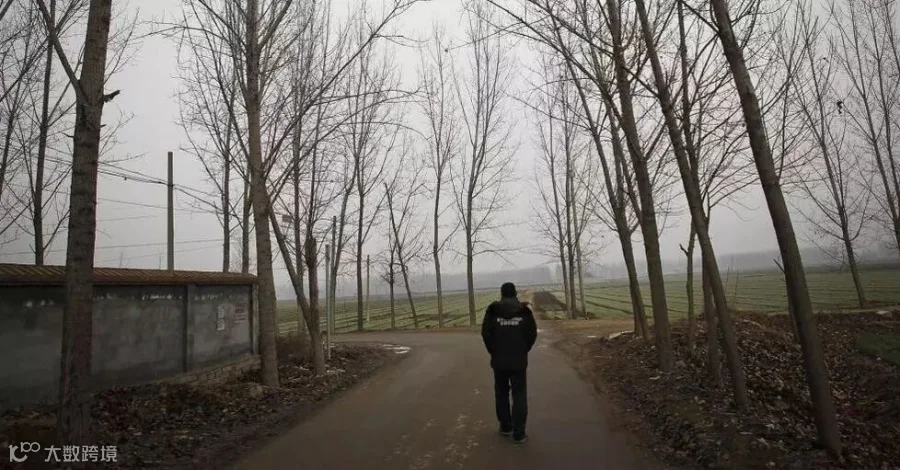
Baishi Village, Shandong Province
At 11 a.m. on a December morning in 2013, migrant worker He Jingyun was on a bus to a new job when the shrill ring of his phone ripped him from his thoughts. It was his wife, Liu Guilan. She sounded distressed. He Xiwen, their 23-year-old only son, had been in a traffic accident in the distant province of Jiangsu, where he lived with his wife and daughter. He Jingyun thought about the car he and his wife had purchased for their son and felt a sudden pang of guilt.
Jingyun immediately returned back to his home in Shandong province, abandoning his job in neighboring Hebei. He often left the village of Baishi to find work, escaping the poorly paid farming or mining jobs that were his only options there. At home, he lived with his wife in a simple one-story house built around a concrete courtyard — a style typical of China’s northern farming villages. The family toilet was a hole in the ground located in a concrete shed off to one side of the yard, and inside the house magnolia paint was peeling off the bare walls.
The family led a humble life, and if Xiwen were seriously injured, Jingyun knew the cost of treatment would overwhelm them. Xiwen was covered by basic insurance, but he wouldn’t see any reimbursement until months later, and even then at only 70 percent of the total cost. The couple begged and borrowed 60,000 yuan ($9,270) from friends and family. Not having a car, they rented an unlicensed taxi and set off on the 650-kilometer drive to Jiangsu, telling friends that they were going to “save” their son. It was 2 a.m. when they finally pulled up outside their son’s house. From the car, they could see their daughter-in-law and her family illuminated by the headlights’ harsh white light. Reality hit. “If my son were still alive, everyone would’ve still been at the hospital,” Liu says. Xiwen, her only child, was dead.
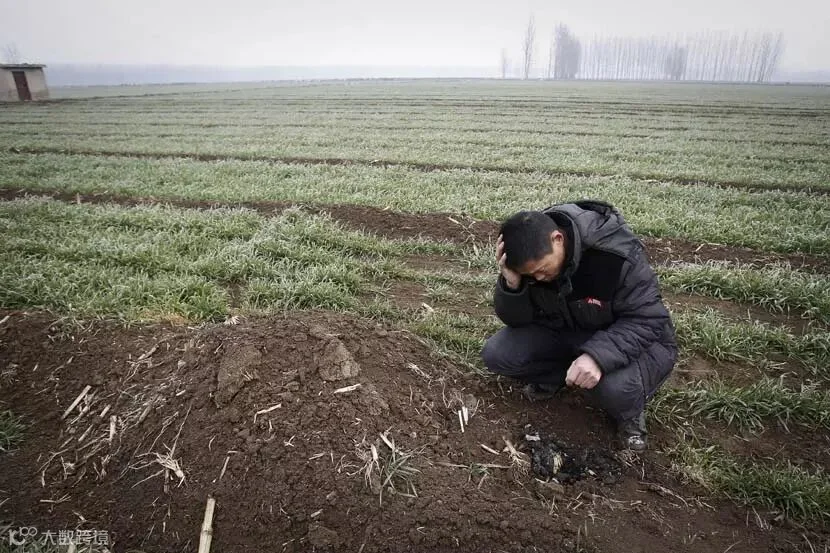
He Jingyun mourns his late son He Xiwen on a farm in Jining, Shandong province, Jan. 7, 2016. Gao Zheng/Sixth Tone
There are no official statistics on the number of families in China that have lost only children. But according to a rough estimate in a 2012 article in Xinkuaiwang, a Guangzhou-based newspaper, it could be over 15 million. China passed its one-child policy in 1982, making it illegal for couples to have more than one child, in an effort by the central government to control population growth. The only exceptions were well-off families who could afford the fine, members of Chinese ethnic minorities, and, after a loosening of the policy in 2013, married couples where both spouses were themselves only children. With the policy in effect for 30-plus years, China’s population suffered an aging crisis, and on Jan. 1, 2016, the central government responded by implementing China’s new two-child policy to try to ease the demographic imbalance. Though the regulation is now history, the effects of the one-child policy live on through the lives of parents who lost their only child while living through it, and in the memories of the family planning officials who were tasked with enforcing it.
Huaihua, Hunan Province
One day in 2004, Han Shengxue was working in the office of the family planning committee in Huaihua City when a loud noise broke his concentration. Han left his desk and went to the lobby to see what was wrong and was confronted by a family in tears. “We obeyed the party’s orders,” they said. “But now our only child is dead. What are we supposed to do?” The parents were still young, so Han offered to accompany them to their home county and help them apply for a birth permit for another child. But he was shaken when he realized there would have been nothing he could have done if the couple had been too old to have another child.
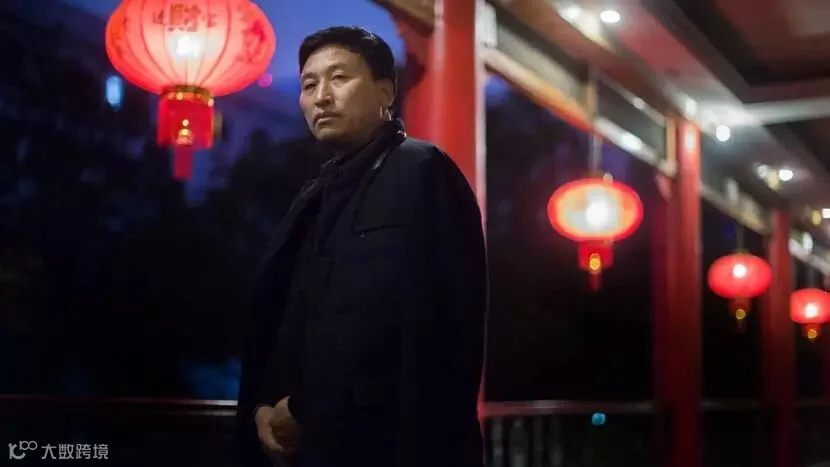
Han Shengxue poses in front of a row of lanterns in Huaihua, Hunan province, Dec. 23, 2015. Yang Yi/Sixth Tone
Encounters with families at the office were a regular occurrence for Han. The family planning office was the only place people affected by the policy could go to register a number of grievances, which included difficulties with birth permits, contesting fines, or requesting financial assistance. Han was hardened to most complaints, but this time was different: It was his first close encounter with shidu families — or those bereaved of their only child during the one-child policy. Han saw in them a unique kind of suffering. “The sorrow these parents feel is unlike anything else,” he says. This belief sowed the seed of an idea in his mind — an idea that, after more contact with bereaved families, finally sprouted in 2010. It was then that Han embarked on a project to document the plight of China’s shidu families. In the five years since, 53-year-old Han has interviewed hundreds of families about the unique struggles they face, and in the process he has lifted the lid on a devastating but little-known side effect of the one-child policy.
Yangzhou, Jiangsu Province
He Xiwen’s head was crushed when a truck smashed into him on his morning commute. Longing for one final look at their son, He and Liu asked the police if they could see the body, but it was disfigured so badly the police refused. The couple protested, but the officers weren’t moved. “They intimidated us,” says He. “They shouted at us to leave.” Courts ordered the truck driver’s family to pay the couple 70,000 yuan in compensation, which He and Liu gave to their daughter-in-law and granddaughter. They returned to Shandong with Liu holding her son’s ashes in an urn on her lap. There was one small consolation for the couple: To save money on gas, their son had purchased a small motorbike, with a helmet, to get to and from work. The vehicle he was using at the time of the accident wasn’t his car.
Old Buddhist superstitions linger on in China’s countryside, and some neighbors who had previously been friends began to shut He and Liu out, believing karma was punishing them for being bad people. The couple buried their son’s ashes in the field they used to grow crops, marking it with a small mound of earth. During those tough times, they only visited in the dead of night. “In the daytime I wouldn’t go out because I was worried about seeing people,” says He.
In March 2014, three months after their son’s death, Liu’s father was taken to the hospital and diagnosed with heart disease. While at the hospital caring for Liu’s father, the couple became acutely aware of all the sick old people surrounding them. A painful thought flashed in their minds: Who will look after us when we get old? With China’s weak social welfare system, they had pinned their hopes on their only child supporting them in old age, just like many other parents in China. Five years before their son died, He Jingyun’s younger brother passed away in a car accident. The loss of their son removed one more vital person from an already-small family support network. “We felt so much pressure thinking about growing old,” says He.
Huaihua, Hunan Province
Han has worked at the family planning committee in Huaihua since 1996. From offices like his all around the country, the one-child policy was implemented, and sometimes by force. Han, who is medium-height with a perfectly black mop of hair, is aware that he has been a part of the policy’s enforcement apparatus. “It is because of the policies the family planning department enacted that these people find themselves in this terrible situation,” he says. Han’s mid-level colleagues gave orders that were carried out by lower-level employees. But he doesn’t see a contradiction in his two roles. “I think it is our responsibility to also undertake this issue,” he says. “When shidu parents come to visit the department, they should be met with kindness.”
As the public relations officer for the Huaihua family planning committee, Han often put his journalism training to use writing press releases and news items for the committee. But he never dared to write about shidu parents officially because discussion of the one-child policy was taboo at the time. With nobody willing to give voice to the bereaved, their plight went largely unheard.
Though losing a child is painful for anyone, Han recognized that older shidu couples suffer the most. With their only child gone, and too old to have another, “It’s as if these people are being punished by God,” Han says. Despite wanting to help them, he found that many shidu families blamed him and his department for their troubles, and they refused to talk to him. “Many of them were closed off,” he says. “They would hide inside and not open the door or allow me in.”
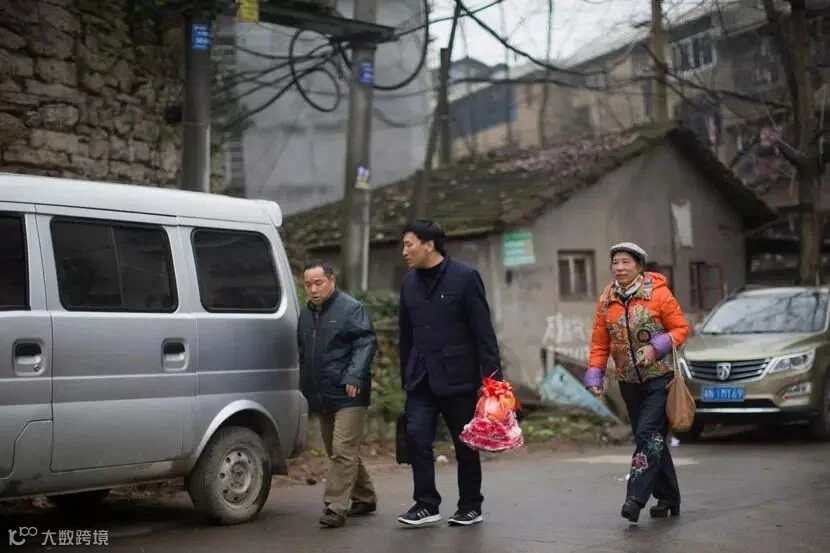
Han Shengxue (middle), Nie Heping (right), and a local volunteer are on their way to visit a ‘shidu’ family in Huaihai, Hunan province, Dec. 23, 2015. Yang Yi/Sixth Tone
So Han switched tack. When he qualified as a reporter, he was given a license. Han used this license to pose as a journalist in order to get access to shidu parents. The strategy worked, and Han was allowed in to talk to many bereaved families. By the time he disclosed that he was also working for the family planning committee, any suspicion from the parents about his intentions had dissipated.
Progress was still slow, however. In 2014 Han heard about an unofficial association for shidu families in Huaihua and knew that he had to get in touch. He contacted the founder, Nie Heping, herself a shidu mother in her 60s. She agreed to ask the families in their online chat group if they’d be willing to meet Han, but because of his job at the family planning committee, everyone refused. It wasn’t until Nie invited him to a group barbecue, and the families were able to see the real nature of his intentions, that they opened up to Han and let him into their lives.
Financial assistance for shidu parents is limited. In 2013 China’s public health and family planning committee set a nationwide policy that financial aid could only be given to shidu parents if the female partner was over 48 years old. The rationale was that younger couples were in a better position to find work and have another child. Parents who qualified for benefits would receive a monthly minimum of 340 yuan. The central government sets the bare minimum that can be awarded, though local governments are free to award more if they choose. But without pressure from those higher up, most do nothing.
To continue reading click the 'Read more' link at the bottom of the screen to go to the original article.
With additional reporting by Fu Danni.
(Header image: He Jingyun walks to his son’s grave near a farm in Jining, Shandong province, Jan. 7, 2016. Gao Zheng/Sixth Tone)