
Hospital’s ethics commission argued she should be seen as a single woman — and therefore disqualified from the procedure.
By Wang Lianzhang
A 33-year-old woman successfully sued a hospital over their refusal to continue her in vitro fertilization treatment because her husband, a sailor, had been lost at sea, Sixth Tone’s sister publication The Paper reported Thursday.
The verdict was issued on Dec. 12, 2016, but was only recently reported on. The case provides yet another talking point in the recent public discussion about IVF and surrogacy in China, kicked off by an article in Party newspaper People’s Daily earlier this month that argued surrogacy should be legalized so women in their 40s can have more children.
According to court documents, Yang Yonghui and her husband, Zhou Jun, lived on Daishan Island in Zhejiang province, just south of Shanghai. The couple decided to try IVF after attempting to conceive for three years without success. They turned to the Zhoushan Maternal and Children’s Health Hospital in February 2016 and had five embryos frozen. The transfer of the embryos was scheduled for five months later because Yang was not in good health at the time.
However, Zhou went missing in May during a voyage at sea. Yang’s and Zhou’s parents still hoped that the couple could have a child with the help of the hospital, but their wish was denied on ethical grounds.
The hospital’s ethics committee determined that Yang was no longer qualified to undergo IVF since she was now a single woman: In China, only married women are allowed to have children. Many women who are single or in same-sex relationships — and thus cannot marry their partners — go abroad to undergo IVF instead.
The hospital also said that growing up without a father could have a negative impact on a child’s physical and mental health. “Whether the plaintiff should be eligible to receive in vitro fertilization is not only a matter of law, but also a social ethics problem,” the committee argued, according to court documents.
The court, however, said that although Zhou had not been found, he hadn’t been legally pronounced dead, and so the marriage should still be seen as valid. Furthermore, growing up in single-parent family does not necessarily mean that the child would be adversely affected, it said.
The head of the hospital’s Party and government office, a woman surnamed Wang, told Sixth Tone that the surgery would be carried out as soon as Yang is healthy enough. Wang added that Yang’s case presented a dilemma for the hospital: “We intended to help her from the beginning, but we couldn’t,” she said.
According to a local news report, an unidentified representative from the hospital initially told Yang to try going through the court system to compel the hospital to continue the treatment, and even introduced her to a lawyer.
Wang said she was satisfied with the verdict, even though the hospital lost the case. “When there are gaps in the law, we can seek help from the courts,” she said. “The law still needs to be improved.”
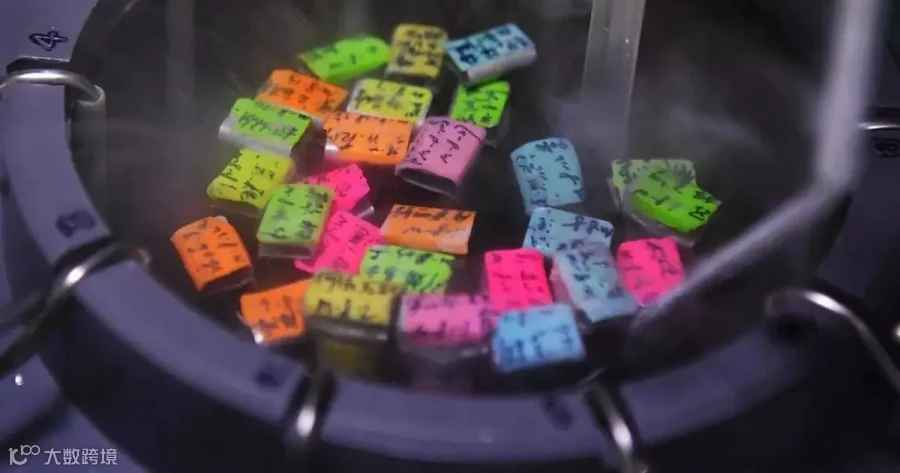
(Header image: Embryos are stored in liquid nitrogen in a laboratory at Xiehe Hospital in Wuhan, Hubei province, Nov. 9, 2016. Zhu Xiyong/VCG)
You may also like:
One-Child City in Crisis Foreshadows China's Aging Problem
Guangdong Families Told to Have Abortion or Lose Job
Hospital Hackers Steal Thousands of Newborn Baby Videos