


Common complaints from 1,733 people surveyed six months after infection were fatigue or muscle weakness, difficulty sleeping, anxiety or depression, and lung or kidney problems
By Du Xinyu and Chen Qi'an
Three out of every four people infected with COVID-19 in China still experience lingering symptoms six months later, a study published Friday in British medical journal The Lancet suggests.
Researchers from several Chinese institutions surveyed 1,733 adults who were discharged from Jinyintan Hospital in Wuhan, the city in central China where the novel coronavirus was first detected, between early January and late May. The median age of the group was 57, and just over half were men.
The patients were asked a series of questions about their symptoms and quality of life, underwent a physical exam and six-minute walking test, and had their blood analyzed. Then, between June and September, the researchers conducted two follow-up surveys at three-month intervals.
According to their findings, 63% of the study participants reported fatigue or muscle weakness six months after their initial symptoms, while 26% said they had difficulty sleeping and 23% reported feelings of anxiety or depression. Lung or kidney issues were also clinically observed in over one-third of participants.
Overall, 76% of the participants reported or showed at least one symptom six months after getting sick. Moreover, patients whose infections were more severe were more likely to have lingering problems and require further care after being discharged from hospital.
Though the Jinyintan Hospital study is the first to evaluate the long-term effects of China’s coronavirus outbreak on such a large scale, it is not without limitations. For example, the researchers said patients with mild COVID-19 symptoms who were treated at temporary “shelter hospitals,” or fangcang, were excluded. They also noted that they did not track whether participants had the same symptoms when they were hospitalized or developed them later, after being discharged.
The study was authorized by Jinyintan Hospital’s ethics commission and funded by authorities at several levels of government, including the National Natural Science Foundation of China.
Last February, the National Health Commission, China’s top public health authority, began keeping tabs on discharged COVID-19 patients. A senior hospital staff member surnamed Xie told Sixth Tone he had to report his health status to authorities in Huanggang, a city near Wuhan, on a monthly basis after he was deemed to have recovered from the virus in early March.
Xie, who tested positive for the coronavirus in February without showing symptoms, said that some 900 residents from Huanggang’s central Huangzhou District had their health status monitored, and most mild cases like his did not give way to lingering symptoms.
“I wasn’t experiencing any obvious symptoms after my recovery,” said Xie, who has resumed his management role at a Huanggang hospital. “What’s more worth noting to me is that most of us who became infected were suffering from fear of the virus,” he added.
Deng Miao, a 41-year-old Wuhan resident, lost his father to COVID-19 in February. At the time, his whole family, including his parents and wife, tested positive. Deng told Sixth Tone that, although his case was mild, he has been experiencing insomnia and joint pain since May.
“I don’t know whether my insomnia is a lingering symptom or just psychological,” Deng said, adding that he occasionally takes sleeping pills.
Deng’s mother, who is in her 70s, remains so afraid of the virus that she doesn’t dare leave their apartment, even eight months since the citywide lockdown on Wuhan was lifted. She, too, complains of insomnia and takes sleeping pills on a daily basis, according to her son. But what worries Deng the most is the persistent chest pain his mother has experienced since being discharged from a shelter hospital in March.
“We had her checked at the hospital about the tightness in her chest, but there was no official diagnosis, at least nothing related to heart disease,” Deng said. “The local health authorities frequently call us to check on our situation,” he added.
Yang Zhanqiu, a virologist at Wuhan University, told Sixth Tone that, regardless of what the survey says, it’s still too soon for researchers to be drawing authoritative conclusions. Even for cases of regular pneumonia, Yang said, some patients can take months to completely get over nagging symptoms.
“We should still wait another six to 12 months before conducting research like this,” Yang said, as “most of the listed symptoms should gradually subside as the patients’ immune systems bounce back.”
Editor: David Paulk.
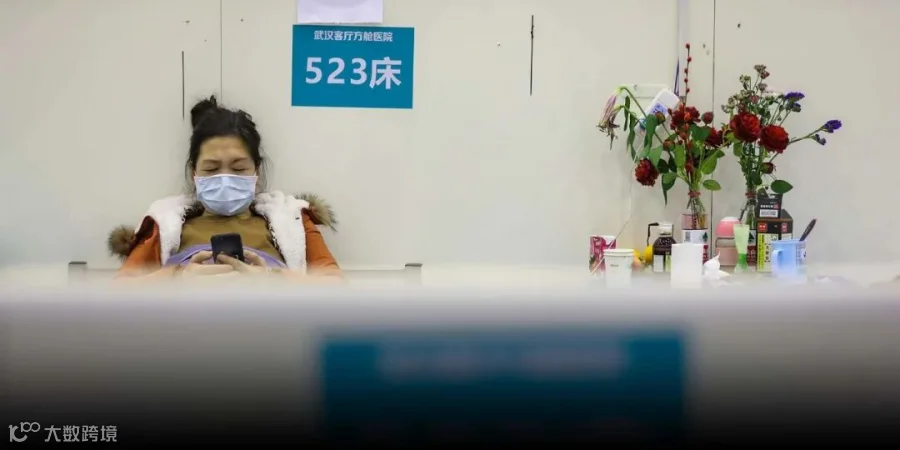
(Header image: A patient sits in her assigned bed at a temporary “shelter hospital” in Wuhan, Hubei province, Feb. 18, 2020. People Visual)
Want to get Sixth Tone stories delivered to your email?

Subscribe to our newsletter for a weekly roundup of the latest news and trending topics from China.
Sign up here:
http://ow.ly/zgv530cPeV4 (Copy and paste the URL into your browser)