
Checklist of symptoms includes 'not attending school or work for no reason' and 'talking to oneself.'
By Fan Yiying
If you talk a lot, like to stay indoors, or have a habit of poking your nose into everything, you run the risk of being reported as mentally ill in Chengdu, capital of southwestern China’s Sichuan province.
The Shuangliu District health bureau posted a Weibo microblog on Thursday saying it would award up to 350 yuan ($52) to people for reporting potential mental patients. To help with identification, the bureau provided a checklist of possible symptoms, ranging from “talking nonstop” to “not leaving the house” to “acting too cold to others” to “inflicting self-harm.”
Whistleblowers are rewarded 50 yuan for the initial report, and they receive another 300 yuan after the diagnosis is confirmed, the bureau said.
“This kind of reward is not based on law,” Ding Jinkun, a lawyer at DeBund Law Offices in Shanghai, told Sixth Tone, adding that he thought the checklist was vague and unscientific.
A representative of the Shuangliu health bureau told the Chongqing Morning Post that the purpose of the reward is to find untreated patients who could be eligible for subsidies. They added that in the wake of several news stories involving mental patients attacking others, public safety was also a concern. Shuangliu health bureau could not be reached for comment when Sixth Tone contacted them for clarification on Friday.
The Chongqing Morning Post reported that the guidelines are a national standard implemented across the country, but that they are generally for internal use and were not intended to be publicly promoted. Shanghai’s health department issued the same checklist of symptoms in 2012.
According to Huang Jian, a deputy director at Peking University Sixth Hospital, one of the country’s most progressive mental health facilities, the symptoms mentioned on the checklist cannot confirm whether an individual suffers from mental illness.
Huang said the survey also violates personal rights. “Patients should be sent to the hospital by the police or their family members if they display impulse behavior harmful to others,” he said, emphasizing that all patients have the right to privacy protection according to China’s mental health law, which came into effect in 2012.
“I don’t believe that a district-level health bureau is capable of keeping the information confidential,” Huang said. “Who will take responsibility if a patient’s personal information is leaked?”
Additional reporting by Wang Lianzhang.
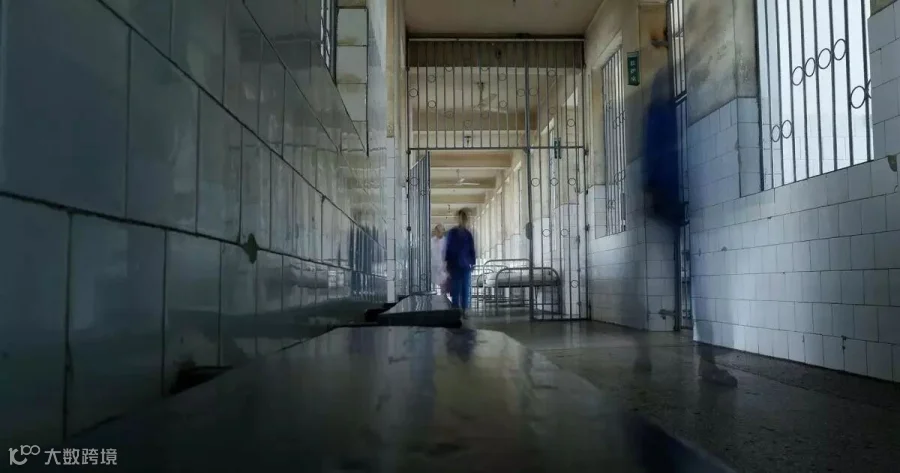
(Header image: A patient walks down the hallway of a psychiatric hospital in Shaoyang, Hunan province, Sept. 25, 2015. Xu Haifeng/Sixth Tone)