
Findings into potentially cancer-curing genome could not be replicated.
By Wang Yiwei
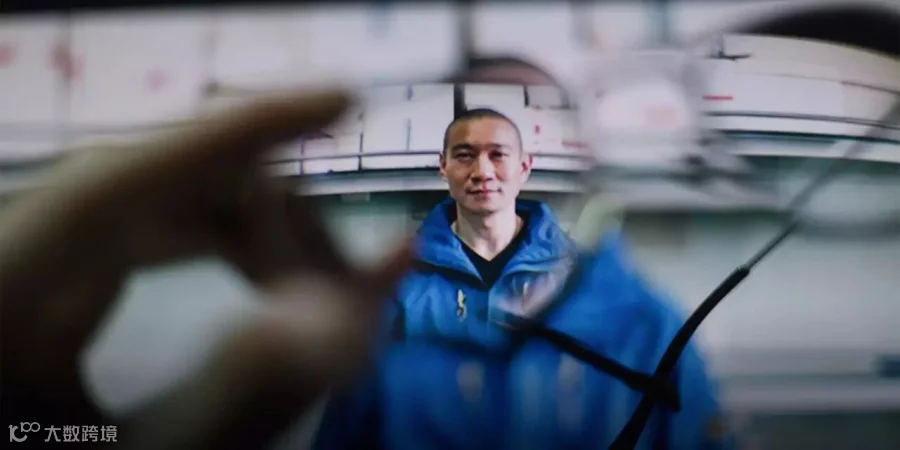
Han Chunyu, an associate professor at Hebei University of Science and Technology (HEBUST), and his colleagues have retracted their controversial thesis on new tech of genome editing on Thursday from Nature Biotechnology, an international journal under the Nature brand of publications.
The withdrawal is because of “the continued inability of the research community to replicate the key results” using the same protocol, according to a statement by Han and his team, published Thursday in the journal. While the team is retracting the thesis to “maintain the integrity of the scientific record,” they said they would continue to investigate in the reasons why the findings could not be reproduced and provide a solid methodology for doing so.
In an editorial from Nature Biotechnology published on the same day sees the retraction as “the best course of action,” and a “testament” to the time and efforts made by scientists around the world to clarify the claimed results by the team.
Han published a paper in Nature Biotechnology last May on human genome editing using an enzyme called NgAgo, a technology potentially applicable in the cure for cancer. While claiming NgAgo could locate and cut the gene sequences more accurately than CRISPR-Cas9, a dominant technology in the field of genome editing, the findings were met with excitement by scientists both in China and abroad.
But this was soon replaced by skepticism, as dozens of peers were not able to reproduce the same results. Last November, 20 scientists from the United States and China jointly published a letter in “Protein & Cell,” a Chinese journal of biological science, announcing zero cases of success in their experiment with NgAgo genome editing. They urged the original authors to clarify the method around the study and provide the details needed to replicate the results.
Two weeks later, Nature Biotechnology followed up by publishing research results from three research groups in Germany, U.S., and South Korea, who had also tried to reproduce Han’s work but who had failed to observe signs of gene mutation induced by NgAgo. Together with the letter, the journal issued an “Editorial Expression of Concern,” a common step before a full retraction.
Han later submitted additional research data to Nature Biotechnology. In a January response to the Paper, Sixth Tone’s sister publication, the journal said it was exploring the newly available data and pending further action. In its Thursday editorial, it explained that Han and several independent groups had claimed to have reproduced the results successfully, but the data failed to satisfy the journal’s publication standards.
Han has received extensive attention from the scientific world and the media since publishing his research. He received multiple awards both for himself and for the university, including 224 million yuan ($33.3 million) from the Hebei provincial government for establishing a genome editing research center at HEBUST, and a promotion to the position of the vice president of Hebei’s Association for Science and Technology, a government sponsored science league.
Han remained largely silent despite repeated calls for clarification from fellow scientists and the media. In the rare case he did respond, such as in a most recent response on state-owned broadcaster China Central Television, he maintained that his research was replicable, and that an important reason for failure could be cell contamination. Sixth Tone could not reach Han for comment on Thursday morning.
This is not the first time that a Chinese scholar has retracted a thesis from an international journal. Earlier this year, 107 papers, most of which authored by Chinese academics, were retracted from Tumor Biology, an international scientific journal, because the peer reviews of the articles were discovered to be fake.
“Publication of the NgAgo paper was not the end of the scientific process, it was the start,” stated Nature Biotechnology in its latest editorial. While acknowledging the time-consuming yet unrewarded work of scientists in replication studies, it stated that in the case of the research by Han and his colleagues, “the time has come and the data has spoken.”
(Header image: A portrait of Han Chunyu from a website is seen on a screen in Shanghai, Aug. 2, 2017. Wu Huiyuan/Sixth Tone)
You may also want to read:
Chinese Scientists Reprimanded by Academic Journal
Code and Capital: Genetic Testing in China
Journal Retracts Dozens of Papers by Chinese Scientists
Want to get Sixth Tone stories delivered to your email?

Subscribe to our newsletter for a weekly roundup of the latest news and trending topics from China.
Sign up here: http://ow.ly/zgv530cPeV4 (Copy and paste the URL into your browser)