Concerns grow as medical staff receive kickbacks from pushing tests for rare genetic disorders in days after birth.
By Ni Dandan
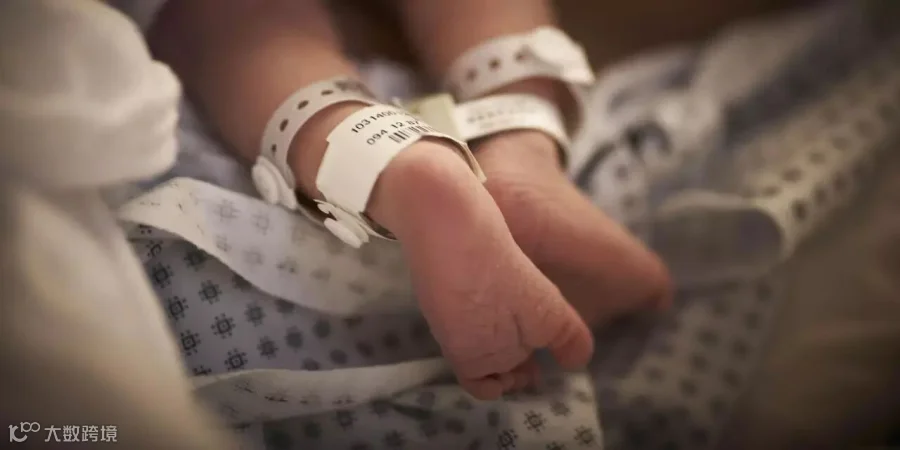
Profit-hungry health care businesses are eying the parents of newborns in China, according to a recent report.
Today, state news agency Xinhua revealed that public hospitals in Beijing municipality and Liaoning province in the north and northeast of China, respectively, are charging families nearly 1,000 yuan ($150) for a test that rules out genetic disorders.
All newly born children in China are legally entitled to have a heel prick test within 72 hours after birth in order to check for the presence of hereditary conditions such as phenylketonuria, a metabolic disorder, and congenital hypothyroidism, a hormonal deficiency.
In Shanghai and provinces such as Zhejiang and Guangdong, local governments also require that clinicians check for other disorders, such as glucose-6-phosphate dehydrogenase deficiency, which affects red blood cell health, and congenital adrenal hyperplasia, which affects the development of sex characteristics.
Some hospitals now allow third-party providers to offer families an additional test, costing around 880 yuan, that will identify additional markers of potential genetic health issues. In many cases, hospital staff receive a financial reward for each test sold.
In an online forum called “Babytree,” new and expectant mothers raised concerns about the additional fee and about the necessity of having those extra items tested.
Su Yu, a mother from Shenyang, Liaoning province, said that when her son was born underweight, the hospital required them to pay for the 48 conditions tested for in a heel prick test. When the family refused to pay the fee of 880 yuan for the extra examinations, the mother said the hospital warned her that her family would be responsible for any possible consequences and had her sign a paper of acknowledging this.
Similar concerns have been voiced by parents from Beijing, Liaoning, Heilongjiang, Hebei, and Sichuan provinces. While many said they were charged an extra 880 yuan, others quoted figures across a wide range, from 400 yuan to more than 1,000 yuan.
Love & Health is a Beijing-based agency that bridges the gap between hospitals and third-party testers. In July one of its shareholders, Yu Wenhui, told Southern Weekly, a Guangzhou-based newspaper, that the company pays department chiefs and head nurses 10 percent of each deal in rebates, while regular nurses get 10 yuan for each test.
According to the report, between 70 and 90 percent of families in the more than 10 hospitals that cooperate with Love & Health paid for testing services.
A Jiangsu-based testing institute, PerkinElmer, also offers an additional test for newborns. The Xinhua report said the company worked with 30 hospitals in Liaoning and at least 15 in Beijing.
Lu Xiuxiang, regional manager of the PerkinElmer institute in Shanghai, told Sixth Tone that the additional 48 items in his company’s test all pertain to inherited metabolic disorders. “The occurrence rates of these diseases are extremely low,” Lu said. “But whether it’s necessary to pay extra for the test is entirely up to the families. In Shanghai, where information transparency is so high, you can never force people to buy a service they don’t want.”
Lu said the institute he works for has cooperation agreements with a couple of hospitals in Shanghai, though he did not specify which. Lu added that the pricing of the test is strictly regulated by local authorities, costing between 200 and 300 yuan.
According to He Xiyu, an expert on genetic diseases at Bayi Children’s Hospital in Beijing, there are 10 major inherited metabolic disorders in China, with the incidence of other inherited metabolic disorders being comparatively low. He was quoted by Xinhua as saying that the tests are mostly carried out by third-party institutes, and that the pricing is generally discretionary.
Additional reporting by Fu Danni.
(Header image: Thomas Collins/ Photographer’s Choice/VCG)