
With both an online forum and a physical office, Ziguzhe seeks to build a community for those who work remotely.
By Su Ya
I worked in architectural design for almost ten years before launching my own business. The first time I realized that it may be time to change careers was actually at an interview. Although I wasn’t offered the job, the interviewer told me on my way out that I was more suitable to be a CEO than an employee.
It is the case with many creative industries — design, editing, translating — that employees often don’t need to engage closely with others. They can contract themselves out and work remotely. They have flexible schedules and use the internet to advertise their services. They are self-employed workers.
Having worked in an industry where we regularly contracted out small jobs to people like this, I decided to try and build a community for them. In 2013, I left my architecture firm and founded a new company, called Ziguzhe.
Since 2015, we have rented a shared workspace where people can come and rent a desk. Our focus is on building a strong community between these individuals, and we supply them with job postings and networking opportunities. We rent out about 100 desks, and the space also includes important office amenities, like printers, photocopiers, and, of course, coffee.
However, as opposed to other companies that rent out shared office spaces, our physical location isn’t critical to our company mission. Our focus is on building a community of self-employed people, and my company also runs an online forum where our members can meet and discuss. Our online members account for more than 10 times the number of people who rent office space from us.
Our internet community is made up of a number of diverse groups of people hailing from every corner of the workforce. Here, although members cannot choose their “neighbors” like they can in our physical offices, they are offered a chance to interact with many more people than they could in our offline space. These interactions sometimes come with job opportunities, and our website has blossomed into an online marketplace with its own points-system currency that members can redeem in real life for a desk or coffee at our physical offices. We also have a section where the self-employed workers can submit articles, typically about their craft, and earn additional points.
As China continues to come online, more and more people are becoming self-employed. They are launching internet ventures that provide everything from artisanal wines to natural medicine. New companies are popping up every day and people are turning away from large corporations and starting their own small businesses in an increasingly competitive job market.
We’re here to stay. Compared to other major cities in China, Shanghai is pretty bourgeois. Consumers have a large disposable income and young entrepreneurs are educated, well-trained, and internet savvy. People consider Shanghai the city of the future, and I’m sure our self-employed community will only continue to grow.
We are in the process of upgrading our company. Our shared office has filled up and we now plan on opening five new workspaces. Someday we would like to bring in specialists who will be able to help our self-employed workers apply for things like tax deductions or register new companies. I foresee a lot of expansion ahead.
A Chinese version of this article first appeared in Sixth Tone’s sister publication, The Paper.
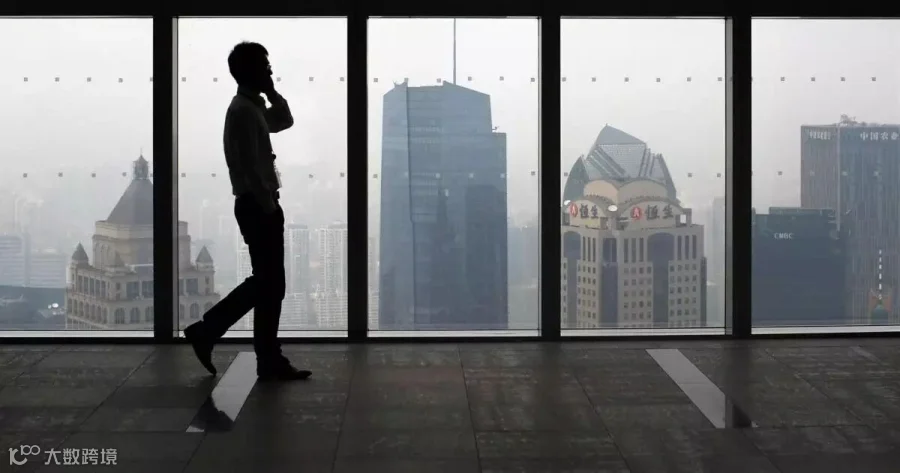
(A man talks on a cell phone with a view of Shanghai’s skyline in the background, September 4, 2014. Carlos Barria/Reuters)
Author Bio:
 Su Ya is the CEO of Ziguzhe, an online and offline workspace for people who are self-employed.