
Ancient Chinese art and antiques, displaced for decades in Japan, fetch record prices at auction.
By Li Haowen
NEW YORK — The blizzard failed to dampen the enthusiasm of bidders who packed into James Hall last week for a highly anticipated auction of treasured Chinese art from the Fujita Museum in Osaka, Japan.
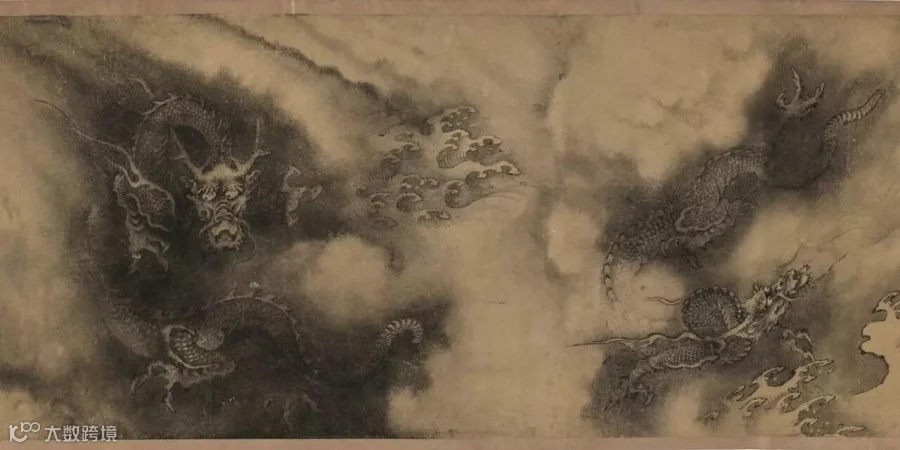
Art buyers and their representatives filled the largest auction hall at Christie’s New York on March 15, even spilling into the aisles. They competed eagerly to acquire celebrated treasures such as the “Six Dragons” scroll, a 13th-century parchment that was once named by the Qianlong Emperor as one of the most important paintings in his collection. These artworks had drifted overseas during the late Qing Dynasty and the early days of the Republic of China, so many were watching closely to see if the relics would wind up being repatriated.
The night reflected the optimistic mood of the market for ancient Chinese art, with bidders from all over the world — particularly from the Chinese mainland, Hong Kong, and Taiwan — showing strong interest. By the end of the evening, the auction had realized more than $262 million, a record for any Asian art sale in Christie’s 250-year history, and several of the most prized works — six scrolls, including “Six Dragons,” and four rare ritual bronze vessels — would return to China.
In recent years, more and more Chinese buyers have become active in major overseas auctions. They are willing to place sky-high bids for Chinese artworks and antiques, many of which were snatched out of the country during wartime. Some are motivated not only by the positive outlook of the art market, but also by a sense of patriotism in bringing national treasures back to their homeland.
Christie’s global president, Jussi Pylkkänen, revealed that bidders demonstrated fervent interest in the items, with phone bids matching the intensity of those from the floor. The three pieces of Longquan celadon that opened the auction swiftly exceeded the highest estimated prices given beforehand. Shang Dynasty bronze vessels, too, sold for many times their estimated price.
Though Christie’s New York kept their bidders’ identities confidential, a number of the more important items were sold to representatives from mainland China, Hong Kong, and Taiwan, suggesting that the bidders shared such provenance. The buyers are part of a rising tide that suggests a slow curtain call for Western collectors, as a growing number of art pieces that were previously displaced due to war, colonization, or political unrest have been returning to their places of origin.
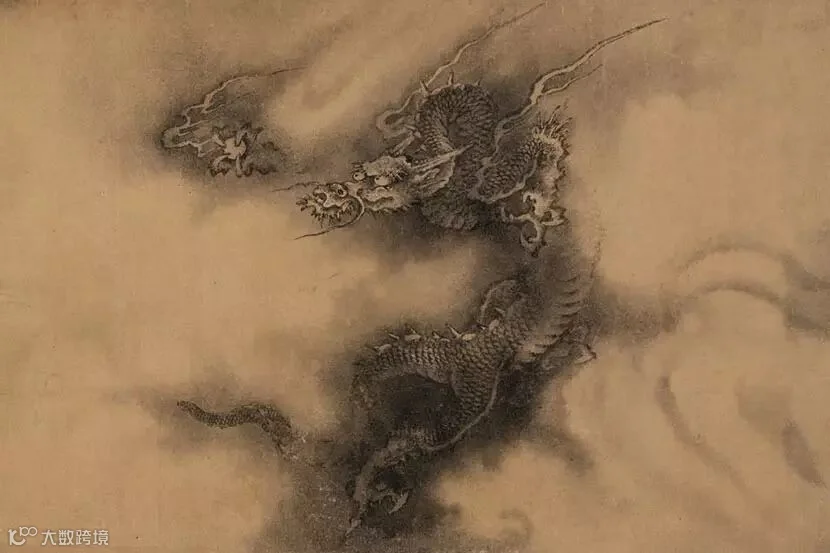 A partial view of ‘Six Dragons,’ painted in the 13th century by Chen Rong. Courtesy of Christie's
The most closely watched item of the night was “Six Dragons,” a scroll by Southern Song Dynasty painter Chen Rong which bears ownership seals from such luminaries as the Emperor Qianlong of the Qing Dynasty. The emperor included the scroll, already half a millennium old during his 18th-century reign, along with five others offered at the auction, in his imperial catalogue, the “Shiqu Baoji.”
Like so many Chinese relics, the six Shiqu Baoji scrolls were displaced for many years due to the country’s misfortunes or political circumstances. The six scrolls originated from the Prince Chun Mansion in Beijing, where they were sold by the head of the mansion, Zhang Binfang, to the Japan Chamber of Commerce and Industry on Feb. 22, 1915. After that, the Fujita family in Osaka purchased them for their collection, which later became the Fujita Museum.
“Six Dragons” had been estimated to sell between $1.2 million and $1.8 million, but industry experts were confident that the scroll could reach more than 10 times that price. The atmosphere in the auction hall only reaffirmed their ambitious appraisals: Soon after bidding started, three calls raised its price considerably, to $10 million, before a phone bidder pushed the price to $15 million.
The bidding war gradually came down to three parties: a phone bidder represented by Rebecca Wei, president of Christie’s Asia; a phone bidder represented by Chi Fan Tsang, head of Chinese artwork and ceramics at Christie’s Hong Kong; and an on-site Chinese bidder. With the entire hall closely following the action, the bid climbed in steep increments: half a million, then a million more.
After 10 minutes of a tight contest for “Six Dragons,” Wei’s bidder backed out, only to be replaced by another bidder from the floor. Bidding continued for another 20 minutes until a Chinese bidder sitting in the front row bid $43.5 million — a hammer price that becomes $48.9 million with a buyer’s premium. The gavel fell, and the hall erupted into applause.
Translator: Katherine Tse; editors: Qian Jinghua and Yin Yijun.
A Chinese version of this article first appeared in Sixth Tone’s sister publication, The Paper.
(Header image: A partial view of ‘Six Dragons,’ painted in the 13th century by Chen Rong. Courtesy of Christie's)
You may also like:
The Amateur Tomb Raiders Pilfering China's Artifacts
The Rags-to-Riches Artist Who Doesn't Want Riches
Q&A With Artist Gu Wenda on Making a Mark With Algae