A decade after major food safety scandal, milk production has moved from Mongolian herdsmen to megafarms.
By Lin Qiqing & Colum Murphy
INNER MONGOLIA, North China — Milk has ruined Cheng Guotian’s life. Once a proud herdsman, the tall, scrawny 51-year-old has had to bid the grasslands goodbye and now lives in a sterile city, where he scrapes together a meager income as a construction worker.
Fifteen years back, a government program relocated Cheng and his family from the prairie where they herded sheep, cows, and horses to a new housing development some 30 kilometers away. In the move, Cheng had to give up his freedom on the grasslands and adopt a new career: dairy farming.
The relocations in Inner Mongolia Autonomous Region were part of a government push to alleviate poverty and ease the devastating sandstorms hitting Beijing around that time — exacerbated by the dry, dusty conditions caused by grassland overgrazing. An estimated 100,000 herders in the region were compelled to relocate under the ecological migration program.
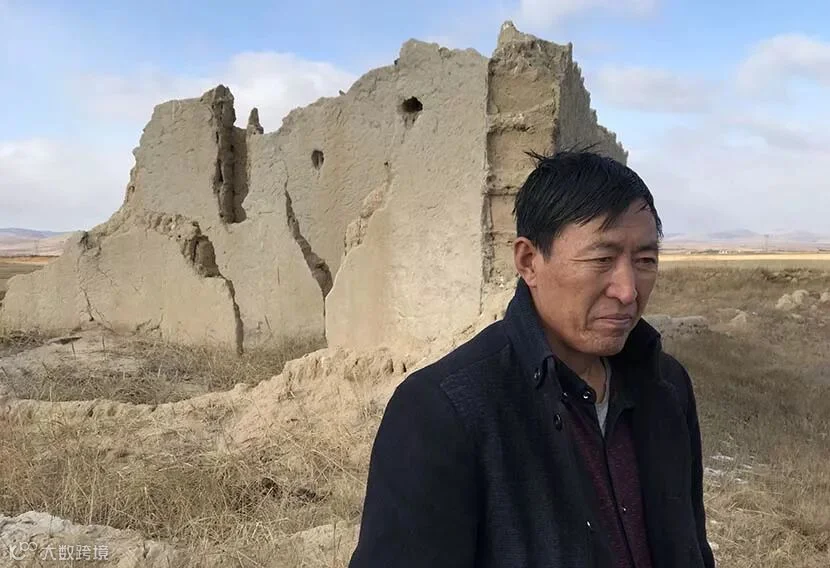 Cheng Guotian stands amid the ruins of his former prairie home, which was demolished in 2002 when his village was relocated as part of ecological migration program, Zhenglan Banner, Inner Mongolia Autonomous Region, Nov. 14, 2017. Colum Murphy/Sixth Tone
But the migration yielded another outcome: It helped boost China’s fledgling dairy industry. Data from the United States Department of Agriculture shows that in 2002, China produced 13 million tons of milk; last year, that figure had risen to over 36 million tons, ranking China third in the world for milk production after the U.S. and India.
Around 150 families from Cheng’s original village were relocated to so-called cow villages, but for many, their time there was short-lived. The 2008 tainted milk scandal — in which milk products contaminated with the industrial chemical melamine were linked to the deaths of at least six infants — was traced back to small dairy farmers, who bore the brunt of the blame. The scare triggered changes in the industry; as work dried up, some small producers were forced out of dairy farming and into the city, where they found little use for their agricultural skills.
The shift to large dairy farms following the scandal was seen as a positive step for food safety, but the dairy industry’s transformation has not been smooth — nor is it complete. The sector is still grappling with challenges on several fronts, including the high cost of producing milk in China, looming competition from imports, and wary consumers, some of whom have yet to be convinced that Chinese milk is safe.
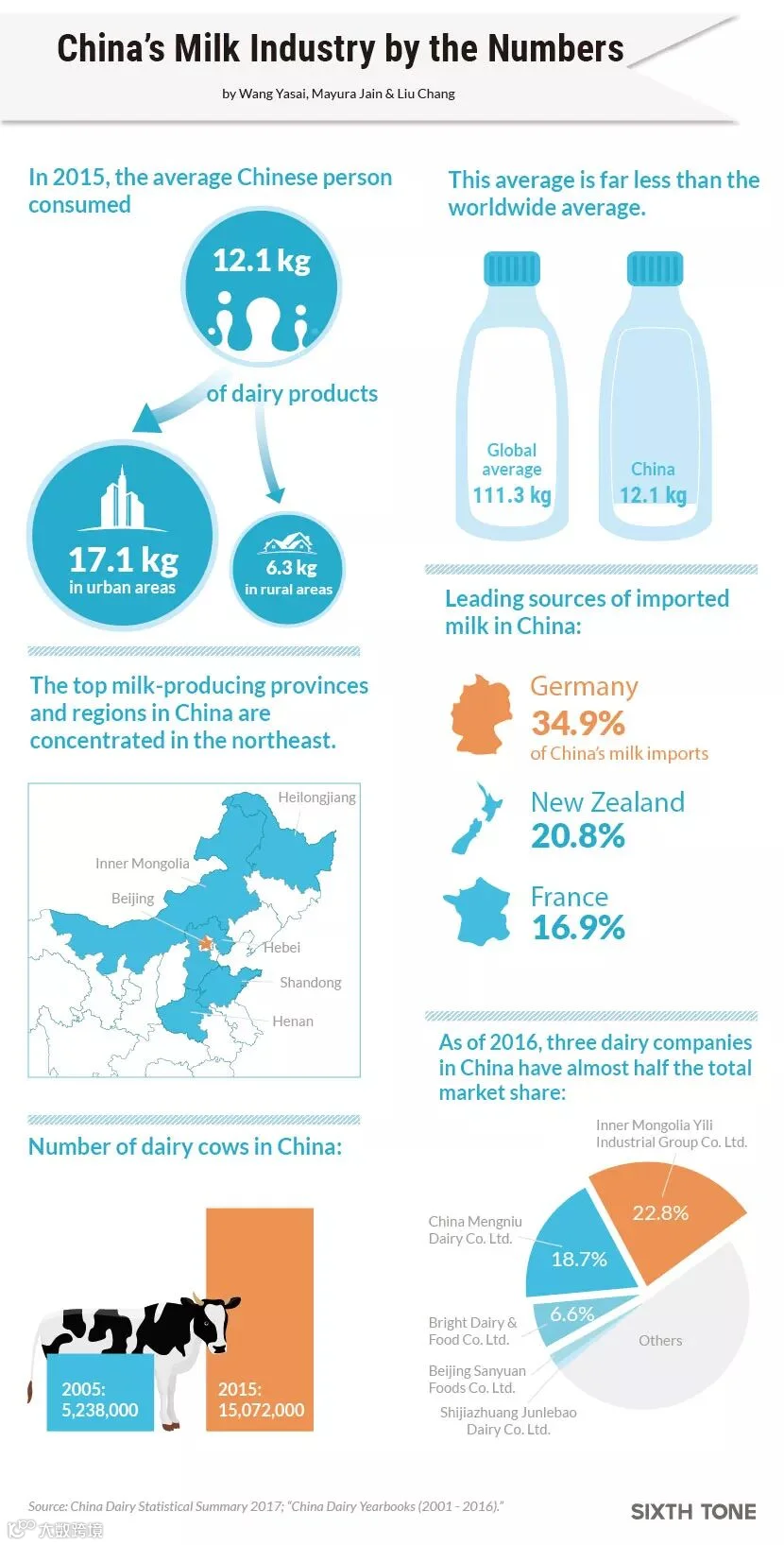
Cheng stuck it out until 2013, when China Mengniu Dairy Co. Ltd. — one of the country’s largest dairy brands — stopped purchasing milk from individual producers in the region. Cheng sold his eight cows and followed others who had long since moved to a nearby city.
While visiting his original prairie land on a bitterly cold morning in November, Cheng reminisces about the past: the vast open spaces — his family’s nearest neighbor lived 1 kilometer away — and relaxing pace of life, with nights spent dining on freshly slaughtered sheep and swilling alcohol. His ability to kill a sheep by merely severing a main artery with his finger is of little use to him these days. “No matter how many years have passed,” Cheng says, surveying the dilapidated remains, “this is my hometown.”
China’s Milk Dream
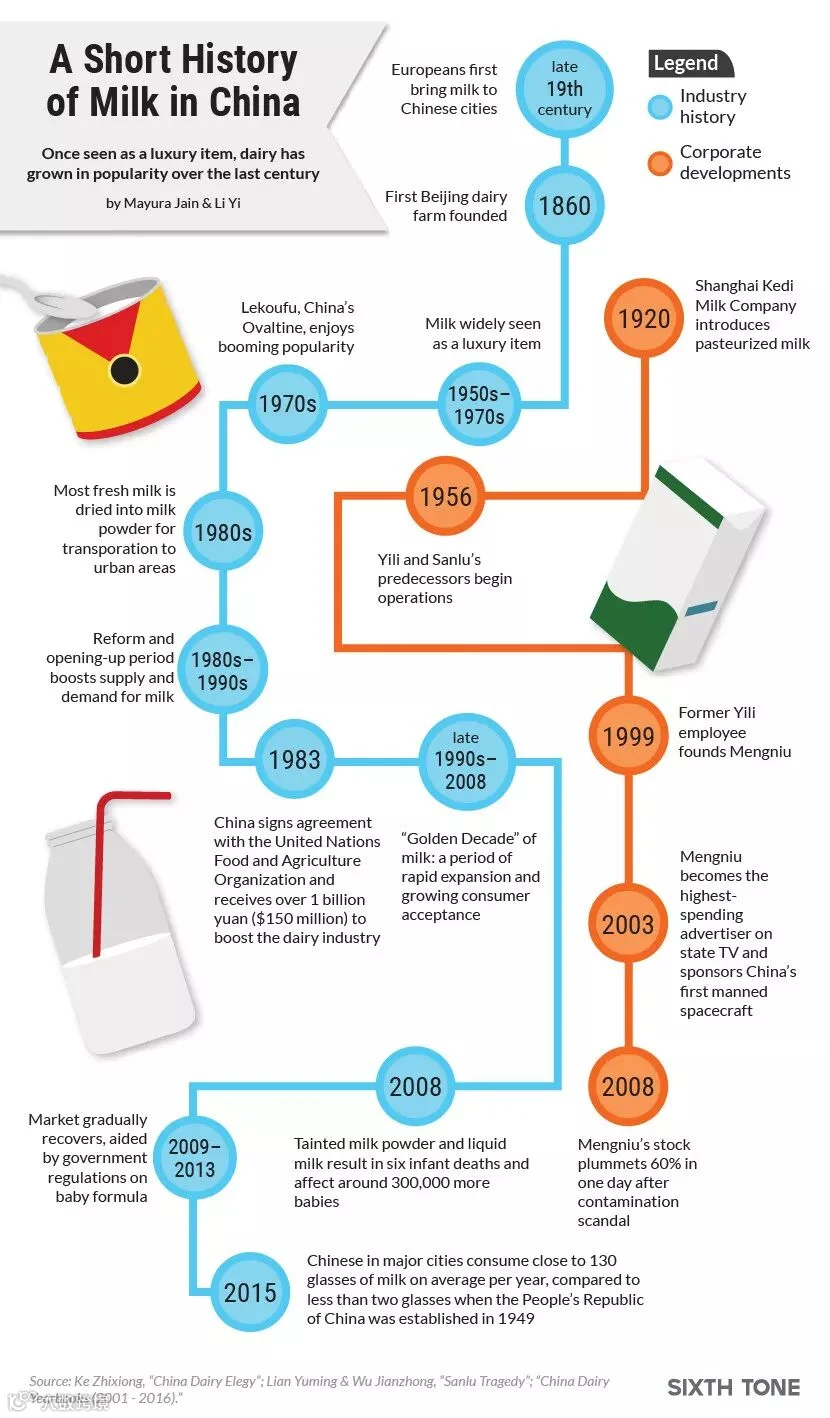
Westerners introduced the habit of drinking milk to urban China around the end of the 19th century, but by the time the People’s Republic of China was established in 1949, the average Chinese person drank less than two glasses of milk annually. It wasn’t until the reform and opening-up period beginning in 1978 that supply and demand for the beverage got a boost. What followed was the so-called golden decade of milk in China: Beginning in the late 1990s, the country saw rapid expansion of the dairy industry and widening acceptance of dairy products among Chinese consumers.
Like many other economies of its size, China desired — and continues to desire — self-sufficiency in producing staple foods. In 2006, former Premier Wen Jiabao famously declared, “I have a dream to provide every Chinese, especially children, sufficient milk each day.” With expansive and underutilized grasslands in places like Inner Mongolia, milk seemed a good industry to focus on, and China worked to grow its dairy sector. But the nation didn’t want to replicate the dairy farming model adopted by other populous developing countries such as India, where policymakers insisted that small farms could have positive ripple effects on society. Instead, China wanted to become a superpower in milk production, using expansive American-style farms with mechanized milking processes.
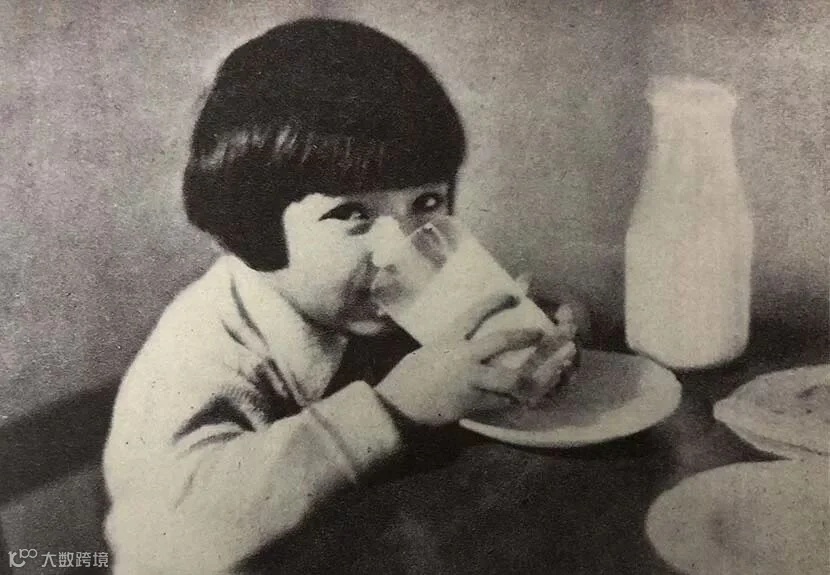 A photo published in popular Shanghai lifestyle magazine The Young Companion (Issue No. 75, 1933) shows a child drinking milk.
But in 2008, crisis hit, giving Chinese milk producers a rude awakening and marking a turning point in the industry. In December 2007, consumers began reporting that their babies had fallen ill after drinking products from Shijiazhuang Sanlu Group Co. Ltd. — the biggest baby formula producer at the time. The following year, media exposed the scandal, and a subsequent investigation found that 41 of the 372 milk collecting stations — places where small dairy farmers pooled their milk to sell to dairy companies — that supplied Sanlu had added melamine to their product.
The nitrogen-rich industrial chemical could trick testers into thinking the milk contained higher protein levels — an important criterion among large buyers — and some collecting stations had been adding it to their milk since 2005. The melamine scandal was “the most severe systemic national food safety scandal since the founding of this country,” as Dairy Association of China Chairman Gao Hongbin said in a speech in November this year.
In total, around 300,000 babies were treated for kidney problems after drinking baby formula from Sanlu and other contaminated brands. Over 52,000 were hospitalized, and the crisis was linked to the deaths of at least six infants. Of the products tested from 109 milk powder companies, 22 companies’ goods had been contaminated with melamine, the investigation found.
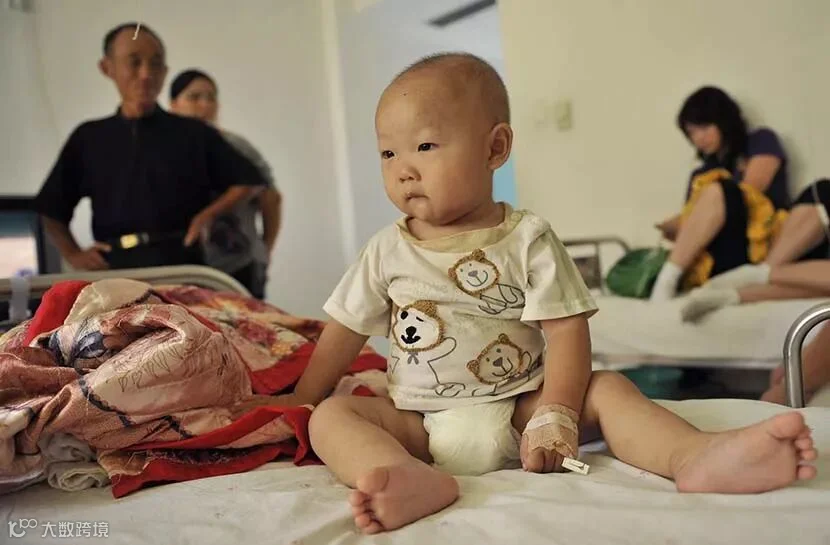 An 8-month-old boy is hospitalized with urinary problems after drinking baby formula from Sanlu in Wuhan, Hubei province, Sept. 17, 2008. Hai Lang/VCG
The fallout was so huge that it threatened to take out one of China’s largest dairy companies. In September 2008, tests found that Mengniu’s milk powder and liquid milk contained melamine, prompting the listed company’s stock price to plummet 60 percent in one day. In 2009, a state-owned food processing company saved the dairy producer, investing 6.1 billion Hong Kong dollars ($780 million) to become its largest shareholder. Mengniu — which declined to comment for this story — had narrowly avoided total ruin.
A wave of industry consolidation followed the scandal. Sanlu was consumed by dairy company Beijing Sanyuan Foods Co. Ltd. Between 2008 and 2016, the number of dairy companies in China decreased by almost a quarter, according to data from the Dairy Association of China.
During the same period, larger farms began to dominate. While nine years ago, less than 20 percent of farms had over 100 cows, that number has now reached 53 percent, the Dairy Association’s Gao said. Chinese dairy farms with more than 1,000 cows made up just under a quarter of all dairy farms in 2015, according to the 2017 China Dairy Statistical Summary — and some of the nation’s largest farms have up to 40,000 cows. The scandal also prompted a flood of imported milk brands, with foreign companies hoping to win over consumers who no longer trusted domestic products.
For the Chinese government, the scandal constituted a major loss of face, as it revealed that the country was unable to provide safe nourishment for its own babies. Regulators moved swiftly to introduce oversight measures, some of which put pressure on smaller players. Immediately following the scandal, China set a safety limit for melamine — low levels of the chemical are sometimes found in milk due to the plastic packaging. In June 2009, China rolled out its first-ever food safety law, which made adding unauthorized chemicals to food illegal. And in 2013, authorities announced regulations requiring baby formula producers to use milk sources that they controlled. Massive dairy farms, which were easier to regulate, became the most desirable model.
The government’s efforts to develop the milk industry — first relocating herdsmen to cow villages, and later promoting consolidation among dairy companies — have divided experts. Although Lei Yongjun, chairman of Beijing-based consulting firm Proper Tao and a longtime dairy industry watcher, backs both moves, he thinks the government should have offered greater aid to herders when the market shifted against them. He points out that one benefit of big farms is that they are more likely to receive the support of local governments and investors. “You have to have capital to raise cows,” Lei says. “If we didn’t have the 10,000-cow farms, we wouldn’t be able to support giant companies like Mengniu and Yili.”
But Ian Lahiffe, a former agribusiness consultant and current China country head for Allflex — a manufacturer of monitoring equipment for dairy farms — says that while megafarms may make sense if they are near big cities like Shanghai, they should generally be discouraged. “The ‘bigger is better’ race to grow comes with huge growing pains,” he says, citing pollution and difficulties in controlling the spread of disease as examples.
Last Farmer Standing
At 5:30 a.m. on a snowy November morning in the Inner Mongolian village of Duhumu, 58-year-old Liang Yu, who is Han Chinese, and his ethnic Mongolian wife Naranchimeg rise from their heated brick bed to milk their cows.
It’s pitch-black as they shuffle to their cowshed, just meters from their small redbrick bungalow. Liang leads the cows one by one into the cowshed — which is lit by a single naked bulb — to be milked. Naranchimeg, whose chubby, tanned face and wide smile betray her 56 years, carefully measures out the animals’ morning feed and dishes it into a dented metal bucket.
To read the full article, click 'Read More' at the bottom of the screen to go to the original article.
Contributions: Chen Na, Qian Zhecheng, and Cai Yiwen; editor: Julia Hollingsworth.
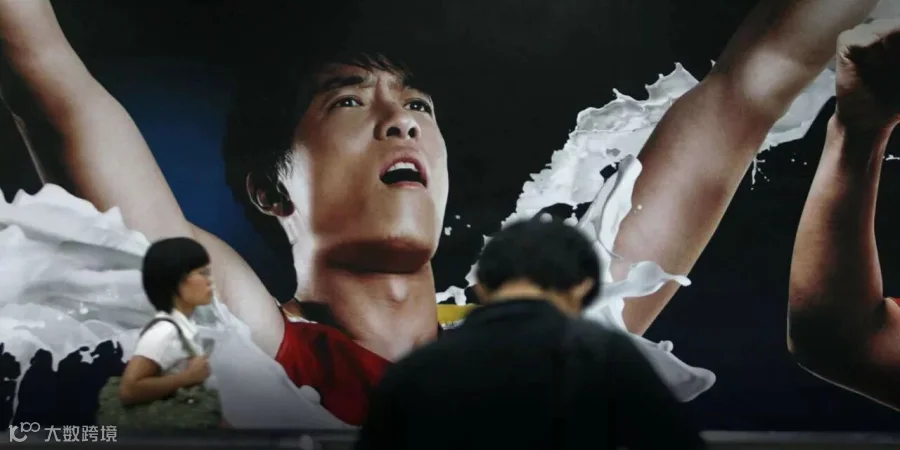
(Header image: A 2008 ad for Yili features Liu Xiang, China’s first Olympic gold medalist in men’s track and field. Yili used Olympic athletes in promotional material during the Beijing Olympics. IC)
You may also want to read:
Father of Tainted Milk Victim Found Innocent After Years in Jail
CCTV Says Foreign Milk Powder Doesn't Meet Chinese Standards
Why China's Clean Eating Craze Is Harmful to Public Health
Want to get Sixth Tone stories delivered to your email?
Subscribe to our newsletter for a weekly roundup of the latest news and trending topics from China.
Sign up here: http://ow.ly/zgv530cPeV4 (Copy and paste the URL into your browser)