


On Tuesday, a senior official from the World Health Organization clarified that asymptomatic transmission rates aren’t yet known. A day earlier, she had caused a stir by suggesting that asymptomatic spread occurs but is “very rare.”
Some of the debate surrounding whether people who aren’t sick but test positive for the coronavirus can spread it to others comes down to how “asymptomatic infection” is defined, experts say.
“The term ‘asymptomatic patient’ is pretty vague,” Lu Hongzhou, a virologist at the Shanghai Public Health Clinical Center, told Sixth Tone. “Live virus, dead virus, and RNA fragments can all yield positive nucleic acid tests.”
According to Lu, there needs to be a distinction between people who are completely asymptomatic but test positive because of viral remnants and people who have recently caught the virus but not yet developed symptoms.
The 300 people who tested positive in Wuhan likely fall into the former category, he said.
“Shedding viral remnants can take two or three months,” Lu said. “The people tested positive, but it (the virus) didn’t invade cells in the cultures, which means it’s not live, and therefore not infectious.”
Only sporadic COVID-19 cases are being detected in China these days, although concerns of a resurgence persist. In a recent paper published in the British medical journal The Lancet, scientists from the Chinese Center for Disease Control and Prevention said the country must continue to take aggressive measures to prevent a rebound, “particularly in view of the high population susceptibility.”
Editor: David Paulk.
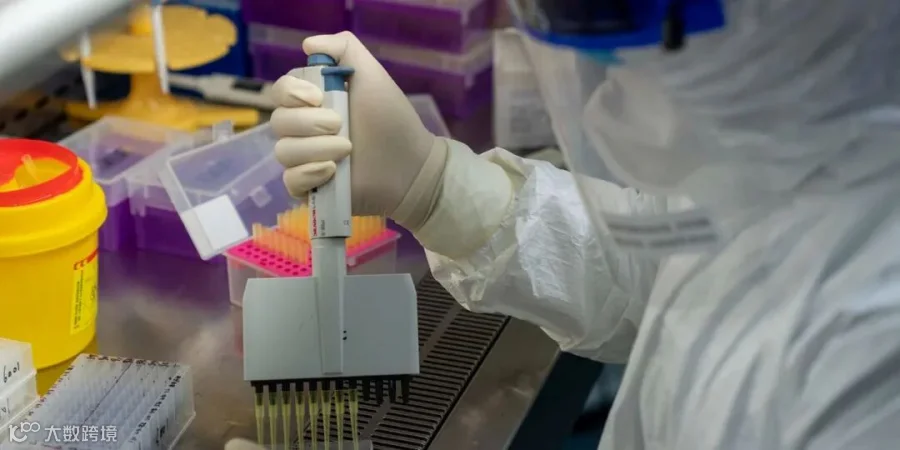
(Header image: A medical worker conducts a nucleic acid test for SARS-CoV-2 at a lab in Enshi, Hubei province, May 27, 2020. People Visual)
Download the new Sixth Tone app at the App Store or Google Play

APK file for Android:
https://image4.sixthtone.com/pkg/sixthtone.apk
(Copy URL and open in browser)