

Chinese understandings of movements like Black Lives Matter are often warped by a lack of access to — or engagement with — black authors and writings
On May 30, my American roommate told me about an anti-racism march taking place in downtown Philadelphia, adding that she was planning to go. But first, she wanted to know if I minded her attending a mass rally in the middle of a pandemic.
I didn’t. As far as I was concerned, the only question was whether I should go myself. As a Chinese international student living in the United States, the emergence of the Black Lives Matter movement in 2013 radically altered my understanding of American society, its history, and its justice system. So I wanted to support BLM this time any way I could. Still, I was a little worried about the health risks posed by taking part in a demonstration at this particular point in time.
Ultimately it was the fear that too few Chinese Americans would show up that settled it: I called up a Chinese friend, and we drove over to the site of the protest, where I was soon heartened by the sight of other Asian faces. The protests were mostly spontaneous, and we didn’t know what to do when the police tried to surround us; we left when they started firing smoke bombs.
It was the first time I’d seen police use violence to disperse a crowd, yet I got home to find Chinese-language news outlets and social media users describing the march as a “riot.”
I’m an active user of social media myself, but it wasn’t until the next day that I decided to open up publicly about what I’d seen and heard. There were risks involved: Although international students are legally allowed to participate in protests in the U.S., rumors that immigration officers might be in attendance can have a chilling effect in practice. Even voicing support online can potentially have consequences, as American border officials can now ask arrivals to list their social media accounts.
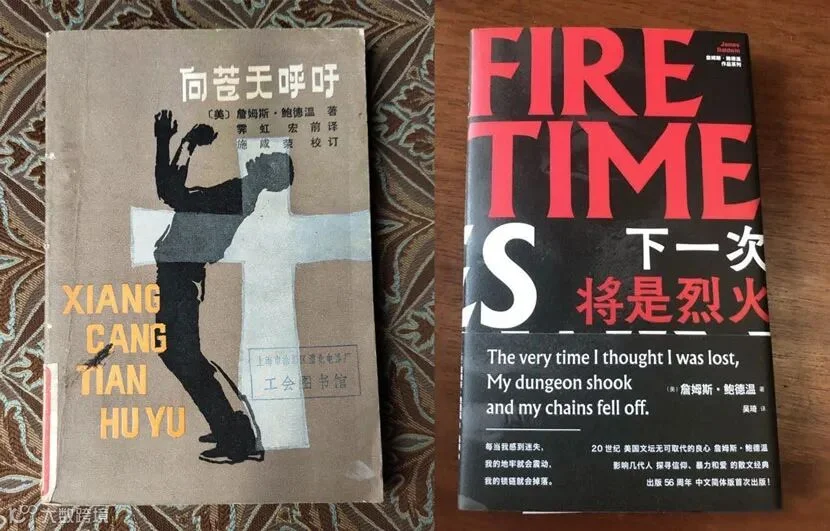
In addition to translating, I’ve invited some friends who study in the U.S. and the U.K. to join an online book club about the problems faced by African Americans. They are all Chinese-speaking women, many of whom, like me, study gender issues. Privately, some have told me that few of the Chinese communities they inhabit — whether their families, classmates, or social media WeChat groups — support the BLM protests. Our book club is the only place they can relax and talk freely without having to repeatedly explain their basic positions to strangers.
True, there’s a risk that this kind of get-together will become an echo chamber. But for me, an echo chamber is not necessarily a bad thing when members are otherwise isolated politically. It’s a place where we can take a breather, refine and advance our arguments, and prepare to convince others.
For the past two weeks, we’ve been reading works by Angela Davis and the academic and activist Keeanga-Yamahtta Taylor. Many members have already started to reconsider their attitudes toward the prison system. We’re taking notes in Chinese on what we’re reading, then collating and publishing them online so the broader Chinese-speaking community can access works that would otherwise only be available in English.
Simply translating existing materials from English into Chinese isn’t enough, since the ideology of anti-black racism developed in a different historical and social milieu. But I hope we can at least integrate more insights from African American authors into our thinking and link their critical analyses to our own lives and experiences. Only then can we develop a new, transnational language for anti-racism capable of bridging the gaps between our cultures.
Chris Ma is a Ph.D. student in feminist philosophy.
Translator: David Ball; editors: Cai Yineng and Kilian O’Donnell; portrait artist: Wang Zhenhao.
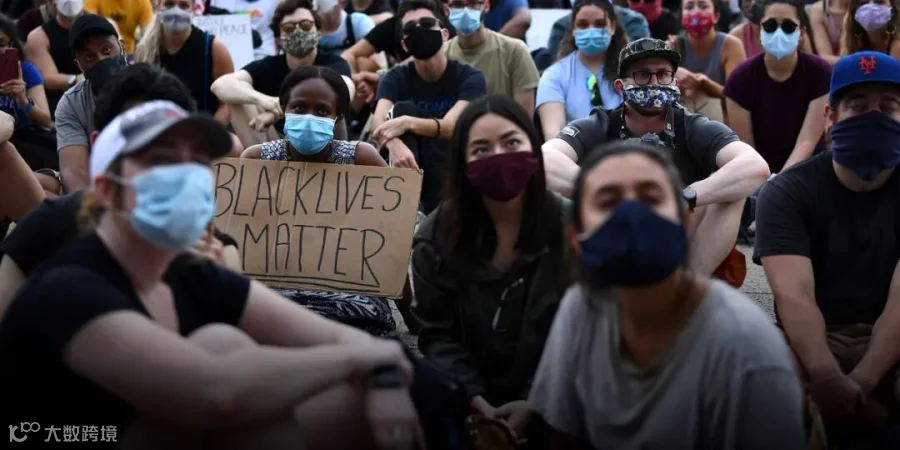
(Header image: People attend a demonstration at the Lincoln Memorial Reflecting Pool, protesting the death of George Floyd, in Washington D.C., June 4, 2020. Brendan Smialowski/AFP via Xinhua)
(Copy URL and open in browser)