


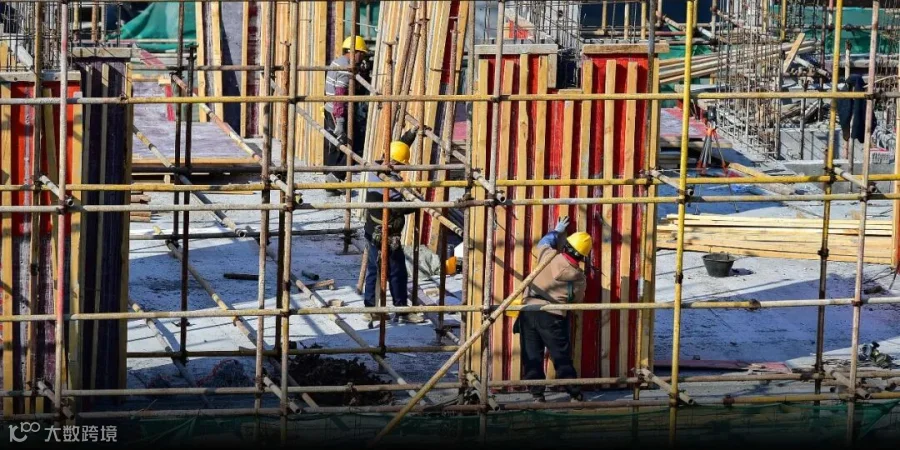
Faced with needing to raise investments for demolition and construction, cities like Shenzhen have begun exploring ways for homeowners to redesign aging structures themselves.
A more than 40-year-old residential building in the southern tech hub of Shenzhen has become the city’s first renovation project led by homeowners — rather than the government or real estate developers. The project comes as China explores new models for urban renewal amid an anemic property market.
Launched last Saturday, the construction project involved the building’s 10 landlords reaching an agreement on the amount each would contribute to the project’s funding, specific renovations, and the choice of construction and design companies.
Urban renovation in China is typically led by local governments or property developers, after obtaining approval from a majority of the affected homeowners. However, many projects stall due to disagreements between developers and residents or a disconnect between redevelopment plans and residents’ expectations.
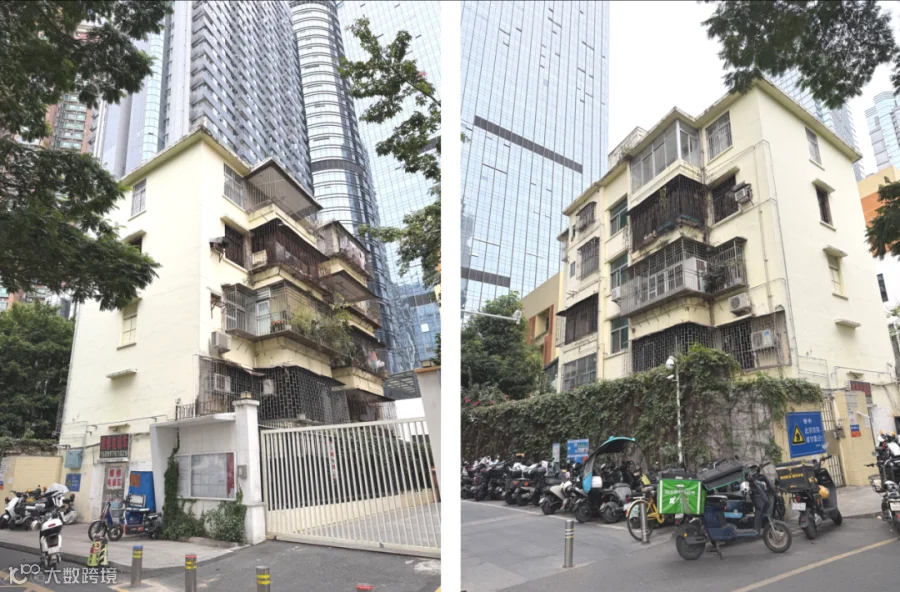
The residential complex in Shenzhen, built in 1979. From @中j建八局 on The Paper
To remedy this, many cities across China have since 2020 initiated resident-led renovation schemes in which homeowners collectively contribute funding and plan the reconstruction of their buildings. Such projects have so far been launched in cities including Beijing, Guangzhou, Hangzhou, and Changsha. China’s latest urban renewal five-year plan, released earlier this year, also pledged to explore “self-directed urban renovations.”
The Shenzhen building was constructed in 1979 as a dormitory for a public kindergarten, with a total floor area of around 870 square meters. Domestic media reported that it had long suffered from crumbling walls, aging electrical wiring, and repeated flooding during heavy rain.
While the total floor area will remain unchanged, the structure will be outfitted with elevators for the first time. The ground floor will also be elevated to help prevent flooding, and bathroom lighting and ventilation will also be upgraded.
Although the Shenzhen project’s total reconstruction cost has not been disclosed, domestic media reported that the resident-led renovation of a similar building with a total floor area of over 1,700 square meters in Guangzhou, capital of the southern Guangdong province, cost 8 million yuan (roughly $1.2 million), with each homeowner spending around 300,000 yuan.
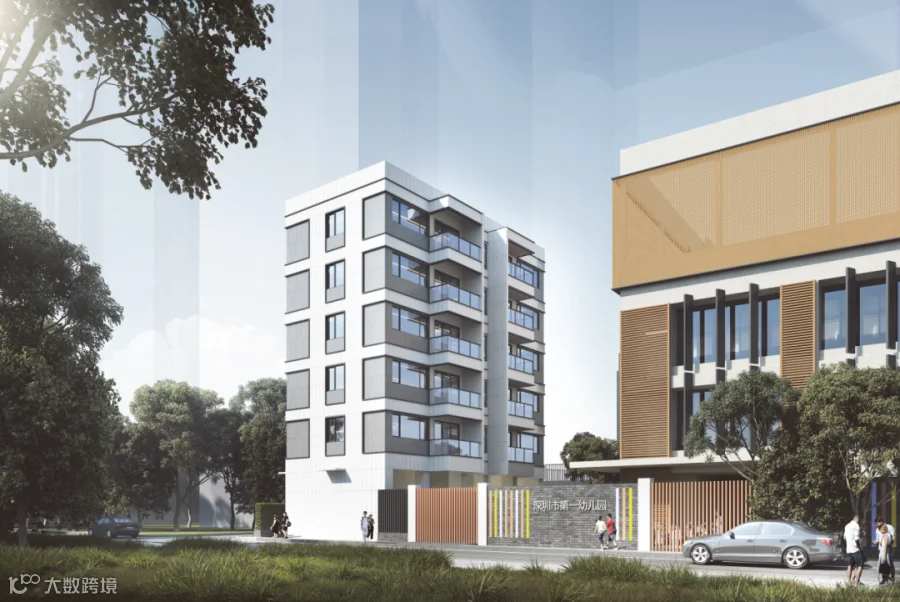
A schematic of the building post-reconstruction. From @中j建八局 on The Paper
Chen Jie, director of the Center for Housing and Urban-Rural Development at Shanghai Jiao Tong University, told domestic media that the traditional property development model — featuring “large-scale demolition and reconstruction, relocating residents from old low-rises, and building high-end high-rises for sale at high prices” — is no longer suitable for most aging residential compounds due to the current property market.
“Relying solely on government finances can at most support a small number of model projects involving severely unsafe buildings, but it cannot be expanded on a large scale,” he said.
Compared with traditional relocation-based redevelopment, Chen said resident-led renovation “not only better respects residents’ wishes and avoids conflicts over forced demolition but also lowers reconstruction costs, improves housing quality, and redefines the responsibilities between governments and residents.”
However, the model also faces challenges, particularly in larger residential communities where reaching consensus among homeowners is more difficult. Residents also often lack incentives to spend heavily on renovations.
Chen said that establishing a more effective “exit mechanism,” whereby homeowners who do not want to be involved in resident-led renovations can be incentivized to sell their property and swap for property elsewhere, is key to expanding resident-led renewal projects.
He suggested allowing investment firms to purchase homes from such residents at market rates, or offering them the choice to move to unsold properties. Therefore, remaining residents could receive larger living spaces without the need to increase a building’s overall floor area ratio.
Editor: Marianne Gunnarsson.
(Header image: VCG)
Download the new Sixth Tone app at the App Store or Google Play

APK file for Android:
https://image4.sixthtone.com/pkg/sixthtone.apk
(Copy URL and open in browser)