


In an unassuming room tucked away in the maze of underground laboratories beneath ShanghaiTech University’s School of Physical Science and Technology, Liu Zhi stares intently as an intricate atomic dance plays out across a pair of screens.
The screens are connected to a sophisticated instrument known as an environmental scanning electron microscope (ESEM). Roughly the size of a wardrobe, Liu can use it to photograph the atomic structure of almost any substance at temperatures as high as 1,000°C.
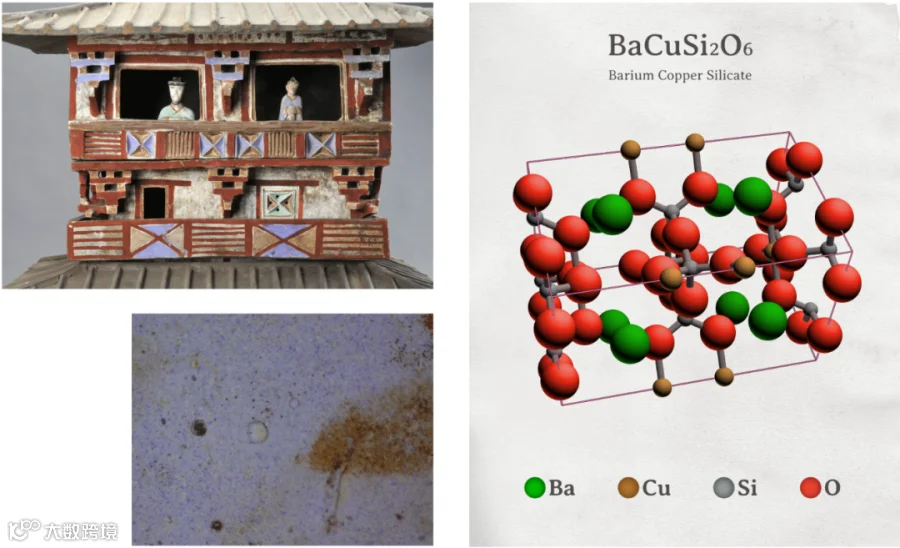
Typically, Liu — the director of the Center for Transformative Science at ShanghaiTech — has the microscope’s lens trained on sources of electromagnetic radiation. But today he’s using it to study something far more tangible: BaCuSi₂O₆, a barium copper silicate better known as Chinese purple.
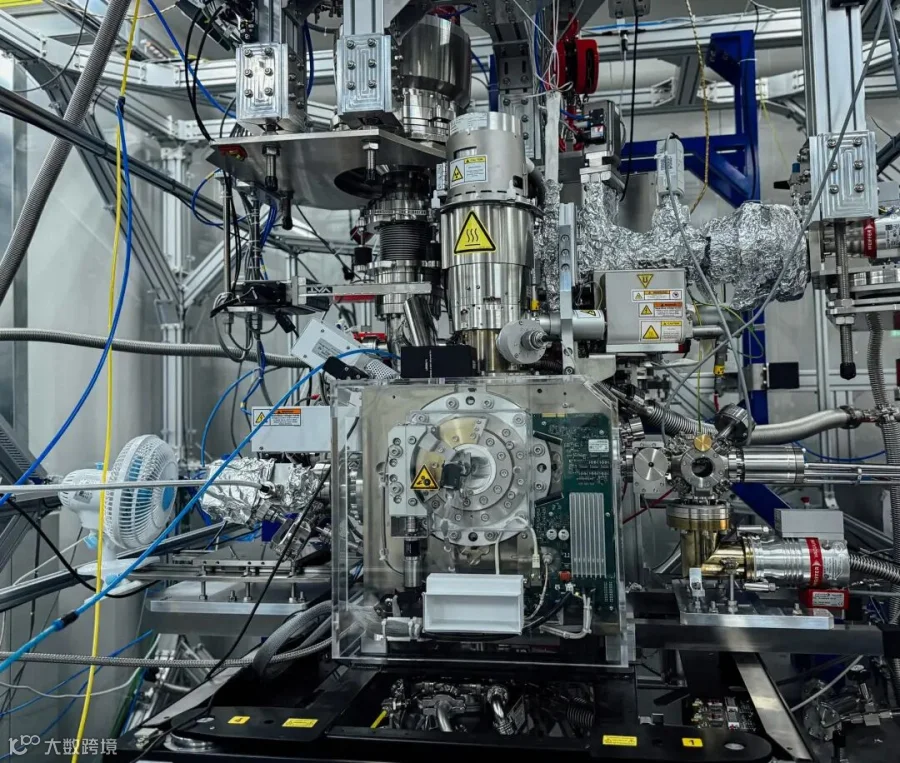
Details of the environmental scanning electron microscope (ESEM) at ShanghaiTech University, May 2025. Wu Huiyuan/Sixth Tone
Not that long ago, BaCuSi₂O₆ was believed to be a modern invention. In 1900, the French chemist Henry Louis Le Chatelier synthesized the compound and patented its formula in Berlin. The world then promptly forgot about it until the 1980s, when American scientists accidentally produced it while researching superconductors. The scientists were fascinated by the compound’s unique layered structure, which was later shown to exhibit quantum behaviors at low temperatures and under strong magnetic fields.
That made it all the more surprising when, in 1992, Elizabeth West Fitzhugh, an analytical and conservation scientist at the Freer Gallery of Art in Washington, D.C., identified BaCuSi₂O₆ in pigment samples from artifacts dating to China’s Han dynasty (202 BC–AD 220).
That discovery led some to start calling the pigment Han purple. But soon, researchers in the United States and Europe began identifying the compound on other Chinese artifacts from the period — including some predating the Han by hundreds of years. It was found on the Qin dynasty (221–206 BC) terra-cotta warriors, ceremonial rods from the Warring States era (475–221 BC), and beads from the Spring and Autumn Period (770–476 BC).
That suggests that Chinese purple was used in one form or another for nearly 1,000 years — and well before the founding of the Han dynasty. It then disappears from the archaeological record at the end of the Han, reemerging only with the advent of modern chemistry 1,700 years later.
That mysterious creation of Chinese purple has fascinated Chinese archaeologists and scientists for decades. How did ancient craftspeople manage to reliably synthesize such a complex compound?
For years, the answers lay out of reach. Even those scientists who were able to research Chinese purple had to do so overseas, says Ma Qinglin, one of the subject’s leading experts. Chinese labs simply didn’t have the requisite equipment.
Now, thanks to new scientific approaches like those being pioneered by Liu at ShanghaiTech, that is finally starting to change.
“At first, we could only follow the lead of overseas experts, without whom we wouldn’t have even been able to identify the substance,” Ma tells Sixth Tone. “Now, several (China-based) teams are tackling the problem from a range of angles and academic backgrounds, often using the most advanced instruments available.”
“Still, many of its mysteries remain unsolved,” Ma adds.
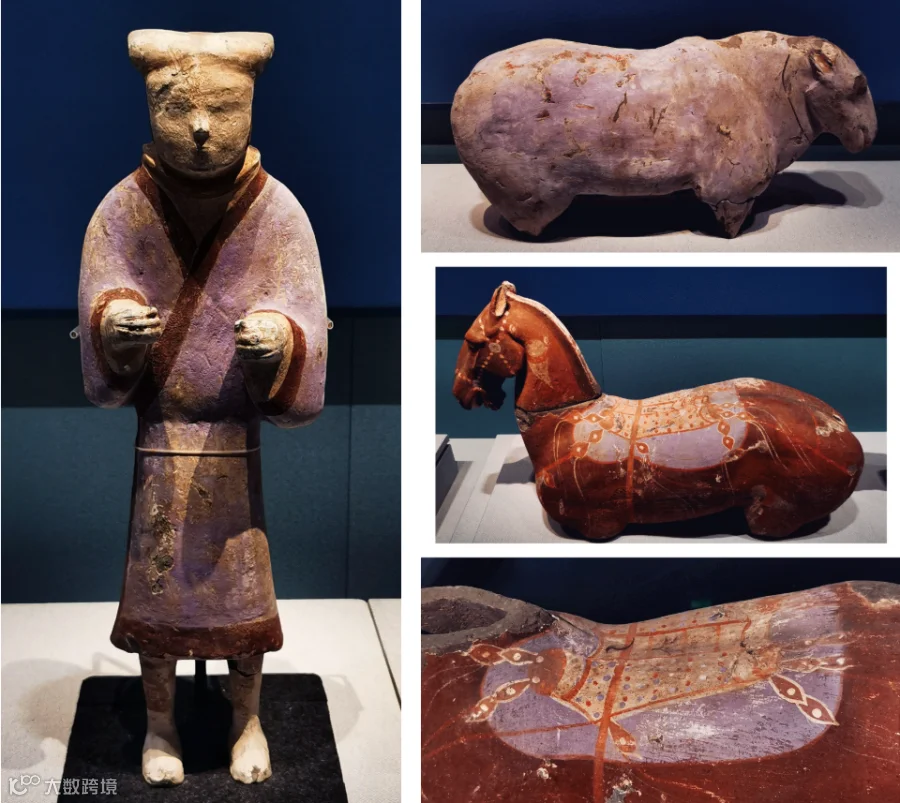
Pottery figurines with purple coloring excavated from a Han dynasty tomb in Qingzhou, Shandong province. Courtesy of Gao Zhen
Knowns and unknowns
The emergence and spread of Chinese purple was something of a historical outlier. According to Xiao Shimeng, a professor at the Hubei Institute of Fine Arts and author of a book on color in the pre-Qin dynasty period, purple hues were rarely used in China as late as the Spring and Autumn Period.
The problem wasn’t just technological, but also philosophical, Xiao says. Unlike in the West, where the color was associated with wealth and power, Chinese generally avoided the use of “mixed colors” like purple, which were seen as inferior to the five “pure” colors: black, white, red, yellow, and cyan.
This began to change during the Warring States period, which saw the rise of both new metallurgical technologies and yinyang wuxing cosmology. “In yinyang wuxing theory, red represents yang and fire, while black represents yin and water,” Xiao explains. “As a result, purple became imbued with mystical connotations. It signified the interaction of yin and yang, water and fire, and the origin of all things.”
A key indicator of purple’s elevated status in post-Warring States China is its association with the heavenly court. According to ancient beliefs, the central hub of the heavens — where the supreme deity Taiyi was believed to reside — was the Purple Palace.
“In the Han, it was believed that the souls of one’s ancestors would return to the heavens, and the best heaven to return to is the Purple Palace, which is why relics and murals in Han tombs often portray the dead wearing purple robes,” says Xiao.
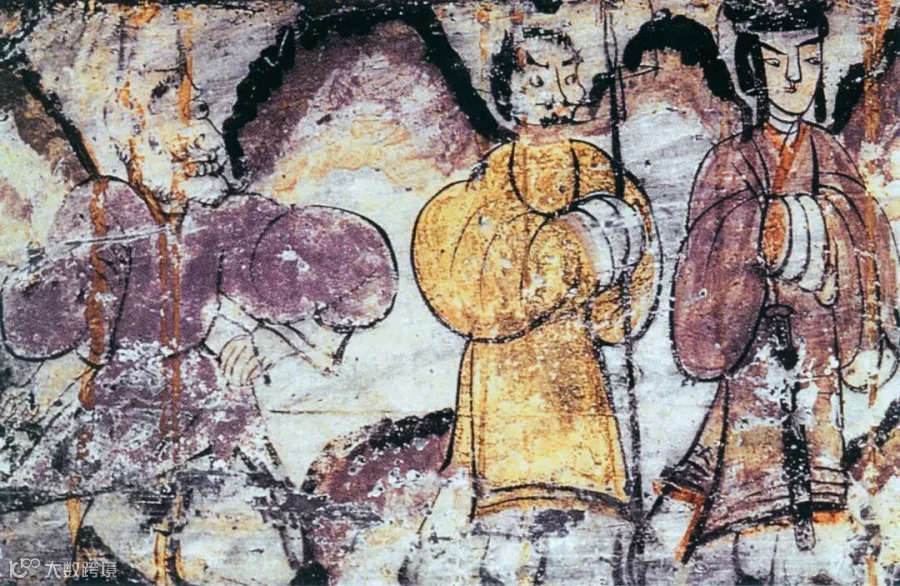
Details of a purple pigment from a Han dynasty mural, from the collection of the Luoyang Museum of Ancient Tombs. VCG
Of course, the emergence of Chinese purple was also the result of technological progress. The Warring States period was a time of intense competition among feudal states that catalyzed the advent of various crafts and techniques, including iron smelting, ceramics, and glassmaking. And after China was unified by the Qin and Han dynasties, imperial patronage supported the growth of key technologies.
The exact provenance of Chinese purple remains a mystery. Some scholars believe the pigment was born from practical necessity: naturally occurring purple minerals were rare, and traditional plant-based dyes proved unsuitable for ceramic or stone surfaces, meaning a synthetic inorganic pigment would have filled a critical artistic and ritual need.
Others argue that it was more likely an accidental byproduct of alchemical experimentation rather than a deliberate invention. “Ancient alchemists not only looked for immortality elixirs, but they also experimented with transmuting base metals into gold or silver,” says Guo Jinsong, a historian of ancient Chinese science at Peking University. “These experiments sometimes yielded unexpected results, such as the emergence of a blue ‘flower’ in their furnaces. It is possible that Chinese purple was born from such proto-scientific explorations.”
A definitive answer is likely impossible. But a growing number of archaeologists believe they are close to solving another of Chinese purple’s mysteries: the how.
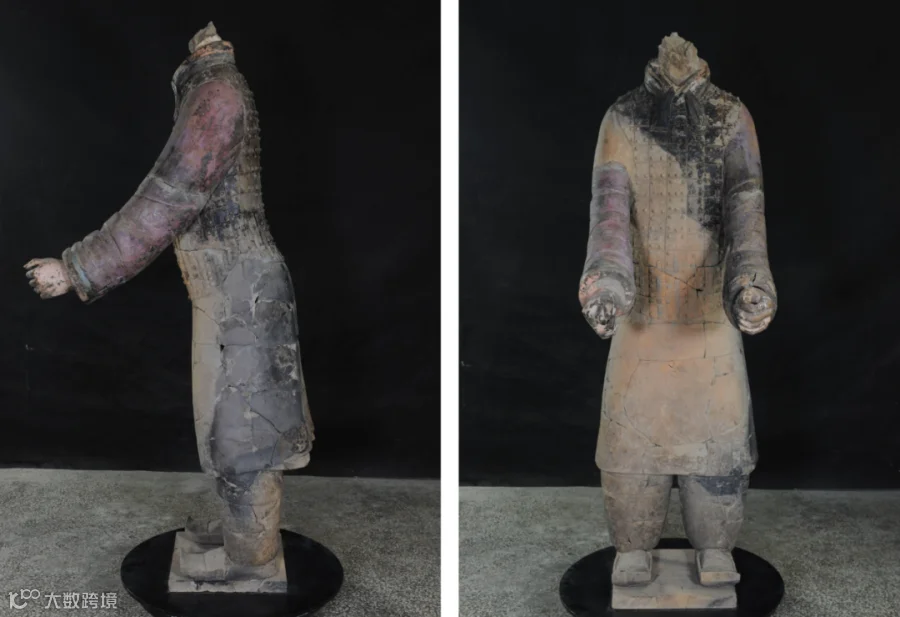
The left and front view of a terra-cotta army soldier with purple sleeves. Courtesy of Emperor Qinshihuang’s Mausoleum Site Museum
Modern science, ancient techniques
Not long after Fitzhugh published her paper on the discovery of BaCuSi₂O₆, Chinese archaeologist Zhang Zhijun wondered if the same pigment might be the source of the purple coloring found on China’s famed terra-cotta warriors.
He would have to wait for an answer until 1994, when China renewed excavations at the site for the first time since the late-1970s. Driven by curiosity, Zhang — then a member of the archaeological team at the Emperor Qinshihuang’s Mausoleum Site Museum, which oversees work at the site where the terra-cotta warriors were found — collected samples from the clay statues and tentatively identified them as BaCuSi₂O₆.
Confirmation came when the Bavarian State Department of Monuments and Sites in Germany, which was cooperating with the Emperor Qinshihuang’s Mausoleum Site Museum on preservation and research projects related to the site, tested the samples, and Zhang published his results in 1995.
The discovery could have been made earlier. During the initial excavations, which took place between 1974 and 1979, archaeologists noted the presence of various pigments, including purple, on the warriors’ bodies. However, they did not recognize its unique nature. A 1983 report on pigment composition mistakenly identified the purple hue as a mixture of barium sulfate, lead carbonate, ferric oxide, and another unknown compound.
“Looking back at that report, it’s clear that the archaeologists were doing their best, but they were limited by their lack of knowledge and the analytical tools available at the time,” says Rong Bo, Zhang’s former assistant and the current deputy director of the Archaeology Department at Emperor Qinshihuang’s Mausoleum Site Museum. “Most of them were trained in history or archaeology but lacked chemistry or materials science expertise.”
With the exception of a handful of scholars like Zhang, Fitzhugh’s original findings had gone largely unnoticed in China, but the revelation that the terra-cotta warriors had been painted with a substance previously believed to be a modern invention caused a frenzy in Chinese archaeology and cultural heritage fields.
Soon, experts all over the country began sending pigment samples off for testing, and BaCuSi₂O₆ was found at Han and pre-Han sites from the Han Yangling mausoleum near what is today the northwestern city of Xi’an to the Chu King’s Mausoleum in the Yangtze River Delta.
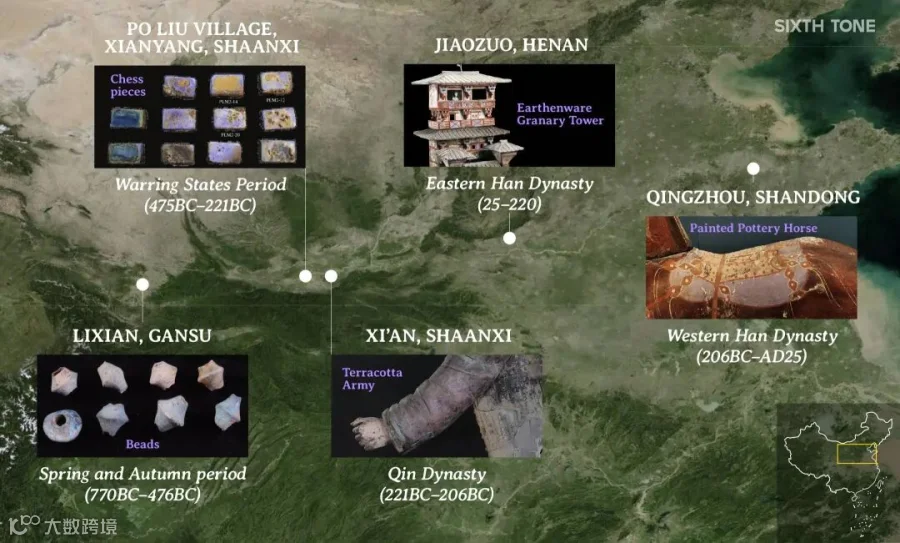
A map showing cultural relics related to Chinese purple.
One of the scholars attracted to the topic was Ma Qinglin. He first heard about Chinese purple in the late 1990s, while pursuing a Ph.D. in chemistry at Lanzhou University in northwestern China’s Gansu province, but wasn’t able to pursue the subject until 2000, when he spent a year as a visiting scholar at the Getty Conservation Institute in the United States.
“Back then, the experts and labs capable of studying Chinese purple were all in the West,” Ma says. Three years later, Ma went to Switzerland for a postdoc under Professor Heinz Berke at the University of Zurich — the same scholar who had first analyzed the pigment samples from the terra-cotta warriors for the Bavarian State Conservation Office in the 1990s.
This experience made Ma a natural candidate when China’s State Administration of Cultural Heritage launched a project focused on Chinese purple and another ancient synthetic pigment, “Chinese blue” (BaCuSi₄O₁₀), in 2005. Seven years later, a joint Sino-Swiss study led by Ma and Berke simulated the preparation of three copper-barium silicate pigments, including Chinese purple, under controlled laboratory conditions in China for the first time.
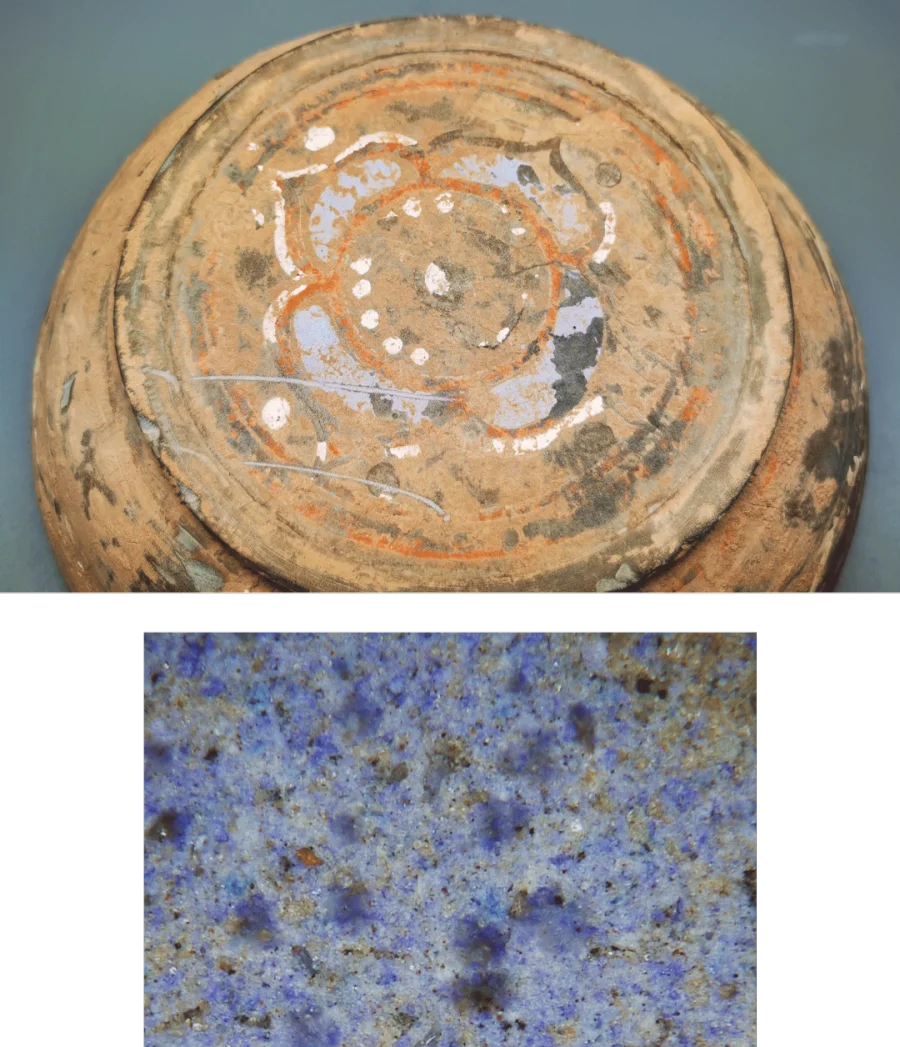
A Western Han dynasty pottery piece with purple coloring and details of the pigment. Many relics contain elements of both Chinese blue and Chinese purple. Courtesy of Gao Zhen
Then came the hard part: replicating Chinese purple using methods available to ancient artisans. There were no books to consult. Most traditional Chinese techniques, even those that exist today, were never written down. Artisans viewed their craft not merely as a matter of technical expertise, but as trade secrets to be passed down orally from generation to generation.
That means researchers must rely on reverse inference. By following a hypothesized set of procedures, they use ancient materials and tools to see if they can replicate a given item that matches the characteristics, structure, and composition of ancient relics.
One of the first to successfully replicate Chinese purple this way was a Shanghai University doctoral candidate, Gao Zhen, in 2024. Gao manually crushed and ground raw minerals — barite, copper ore, and quartz — before mixing them in precise ratios and firing the compound in a kiln held between 900°C and 1,000°C for four to six hours. To approximate ancient production conditions as closely as possible, his team even sourced sedimentary barite deposits from Northwest China, where the pigment was first developed.
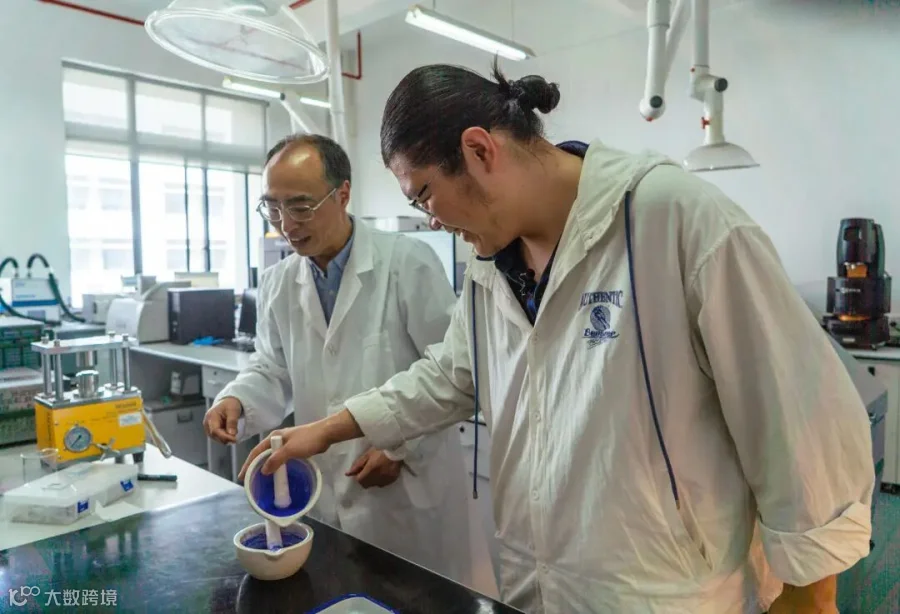
Ji Shidong (left) and Gao Zhen grind pigment samples at a lab in Shanghai University, March 2025. Wu Huiyuan/Sixth Tone
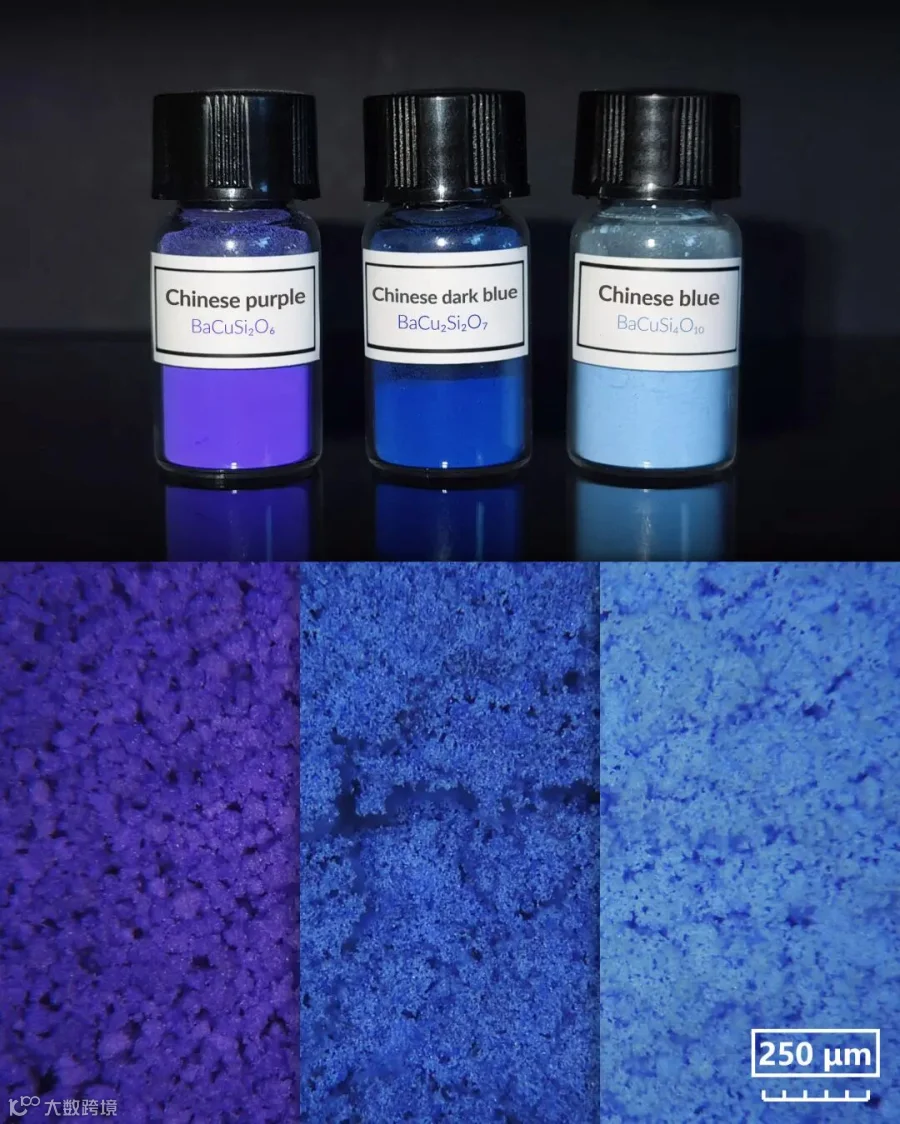
Samples of Chinese purple, Chinese dark blue, and Chinese blue produced by Shanghai University. Courtesy of Gao Zhen
According to Gao, the process presented two major technical challenges. The first was getting the proportions right. The second was maintaining the kiln’s temperature long enough for the reaction to take place.
“If the temperature drops below 900°C, the reaction won’t occur, but if it exceeds 1,050°C, some of the substances begin to decompose, causing the entire reaction to fail,” Gao says. While initially uncertain how the experiment would turn out, Gao says he was surprised at how efficient the method was.
“Initially, we believed our approach couldn’t match the (modern) method in terms of purity, and would max out at around 80%,” he says. “But now we know that’s not true. You can get 90% purity, or even higher.”
Qian Wei, a specialist in Chinese metallurgy at the University of Science and Technology in Beijing, attributes Gao’s finding to the high degree of artisanry achieved during the Warring States period.
“They (the craftsmen) could assess kiln temperatures by observing changes in specimen models, regulate heat by adjusting fuel and ventilation, and even estimate temperature based on the color of the flames — red below 1,000°C, yellow around 1,000°C, and white at higher temperatures,” Qian says.
A new approach
Not everyone agrees that this process of trial and error is necessary, however. Liu, the ShanghaiTech scientist, believes the future of archaeology lies under the microscope.
“Different techniques leave unique ‘fingerprints’ on the microstructure (of an item), and advanced imaging and spectral analysis techniques can help us decode their technological secrets,” Liu says.
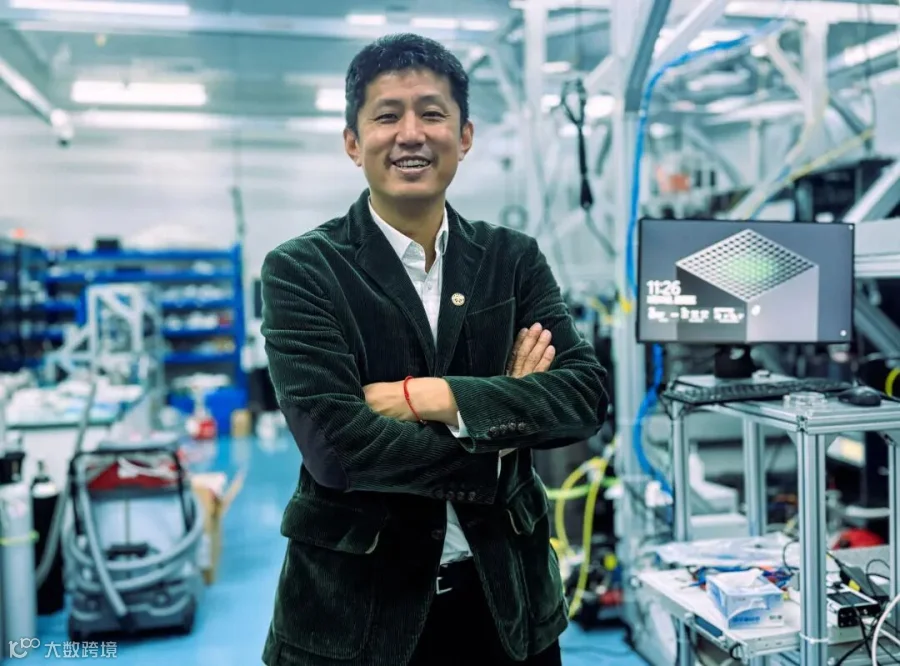
Liu Zhi poses for a photo at his lab in ShanghaiTech University, May 2025. Wu Huiyuan/Sixth Tone
The idea took root nearly two decades ago, when Liu first encountered Chinese purple as a postdoctoral researcher at Stanford University. At the time, there was a significant debate as to whether Chinese purple originated from “Egyptian blue,” the earliest known synthetic pigment.
“Chinese purple and Egyptian blue have the same crystal structure, but with calcium (Ca) replaced by barium (Ba),” Liu says. “Even today’s material scientists would find it difficult to achieve this shift. So I was curious — could ancient artisans really have accomplished it?”
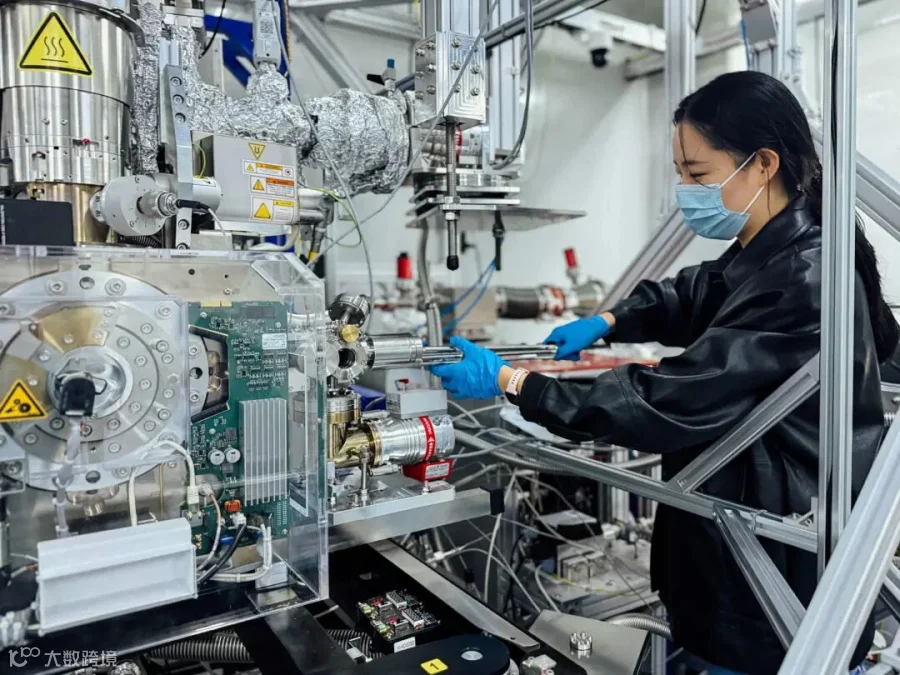
A Ph.D. student, Yang Yue, uses the environmental scanning electron microscope at ShanghaiTech University, May 2025. Wu Huiyuan/Sixth Tone
Liu obtained a small sample of Chinese purple and subjected it to X-ray diffraction analysis, eventually concluding that the creation of Chinese purple involved the use of lead, as opposed to the sodium and potassium agents to make Egyptian blue — suggesting that it was an independently developed technique.
Then he set the question of Chinese purple’s creation aside for 14 years, returning only in 2021 — in part due to the potential of new technologies like the ESEM. Designed by a colleague of Liu’s, Wang Zhujun, it would allow Liu to perform in-situ imaging of Chinese purple at the atomic level at temperatures of up to 1,000°C. That means he can not only analyze raw materials and finished artifacts, but also watch what really goes on inside the kiln.
“Just as DNA holds the blueprint of life, the microstructure of artifacts conceals a wealth of historical insights,” Liu says.
Not everyone is convinced, however. Ma, who has been studying Chinese purple for nearly three decades, tells Sixth Tone that while he is pleased to see more scholars from different disciplines enter the field, he hopes these ambitious newcomers will recognize the particularities of the archaeological discipline and avoid assuming that all problems can be resolved at once through a single methodology.
“Archaeological relics are just fragments of history,” Ma says. “We must resist the temptation to ‘reconstruct the whole from a single shard,’ or assume that one fragment can reveal the full story.”
“Fragments are just fragments, and they provide only limited information,” he adds. “All we can do is focus on our own fragments, then piece them together.”
Producers: Wu Haiyun and Fu Xiaofan, Writer: Wu Haiyun, Editor: Kilian O’Donnell, Copy editor: Tom Arnstein, Visual designer: Fu Xiaofan, Executive editors: Qi Ya and Cai Yiwen, Videographers: Wu Huiyuan, Video editor: Lü Xiao, Photographer: Wu Huiyuan, Photo editor: Ding Yining,
Graphic: Fu Xiaofan, Website developer: Lin Tao.

(Copy URL and open in browser)