
TastyOlive
Healthy food, Happy life!

Today, most people are eating a lot of omega-6 fatty acids.
At the same time, the consumption of animal foods that are high in omega-3s is the lowest it has ever been.

Scientists suspect that a distorted ratio of these polyunsaturated fatty acids may be one of the most damaging aspects of the Western diet.



Why Care About Omega-6 and Omega-3 Fatty Acids?
Omega-6 and omega-3 fatty acids are called polyunsaturated fats because they have many double bonds (poly=many).
Your body doesn’t have the enzymes to produce them, so you must get them from your diet. If you don't get any from your diet, you develop a deficiency and become sick. That is why they are termed "essential" fatty acids.
However, these fatty acids are different than most other fats. They are not simply used for energy or stored, they are biologically active and have important roles in processes like blood clotting and inflammation.
But omega-6s and omega-3s don't have the same effects. Scientists believe omega-6s are pro-inflammatory, while omega-3s are anti-inflammatory.
Of course, inflammation is essential for your survival. It helps protect your body from infection and injury, but it can also cause severe damage and contribute to disease when it’s chronic or excessive.
In fact, chronic inflammation may be one of the leading drivers of the most serious modern diseases, including heart disease, metabolic syndrome, diabetes, arthritis, Alzheimer's and many types of cancer.

Scientists have hypothesized that a diet high in omega-6s but low in omega-3s increases inflammation, while a diet that includes balanced amounts of each reduces inflammation.
Those who follow a Western diet are typically eating way too much omega-6s relative to omega-3s. Many believe this is a serious health problem.
SUMMARY: An omega-6 to omega-3 ratio that is too high may contribute to excess inflammation in the body, potentially raising the risk of various diseases.




How Much Omega-6 Did Non-Industrial Populations Eat?
According to Dr. Stephan Guyenet, typical omega-6 to omega-3 ratios for pre-industrial populations ranged from 4:1 to 1:4.
Hunter-gatherers who ate mostly land animals consumed these fats at ratios of 2:1 to 4:1, while the Inuit, who ate mostly omega-3 rich seafood, had a ratio of 1:4. Other pre-industrial populations were somewhere in between.
Anthropological evidence also suggests that the ratio human beings evolved eating was somewhere around 1:1, while the ratio today is about 16:1.
Although these populations had a lower life expectancy than modern people, some researchers estimate that chronic lifestyle diseases, such as heart disease and diabetes, were much less common.
Not only did pre-industrial populations get much less omega-6 from their diets, they also got more physical exercise, ate less sugar and didn’t have access to modern junk food.
All of these factors could explain their lower rates of modern lifestyle diseases. However, the effect cannot be solely attributed to a lower intake of omega-6 fatty acids.
SUMMARY: People who ate a pre-industrial diet had an omega-6 to omega-3 ratio of about 4:1 to 1:4, most falling somewhere in between. The ratio today is 16:1, much higher than what people are genetically adapted to.

The Problem With the Western Diet
Western populations are eating large amounts of processed seed and vegetable oils. Some of these oils are loaded with omega-6s.
The technology to process these oils didn’t exist until about 100 years ago, and people have not had time to genetically adapt to the high amounts of omega-6.
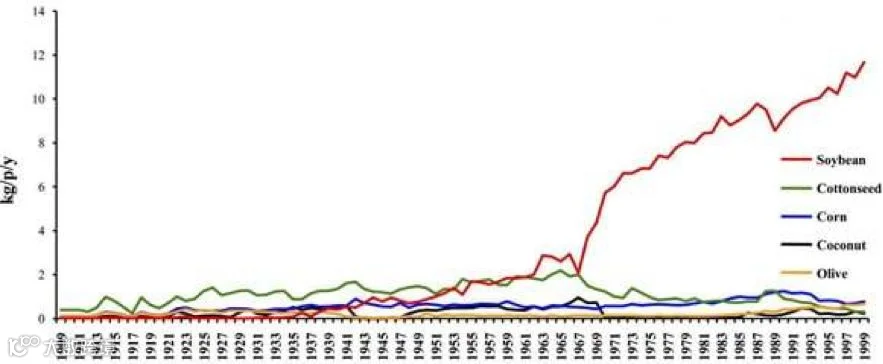
In the graph below, you can see the dramatic increase in soybean oil consumption in the US, from zero to 24 pounds (11 kgs) per person per year. This amounted to a whopping 7% of total calories in the year 1999.
Source: National Institutes of Healt
Soybean oil is currently the biggest source of omega-6 fatty acids in the US because it is really cheap and found in all sorts of processed foods.

In the graph below, you can see how the amount of omega-6 fatty acids found in body fat stores has increased by more than 200% (3-fold) in the past 50 years alone.
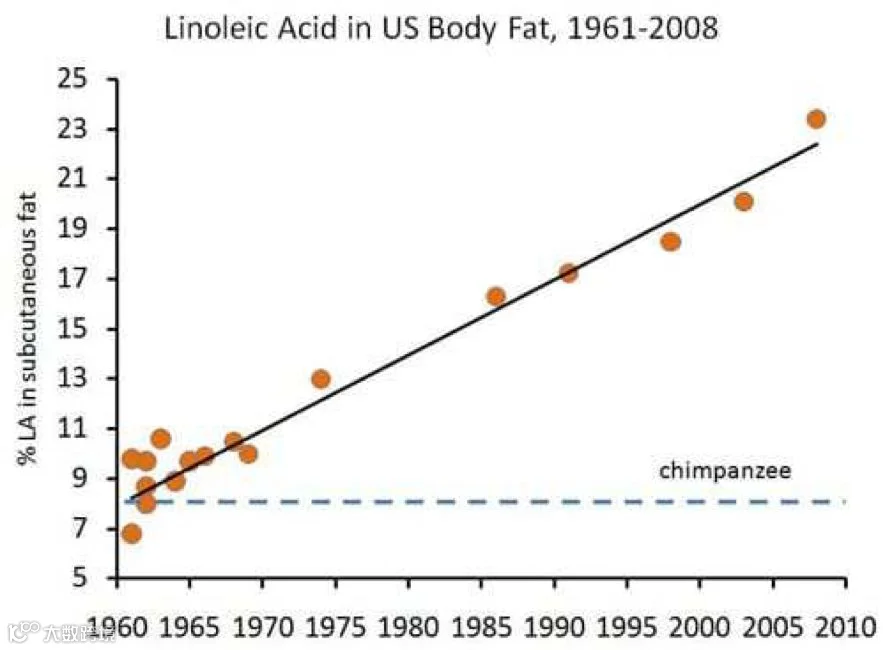
Source: Dr. Stephan Guyenet
Thus, the fats people are eating today are leading to actual changes in their bodies, both in terms of their body fat stores and cell membrane health.
A high amount of omega-6 in cell membranes is strongly associated with the risk of heart disease, which makes perfect sense given their potential pro-inflammatory effects:
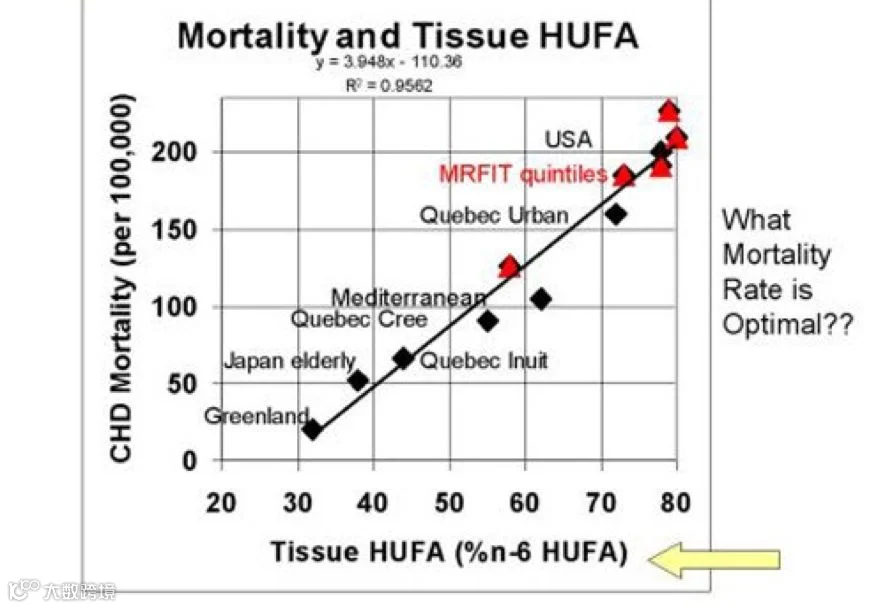
Source: National Institutes of Healt
However, no high-quality controlled studies have investigated the effects of omega-6 acids on heart disease.
Also, controlled studies show that linoleic acid — the most common omega-6 fatty acid — doesn’t increase levels of inflammatory markers.
In fact, it remains unclear whether a high intake of omega-6 fatty acids has any effects on the risk of chronic lifestyle diseases.

On the other hand, lots of evidence supports the positive health effects of omega-3 fatty acids. For example, their heart benefits are significant.
Omega-3s may also improve all sorts of mental disorders like depression, schizophrenia and bipolar disorder.
Nonetheless, excessive intake of polyunsaturated fatty acids, including omega-3 and omega-6, has several risks. The double bonds in the fatty acid molecules are very reactive.
They tend to react with oxygen, forming chain reactions of free radicals. These free radicals can cause cell damage, which is one of the mechanisms behind aging and the onset of cancer.
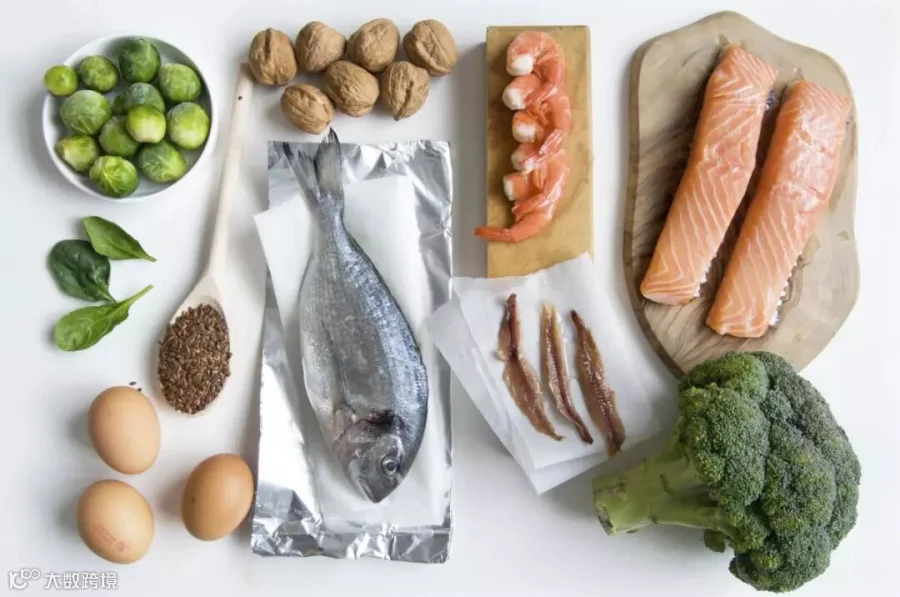
If you want to improve your ratio of omega-6 to omega-3, it’s probably a bad idea to eat a lot of omega-3 to compensate. Having a relatively low, balanced amount of each is best.
SUMMARY:The consumption of vegetable oils high in omega-6 has increased dramatically in the past 100 years. Scientists believe this may cause serious harm.

Avoid Vegetable Oils High In Omega-6
The single most important thing you can do to reduce your omega-6 intake is avoid processed seed and vegetable oils that are high in omega-6, as well as the processed foods that contain them.
Here is a chart with some common fats and oils. Avoid all that have a high proportion of omega-6 (blue bars).
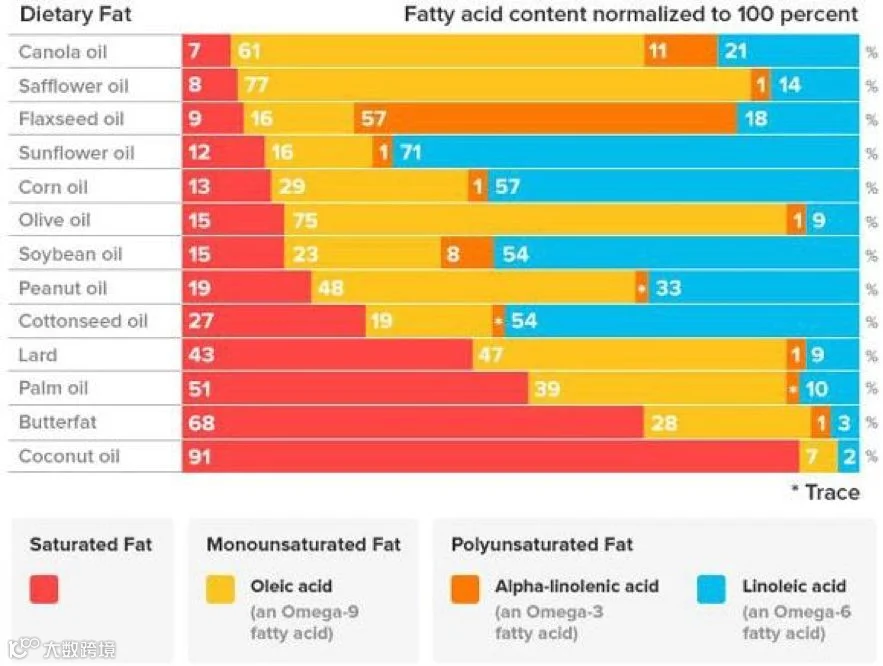
Source: POS Pilot Plant Corporation
You can see that butter, coconut oil, lard, palm oil and olive oil are all relatively low in omega-6.
Sunflower, corn, soybean and cottonseed oils are, by far, the worst. Avoid these like the plague.

It's important to realize that benefiting from a diet low in omega-6 fatty acids is a long-term process and requires permanent lifestyle changes.
Most people store immense amounts of omega-6 fatty acids in their body fat, and it can take a while to get rid of them.
If you are concerned about omega-6 fatty acids, use vegetable oils that contain low amounts of omega-6 fatty acids, such as olive oil. Also, consider taking omega-3 supplements or eating fatty fish twice per week.

SUMMARY: The most important thing you can do to reduce omega-6 intake is to eliminate processed vegetable oils from your diet, as well as the processed foods that contain them.

Resource from: Healthline Blog
Picture:Pinterest

#healthy

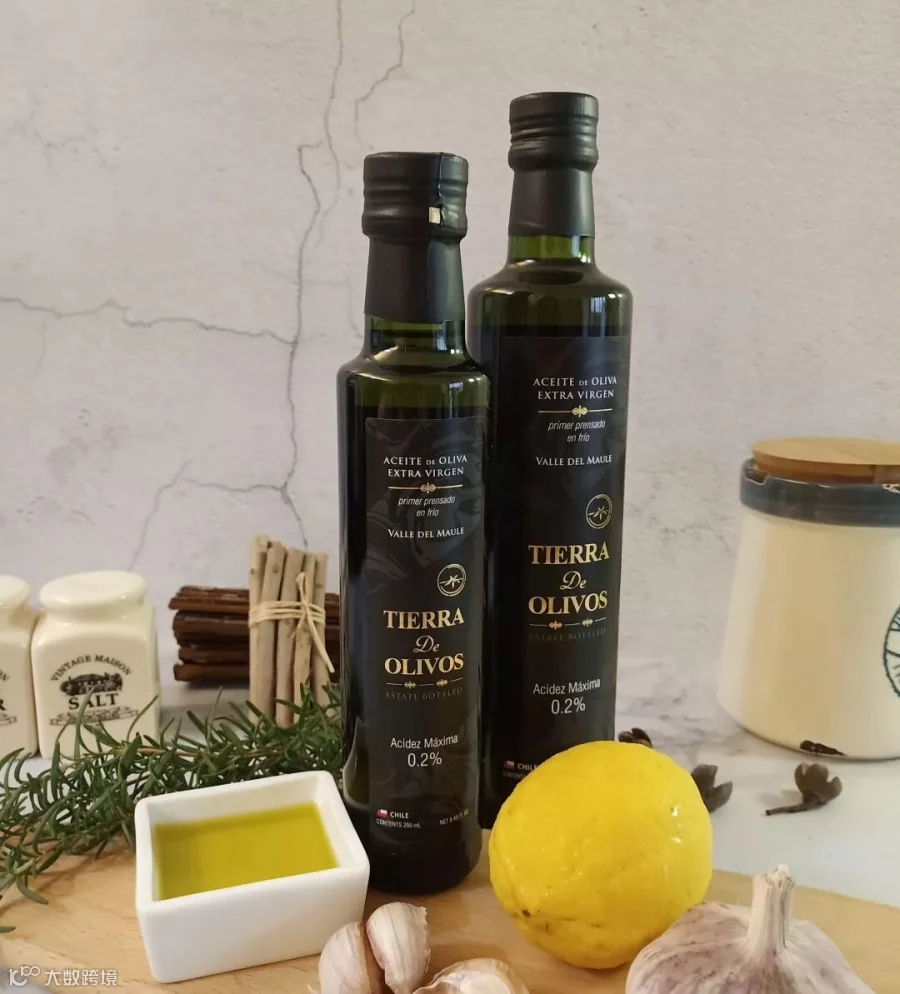
EXTRA VIRGIN OLIVE OIL
First Cold Pressed
VALLE del MAULE

TIERRA De OLIVOS
ESTATE BOTTLED

Acidity Maximum 0.2%
Format of 250ml & 500ml
100% CHILE 🇨🇱




TIERRA De OLIVOS
第岚特级初榨橄榄油

特级初榨橄榄油
第一道工序物理冷榨
莫莱山谷

TIERRA De OLIVOS
庄园原装原瓶罐装

酸度 ≤ 0.2%
规格 250ml & 500ml
100% 智利🇨🇱






If you like this article, please follow us and share to your friend, It is a simple way to support us
More info pls feel free to contact us!
Wechat ID: tierradeolivos
Tel: 135 2425 2074
Wechat Official Account: TastyOlive

△ TastyOlive
新鲜|美味|营养|健康