 Men and women who have spent careers trying to understand and shape human collective behaviour have always encountered immense complexity. From scholars to policymakers, social activists to business strategists, innovators to marketers - all have grappled at some point with the challenge of ‘cracking’ human behaviour at a societal, or even global scale.
Today, the extent of interconnectivity and dynamism, fuelled by the wide-ranging application of advanced technology, from consumer products to industrial processes and government systems, has only ratcheted up the scale and incidence of complex problems. For example, the fast spreading coronavirus across the globe and the panic it caused has escalated partially due to the large scale human movements and wide spreading social media news brought by technology development.
The problem of complexity: Empowered, entangled and wicked
Complexity arises on both sides of the economic development equation. While our age feels like one of endless possibility and potential, it is also one in which the challenges such as urban overcrowding, environmental degradation, income inequality, healthcare affordability, urban loneliness, and an erosion of trust have become ever more difficult and yet ever more pertinent. In a rapidly developing world that also feels palpably more messy, crowded, confusing and unpredictable, the need to design adaptively complex solutions for increasingly complex problems will become more pressing for both public institutions and businesses who hope to change lives for the better.
Problems of the order of complexity that we hope to, and need to, solve today will not be addressed simply by bringing about change at the level of an individual, organisation, or even industry. Better products and services do change citizens’ and consumers’ lives for the better, but the scale of their impact is limited. Creating more space-efficient subway carriages will make some daily commutes more pleasant but will not solve a city’s traffic problems. Similarly, developing new monitoring and communication features in a ride sharing app may make some feel safer, but will not bring an end to sexual harassment or assault in an urban population. With the coronavirus spreading worldwide, having a just safe trip becomes so challenging to us despite all kinds of advanced technologies available.
These ‘wicked problems,’ whose seemingly required solutions are sometimes shifting, contradictory, invisible, or incomplete, require not just more comprehensive answers, but solutions at a different scale that bring about change at the level of an entire human behavioural system.
To even begin to arrive at these, it is crucial to perform a different kind of diagnosis of the problem. System Thinking offers the hope of deeper and clearer insights on complex societal interactions driving wicked problems - which do, by their pervasive nature, impact the relationships between people and all kinds of products and services. When we start to see a beverage brand as not just a product portfolio, but an element within interconnected systems of societal health, nutrition, food justice, wellness, and recreation we can then see how business decisions can begin to impact the complex societal challenges we are all faced with and bring about more wide ranging transformations for the human good.
The presentation of complexity: Ecosystem models of engagement
Men and women who have spent careers trying to understand and shape human collective behaviour have always encountered immense complexity. From scholars to policymakers, social activists to business strategists, innovators to marketers - all have grappled at some point with the challenge of ‘cracking’ human behaviour at a societal, or even global scale.
Today, the extent of interconnectivity and dynamism, fuelled by the wide-ranging application of advanced technology, from consumer products to industrial processes and government systems, has only ratcheted up the scale and incidence of complex problems. For example, the fast spreading coronavirus across the globe and the panic it caused has escalated partially due to the large scale human movements and wide spreading social media news brought by technology development.
The problem of complexity: Empowered, entangled and wicked
Complexity arises on both sides of the economic development equation. While our age feels like one of endless possibility and potential, it is also one in which the challenges such as urban overcrowding, environmental degradation, income inequality, healthcare affordability, urban loneliness, and an erosion of trust have become ever more difficult and yet ever more pertinent. In a rapidly developing world that also feels palpably more messy, crowded, confusing and unpredictable, the need to design adaptively complex solutions for increasingly complex problems will become more pressing for both public institutions and businesses who hope to change lives for the better.
Problems of the order of complexity that we hope to, and need to, solve today will not be addressed simply by bringing about change at the level of an individual, organisation, or even industry. Better products and services do change citizens’ and consumers’ lives for the better, but the scale of their impact is limited. Creating more space-efficient subway carriages will make some daily commutes more pleasant but will not solve a city’s traffic problems. Similarly, developing new monitoring and communication features in a ride sharing app may make some feel safer, but will not bring an end to sexual harassment or assault in an urban population. With the coronavirus spreading worldwide, having a just safe trip becomes so challenging to us despite all kinds of advanced technologies available.
These ‘wicked problems,’ whose seemingly required solutions are sometimes shifting, contradictory, invisible, or incomplete, require not just more comprehensive answers, but solutions at a different scale that bring about change at the level of an entire human behavioural system.
To even begin to arrive at these, it is crucial to perform a different kind of diagnosis of the problem. System Thinking offers the hope of deeper and clearer insights on complex societal interactions driving wicked problems - which do, by their pervasive nature, impact the relationships between people and all kinds of products and services. When we start to see a beverage brand as not just a product portfolio, but an element within interconnected systems of societal health, nutrition, food justice, wellness, and recreation we can then see how business decisions can begin to impact the complex societal challenges we are all faced with and bring about more wide ranging transformations for the human good.
The presentation of complexity: Ecosystem models of engagement
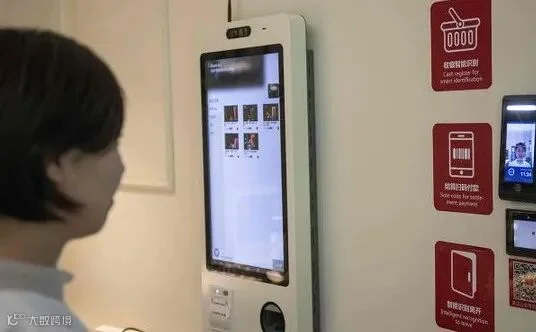
An example of how Systems Thinking has been immediately relevant to businesses can be found in the platform model we see most prominently used by tech start-ups. At the apex of its application, the platform model is growing into the form of ‘super apps’ which seamlessly offer consumers a range of connected products and services across multiple geographies. The phenomenal growth of ride sharing apps, and the pervasiveness of their products in the everyday life of tens of millions of consumers in the region, illustrate how this emerging new business paradigm is not just unlocking consumers’ latent needs for simplicity and seamlessness, but also shaping, in a very significant way, a variety of societal behavioural systems.
The alluring conveniences that comes with an integrated cashless payment system, e-wallet, and one-stop access to a variety of essential daily services, for instance, is not just making life more convenient, but shaping the very meaning of money and changing how we engage with the society.
In Singapore’s culinarily delightful hawker centres, I sometimes find myself in an odd situation where I have in my pocket (besides my stack of credit cards, worthless in a hawker centre) only a $50 dollar bill trying to buy a $1.50 cup of my favourite soya bean drink. On some occasions, my friendly soya bean drink seller will tell me that he can’t give me change for such a large bill, and I should just take the drink and pay him some at other time when I have smaller change. I do so the next time I’m back with a $2 bill, he remembers, smiles at me signalling his recognition of my trustworthiness, and I leave with another cup of soya bean drink and a better relationship with him.

In a cashless payments society with no concept of ‘paying me back next time’ or ‘keeping the change’ or ‘leaving a tip,’ teenagers of today and tomorrow will enter the economy with vastly different imaginations of what money looks and feels like and different social and cultural meanings attached to monetary transactions. What will this mean for trust? And how can we design for a cashless, but not trustless future of payments?
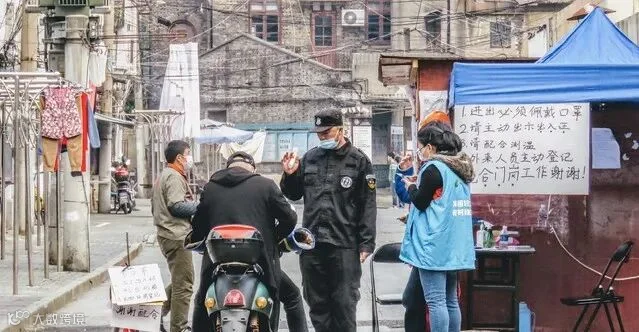
In an always on society, everything can be done and purchased with my fingernails, people are enjoying the great convenience of their life without knowing who might be their neighbour, when there is immediate need for help in crisis, you donot know how to ask help from just the next door. In the epicentre the coronavirus in wuhan, when people are taken away to hospital and neighbours are forced to be self-quarantined at home, some people just realized they have never met their neighbours before. A society built around convenience at the cost of connection and community belonging, is this what we have been striving for?
The hope for addressing such complexity: Unlocking hidden meaning
The kind of transformative Systems Thinking that will be increasingly applied to consumer solutions like the super-app will not, ultimately, be just that which relates to programming, user-experience, or networked services. Instead, the critical Systems Thinking of the future will lie in unlocking the invisible cultural meaning systems that drive human engagement with any technological or non-technological platform.
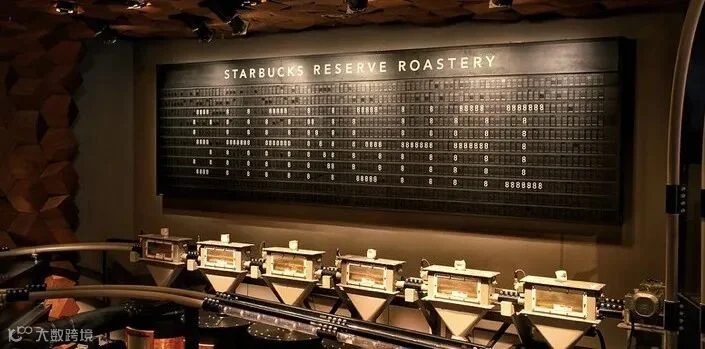
Take the case of the coffeeshop: whether Starbucks coffee really cuts it may be a discussion that lasts as long as the chain does; but what is not a matter of contention is how the spaces it creates has found resonance through what the brand really stands for, and what the product really is: a consistent experience of a familiar, convenient, and reasonably comfortable place to work, meet, or stop by on the morning commute.
While improvements in space and service design will further improve the experience for many - for instance, in seamless connectivity with the Starbucks app, or with delivery services - the real potential, perhaps, lies in understanding how new directions in space and service design, in conjunction with a design direction for a wider system of other non-coffeeshop spaces and services, can unlock latent cultural meanings of convenience, comfort, and familiarity by addressing them in new, previously unmet ways. How can we design not just for better coffeeshops, but better experiences of the familiar, consistent, and comfortable? Systems Thinking demands that the answer to the former be born out of the answer to the latter.
The way we behave ultimately is driven by the meanings we associate with elements of our world. The behavioural systems in society are a product of those associations; to drive real change, and change in a direction we desire, the design of systems must be guided by the design of meaning; and such design must be rooted in a deep understanding of the hidden meaning landscapes that will govern our lives as much as, and arguably even more than, the technological landscapes of tomorrow.
The famous theory of Jobs To Be Done states that people don’t simply buy products or services, they ‘hire’ them to make progress in specific circumstances. Similarly, when we design product or services for an ecosystem of society, we will have to ask the same question why they hire us for this job, what is the meaning behind of these products/services?
About Quantum
Quantum is a specialised innovation & strategy consulting company. Our thinking and approach is informed by the field of human sciences as our underlying goal is to put humans at the centre of business decision making. Our approach marries methods from the social sciences with proprietary strategy frameworks, using a design process to provide clients with clear and tangible outcomes. We address issues across the value chain of business – Future visioning and growth opportunity mapping, business purpose, building strong purpose-led brands and conceptualizing new products and services
Follow Us