

The Azure Research
and Strategy team
News Summary
China’s State Council approves more than 4.7GW nuclear power plants in Fujian and Guangdong
Ningxia will strive to reach 55 GW renewable energy installed capacity by 2025
Hebei cancels 0.32 GW and 4.1 GW of wind and solar power projects
Coal management ticket system abandoned in Yulin, Shaanxi
-
Coporate Net Zero Pathways: Anhui concludes the largest green electricity trading day without capping green electricity prices

China’s State Council approves more than 4.7GW nuclear power plants in Fujian and Guangdong
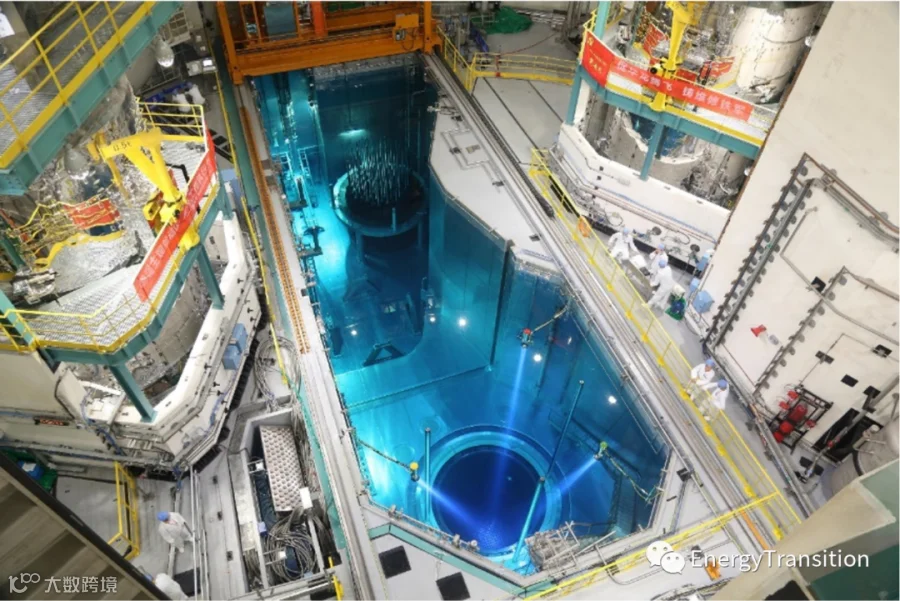
Premier Li Keqiang presided over an executive meeting of the State Council on the 13th of August, at which it was decided to approve the Fujian Zhangzhou Phase II and the Guangdong Lianjiang Phase I nuclear power projects.
Zhangzhou II will include two Hualong No. 1 nuclear power units with a rated power of 1212MW each. Lianjiang I will include two 3rd generation CAP1000 nuclear power units (1250MW each).
According to GlobalData, China had 19 reactors under construction, 43 reactors awaiting permits, and 166 reactors announced as of the end of 2021.
(GOV)
Ningxia will strive to reach 55 GW renewable energy installed capacity by 2025
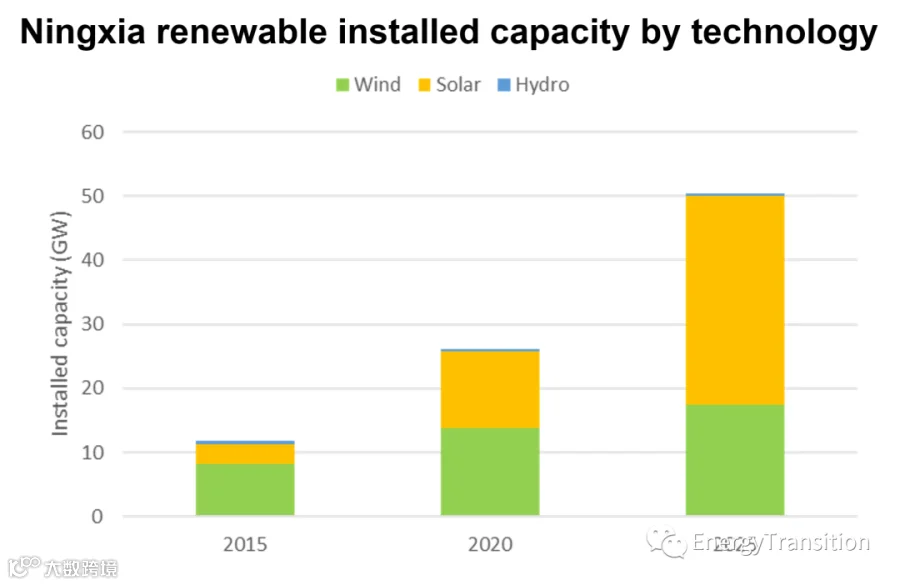
The "Ningxia Energy Development 14th Five-Year Plan" was recently released by the Ningxia government. During the "14th Five-Year Plan" period, Ningxia will strive to double its renewable energy power generation capacity, with a minimum installed capacity of 50GW and a target of 55GW. This would bring Ningxia’s total installed power capacity to more than 90GW.
The proportion of non-fossil energy in primary energy consumption should increase to about 15%. The proportion of renewable power in power consumption should increase to more than 30%, and that of non-hydro renewable power to more than 28%.
(Ningxia GOV)
Hebei cancels 0.32 GW and 4.1 GW of wind and solar power projects
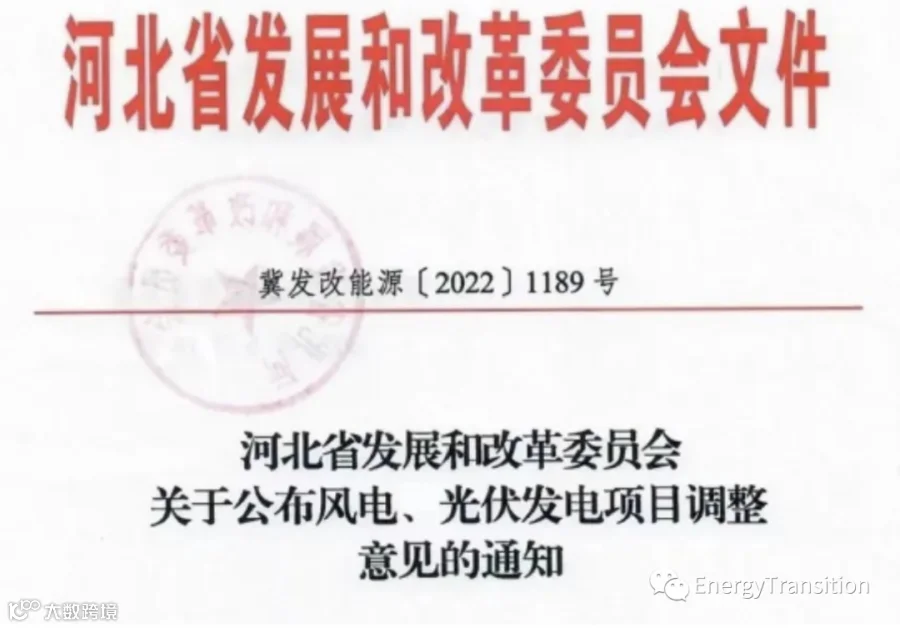
The Hebei Provincial Development and Reform Commission issued the "Notice on Announcement of Adjustments for Wind Power and Photovoltaic Power Generation Projects". The notice indicates that local authorities intend to cancel 4.1GW and 0.32GW of solar and wind power projects, respectively. This includes projects that are no longer able to be grid connected or be completed on time for reasons such as land-use rights policy adjustments or COVID-19. The 34 cancelled projects in the list include 28 projects that have been included in the 2021 construction plan. This follows Shanxi and Shaanxi province, who have also cancelled several projects earlier this year. (International Energy Network)
A first document was released by the Hebei government at the beginning of September which ‘only’ included 3.7 GW of solar projects. Another 350 MW were added in the later version.
Interestingly, it is worth noting that the government also released a list of project adjustments. 128 projects have been approved to alter project construction details including changing project SPV names, construction sites, and even project capacity. In the project adjustment list, wind project capacity has increased to 3.66GW from 3.2GW and that of solar has decreased from 19.43GW to 18.5GW.
(Hebei GOV)
Coal management ticket system abandoned in Yulin, Shaanxi

The coporate Net Zero Pathways
Anhui concludes the largest green electricity trading day without capping green electricity prices
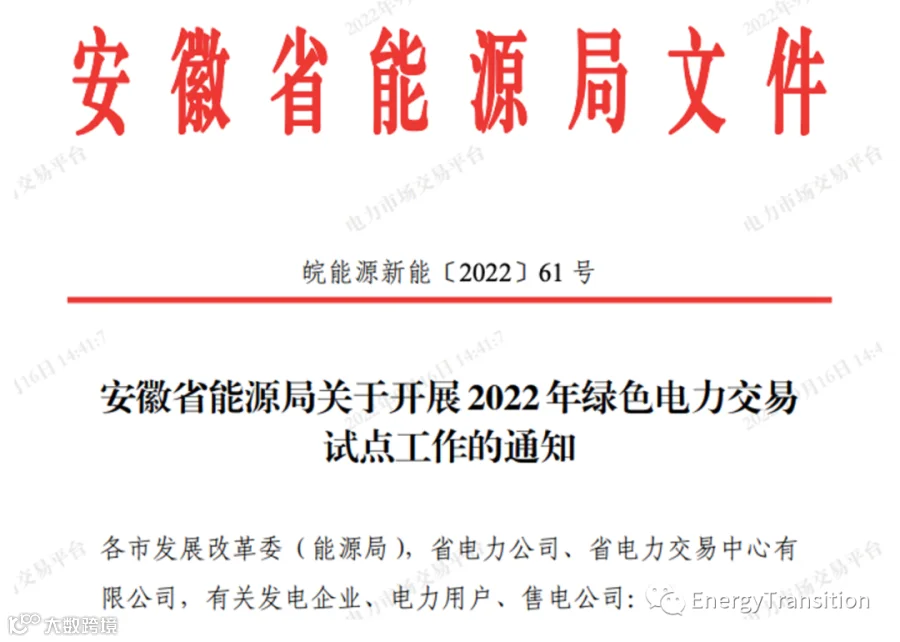
The Anhui Power Exchange recently organized its first green electricity trading in 2022, after the promulgation of the Rules and Regulations of the Green Electricity Trading Pilot in Anhui (hereafter: Anhui rules) at the end of August. On September 7, 27 wind and solar power generation companies and 21 power users and power trading companies concluded 0.829TWh of green power transactions through bilateral trading, which is the largest transaction volume in a single day among all the provinces that have organized green electricity trading so far. The 0.829TWh will support power users’ green power consumption from September to December 2022.
This is a second transaction organized in Anhui since the national green power trading pilot took place in September 2021. During the pilot trading last year, 11GWh of green power was traded at 404.4RMB/MWh in Anhui province.
The new Anhui rules issued in August have strongly impacted the latest transactions, as they have clearly specified certain key terms including the price range, transaction types, settlement, etc.
Green power prices can fluctuate within +-20% based on the coal-fired base price + green premium
Regarding the price range, Anhui rules indicate that the green power price comprises power price (value) and green premium. The power price can fluctuate within +-20% based on the coal-fired base price while the green premium has no limit. This is probably the first time that provincial rules stipulate that the power value of green electricity can have the same fluctuation range as thermal power. It sets a positive signpost for renewable energy projects given that green power prices are officially allowed to go beyond the coal-fired trading price range (+-20% of coal-fired base price + green premium). Some other provinces, such as Guangxi, have capped the entire green power price within 20% above the coal-fired base price. Some others like Fujian have anchored the green power price with the coal-fired base price.
For the time being, after deducting the power volume to be traded in the green electricity trading market, renewable power generation companies can sell their residual power to the local grid company at the coal-fired base price or participate in mid-long-term trading. Power deviation against the contract quantity will not be measured. Although some other provinces are doing the same, Anhui is one of the few that have clarified this point.
The Anhui power exchange has not disclosed the average green electricity price of the September 7 transaction. According to the power exchange, 32 wind and solar companies registered to participate in the direct trading with power buyers in August. It is expected more renewable power sellers will continue to register in September.
This content is prepared by the Research and Strategy Team of Azure International. Please contact us via our official account or email for any enquiry.
E-mail address:
info@azure-international.com
Azure International Technology
Development (Beijing) Co.,Ltd