-
CGN Shanwei Jiazi 900MW offshore wind project start operating
-
The second largest hydropower station in the world, has been put into full operation
-
Dongfang Electric Group starts research on hydrogen production from seawater
-
Peak-valley power price difference nearly 1.5 CNY/kWh in Shanghai
-
Corporate Net Zero Pathways: German automobile giants are pushing the green steel supply chain development in China
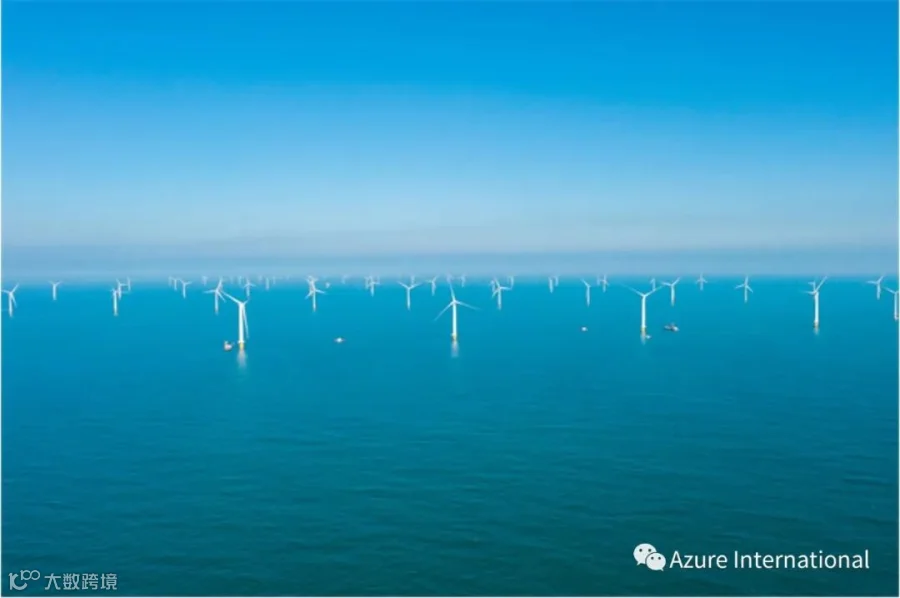
CGN Shanwei Jiazi 900MW offshore wind project start operating
After six months of construction, all wind turbines of the CGN Shanwei Jiazi II 400MW Offshore Wind Power Project have been connected to the grid and have started operation. The CHN Shanwei Jiazi project is in the southern sea area of Lufeng City, Guangdong.
The first phase of the project, Jiazi I, with a capacity of 500MW, has been put in operation in November this year. Jiazi II is located approximately 25km from the shore with a water depth of 30-37m and it has a planned capacity of 400 MW constituted of fifty 8.0 MW wind turbines.
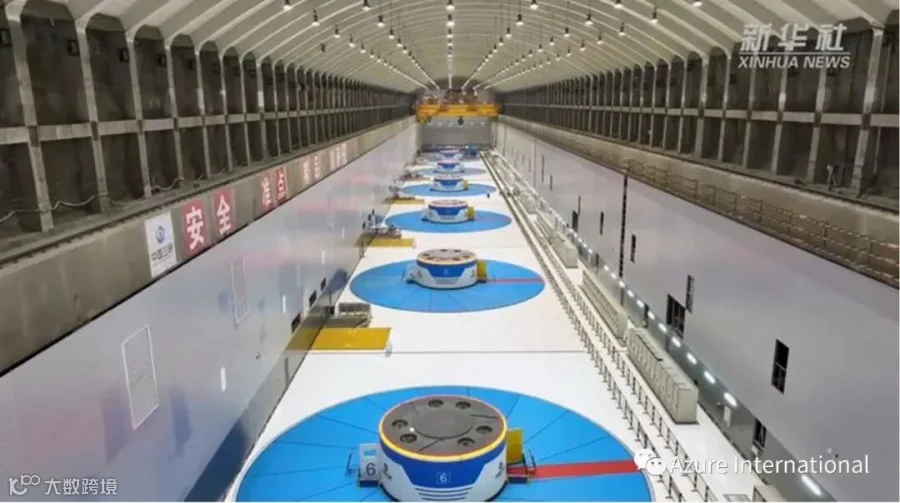
The second largest hydropower station in the world, has been put into full operation
With the connection of the No.9 unit developed by Harbin Electric Power Group, the Baihetan Hydropower Station is fully put into operation. The project is located in the main stream of Jinsha River at the junction of Yunnan Province and Sichuan Province.
The total installed capacity is 16GW, and eight water turbine generator units with a single unit capacity of 1GW each are arranged on the left and right banks. After the project is fully completed and put into operation, the annual average power generation is expected to reach 62.44TWh.
(163.com)
Dongfang Electric Group starts research on hydrogen production from seawater
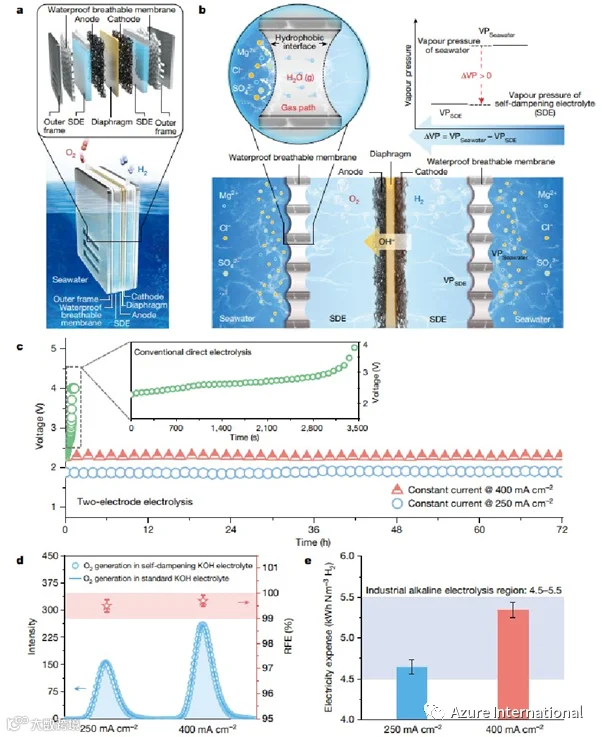
Dongfang Electric Co., Ltd., together with Academician Xie Heping from Shenzhen University and Sichuan University, signed a cooperation agreement on "pilot test and industrialization promotion and application of original technology for direct electrolysis hydrogen production in situ without desalination of seawater". According to the agreement, Dongfang Electric (Fujian) Innovation Research Institute Co., Ltd. will share the intellectual property rights of seawater desalination free in-situ direct electrolysis hydrogen production technology, and undertake the tasks of pilot test, demonstration and industrialization.
Academician Xie Heping and Shenzhen University under his guidance solved the problem of hydrogen production by direct electrolysis of seawater, and relevant research results were published on Nature.
(CNR)
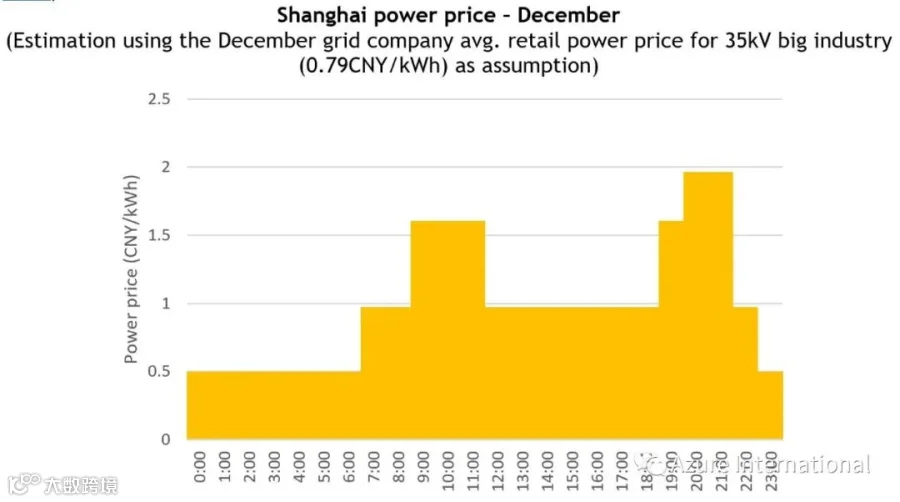
Peak-valley power price difference nearly 1.5 CNY/kWh in Shanghai
Shanghai DRC has released the ‘Notice on the Improvement of Electricity Time of Use (ToU) Mechanism’《 关于进一步完善我市分时电价机制有关事项的通知》. The policy states that ToU electricity prices will be applied to both the purchase price in the market as well as the grid’s average retail price. The latter applies to power users that have yet to participate directly in power market trading. The policy also introduced a seasonal pricing mechanism – in January, July, August and December, power prices will be higher than other months.
The electricity price during peak and valley periods will increase 80% and decrease 60%, respectively, compared to shoulder electricity prices. Furthermore, a 20% mark-up on top of the peak hour price will be implemented for critical peak hours during these months.
Corporate Net Zero Pathways
German automobile giants are pushing the green steel supply chain development in China
On 13 December 2022, the European Parliament reached a provisional agreement with the Council of the EU to implement an EU Carbon Border Adjustment Mechanism (“CBAM”) from 1 October 2023.
The CBAM will apply a price on emissions to a wide range of goods comprised in the following categories which are imported into the customs territory of the EU.
-
Iron and steel including some downstream products (e.g., including screws, bolts)
-
-
-
-
-
One of the controversial issues that the EU needs to finalize during the transition period before the official implementation of CBAM put in force is whether and to what extent the downstream industries such as automobile-manufacturing should be covered in the scope.
China’s car export is growing rapidly and ranked the world’s second largest country for automobile export behind Japan from Jan.to Aug. of 2022, according to the data released by the Chinese customs. Although only two European countries (Germany and Belgium) are among the top ten automobile export destinations, Chinese brands such as BYD, Nio are actively developing their EV market shares in Europe. It is possible that the Chinese EV brands will have to pay more attention to the decarbonization of their upstream material such as iron and steel, which account for ~20% of the supply chain carbon emissions of EV.
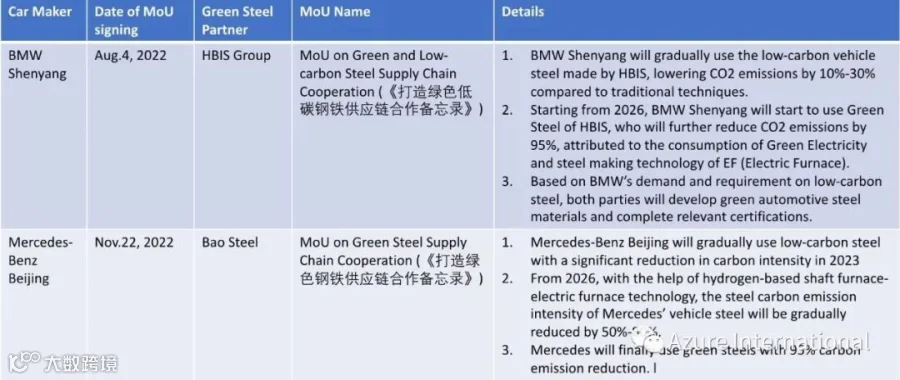
Notably, foreign car makers have already started strategic deployment of green steel supply chain in China. Both BMW and Mercedes-benz have recently locked up green steel cooperation memorandums with the two key steel makers in China for their manufacturing bases in China:
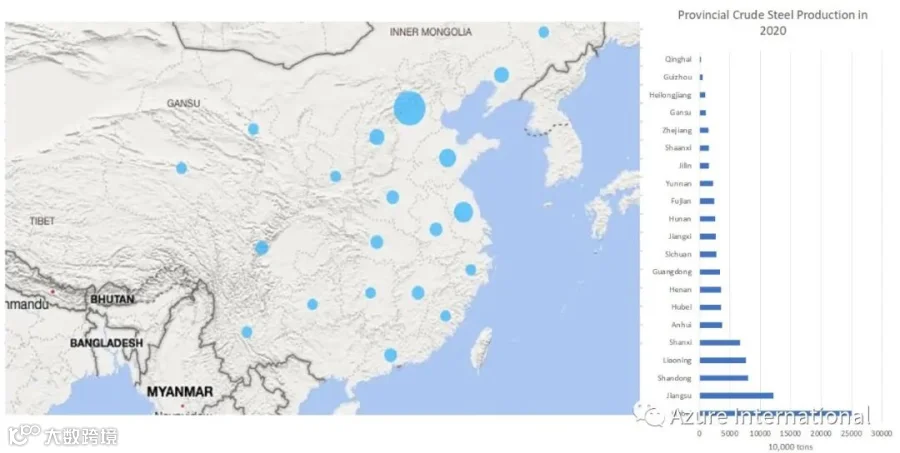
Source: State Statistics Bureau, Azure
As the largest steel production and consumption country in the world, China contributes over 50% of the total crude steel production and over 60% of the industry’s carbon emissions globally. While there are some doubts on the design and the effectiveness of the CBAM, the rules are a shove in the right direction to help the massive Chinese metal industry follow a greener pathway.
(China Daily 1, China Daily 2)
This content is prepared by the Research and Strategy Team of Azure International. Please contact us via our official account or email for any enquiry.
E-mail address:
info@azure-international.com
Scan the QR code to follow
Azure International Technology
Development (Beijing) Co.,Ltd