China’s first grid parity offshore wind farm has generated power in Guangdong province. To achieve grid parity, the project takes advantage of the decreasing trend for turbine costs and relatively good environmental conditions in Guangdong. However, in certain areas such as Shanghai, where projects will be required to be equipped with 4 hours of energy storage capacity, such cost reductions might be partly offset as local governments require offshore wind projects to internalize the cost of energy storage capacity.
The Chinese central government has published a policy clarifying implementation and rules for the exemption of incremental renewable power consumption in power users’ power consumption accounting. While many questions remain, such a policy could encourage power users to purchase green electricity certificates (GECs). We analyze this latest document in our Corporate Net Zero Pathways column.
-
China’s first grid parity offshore wind farm starts operating
-
Shanghai offshore wind projects must be bundled with 4-hours of energy storage capacity
-
China's first 500kW hydrogen fuel cell powered boat successfully assembled
-
China’s Ministry of Finance announces CNY 4.71 billion budget for 2023 renewable power subsidies
-
Corporate Net Zero Pathways: Chinese government issues policy to promote renewable energy consumption. Will the Chinese GEC market finally take-off?
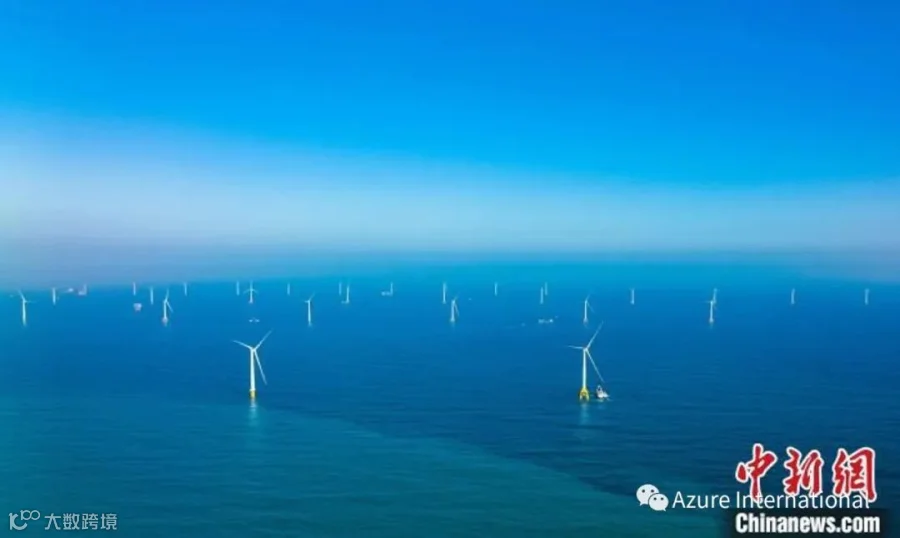
China’s first grid parity offshore wind farm starts operating
CGN Shanwei Jiazi I 500MW offshore wind project, China’s first grid parity offshore wind farm, was completed and has started generating power in Guangdong. The project has an installed capacity of 500MW, using 78 units offshore wind turbines from Mingyang smart energy.
The project’s distance from the shore is 25 kilometres with water depth between 30 and 35 meters. It is equipped with a 220kV offshore substation and a 500kV onshore substation shared by the three projects of CGN Houhu, Jiazi 1 and Jiazi 2.
Shanghai offshore wind projects must be bundled with 4-hours of energy storage capacity
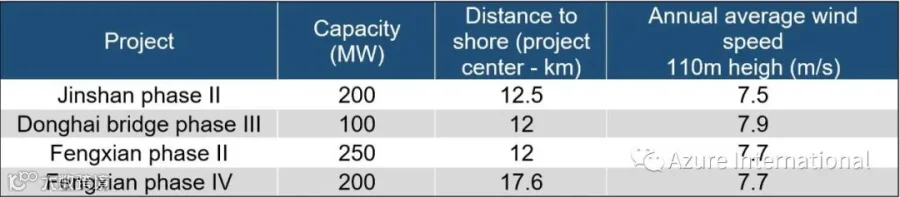
The Hangzhou Bay offshore wind competition plan was released by Shanghai DRC. The plan includes 4 offshore projects with a total capacity of 750 MW.
The plan also requires offshore wind power to be accompanied with more than 4 hours of storage capacity, while the storage power (MW) requirements will vary between 10 and 20 % of the offshore wind project capacity depending on the project owner’s peak shaving capacity in Shanghai. Further requirements concerning the efficiency and lifespan of the storage systems are also explained in the document.
China's first 500kW hydrogen fuel cell powered boat successfully assembled
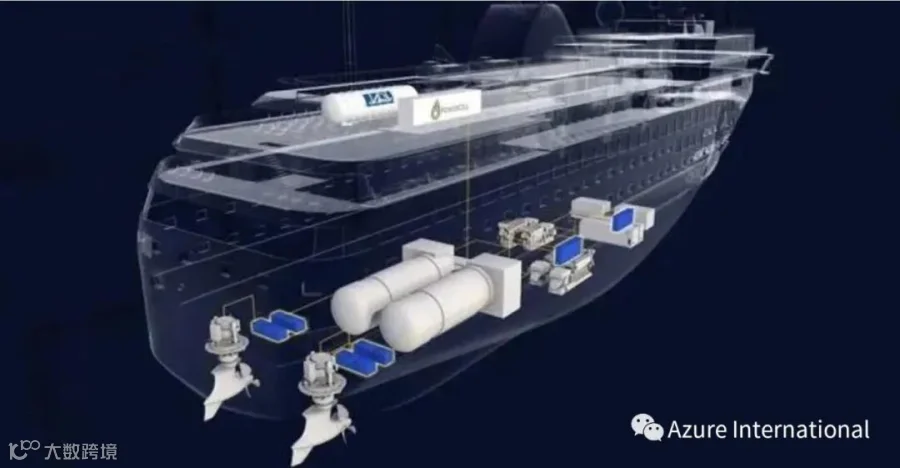
Jianglong Shipbuilding successfully completed the assembly of the "Three Gorges Hydrogen Boat No. 1". This ship is the first 500kW hydrogen fuel cell powered boat in China to be classified by China Classification Society (CCS).
"Three Gorges Hydrogen Boat No. 1" combines a hydrogen fuel cell and a lithium-ion battery power system. It has a steel-aluminum composite structure with a total length of 49.9m, a width of 10.4m, and a depth of 3.2m. It can reach a maximum speed of 28km/h and a cruising range of 200km at 20km/h.
(NEW.QQ.COM)
China’s Ministry of Finance announces CNY 4.71 billion budget for 2023 renewable power subsidies
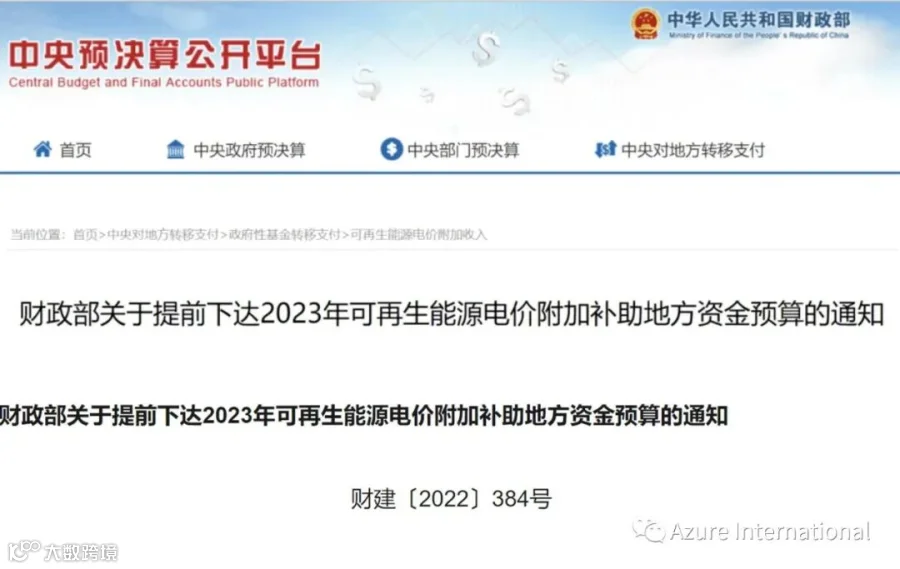
China’s Ministry of Finance issued the " Notice of the Ministry of Finance on the Subsidy Budget for the Renewable Energy Electricity Prices in 2023". According to the document, wind power will receive CNY 2.046 billion, photovoltaic CNY 2.58 billion, and biomass CNY 84.25 million.
In total, the subsidy budget amounts to CNY 4.71 billion (USD 660 million). The subsidies are distributed by grid companies to eligible renewable power generation projects via a feed in tariff mechanism.
Corporate Net Zero Pathways
Chinese government issues policy to promote renewable energy consumption. Will the Chinese GEC market finally take-off?
NDRC, NEA, and the National Statistics Bureau finally released a notice to clarify the initiative to make the incremental consumption of renewable energy not included in the local government’s total yearly energy consumption (《有序推进新增可再生能源电力消费量不纳入能源消费总量控制》), after it has been highlighted in several documents and speeches by the central government since the beginning of this year.
Definition of new additionality of renewable power consumption:
2020 renewable power consumption of different provinces will be used as the reference value. During the 14FYP (2021-2025), yearly incremental renewable power consumption is considered a new additionality, which can be deducted from the national and provincial/regional annual energy consumption total. However, it will be still considered in the energy consumption intensity calculation.
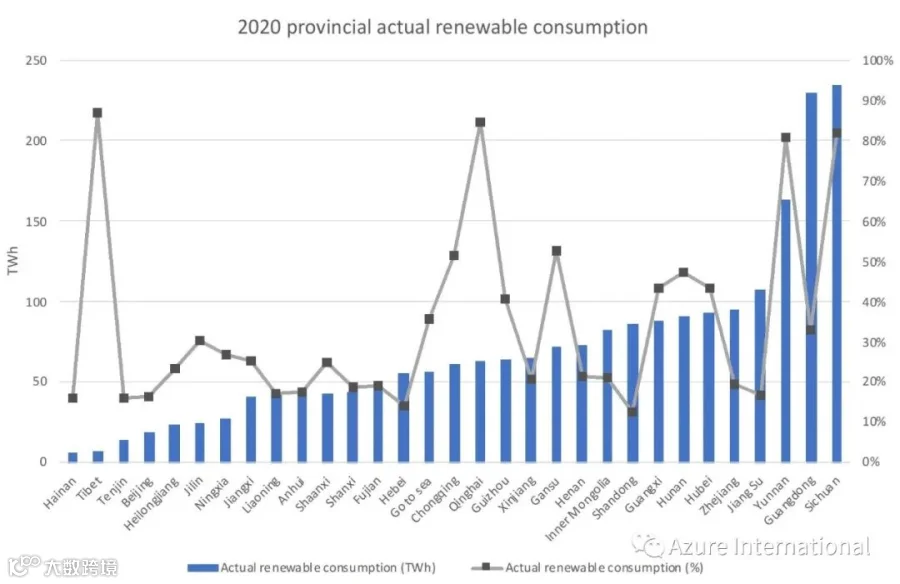
It is believed that the local governments will actively promote local renewable power consumption, while monitoring the energy efficiency of power users at the same time. In this case, local governments may tend to keep incremental renewable energy for new C&I project investments with high GDP to energy consumption ratios, leaving out traditional energy-intensive industries. For example, the Shandong provincial government has already declared that incremental renewable energy during the 14FYP would not be used for new two-high industry projects, which refers to industries with high-emissions and high-energy-consumption such as coking, cement, chemical fertilizer, tyre-making etc.
The policy is a national guideline to promote renewable power consumption. When it comes to local implementation pertaining to specific industries and power consumers in different provinces, provincial governments may have the freedom to decide the details.
Green Electricity Certificate (GEC) is used as the unique token of green electricity consumption
Every year the total number of GECs owned by all power users in a province will be used for the accounting and verification of said province’s renewable power consumption. Meanwhile, the renewable power consumption of enterprises will also be calculated based on the quantity of GECs it holds.
GECs will cover all sorts of renewable power including power generated by wind and solar, hydro, biomass, geothermal sources, etc. Under such circumstances, the GEC supply will increase significantly.
It is safe to infer that more and more provincial regulators would soon impose Renewable Portfolio Standard (RPS) targets on all power users in the power trading market. For those who have constraints in sourcing renewable energy, buying GEC will become a handy solution to meet the targets.
As far as power users who hope to avoid “green-washing” and “double counting possibility”, participating in green power trading to obtain GECs bundled with green electricity will remain the best option.
To conclude, it is still important for local governments to clarify several essential questions: What are the implications and impacts on power end-users if they consume renewable energy? What should be defined as incremental renewable power consumption for end users? Besides, how will the new policy correlate to the carbon emissions accounting system for emitters? Finally, with the spike of GEC supply in the market, how will a pricing system for different sorts of renewable energy be established? There remain many more questions that need to be answered.
This content is prepared by the Research and Strategy Team of Azure International. Please contact us via our official account or email for any enquiry.
E-mail address:
info@azure-international.com
Scan the QR code to follow the official
account of
Azure International Technology
Development (Beijing) Co.,Ltd