According to incomplete statistics, 60GW of wind turbine tenders were completed in the first 9 months of 2022, similar to figures reached for the whole of 2021, underlining strong activity in the wind power market.
Energy storage continues making the headlines, as Shanxi announced plans to reach 10 GW of installed capacity by 2030, while the construction of a 350 MW/1400 MWh salt cavern compressed air energy storage project was started in Shandong province.
The NDRC and four central government ministries have released a strategy for the green development of waterway vessels. According to the document, green fuels will be a key element in China’s strategy to decarbonize a sector that represented 2.5% of China’s CO2 emissions. We present this policy in our Corporate Net Zero Pathways column.
The Azure Research
and Strategy team
-
60GW wind turbine tenders concluded in the first 9 months of 2022
-
Offshore wind project energy storage EPC bidding result reaches CNY 1.7/Wh
-
Construction of 350MW salt cavern compressed air energy storage project started
-
Shanxi province plans to build 10GW energy storage by the end of 2030
-
Corporate Net Zero pathways: China focuses on green fuels for its inland waterway vessel industry development

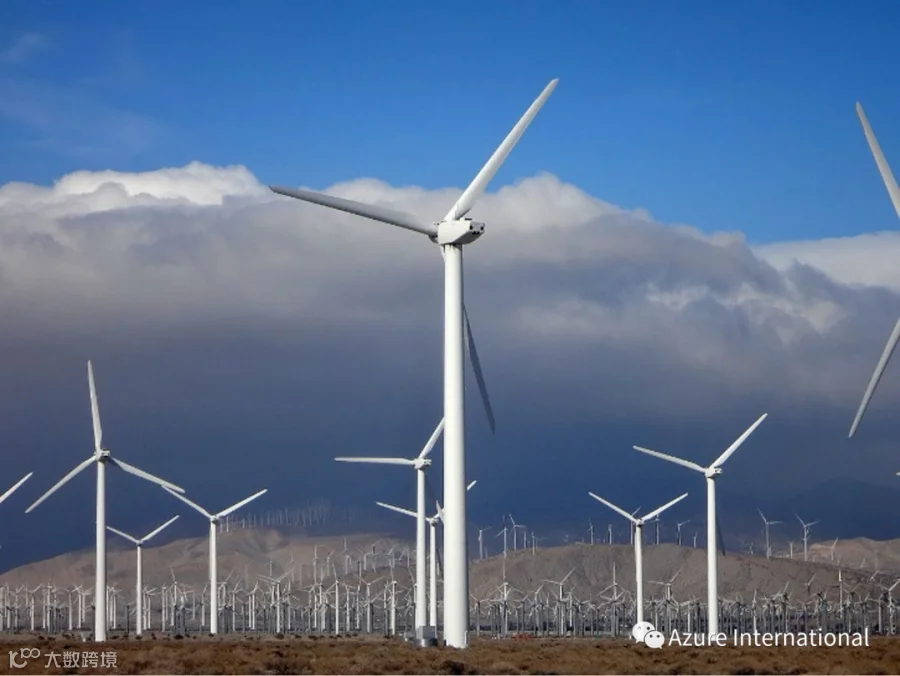
60GW wind turbine tenders concluded in the first 9 months of 2022
According to incomplete statistics, from January to September this year, wind power manufacturers participated in tenders for 321 projects representing nearly 60 GW in capacity.
The top 3 winning manufacturers were Goldwind Technology with 12GW of tenders won, Envision Energy with 11GW, and Mingyang Smart with 10.5GW. The market is relatively concentrated as the top three manufacturers accounted for 57% of the total market, with the fourth manufacturer (Sany Group) only reaching 5GW.
The main power developers launching these tenders were Huaneng (8.9GW), CHN Energy (5.7GW), and Huadian (5.6 GW).
Offshore wind project energy storage EPC bidding result reaches CNY 1.7/Wh
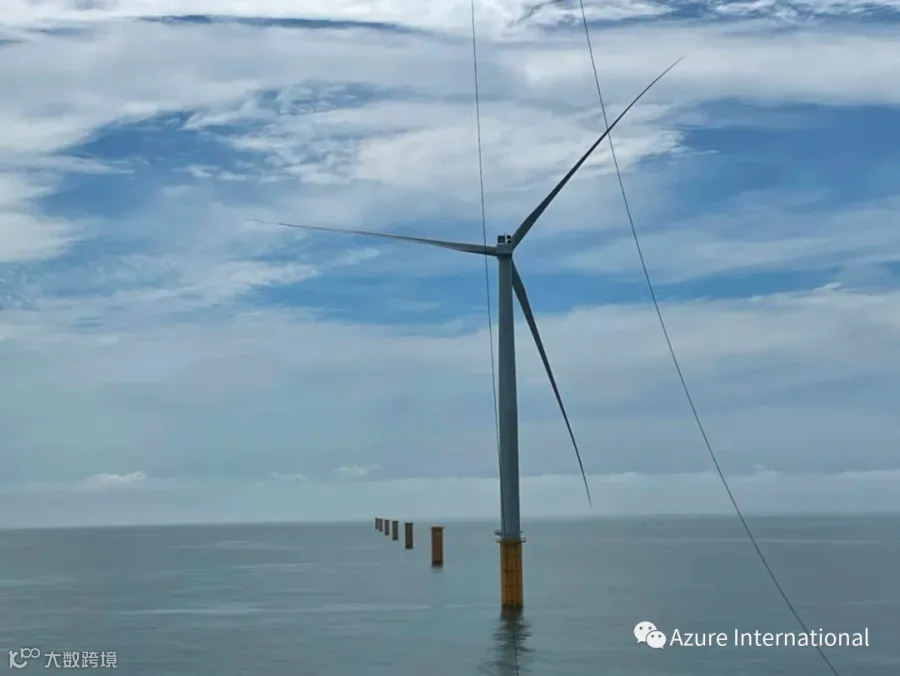
The bidding results of the energy storage EPC for the Huarun Zhejiang Cangnan 1# offshore wind project have been released. A 24MW/24MWh energy storage system will be built to support the project’s power supply reliability.
CEEC (China Energy Engineering Group) won the tender with a CNY 41 million bid, resulting in a unit price of CNY 1.7 / Wh. Cangnan 1# is situated 26 km from the coast in water depths ranging from 19 to 26m. It will use twenty-four 6.25MW and twenty-five 10MW offshore wind turbines for a total capacity of 400 MW.
Construction of 350MW salt cavern compressed air energy storage project started
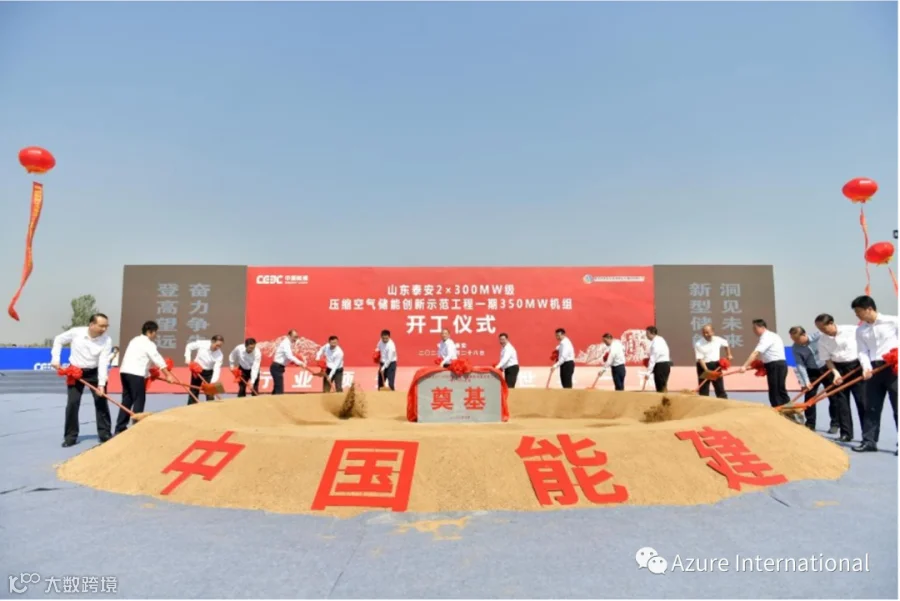
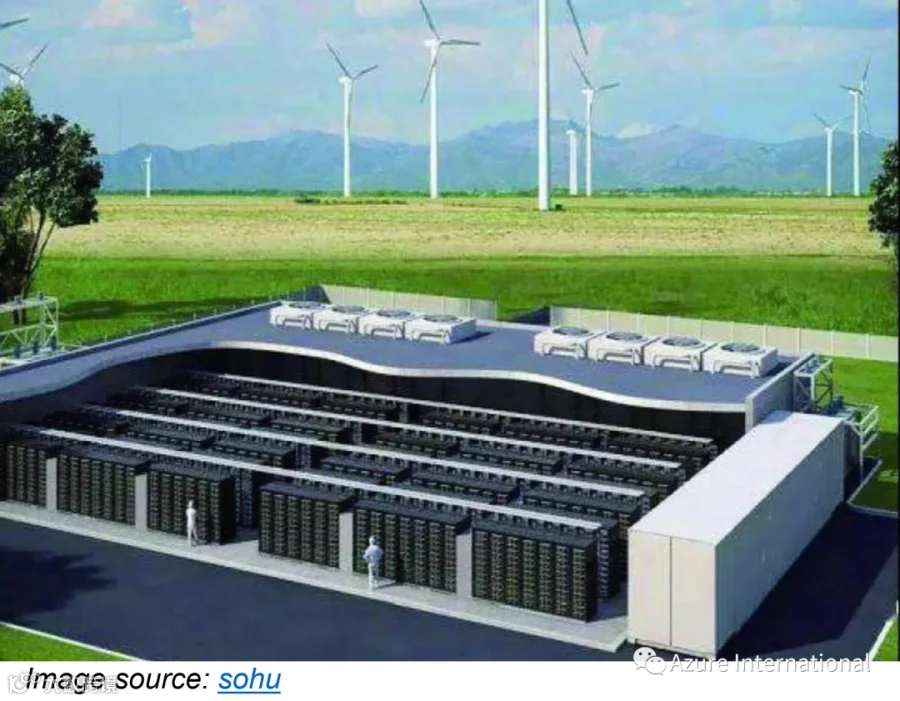
The first phase of the Taian (in Shandong province) 2*300MW compressed air energy storage project has started construction. A 350MW/1400MWh energy storage system will be built in this first phase, representing a CNY 2.23 billion (USD 310 million) investment.
It will use a low-melting point molten salt high-temperature adiabatic (i.e., heat does not enter or leave the system) compression technology. It has a designed energy storage/charging time of 8 hours and an energy release/discharge time of 4 hours.
Shanxi province plans to build 10GW energy storage by the end of 2030
The Shanxi (山西) energy bureau held a press conference to present the province’s energy roadmap in the next 10 years. By the end of the "14th Five-Year Plan", new and clean energy will represent 50% of total installed capacity and 30% of total power generation. Pumped storage will be prioritized for energy storage.
The province will strive to start the construction of 2-3 energy storage power stations every year starting from next year to reach 10 GW installed capacity by the end of the "14th Five-Year Plan".
Corporate Net Zero Pathways
China focuses on green fuels for its inland waterway vessel industry development
The National Development and Reform Commission (NDRC) and four central government ministries – the Ministry of Industry and Information Technology (MIIT), the Ministry of Finance (MoF), the Ministry of Ecology and Environment (MEE), and the Ministry of Transport (MoT), recently jointly issued the Guiding Opinions on Accelerating the Green and Intelligent Development of Inland Waterway Vessels 《关于加快内河船舶绿色智能发展的指导意见》. Inland waterway vessels include ships navigating the waters of China's domestic rivers and the junction area of rivers and seas, mainly comprising passenger ships, cargo ships, engineering ships, etc.
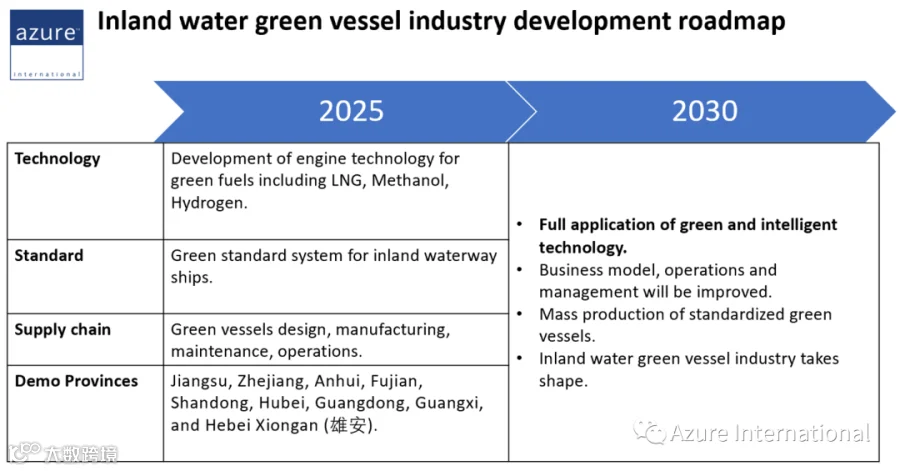
Specific plans for methanol and hydrogen green fuel vessels:
LNG powered engine technology upgrade
Develop hybrid fuel technology (LNG + electricity)
Accentuate LNG engine application for long-distance voyage vessels with over 2000 tons load capacity.
-
Start the R&D and application of battery-switching for cargo ships.
Strengthen the R&D of technical equipment such as marine hydrogen fuel cell power systems, hydrogen storage systems, and filling systems
Explore the application of hydrogen fuel cell power technology in passenger ships and other applications
-
Encourage the use of green hydrogen
Inland water shipping, a challenge for Chinese regulators
In 2018, waterways transportation accounted for 23% of China’s transportation sector energy consumption. According to data from the International Energy Agency (IEA), China's transportation sector energy consumption reached 467 million tons of standard coal equivalent in 2018, accounting for 10.2% of total energy consumption; The transport sector emitted about 1 billion tons of CO2, accounting for about 10.7% of total CO2 emissions, while the waterway transportation sector represented about 2.5% of China’s total CO2 emissions. According to the "Outline for the Development of Inland Waterway Shipping" released by the MoT in 2020, "by 2035,the turnover of inland waterway goods will account for 9% of the total", “the length of inland waterways that can handle ships over 1000 tons load capacity will reach 25000 km”. Controlling the rising emissions of inland water shipping in the mid-long term is becoming a crucial task for Chinese regulators.
This content is prepared by the Research and Strategy Team of Azure International. Please contact us via our official account or email for any enquiry.
E-mail address:
info@azure-international.com
Scan the QR code to follow the official
account of
Azure International Technology
Development (Beijing) Co.,Ltd