
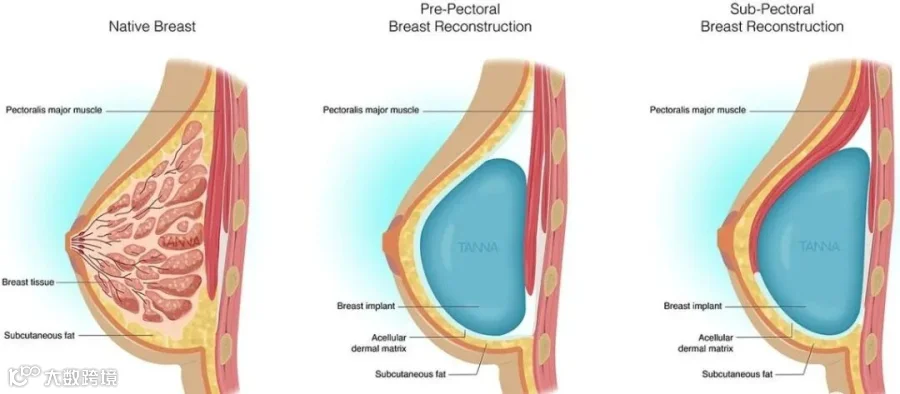
乳房切除术后乳房重建时,传统将假体植入胸大肌后。近年来,乳房重建时将假体经合成补片或脱细胞真皮基质包裹后直接植入胸大肌前,能够保留完整胸大肌,防止肩部功能障碍,包膜挛缩率较低,短期效果良好,不过目前缺乏大样本长期安全性数据。
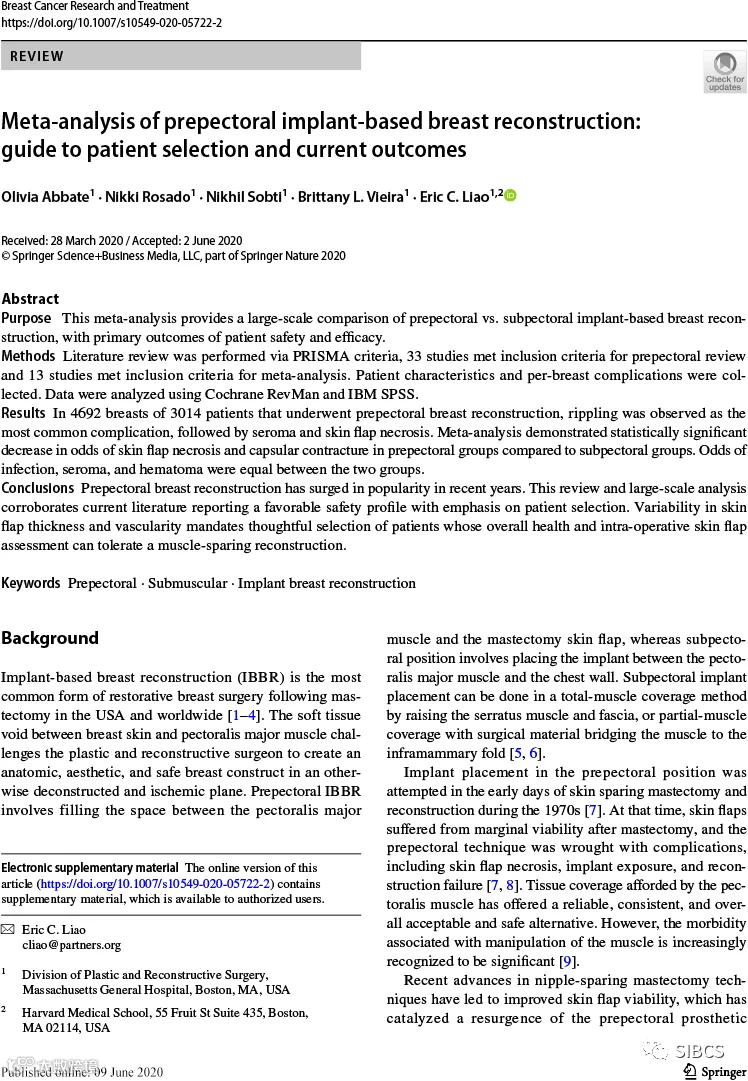
2020年6月9日,施普林格自然旗下《乳腺癌研究与治疗》在线发表美国哈佛大学医学院、麻省总医院的研究报告,通过系统回顾和荟萃分析,对胸大肌前与胸大肌后植入物乳房重建的患者安全性和有效性主要结局进行了大规模比较,为如何选择合适的患者提供了指导意见。
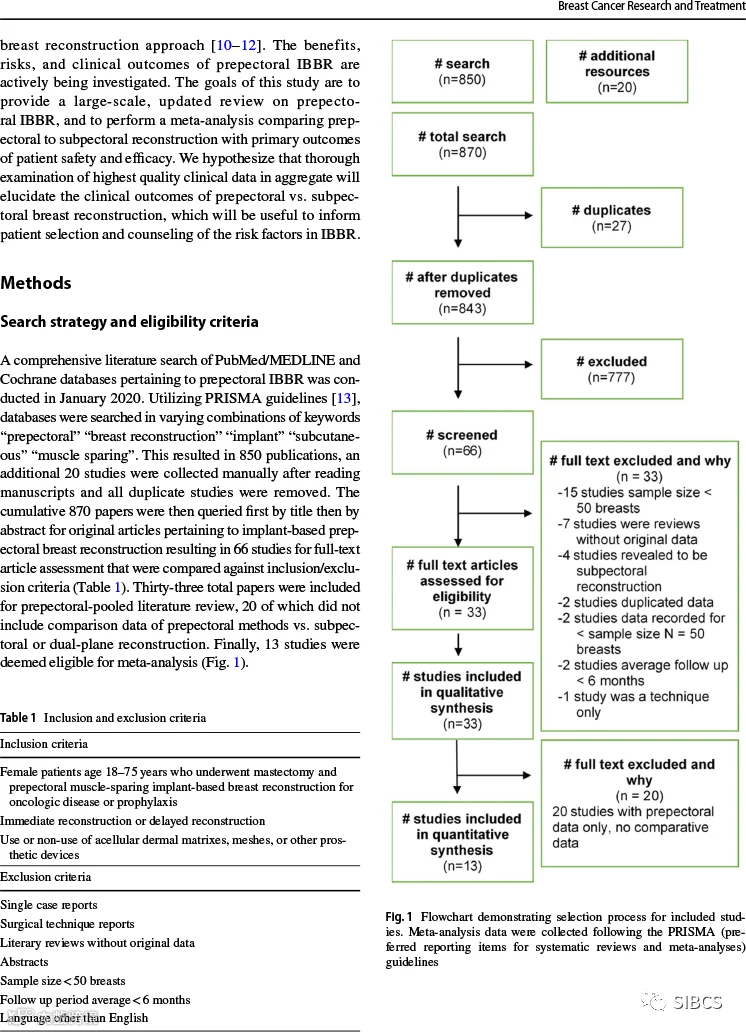
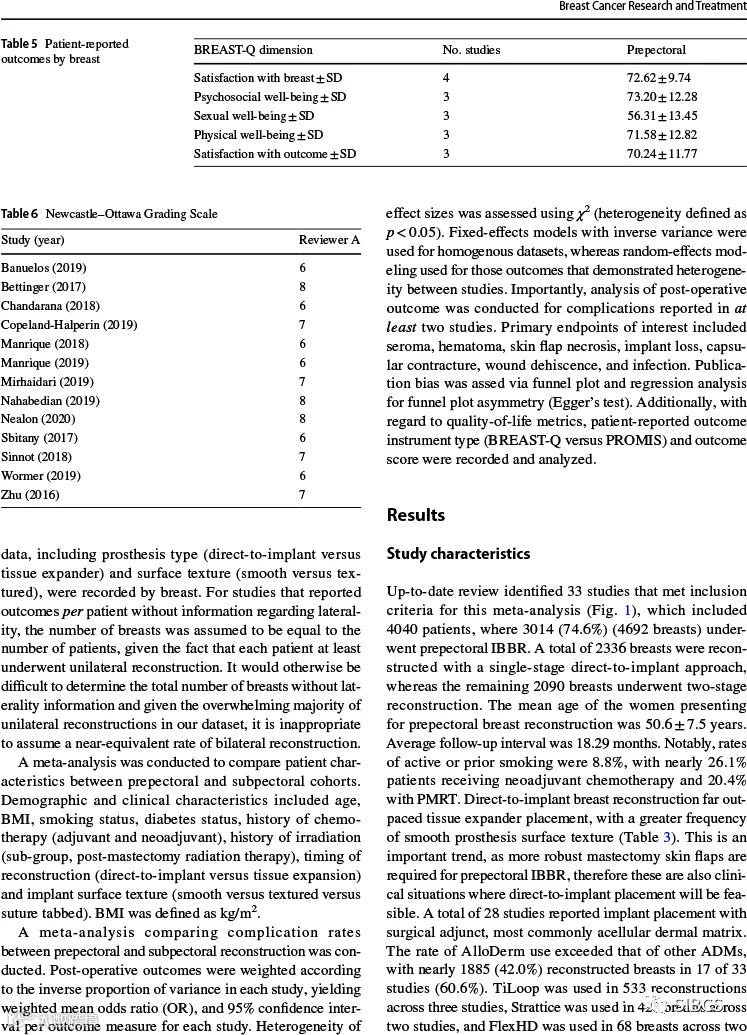
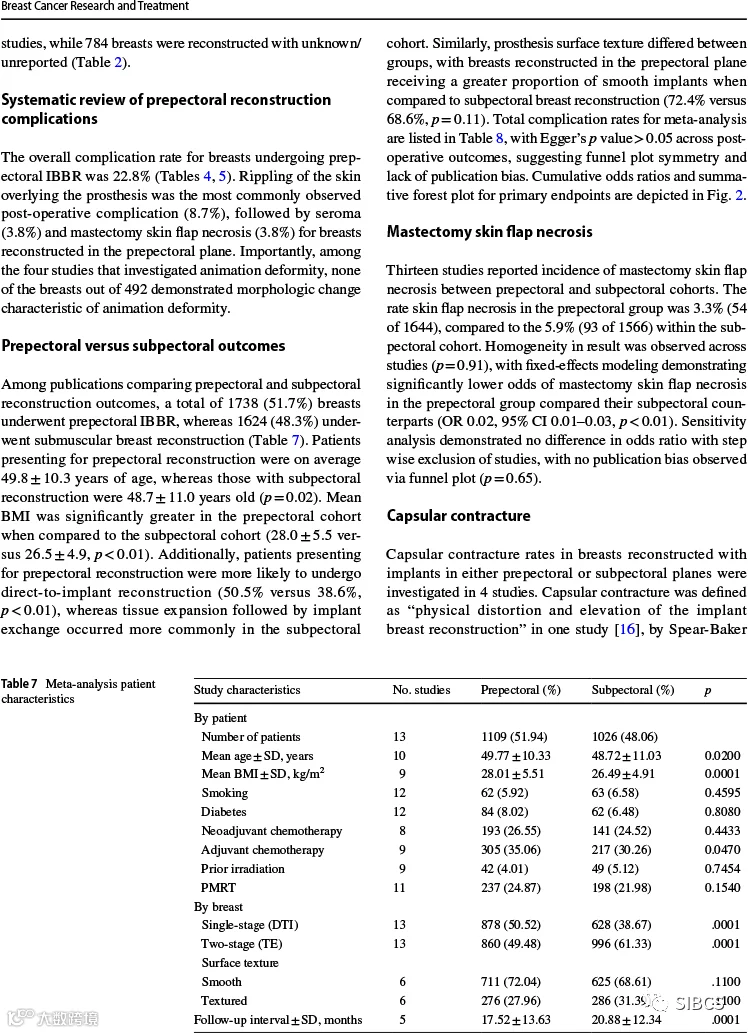
该研究首选按照系统回顾和荟萃分析推荐报告项目PRISMA标准进行文献检索,33项研究符合胸大肌前系统回顾入选标准,13项研究符合荟萃分析入选标准。随后收集患者特征和每个乳房的并发症。最后通过考科蓝系统回顾软件和IBM公司SPSS统计学软件对数据进行分析。
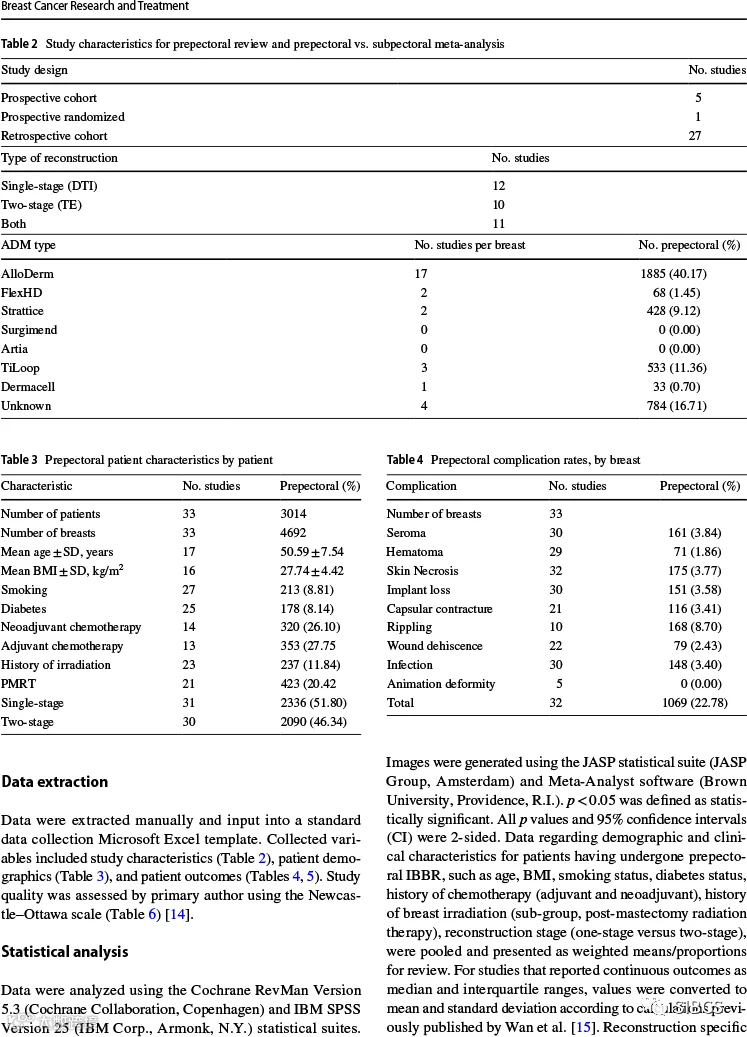
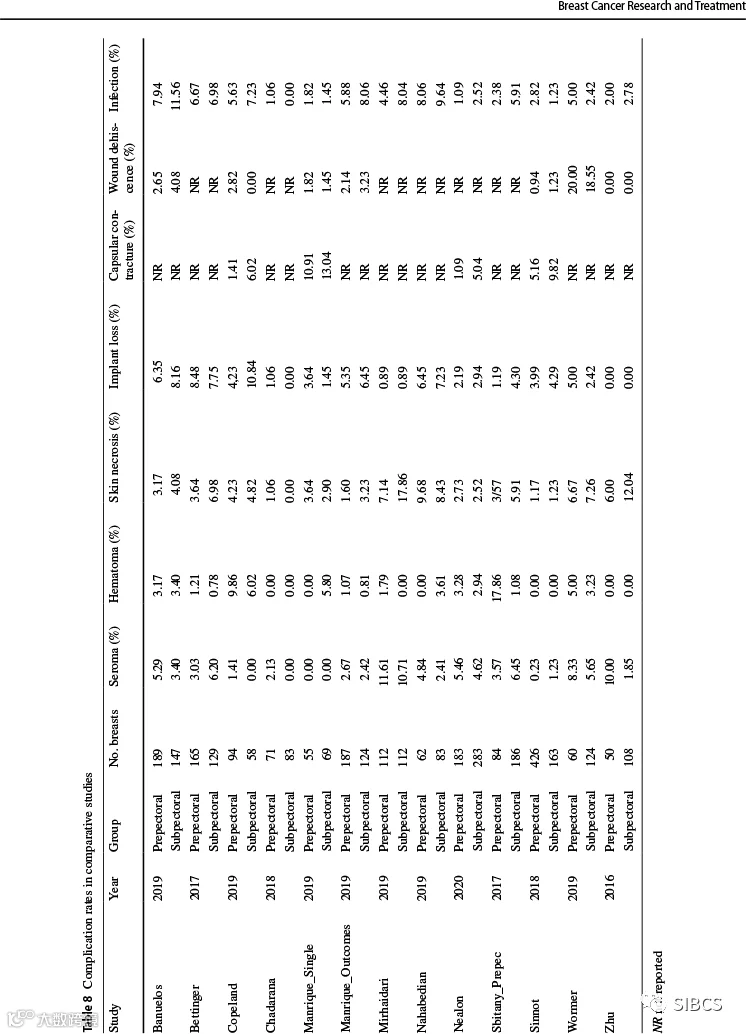
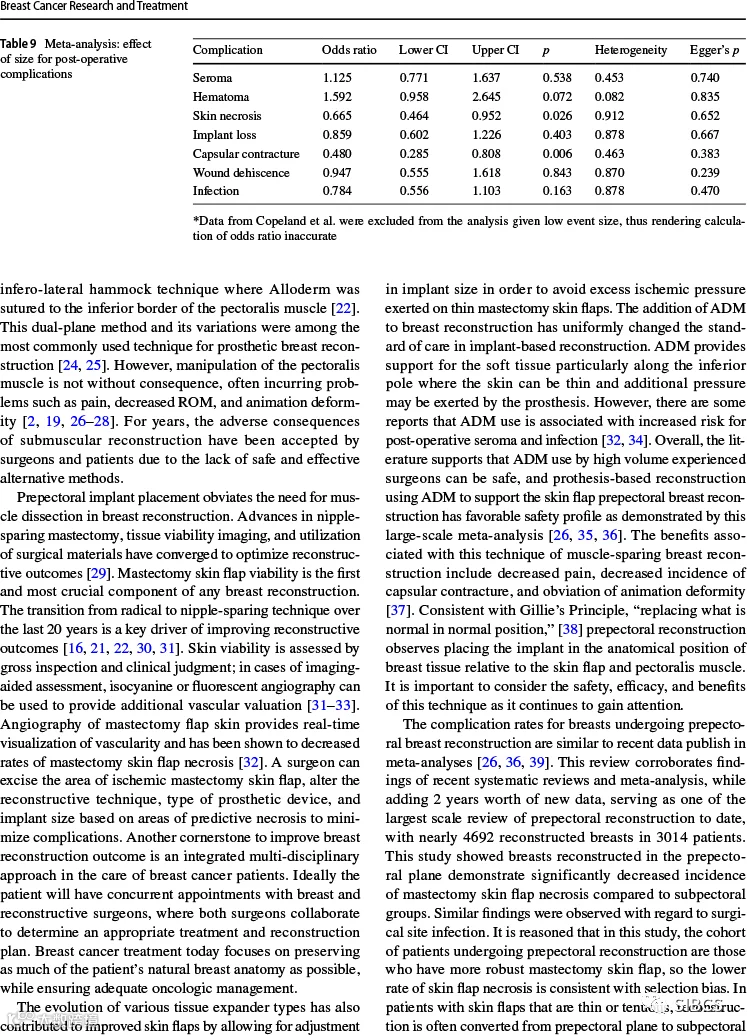
结果,胸大肌前乳房重建患者合计3014例,重建乳房4692个,最常见的并发症为乳房表面波纹,其次为血清肿和皮瓣坏死。
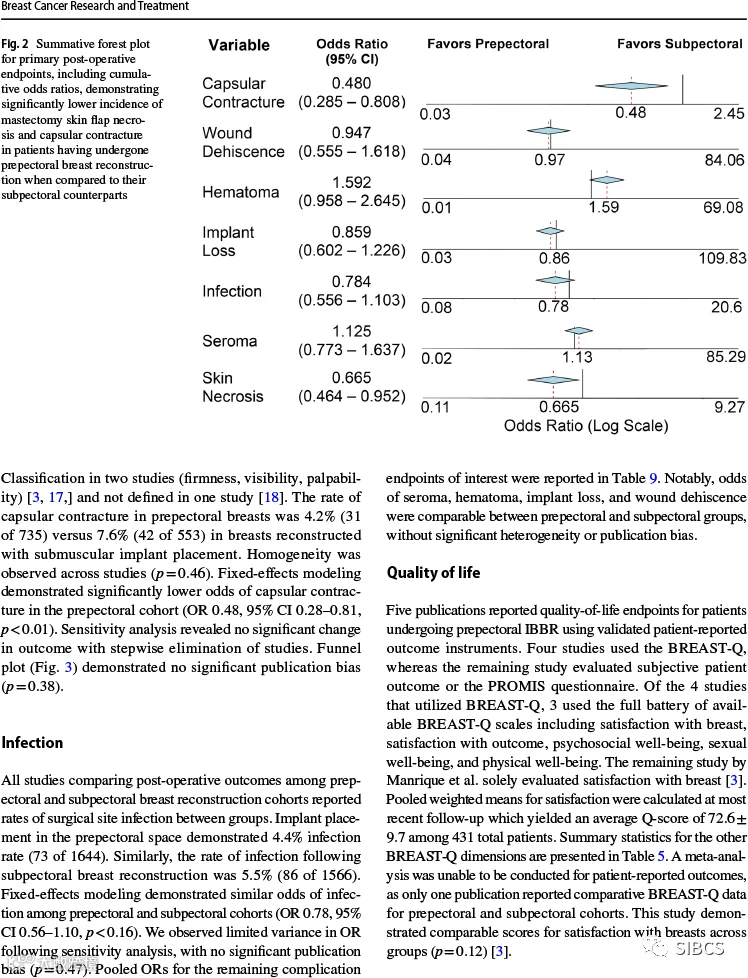
荟萃分析表明,胸大肌前与胸大肌后相比:
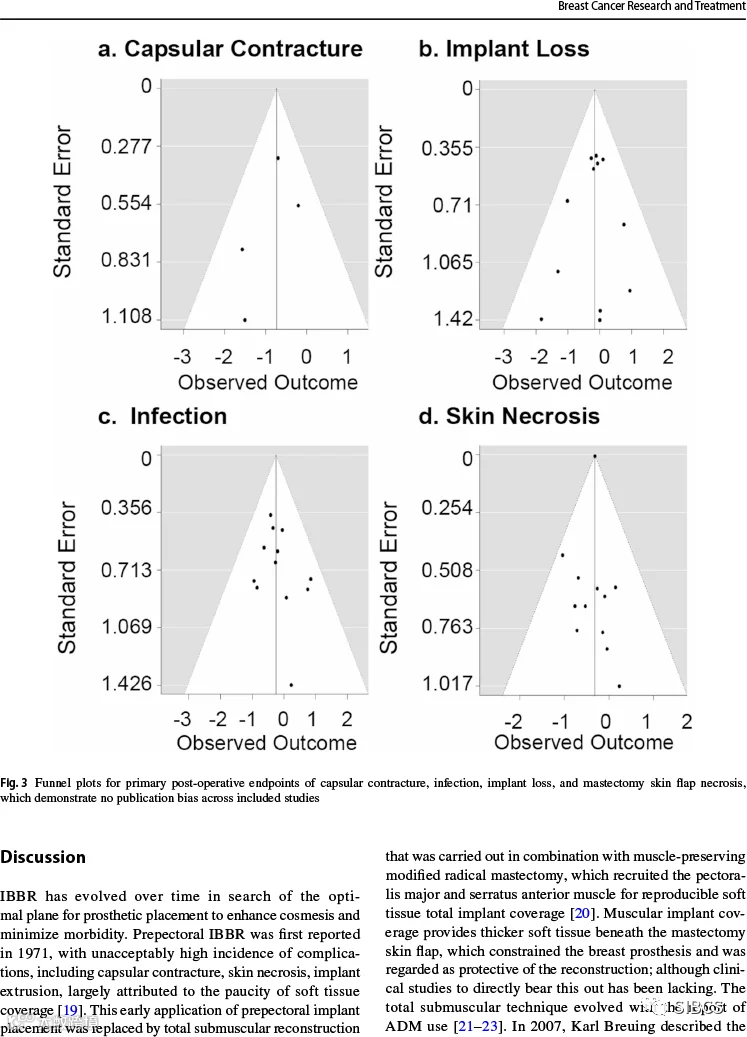
皮瓣坏死:发生比例显著较低
包膜挛缩:发生比例显著较低
感染:发生比例相似
血清肿:发生比例相似
血肿:发生比例相似
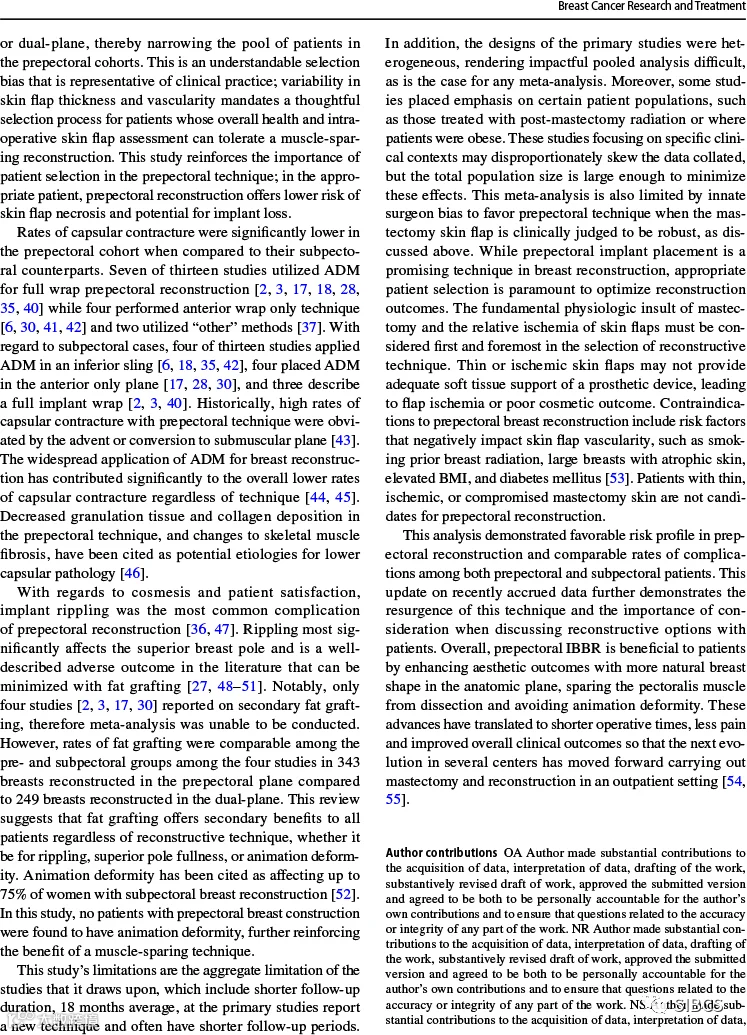
因此,该研究结果表明,近年来胸大肌前乳房重建已经迅速普及,安全性良好,选择合适的患者至关重要。不同患者的皮瓣厚度和血管分布各不相同,这要求对患者进行缜密的选择,其整体健康状况和术中皮瓣评定可以耐受保留肌肉的乳房重建手术。
相关链接
Meta-analysis of prepectoral implant-based breast reconstruction: guide to patient selection and current outcomes.
Abbate O, Rosado N, Sobti N, Vieira BL, Liao EC.
Massachusetts General Hospital, Boston, MA, USA; Harvard Medical School, Boston, MA, USA.
PURPOSE: This meta-analysis provides a large-scale comparison of prepectoral vs. subpectoral implant-based breast reconstruction, with primary outcomes of patient safety and efficacy.
METHODS: Literature review was performed via PRISMA criteria, 33 studies met inclusion criteria for prepectoral review and 13 studies met inclusion criteria for meta-analysis. Patient characteristics and per-breast complications were collected. Data were analyzed using Cochrane RevMan and IBM SPSS.
RESULTS: In 4692 breasts of 3014 patients that underwent prepectoral breast reconstruction, rippling was observed as the most common complication, followed by seroma and skin flap necrosis. Meta-analysis demonstrated statistically significant decrease in odds of skin flap necrosis and capsular contracture in prepectoral groups compared to subpectoral groups. Odds of infection, seroma, and hematoma were equal between the two groups.
CONCLUSIONS: Prepectoral breast reconstruction has surged in popularity in recent years. This review and large-scale analysis corroborates current literature reporting a favorable safety profile with emphasis on patient selection. Variability in skin flap thickness and vascularity mandates thoughtful selection of patients whose overall health and intra-operative skin flap assessment can tolerate a muscle-sparing reconstruction.
KEYWORDS: Prepectoral, Submuscular, Implant breast reconstruction
PMID: 32514624
DOI: 10.1007/s10549-020-05722-2