
序言
在过去几年,我们收集与分析了很多企业出海材料,通过SJT技术,形成了几百个场景式案例。
以下两个案例,特别感谢服务过中资企业如中国电信、顺丰等大型知名企业的新加坡Calvin郑广民先生。
作为一名资深HRD/CHRO,他对中企管理有非常深刻的理解。在他启发、指导与帮助下,经过反反复复打磨,我们形成了这2个案例。
案例集中在人才获取中出现的一些典型问题。而这些问题,与我们平时泛泛而谈的合规风险管理形成巨大反差:口是心非,知行不合一的状态。
而是否能处理好这些问题,这需要一系列的训练。
第十六个案例:猎头合作模式触发危机全球化进程受挫,本地管理团队怎办?
Sinergy是一家中国领先的国际化新能源企业,过去十年在法国、德国、日本、沙特、阿联酋、马来西亚、印度尼西亚、菲律宾和泰国均取得长足发展。如今,公司决定在新加坡设立国际总部,搭建首个区域管理中心,加速向跨国企业集团转型升级。

在全球业务扩张中,Sinergy依赖国际化人才,规模从一万人快速翻倍,营业额已高达百亿并保持高速增长。总部采取“一年一签、每年淘汰30%以上猎头”的合作策略,通过猎头提供的简历迅速建立庞大人才库,随后终止合作以规避高额费用。这种模式在部分海外市场奏效,但在监管更规范、行业透明度更高的新加坡却遭遇阻力。
为支撑新加坡总部的招聘需求,Sinergy外派Alan担任当地HR总监。Alan曾在中东工作并担任总部招聘总监,接受过系统的人力资源训练。然而,过去七八年中,Sinergy注重业务导向与成本控制,Alan对法律与道德合规的关注逐渐淡化。尽管他意识到新加坡招聘环境更透明、规则更严,但在总部严苛的招聘指标与成本考核下,仍被要求沿用原有猎头合作模式。
抵达新加坡后,Alan联系了多家国际及本土猎头公司,以销售总监和研发高级工程师为试单岗位。由于Sinergy坚持的“候选人所有权期限”“非规避条款”和佣金比例严重偏离国际惯例,多轮谈判僵持不下,正式协议一直无法签署。期间,Morgen猎头公司推荐了Kevin,一名全球化职业经理人,并将其纳入候选人名单。三个月后,进展依旧缓慢,Alan在未获Morgen同意的情况下,通过其他渠道联系Kevin并邀请面试。Kevin原本拒绝,并强调自己由Morgen推荐,但在Alan多次劝说下赴约,并在接受Offer前告知Morgen。
Morgen公司发现Sinergy绕过猎头直接接触候选人,认定其违反行业规则和合同精神,要求签署符合国际惯例的猎头协议并支付佣金。Alan虽多次与总部及Morgen沟通,但总部法务最终拒绝调整原有模式。随后,Morgen及其他试单猎头公司将此事投诉至新加坡行业协会和猎头联盟,并曝光于媒体,引发了相关部门与专业人士高度关注。Sinergy的惯用做法被广泛质疑,企业声誉与雇主品牌大受影响,潜在人才和合作机构纷纷拒绝往来,严重挫败其在新加坡乃至东南亚的战略布局。
面对总部管控与本地化业务需求的冲突,Alan与新加坡管理团队应如何应对这场多重危机?
Sinergy is a leading Chinese multinational in the renewable energy sector. Over the past decade, it has achieved considerable growth in France, Germany, Japan, Saudi Arabia, the UAE, Malaysia, Indonesia, the Philippines, and Thailand. Currently, the company plans to establish its international headquarters in Singapore, building its first regional management hub and accelerating its transformation into a fully fledged multinational corporation.
Throughout its global expansion, Sinergy has relied heavily on international talent. Its workforce has doubled from 10,000 employees, and annual revenue has surpassed 10 billion RMB, continuing to grow at a rapid pace. At headquarters, Sinergy follows a strategy of signing one-year contracts with overseas Chinese-oriented recruitment firms and eliminating over 30% of them each year. By leveraging these headhunters to quickly gather a large pool of candidate resumes, Sinergy then terminates agreements to avoid paying substantial recruitment fees. Although this approach has been successful in China and some overseas markets, it has encountered difficulties in Singapore, where regulations are stricter and the industry is more transparent.
To meet recruitment needs for the Singapore headquarters and regional operations, Sinergy assigned Alan as its expatriate HR Director. Having worked in the Middle East and received solid HR training, Alan had served as the Talent Lead at Sinergy’s headquarters. However, after seven or eight years at the company—where business performance and cost control were paramount—he paid diminishing attention to legal and ethical compliance. Although Alan was aware that Singapore’s recruitment environment is notably more transparent and strictly regulated, he remained under pressure from headquarters to meet demanding recruitment and cost targets by using the same headhunter cooperation model.
Upon arriving in Singapore, Alan engaged multiple international and local recruitment agencies, testing them with two positions: a Sales Director and a Senior R&D Engineer. However, Sinergy’s insistence on its own terms—covering “candidate ownership,” “non-circumvention clauses,” and specific commission rates—clashed with international norms and local industry standards, leading to prolonged negotiations without any formal agreement.
During this period, Morgen, one of the headhunters, recommended Kevin, a globally experienced manager, and included him in Sinergy’s candidate list. Three months later, with recruitment still moving slowly, Alan—without Morgen’s approval—contacted Kevin through another channel and invited him for an interview. Initially, Kevin declined, noting that Morgen had referred him, but he eventually relented after Alan’s repeated persuasion. Before officially accepting any offer, Kevin informed Morgen of the situation.
Morgen discovered that Sinergy had bypassed the headhunter and approached the candidate directly, viewing it as a breach of industry rules and contractual obligations. Morgen demanded that Sinergy sign a headhunter agreement aligned with international standards and pay the applicable commission. Although Alan attempted multiple times to negotiate with both headquarters and Morgen, Sinergy’s legal department ultimately refused to modify its existing approach. Morgen and other agencies that had conducted trial searches then filed complaints with the Singapore industry association and headhunter alliance, also reporting the incident to the media. This drew significant attention from Singapore’s Ministry of Manpower and international recruiting bodies. Sinergy’s longstanding practices came under scrutiny, severely damaging the company’s reputation and employer brand; many potential candidates and partner organizations distanced themselves, undermining Sinergy’s strategic ambitions not only in Singapore but throughout Southeast Asia.
Faced with the tension between headquarters’ centralized directives and the need for localized operations, how should Alan and the Singapore management team respond to this multifaceted crisis?
第十五个案例:招聘国际化人才失误,
企业出海新加坡滑铁卢
佛山的民营制造企业K&K在国内市场取得成功后,决定进入东南亚,并选择新加坡作为地区总部。由于公司长期依赖内部培养,管理团队国际化经验有限,因此决定在新加坡当地招聘熟悉广佛地区文化和新加坡市场的HRD与财务总监,配合外派的CEO,尽快搭建年轻化的本地管理团队。
总部HR总监Mia认为,公司作为国内行业头部企业,实力雄厚,如今媒体发达,完全可以通过媒体找到最优秀的知名人才。她通过华人网络,物色到了一位在知名中资企业新加坡代表处工作的HRD和一位华人圈内活跃的财务总监。两人均为大陆外派的不足35岁的年轻人才,熟悉中国文化,生活成本相对较低,薪酬要求也低于新加坡本地的国际化人才。两人长期活跃于各类出海管理论坛,在国内媒体和华人社群中影响力大,曝光度高,看似与企业文化高度契合,公司惜才如金,便迅速录用。
然而,三个月后,公司发现新加坡团队面临严重问题:尽管两位管理者在华人圈内知名,且在新加坡工作多年,但英语能力不足,倾向于在华人圈内活动,反而掩盖了他们对新加坡本地市场、法规及商业环境的实际熟悉程度,难以高效对接政府和商业伙伴。此外,总部仍然沿用高度集中的决策模式,而新加坡员工对“家长式领导”风格颇为反感,更倾向于民主、平等的管理方式,这导致管理沟通与团队磨合出现了诸多问题,业务推进缓慢,沟通成本陡增,跨国运营受阻。
公司管理层开始重新审视国际化人才招聘策略,意识到如何在全球化扩张的过程中,避免因企业文化惯性而陷入选才误区,确保所招聘的管理者不仅能认同企业文化,更能真正适应当地市场,仍然是公司管理层必须面对的挑战…
Foshan-based private manufacturing company K&K, a market leader in its industry, had built its domestic success on a strong supply chain and an internally developed talent pipeline. As the company set its sights on Southeast Asia, Singapore was chosen as the regional headquarters, serving as a gateway to expand into neighboring markets. However, K&K’s leadership team had little international experience, having relied primarily on homegrown talent with limited exposure to global markets. To bridge this gap, the company decided to hire a local HR Director and Finance Director in Singapore who could navigate both the Guangzhou-Foshan business culture and the Singaporean market. These new hires would support the expatriate CEO in building a young, localized management team.
K&K’s Group HR Director Mia was confident in the company’s strong reputation. With digital media making talent searches more accessible, she believed the best candidates could be found through industry networks and media exposure. Leveraging Chinese business circles in Singapore, she identified an HR Director working for a well-known Chinese enterprise’s Singapore office and a Finance Director who was highly active in Chinese expatriate business communities.
Both candidates were Chinese expatriates under 35, well-versed in Chinese corporate culture, and seen as cost-effective compared to internationally experienced local talent. They were regular speakers at forums on global expansion, well-connected in Chinese professional networks, and frequently featured in business media. Their profiles seemed like a perfect fit—aligned with K&K’s corporate culture and positioned to help the company integrate into the Singaporean market. Given K&K’s eagerness to secure talent, the hires were made quickly.
Reality Check: Three Months In
Soon after onboarding, significant challenges surfaced:
- Limited English proficiency hindered their ability to work effectively with
-
Their professional networks remained largely within Chinese expatriate circles, which masked a lack of deep understanding of Singapore’s legal, regulatory, and business environment. - K&K’s top-down decision-making structure clashed with Singaporean employees’ expectations of a more democratic, decentralized leadership style.
- The paternalistic leadership approach common in Chinese companies
The disconnect between headquarters’ expectations and local market realities resulted in delays, inefficiencies, and rising operational friction.
Rethinking the Global Talent Strategy
Recognizing the misalignment, K&K’s senior leadership began to reassess its approach to international hiring. They realized that social media visibility and active participation in expatriate business networks were poor indicators of true leadership capability. More importantly, a candidate’s alignment with corporate culture alone wasn’t enough—cultural adaptability and local expertise were equally critical.
As K&K continued its international expansion, it faced a pressing question:
How can the company refine its talent selection strategy to balance cultural alignment with the ability to lead effectively in local markets?
更多案例...
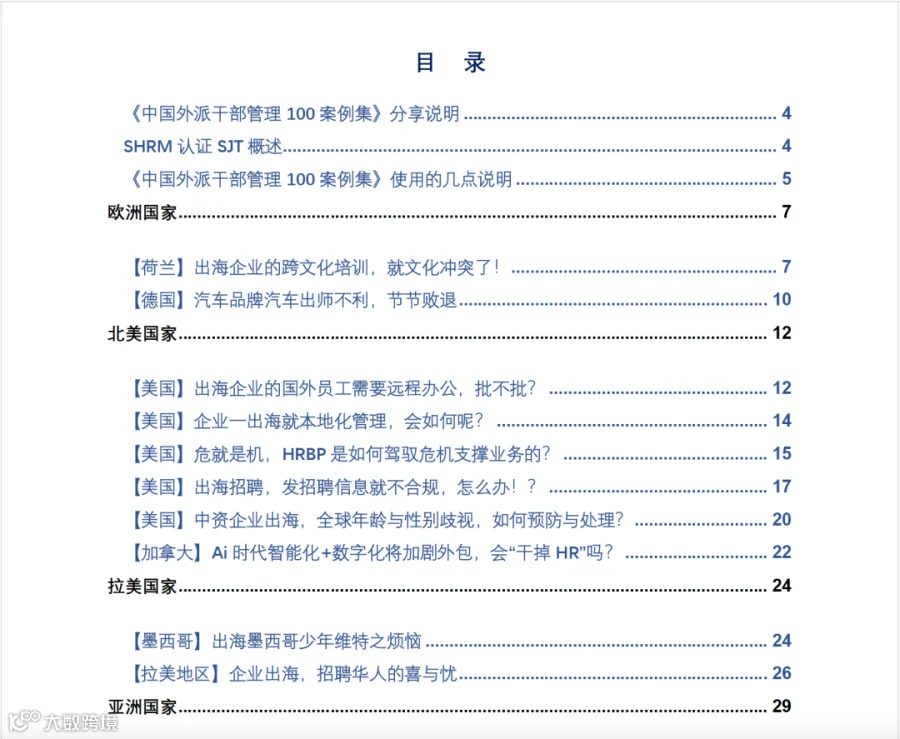
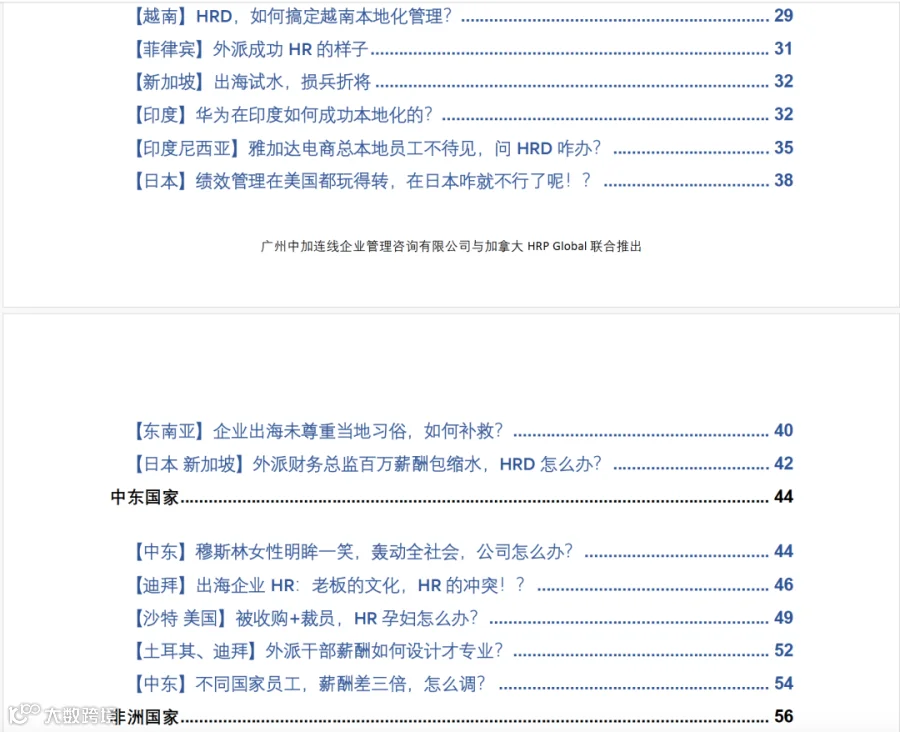
SJT(情境判断测试,Situational Judgment Test)案例题是一种评估候选人在特定情境下的判断和决策能力的测试方法。
SJT通过呈现真实工作场景或模拟情境,考察候选人在面对复杂问题或冲突时的处理方式。这种测试通常用于招聘、选拔和发展人才,尤其在管理、客服、销售等岗位中较为常见。
而案例分析Case Study通常是一个较长的故事或场景,要求被测试者从中分析和推理出某些关键信息,并提出合理的解决方案或建议。Case Study侧重于测试被测试者的分析能力和问题解决能力,以及他们在复杂情境下处理和解决问题的能力。Case Study通常在面试或评估中使用,也可用于模拟真实的工作场景或情境。
SJT案例题的主要特点包括:
- 情境描述:每个案例题都会描述一个具体的工作情境,情境可能涉及到工作任务、团队合作、客户服务、冲突解决等方面。
- 多项选择:候选人需要从几个可能的反应或解决方案中选择最合适的一个或几个。这些选择通常包括一些最佳行为和次佳行为,也可能包含一些不恰当的行为。
行为评估:SJT注重评估候选人的行为,而不仅仅是知识。通过考察应聘者在特定情境下的反应,评估他们的判断力、决策能力、问题解决能力和情商等。
无明确正确答案:与传统的笔试题不同,SJT案例题往往没有一个绝对的正确答案,而是根据情境的合理性和候选人的反应进行评分。评分标准通常由专家根据实际工作中的最佳实践制定。

SHRM
美国人力资源管理协会(简称SHRM)是全球最大的人力资源管理协会与人力资源教育机构。
SHRM成立于1948年,总部位于美国,目前拥有来自全球140多个国家超过32万名专业会员。其使命是通过提供最前沿和最充足的资源以满足人力资源管理专业人士的需求,提升人力资源的关键性和战略性地位以推动人力资源管理事业的发展。SHRM通过教育、认证与会员网络促进其会员的专业发展。
2015年以来,SHRM基于其研发的全球最领先的胜任力体系和案例分析,通过全球学习系统,变革性地推出下一代HR认证体系——SHRM-SCP/CP,并迅速成为了全球HR行业的顶流认证。
CCC
2017 年,CCC Consulting Incorporated(简称 CCC)成立于加拿大蒙特利尔,致力于推动全球化人才与全球化组织的成功。从创立之初,CCC 就将 SHRM 认证引入全球华人 HR 社区,并通过认证体系培养全球化人才。CCC 成为全球仅有的几家SHRM Education Partner区域合作伙伴之一,覆盖加拿大、中国大陆、香港与台湾。
自 2019 年起,CCC 同时成为 SHRM Recertification Provider,持续为提供 高水平的全球战略 HR 高管再认证课程。
在认证与再认证的基础上,CCC 培养了大批全球战略 HR导师与全球翻转学习领袖,并独创了基于 SHRM 胜任力的 SJT 案例教学课程体系。
我们的师资团队由经验丰富的全球化管理实战者、跨文化教练与顾问组成,足迹遍布非洲、东南亚、拉丁美洲、中东、北美与欧洲,积累了丰富的实践经验。
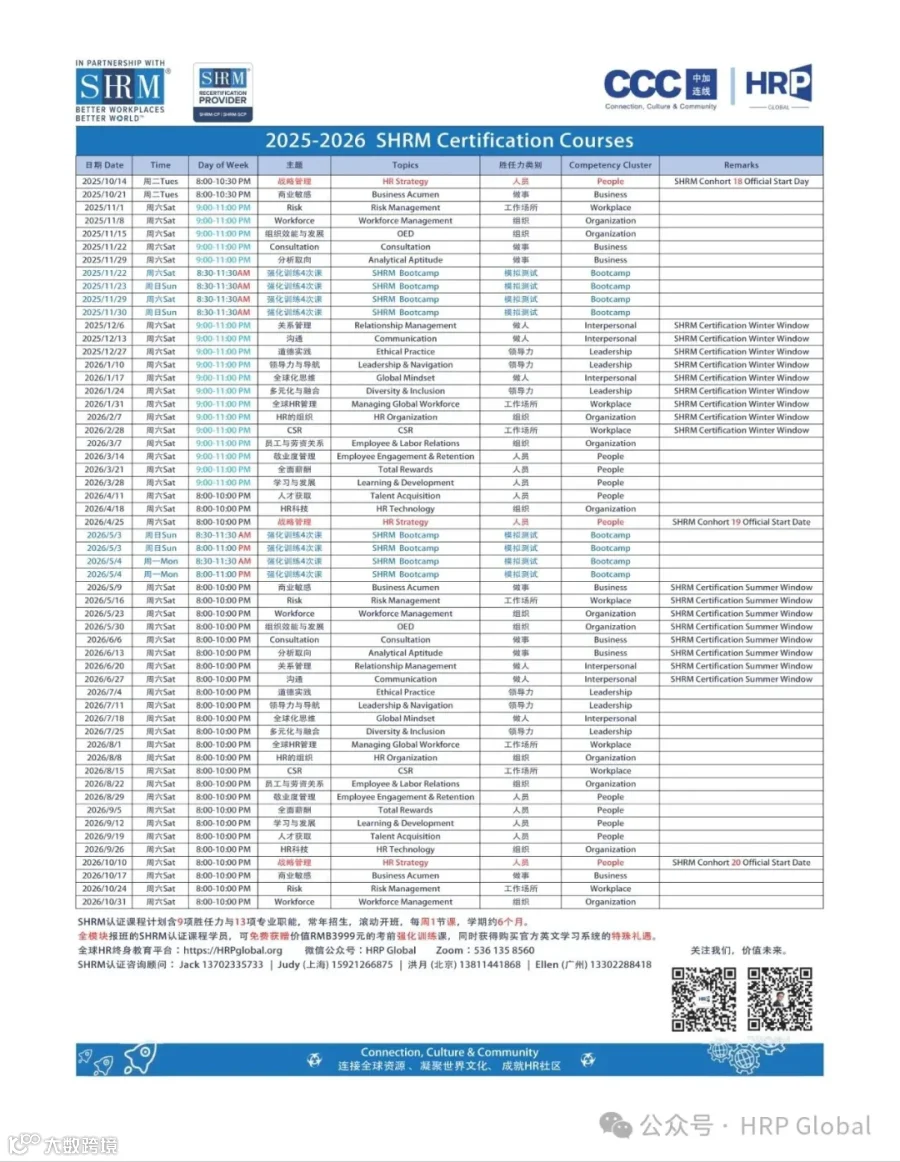
凭借坚实的研发能力,CCC 出版了《SHRM 胜任力训练宝典》,并在全球化管理的基础上,不断开发课程体系,推出 全球化管理培训与发展、教练与咨询服务。
转载分享:大荔枝
o 跨文化教练Cross-cultural Coach
o 全球HR管理教育者Global HRM Educator
o SHRM全球首席导师SHRM Global Lead Mentor
o 婚姻与家庭心理教练Marriage and Family Coach
o 全球翻转学习认证资深导师Global Flipped Learning Senior Master
o 情景判断测试专家Situational Judgetment Test Expert
关于我们
LAW PURPOSE

律意是一家创新型综合性跨境法律服务平台。
基于创始团队在法律大数据及法律服务行业近20年的经验,拥有覆盖全球156个国家和地区的资深律师网络及各行业法律专家资源,已经为数十家跨境制造与消费类企业节约了50%的时间与经济成本。致力于为企业出海提供专业、完善、便捷的一站式法律服务。
联系/关注我们

小管家微信

小红书

知乎

播客
电话:+86 021 31200806
邮箱:inquiry@lawpurpose.com
地址:上海市静安区愚园路108号7楼728