

 你的企业领导者是否有明镜?
中国的隋炀帝和唐太宗,这两位皇帝都是文武双全,才华横溢。但他们命运的结局却大不相同。前者沉溺于挥霍而亡国;后者却是公认的明君,开创了大唐盛世。这是为什么呢?
隋炀帝和唐太宗给予我们的启示
隋炀帝的陨落不仅归咎于其暴政和残虐,还由于他为奸佞之臣所围绕。这些朝臣,虽然身居要职,领着优厚的俸禄,但他们只关心自身,不想费心辅佐隋炀帝。他们这样做也并非出于利益最大化,而是因为敢于直言不讳的人都遭到了隋炀帝的惩罚。一位宫中的侍女听说有人要造反,于是向皇帝禀告。隋炀帝听到这个消息后非常不高兴,将她斩首。从此以后,没人再敢告诉皇帝他不想听到的消息。隋炀帝的利令智昏不仅让 “身家性命和江山落于叛军之手,而且沦为全世界的笑柄。”
相反,唐太宗非常重视谋士并愿意听从他们的建议。当他信任的丞相去世后,他为失去了一面 “明镜” 而悲恸不已:
“以铜为鉴,可正衣冠;以古为鉴,可知兴替;以人为鉴,可明得失。朕尝保此三鉴,内防己过。今魏徵逝,一鉴亡矣。”
唐太宗的优点之一是他能够接受下属的谏言。 为了避免重蹈隋炀帝的覆辙,吸取他不听从劝谏而亡国的教训,唐太宗登上王位后,积极网罗天下建议。他赋予朝廷谏臣更多权力,并鼓励所有官员批评他的决策,表达自己的观点。由于这些政策,唐朝在唐太宗的统治下达到了鼎盛。
虽然这些领导者生活在古代,但是有些东西亘古不变。不重视员工,不听取员工意见的领导者,只会让消极文化滋生。而寻求员工建议的领导者将获得有价值的信息,最终走向成功。
明镜的必要性
作为企业的领导者,你是否经常有这样的感觉:在团队会议上,下属提供的信息总是乐观积极的,但业务数据显示的信息却不容乐观;倾听下属的意见时,你不知道从何入手确定其合理性;或者甚至,你的公司已陷入危机,你迫切需要资深员工群策群力共同贡献他们的智慧,但没有人愿意分享他或她的真实想法......一个企业的领导者,即使是那些成功企业的领导者,往往也无法完全掌握公司真实情况的每一个细节。

 为什么企业领导者常常无法倾听最真实的声音?
你的企业价值观是否落实或真正被遵循?
大多数公司都有自己的企业价值观,常用词汇包括客户服务、创新进取精神、精准求实、诚信正直。诚然,一家公司,无论大小,都应该具备正确的价值观,引领其运作的方向。但在价值观的制定和落实之间存在着巨大的鸿沟,这代表你的企业价值观只流于表面还是有着深层次的运用。
要知道你的企业价值观是否成功落地,你可以对周围的员工甚至管理层进行随机测试:首先,他们是否完全认同企业价值观?其次,他们能否告诉你,这些价值观最近一次在公司中的应用是何时何地?最后,他们是否能说明,这些价值观如何具体纠正和影响他们工作中的行为?
如果你周围的员工不能完全回答上述问题,很遗憾,你的企业价值观很可能没有 “落地”,只是纸上谈兵。为什么企业价值观如此重要?因为它们是引导企业运营氛围的基础。只有建立统一的价值观,员工才能更好地开展相互沟通和对话,更自由地畅所欲言,更有效地分享自己的知识和观点,并通过管理层帮助领导者听到最真实的声音。
大多数企业的价值观是由其领导者所决定的。然而,人类很容易受到外界因素的左右,如环境、情绪和内部偏见等。这就是为什么公司内部的沟通,经过 “看老板脸色” 的处理,往往会迎合领导者的想法和感受。这对员工的影响很大。因此,企业领导者应该时刻提醒自己,有意识地去营造一种公平公正的沟通氛围,避免用自己固有的思维方式限制他人的表达。企业领导者也应该避免 “我说了算” 的做法,这会剥夺一个团队的功能和意义。然而,很少有领导人能不断用批判的眼光看待自己,在这种情况下,你身旁最需要的是一面 “明镜” 。
你身旁是否有一面 “明镜” ?
站在一位企业合规专员的角度看来,如果你身边有一面 “明镜” 不断提醒你客观、冷静地做出判断和接受别人的意见,你无疑是一位德行高尚而又幸运的管理者。
即便领导者构建了透明、开放、交流的氛围,身边的管理层也敢畅所欲言,随着公司的成长,他们可能无法纯粹通过人际沟通来获取信息或处理紧急情况。在这种时候,领导者需要合规部门做他们的 “明镜” 。
企业领导者以及他/她是否愿意聆听真相,直接影响着该企业的文化。如果一位领导者有足够强烈的意愿去了解其公司最真实的状况,那么他肯定能通过自己的努力和他人的辅助来达到这个目的。合规部门可以作为领导者的一只手、一只眼睛和一面镜子,来帮助其管理企业。
 关于作者
关于作者
周涵 - 周涵是一名合规专家,她拥有清华大学MBA学位,之前曾在通用电气医疗集团和西门子担任合规职位。
点击【阅读原文】浏览完整在线刊物。
下期刊物连载:“中航嘉信商旅视点 ” 第七期 — 搭建航空商旅新生态,敬请期待!

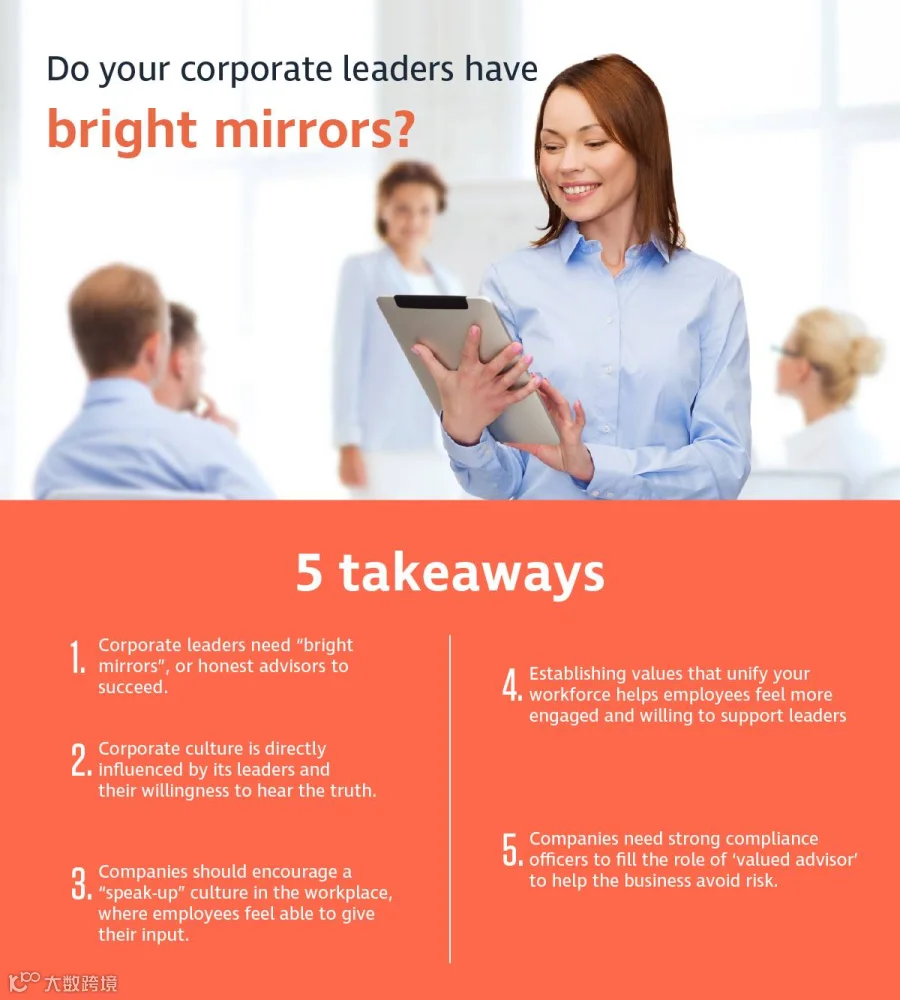
 Do you have “bright mirrors” in your business?
Even the greatest leaders need a team that they can trust to inform and guide them to the right path. Take Emperor Yang of the Sui Dynasty of China and Emperor Taizong of the Tang Dynasty for example. Both were talented emperors with civil and military expertise, but their stories had very different endings.
The lessons of Emperor Yang and Taizong
Emperor Yang surrounded himself with unfaithful and dishonest courtiers. They were given important posts and generous amounts of money, but were more concerned with themselves than advising their Emperor properly. Nor was it in their best interests to do so, because Emperor Yang was known to punish those who gave him honest feedback. When a lady-in-waiting at court heard of a rebellion against the Emperor, she went to him to report it. Emperor Yang was so displeased about hearing the news that he had her beheaded for telling him. After that, few dared to tell the Emperor news that he did not want to hear. Emperor Yang’s ill-advised actions led to his ultimate downfall, losing his life and his empire and becoming a laughing stock for the world to mock.
In contrast, Emperor Taizong valued his advisors and listened to them. When his trusted advisor died, the emperor grieved for the man he regarded as his "bright mirror" saying: "With a bronze mirror, one can see whether he is properly attired; with history as a mirror, one can understand the rise and fall of a nation; with men as a mirror, one can see whether he is right or wrong. Now I've lost my faithful mirror."
Wary of the lessons of Emperor Yang, Emperor Taizong tried his best to seek advice after he succeeded to the throne. He expanded the power of the imperial advisors, and encouraged all officials to criticize his decisions and speak their mind. Thanks to these policies, the Tang Dynasty reached the peak of prosperity under Taizong's reign.
Although these leaders lived in ancient times, things have not changed. Leaders who do not value those who work for them and listen to their opinions will cultivate a negative culture. However, leaders who seek out the advice of those who work for them will obtain valuable information that will lead to success.
The Need for bright mirrors
If you're in a leadership position, perhaps this scenario will sound familiar. Your team has painted a positive picture and seem optimistic about the future; however the business data indicates otherwise. Can you trust their judgement? Or perhaps your company has been plunged into a crisis; you urgently need senior employees to become your think tank, yet no one is willing to share his or her true view. Even leaders from the most successful corporations have difficulty getting the full picture that truly reflects the situation.

 Why do some leaders fail to hear the most reliable voices?
Are you paying lip service to your corporate values?
Most corporations have their own set of corporate values, themed around words like customer service, innovation, entrepreneurial spirit, accuracy, trustworthiness and integrity. Regardless of a company's size, these values should guide its operating principles. But do employees really live and breathe your company culture?
To know whether employees are truly engaged with your values, you can put it to the test. First of all, can employees fully identify your corporate values? Secondly, can they tell you when and where these values were last applied in the business? Finally, can they show the effect these values have on their behavior in their day-to-day work life?
If the employees around you cannot answer these questions, it may be that your company values have not fully "landed", and are just a list of words on paper.
Why are corporate values so important? They are the foundation that guides the company culture. Establishing a set of unified values creates an environment that is more conducive to mutual communication. Employees are more willing to speak up, share their own knowledge and thoughts more effectively, and give honest feedback and opinions.
Many companies' values are determined by the leaders of the organization. However, humans are prone to external factors such as the environment, emotions or internal bias and so the reaction on the boss's face can have a significant impact on whether an employee feels they can voice their honest opinion. It's also important that leaders don't enforce a policy of "it's my way or the highway", which can undermine a team's value. However very few leaders regularly look at themselves through critical eyes; on these occasions, what you need most is a "mirror" beside you.
Do you have a "mirror" around you?
Corporate culture is directly influenced by the head of the business and his or her willingness to hear the truth. Creating a transparent, open and communicative environment, and selecting have a management team you trust to support you is crucial to success as a leader. And one of the most valuable advisors you can have on your team is your compliance department. At the crux of the business is integrity, and your compliance team will protect the company's best interests zealously, becoming a hand, an eye and a mirror for the business.
 About the author
Vivian Zhou - Vivian is a compliance expert. She has an MBA from Tsinghua University and previously held compliance roles in GE Healthcare and Siemens.
Click【Read More】to read the full online magazine.
关注中航嘉信微信公众平台,
完美旅程由此开始!