
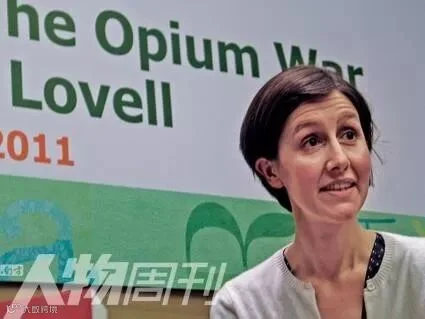
蓝诗玲Julia Lovell,英国汉学家、翻译家。毕业于剑桥大学中文系,获现当代中国文学博士学位。现任教于伦敦大学Birkbeck学院。著作有《文化资本的政治学:中国对诺贝尔文学奖的追逐》、《长城》、《鸦片战争》。
译作有:韩少功《马桥词典》(2003)、欣然《天葬》(2004)、朱文《我爱美元》(2006)、张 爱玲《色戒》(2007)、阎连科《为人民服务》(2008)、《鲁迅小说全集》(2009)。
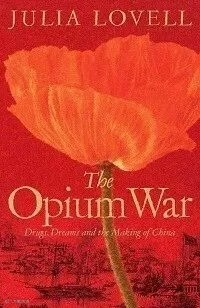
The Opium War
鸦片战争
英文原著: 蓝诗玲(Julia Lovell)
中文译者: 刘悦斌
Chapter One
OPIUM AND CHINA
Consider a late-imperial photograph of Chinese opium-smokers. In one typical shot, two men recline on a couch, enveloped in long, padded jacquard silk gowns. One has an arm draped around a young woman, who is also reclining back on top of him (and looking a touch discomforted – perhaps by the smoker’s attentions, perhaps by the camera). Necks propped up against the headboard, both men stare down the couch at the camera: eyes half-closed, mouths expressionless. (One of the smokers happens inexplicably to be clutching a model dog.) Even today, when synthetic opiates make opium look tame, and decades after Brassaï photographed the Parisian avant-garde rebranding the drug as bohemian chic, the image is somehow troubling; more so than a comparable shot of, for instance, a couple of Caucasian drinkers, even though the pair of smokers here are clearly well-to-do, and appear not to be indulging to great extremes. Perhaps to modern eyes there is something particularly decadent about lying down to take your narcotic of choice, something abject about the supine state. As the smokers gaze levelly back at us, through (we imagine) dope-clouded eyes, they seem to be defying us: ‘We are deliberately, happily smoking ourselves into oblivion. What are you going to do about it?’
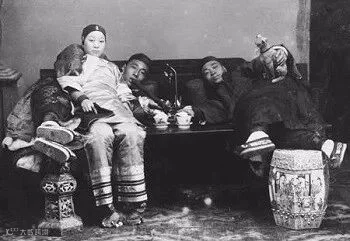
A late-nineteenth-century photograph of Chinese opium smokers.
第一章 鸦片和中国
让我们看一幅中华帝国晚期鸦片吸食者的照片。在这张有代表性的照片中,两个男子斜靠在一张长榻上,身上裹着有衬里的提花丝织长袍。其中一个男子把手臂搭在一个年轻女子的肩上,这个年轻女子斜靠在他的上半身(看起来有点儿不自然——或许是有吸食者在盯着她看,或许是因为正在照相的缘故)。两个男子头靠着床头板,眼神向下越过长榻盯着照相机,眼睛半眯着,面无表情。(还碰巧其中一个吸食者手中令人费解地抓着一只玩具狗。)即使在今天,合成鸦片制剂使得鸦片看起来毒性不那么大了,在布拉塞(George Brassa,本名Gyula Halász,在巴黎成名的匈牙利摄影大师。——译者)拍摄巴黎先锋派把鸦片重新包装为放荡不羁的高雅之物几十年之后,这一景象依然让人感到有些不适,比一对高加索醉鬼的照片更让人感到不舒服,尽管这两个吸食鸦片的人显然生活优裕,看起来也不是有太大的鸦片烟瘾。也许,从现代人的眼光来看,躺着吸食毒品显得非常颓废堕落,仰卧的姿势十分猥琐龌龊。吸食者用吸了毒的阴沉眼神(我们这样想象)平视着我们,好像在向我们示威:“我们是故意而且高兴地吸食鸦片来毁灭自己,你们想怎么样?”
However liberal our politics, we are likely to have absorbed a mix of moral and scientific prejudice against opium that began accumulating in the West (and China) just over a hundred years ago: that reinvented it as a sinister vice enjoyed by social degenerates or masters of villainy. Beyond the opprobrium, though, that is now attached to opium-smoking lies a more complex social phenomenon: one that was widely debated through the nineteenth century, before Western missionary and medical opinion, and then the Chinese state, decided to condemn China’s opium habit as sick and deviant – a national disease of the will that lay at the base of all the country’s problems.
不管我们的政治多么自由,我们仍然会对鸦片抱持成见,这种成见中既有道德的因素,也有科学的因素,它是从一百年前就在西方(也包括中国)开始形成的,这种成见把吸食鸦片看作是社会渣滓或专干坏事的人所乐意干的恶行。不过,除了对于吸食鸦片进行谴责外,还要看到,吸食鸦片是个更为复杂的社会现象:这就是19世纪的广泛争论,先是西方传教士和医学界的观点,然后是中国政府决定谴责中国存在的吸食鸦片的风习,把它看作是病态的、不正常的——是中国所有问题中最根本的人们思想意志上的民族病。
Opium has been an extraordinary shape-shifter in both the countries that would fight a war in its name in the early 1840s. In Britain and China, it began as a foreign drug (Turkish and Indian, respectively) that was first naturalized during the nineteenth century, then – at the end of that same century – sternly repatriated as an alien poison. For most of the century, neither popular nor expert medical opinion could agree on anything concerning opium, beyond the fact that it relieved pain. Was it more or less harmful than alcohol? Did it bestialize its users? Did it make your lungs go black and crawl with opium-addicted maggots? No one could say for sure. ‘The disaster spread everywhere as the poison flowed into the hinterlands . . . Those fallen into this obsession will ever utterly waste themselves’, mourned one late-Qing smoker, Zhang Changjia, before observing a few pages on, ‘Truly, opium is something that the world cannot do without.’The clichéd image of opium-smoking is of prostration and narcolepsy; to many (including Thomas de Quincey, who walked the London streets by night sustained by laudanum), it was a stimulant. China’s coolie masses would refresh their capacity for backbreaking labour with midday opium breaks. One reverend in the late-nineteenth century observed that such groups ‘literally live on the opium; it is their meat and drink’.2 Things were little different in the Victorian Fens: ‘A man who is setting about a hard job takes his [opium] pill as a preliminary,’ wrote one mid-century observer, ‘and many never take their beer without dropping a piece of opium into it’. To add to the confusion about opium's effects, British commanders in China between 1840 and 1842 noticed that Qing soldiers often prepared themselves for battle by stoking themselves up on the drug: some it calmed; others it excited for the fight ahead; others again, it sent to sleep.
19世纪40年代初,中英两个国家进行了一场以鸦片为名的战争,鸦片扮演了改变两个国家形象的非凡角色。不论是在英国还是在中国,鸦片一开始都只是一种外来的药品(在英国是土耳其药品,在中国是印度药品),先是在19世纪引种,然后在该世纪末又作为外来毒品被坚决拒之门外。在19世纪大部分时间里,不论是在一般大众眼里,还是在医药专家眼里,鸦片除了能缓解疼痛之外,大家对它并没有其他共同的看法。它比酒精的害处是大还是小?它会使使用者变得粗野没人性吗?它会使人的肺变黑、会像吃了鸦片的蛆虫那样爬吗?没有人能确切地回答这些问题。“随着烟毒流入内地,烟祸遍及各地沉湎于鸦片者是在浪掷生命”,清末一个名叫张昌甲的鸦片吸食者在用若干页篇幅对吸食鸦片进行评论前悲叹道:“鸦片实为世间不可少之物。” 鸦片吸食者给人的形象通常是萎靡不振,整日昏昏欲睡。对许多人[包括托马斯德昆西(Thomas De Quincey),他在鸦片酊的支撑下,夜里在伦敦的街头游走。]来说,鸦片是兴奋剂。中国的劳苦大众靠着在中午休息时抽几口鸦片,来恢复体力和精力去从事繁重的劳动。19世纪末,一个牧师注意到,这些人“简直就是靠鸦片活着,鸦片就是他们的酒肉。” 维多利亚沼泽(Victorian Fens)中的情形与此没有什么不同:“一个要做苦工的男人开始工作前先服用(鸦片)丸子。”19世纪中叶的一个观察者写道:“很多人都往啤酒里放点儿鸦片,要不他们决不喝啤酒。” 关于鸦片的作用更令人困惑的是,1840—1842年间在中国的英国军队指挥官注意到,清军士兵经常在准备作战时先要饱吸一通鸦片,结果,鸦片使一些士兵镇静下来,使一些士兵为即将到来的战斗兴奋起来,还使另外一些士兵昏昏睡去。
Even now, after far more than a century of modern medicine, much remains unknown about opium’s influence on the human constitution. Whether eaten, drunk or smoked, the drug’s basic effects are the same: its magic ingredient is morphine, a lipid-soluble alkaloid that is absorbed into the bloodstream and (within seconds or minutes, depending on the strength of the preparation, the route of administration and the individual’s susceptibility) presses buttons – the opioid receptors – in our cells. Once triggered, one of these buttons – the μ receptor – reduces the release of chemical transmitters from the nerve endings involved in the sensation of pain. The analgesia produced by morphine and its many analogues, such as diamorphine (heroin), can seem almost miraculous, relieving agony in minutes. And opium is good for far more than analgesia. As it enters the blood, it travels to the intestines to slow the movement of the gut, giving pause to diarrhoea and dysentery. It soothes coughs, by suppressing the brain centres that control the coughing impulse. Most famously, perhaps, it encourages the release of dopamine, the hormone that governs the brain’s pleasure principle. Put more simply, opium makes us euphoric.
即使到今天,在一个多世纪的现代医学发展之后,鸦片对人类体质的影响还有许多未知之处。不论是采用吃的方式、饮的方式还是吸的方式,鸦片的基本作用都是一样的:它令人产生幻觉的成分是吗啡,这是一种脂溶性生物碱,它被血液吸收,(根据准备的力度、服用的途径和个人的感受性不同,在几秒钟或几分钟内)揿动细胞中的开关——类鸦片活性肽受体。一旦揿动,其中的一个开关——μ受体——就会减缓掌管疼痛感的神经末梢的化学传感器的释放。吗啡产生的痛感缺失以及其他的许多相似物,例如海洛因,看起来简直是不可思议,能在几分钟内解除巨大的痛苦。鸦片远远不是仅能够使痛感消失,因为它进入血液,到达肠道,减慢肠道的蠕动,止住腹泻和痢疾。它通过抑制咳嗽中枢,产生镇咳作用。或许最为大家熟知的,是它能促进多巴胺的释放,多巴胺是使大脑产生愉悦情绪的荷尔蒙。简而言之,鸦片能使我们精神愉快。
Like all drugs, opium has its unwanted downsides. One disadvantage is its talent for generating nausea (a response elicited in 40 per cent of patients to whom morphine is administered).4 If taken for pain relief rather than diarrhoea, it can cause troublesome constipation. Its greatest immediate drawback is its habit of slowing, or even putting to sleep, the centres in the brain that control breathing. In excess, opium will kill you by fatally depressing respiration. Because of the quietness with which opium overdosers generally meet their ends, opium has of old been the friend of faint-hearted suicides and the ally of assassins. While dopamine intensifies feelings of contentment, moreover, it can also heighten other, less enjoyable sensations. Encouraging and enlarging perceptions of fear and menace, it is an agent of paranoia, suspicion and schizophrenia – hence De Quincey's visions.
和所有毒品一样,鸦片也有其不受欢迎的消极作用。它的一个缺点是它会引起反胃恶心(这是在40%服用吗啡的病人中引起的反应)。 如果服用它是为了缓解痛苦而不是治疗腹泻,它会导致便秘。它最大的直接的缺点,是它会减慢甚至是停止大脑中控制呼吸的中枢,因此,使用过量的话,它会令人窒息而死。由于过量服用鸦片的人一般都死得很安静,很久以来,鸦片是缺乏勇气的人自杀时所依靠的良友,是暗杀者的好助手。此外,多巴胺能使人增强满足感,也能增强其他的、不那么令人愉悦的感觉。它能加强、放大对恐惧和危险的感知,因而也是导致妄想狂、猜疑症和精神分裂症的药剂——德昆西的幻觉症就是这样产生的。(德昆西常年吸食鸦片,出版有《一个英国鸦片吸食者的忏悔》,书中描述的东方景象就是他的幻觉。——译者)
Opium’s final flaw is that (like many dopamine-generated responses, governed as they are by the sense of pleasurable reward generated), it induces a craving for the whole thing to begin again. Without external stimulation from substances such as opium, the opioid and dopamine receptors exist quietly within us in unnoticed equilibrium. Once a receptor is triggered, however, it can become desensitized and unbalanced, demanding a regular, and perhaps increasing supply of the original stimulant. If the neural and chemical balance in the body has come to rely on external medication, a sudden withdrawal of the supply will bring unpleasant (and indeed dangerous) symptoms in response – trembling, exhaustion, fever, goose-pimples (the origin of the phrase ‘cold turkey’), nausea, diarrhoea and insomnia – relieved only by hair of the dog.
鸦片的最后一个缺点(像许多由多巴胺产生的反应,即被由它产生的愉悦感所控制一样),是它诱使人渴望从头开始重新体验整个过程。如果没有外界物质如鸦片的刺激,类鸦片活性肽和多巴胺受体就会以毫不被注意的平衡状态安静地存在于我们的体内。然而,一旦一个受体受到刺激,这个受体就会变得不再敏感,就会失去平衡,就会要求经常性的、或许还是持续增加的那个刺激物的供应。如果体内的神经系统平衡和化学平衡要依靠体外的药物来维持,供应的突然中断将会带来不良反应症状——发抖、疲惫、发热、起鸡皮疙瘩[goose-pimples,这是“cold turky”(突然戒毒法)这个说法的来源]、恶心、腹泻、失眠——这些症状只有靠醒酒液才能缓解。
(未完,可视需求连载)
来源:付费阅读

精艺达翻译公司
福建省第一家正式注册、规模最大的翻译公司
CSA全球翻译公司百强榜第95名
官方网址:www.mts.cn
厦门公司手机(微信)
13395997956/ ~7957/ ~7938
厦门公司 :0592-5185733
泉州公司 :0595-28000791
福州公司 :0591-87825486
上海公司 : 021-50260618
台湾公司 :886-2-8772-9862
美国公司 :1-408-970-9586
全国咨询电话: 400-6618-000
Email:info@mts.cn