
As we step into 2025, iris recognition technology stands at a transformative crossroads. With advancements in artificial intelligence, miniaturization, and cloud computing, this biometric technology is set to revolutionize security and authentication across various domains. Let us delve into the future landscape of iris recognition technology.
1
Market Growth and Dynamics
Market Distribution by Region (2025)
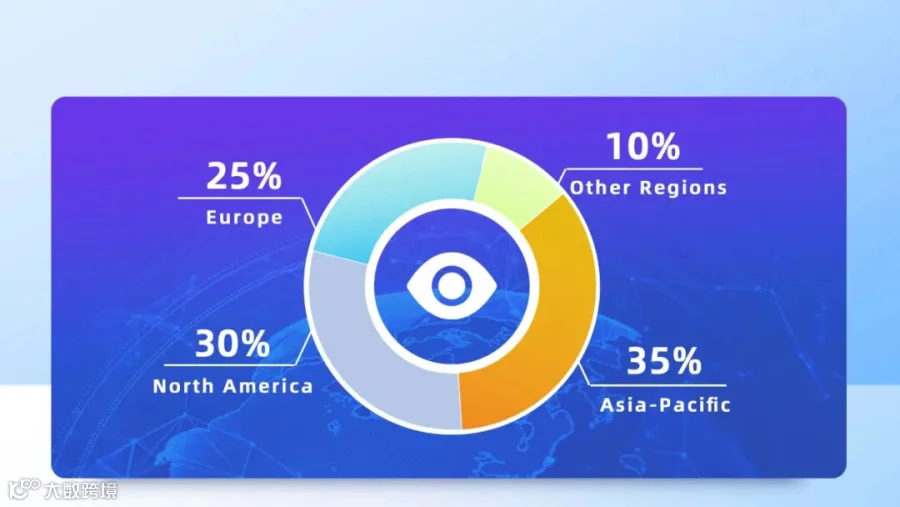
Below is a pie chart depicting the market share distribution across different regions in 2025:
• Asia-Pacific: 35%
• North America: 30%
• Europe: 25%
• Other Regions: 10%
The global market for iris recognition in 2025 exhibits a clear regional differentiation. Asia-Pacific leads with a 35% market share, fueled by extensive applications and investments in biometric technologies across countries like China, Japan, South Korea, and Southeast Asia. North America follows with a 30% share, leveraging its advanced R&D ecosystem and extensive commercial applications, particularly in finance and security.
Europe ranks third with a 25% share, characterized by a focus on privacy protection and data security, which drives the development of related technical standards. Other regions, though accounting for only 10%, are expected to grow rapidly due to the increasing adoption of iris recognition in emerging markets, particularly in smart city projects in the Middle East and Latin America.
Market Distribution by Product (2025)
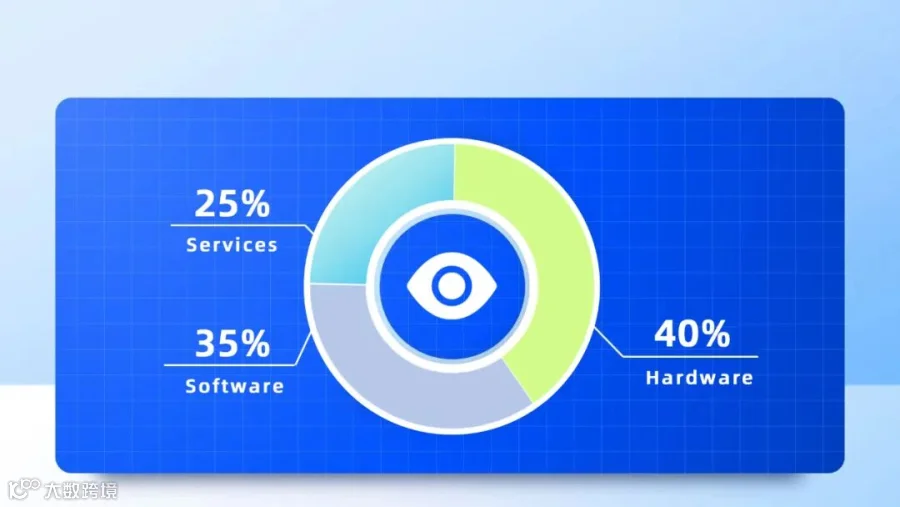
Below is a pie chart illustrating the segmentation of the iris recognition market by product type:
• Hardware: 40%
• Software: 35%
• Services: 25%
This chart highlights the distribution of market share among the three primary business domains in the industry:
1. Hardware: With a 40% share, hardware dominates, reflecting the strong demand for iris scanners, sensors, and capture devices. This share underscores the broad application of iris recognition technology in various end-user devices, from smartphones to security systems.
2. Software: Software holds a 35% share, signifying the importance of software development and system integration. This includes core technologies like iris feature extraction algorithms, matching algorithms, and anti-spoofing algorithms, as well as various applications and management systems.
3. Services: Services account for 25%, covering technical support, system maintenance, user training, and data services. This share indicates that iris recognition has established a complete service ecosystem, with significant growth potential as application scenarios expand.
2
Key Application Scenarios
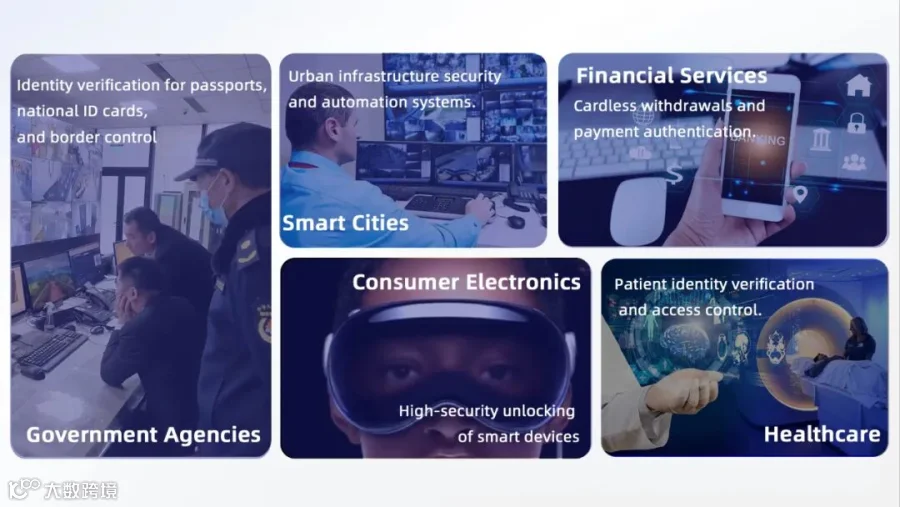
1. Government Agencies: Identity verification for passports, national ID cards, and border control.
2. Financial Services: Cardless withdrawals and payment authentication.
3. Healthcare: Patient identity verification and access control.
4. Consumer Electronics: High-security unlocking of smart devices.
5. Smart Cities: Urban infrastructure security and automation systems.
3
Market Growth Drivers
1. Enhanced Security Requirements
• Increasing cybersecurity threats
• Growing focus on identity protection
• Stricter regulatory compliance
2. Widespread Adoption of Contactless Technology
• Post-pandemic preference for touchless solutions
• Improved user experience
• Higher hygiene standards
3. Smart City Initiatives
• Modernization of government infrastructure
• Integrated urban security systems
• Applications in smart buildings
4. Digital Transformation
• Enterprise security upgrades
• Cloud-based authentication systems
• Integration with mobile devices
4
Technology Trends
Key technology trends shaping the future of iris recognition include:
1. AI and Deep Learning Algorithms: Enhancing recognition accuracy and speed.
2. Hardware Miniaturization: Miniaturized sensors and integration with mobile devices.
3. Cloud and Edge Computing: Boosting data processing capabilities and real-time performance.
4. Anti-Spoofing Technologies: Stronger resistance to attacks using fake irises or photographs.
5
Investment Opportunities
1. Algorithm Development
• AI-enhanced recognition algorithms
• Anti-spoofing technologies
• Performance optimization solutions
2. Hardware Innovation
• Miniaturized sensors
• Mobile device integration
• IoT-compatible systems
3. Integration Solutions
• Enterprise security systems
• Cloud platforms
• Mobile applications
4. Infrastructure Development
• Data centers
• Network solutions
• Edge computing systems
6
Challenges and Considerations
1. Technical Challenges
• Accuracy in varying conditions
• Processing speed optimization
• Storage and bandwidth requirements
2. Market Challenges
• Cost considerations
• User adoption
• Competition from other biometric technologies
3. Regulatory Challenges
• Privacy regulations
• Data protection standards
• Cross-border compliance
The iris recognition market in 2025 presents vast opportunities. With robust growth projections, diverse application scenarios, and continuous technological advancements, the industry is poised for significant expansion. Success in this market depends on addressing key challenges while leveraging opportunities across various sectors.
For businesses and investors, understanding market dynamics, staying ahead of technological trends, and focusing on user-centric solutions are critical to success. As we move toward 2025, iris recognition technology will play a pivotal role in shaping the future of global security and authentication systems.