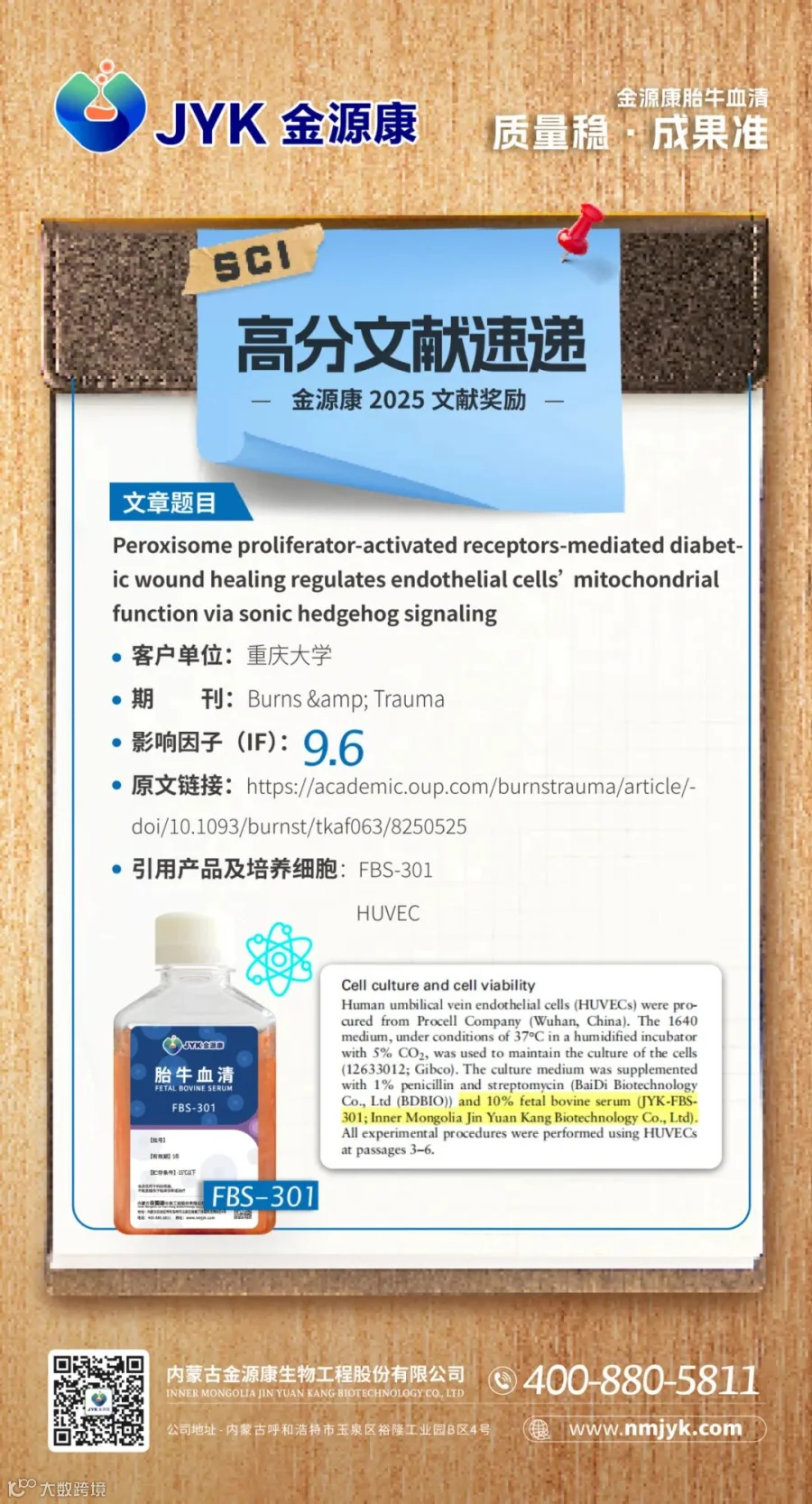

高分文献速递
客户单位:重庆大学
期刊:Burns & Trauma
影响因子(IF):9.6

文章题目:
Peroxisome proliferator-activated receptors-mediated diabetic wound healing regulates endothelial cells’ mitochondrial function via sonic hedgehog signaling
Background
Diabetic foot ulcer (DFU) is a common and debilitating complication of diabetes, often leading to delayed wound healing. The peroxisome proliferator-activated receptors (PPARs) play a crucial role in regulating cellular metabolism and promoting angiogenesis. This study aims to elucidate the mechanisms through which the activation of PPARs enhances wound healing, particularly under diabetic conditions, as these mechanisms remain inadequately understood.
Methods
Differentially expressed genes in DFU wounds and normal skin tissues were identified using the GEO database. PPAR expression in DFU neovascularization was validated by quantitative reverse transcription polymerase chain reaction, immunofluorescence, and western blotting. In vivo, diabetic mice treated with PPAR agonists (chiglitazar) underwent wound healing assessment, including collagen deposition and angiogenesis. In vitro, advanced glycation end-products (AGEs)—induced endothelial cell models were used to evaluate PPAR activation effects on cell migration, tube formation, and mitochondrial function. Whole transcriptome sequencing and mitochondrial analysis were performed to explore the underlying mechanisms, particularly the sonic hedgehog (SHH)–mitochondrial axis.
Results
PPAR expression was significantly downregulated in DFU tissues (p < 0.05), and PPAR activation in diabetic mice enhanced wound healing, collagen deposition, granulation tissue proliferation, and angiogenesis (p < 0.05). In vitro, PPAR activation protected endothelial cells, promoting vascular endothelial growth factor-A (VEGF-A) and CD31 expression, reducing apoptosis, and enhancing cell migration and tube formation (p < 0.05). Mechanistically, PPARs activated mitochondrial oxidative phosphorylation and membrane function through the SHH signaling pathway. SHH gene silencing reversed the effects of PPAR activation on mitochondrial function and angiogenesis.
Conclusions
PPAR signaling plays a critical role in DFU healing, with its inhibition linked to vascular dysfunction. Activation of the PPARs/SHH–mitochondrial axis significantly enhances endothelial cell metabolism and angiogenesis. This study provides insights into the molecular mechanisms of diabetic wound healing and supports the clinical potential of PPAR agonists for DFU treatment.
原文链接:
https://academic.oup.com/burnstrauma/article/doi/10.1093/burnst/tkaf063/8250525
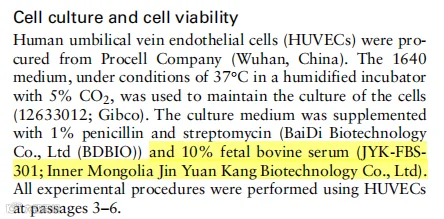
引用产品及培养细胞:FBS-301 HUVEC