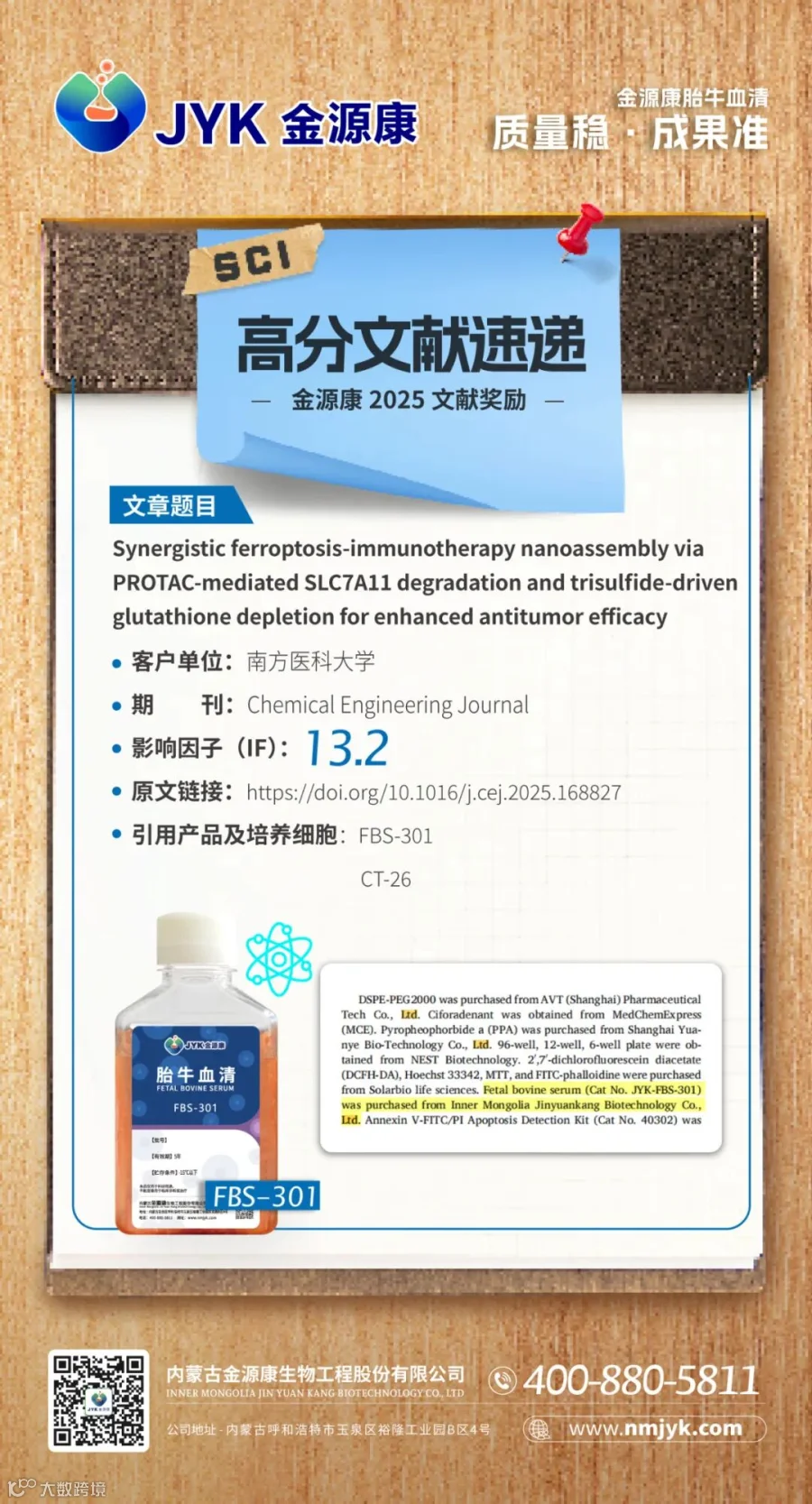

高分文献速递
客户单位:南方医科大学
期刊:Chemical Engineering Journal
影响因子(IF):13.2

文章题目:
Synergistic ferroptosis-immunotherapy nanoassembly via PROTAC-mediated SLC7A11 degradation and trisulfide-driven glutathione depletion for enhanced antitumor efficacy
文章摘要:
Proteolysis-targeting chimeras (PROTACs) represent a breakthrough in targeted protein degradation, enabling the elimination of “undruggable” oncoproteins by recruiting E3 ligases. Despite their potential, systemic toxicity due to off-target effects limits clinical translation. Besides, ferroptosis is a new and effective way of cancer cell death. The cysteine and the cystine/glutamate transporter SLC7A11 are crucial for cancer cell redox balance and ferroptosis regulation. Self-assembled nanoparticles (NP) are useful in drug delivery on account of their high drug load and can encapsulate PROTACs to reduce off-target effects. In this study, a novel NP-based system was designed (CPCi-NP). It contains a PROTAC degrading SLC7A11 (PROTAC-SLC7A11), a camptothecin-arachidonic acid prodrug (CPT-SSS-AA), and the A2AR antagonist Ciforadenant. PROTAC-SLC7A11 reduces GSH synthesis raw materials and CPT-SSS-AA consumes intracellular GSH, inducing ferroptosis. Nano-camptothecin in the system triggers immunogenic cell death and Ciforadenant enhances the immune response. Compared with the PBS and single PROTAC group, the tumor volume of the tumor-bearing mice was reduced by 72.2 % and 63.5 % after tail vein injection of CPCi-NP, and it could induce a strong immune response to kill the tumor cells in the mice. There was a 7.7-fold increase of dendritic cells (DCs) in lymph nodes adjacent to the tumor, a 15.3-fold increase of cytotoxic T lymphocytes (CTLs) in tumor tissue, and a 7.2-fold increase in M1-type tumor-associated macrophage (TAMs) compared with PBS group. This nano-drug delivery system achieved a synergistic effect between ferroptosis and immunotherapy for tumor treatment.
原文链接:
https://doi.org/10.1016/j.cej.2025.168827
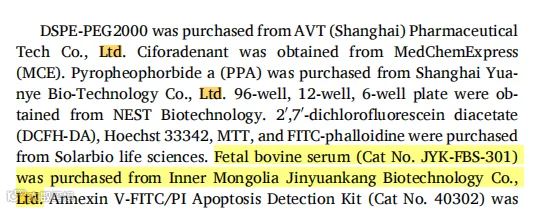
引用产品及培养细胞:FBS-301 CT-26