
高分文献速递
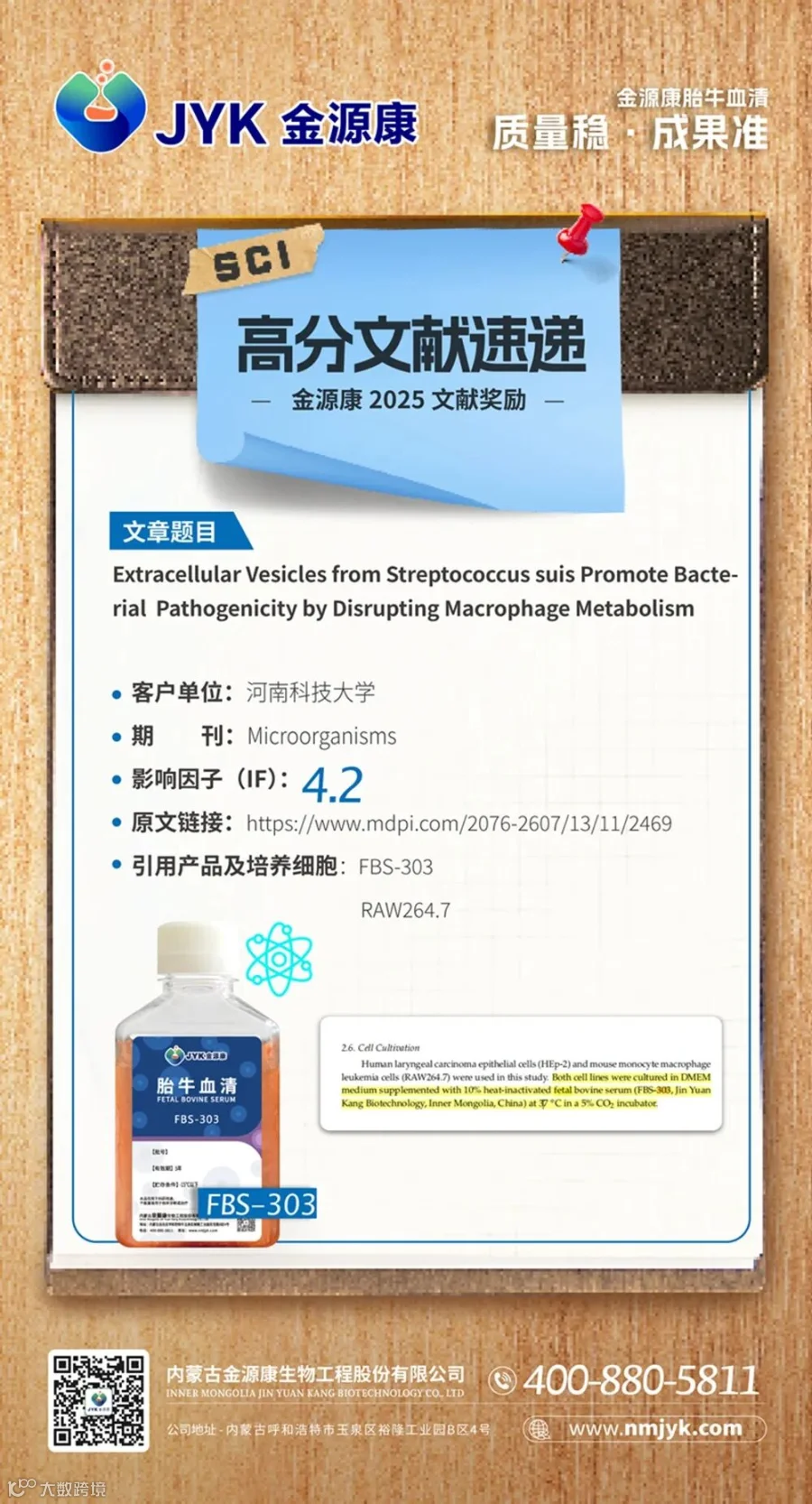
客户单位:河南科技大学
期刊:Microorganisms
影响因子(IF):4.2

文章题目:
Extracellular Vesicles from Streptococcus suis Promote Bacterial Pathogenicity by Disrupting Macrophage Metabolism
Streptococcus suis (S. suis) is an important zoonotic pathogen that causes severe disease in both humans and pigs, leading to substantial economic losses in the swine industry. Extracellular vesicles (EVs), as critical mediators of host–pathogen interactions, play key roles in bacterial virulence and disease progression. This study aimed to investigate the biological properties of S. suis EVs and elucidate their role in the bacterium’s pathogenesis. We isolated and characterized S. suis EVs, which were found to contain diverse protein molecules. EVs were efficiently internalized by mammalian cells, and concentrations below 50 μg/mL did not affect cell viability. Following uptake, EVs suppressed the production of key pro-inflammatory cytokines (TNF-α, IL-1β, and IL-8) by modulating macrophage metabolism. They also downregulated the expression of major histocompatibility complex class II (MHC-II) and adhesion molecules (VCAM-1 and ICAM-1) during subsequent infections, potentially impairing macrophage-mediated clearance. In addition, EVs served as vectors for efficient cargo delivery and facilitated S. suis adhesion to and invasion of endothelial cells. In infection models, EVs markedly enhanced lethality in Galleria mellonella larvae and promoted tissue colonization in murine models. These findings suggest that S. suis EVs are key mediators of host–pathogen interactions, contributing to colonization and disease pathogenesis. Moreover, they offer novel insights and potential strategies for the prevention and control of S. suis infections.
原文链接:
https://www.mdpi.com/2076-2607/13/11/2469
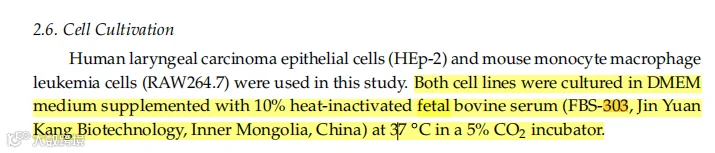
引用产品及培养细胞:FBS-303 RAW264.7