导语:自清控科创旗下的创投孵化平台——Binggo学社与1776成功合作举办了“挑战杯”创业大赛以来,双方结下了深厚的友谊和亲密的伙伴关系,1776作为美国的创新型孵化器和种子基金,已经帮助了250家企业的成长,通过独有的资源渠道优势,链接创业者和投资人、导师、企业家以及政府实体,并通过”挑战杯“创业大赛和创业联盟,打造世界性的创投孵化体系。今天开始,清控科创创业研究部联合1776推出了我们微信平台的专栏——"Challenge Pie",为大家带来更多最新最前沿的创业资讯,更多精彩敬请及时关注我们的微信账号。
从旧金山的创业企业都是想做下一个Facebook或Angry Birds的吗?不解决世界面临的迫切问题,采取病毒策略,然后再解决盈利的问题?旧金山挑战别决赛中35家竞争者不属于这种类型。
一些创业者们在教自闭症患者如何做展示,避免社会焦虑。他们正在利用数据帮助监管者和学校领导更好地理解困扰学校的一些现象,如逃课和暴力冒险等,并帮助家长使孩子的学前选择有意义。
很多创业企业有试点、数百万的收入或者订单。
强有力的竞争者领域涌现出的三种另类趋势:
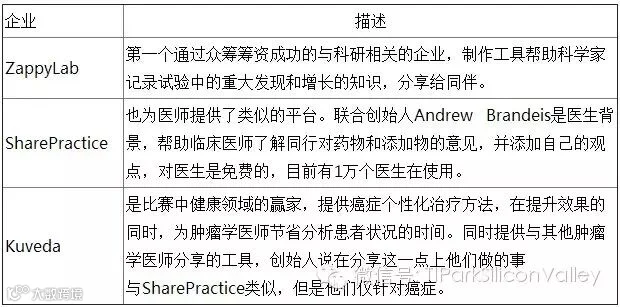
1 使科学家和医生协作的工具
旧金山健康领域的创业企业代表了处理小病、通过游戏管理慢性病和用传感器记录老年人状况的混合体。但一些创业企业也展现了促进医疗和科学专家共享的共同趋势。
2 变革农业,尤其是通过与水相关的技术
加利福尼亚,尤其是湾区,看似是一个与农业相关的解决方案诞生的地方。其实,不仅是加利福尼亚,整个州都面临水资源缺乏的问题,这一问题威胁了农业的发展。
Apitronics帮助农民更精确灌溉土地,在美国80%的农民通过看和感觉这种粗略的方式进行灌溉。Apitronics提供了一个软硬结合的方案,包括用数字土壤地图、气象站和app等来记录一切。市场上有其他土壤传感器,帮助节水20%。但Aptitronics与众不同的地方在于他们的综合系统。
同样在能源领域,Aqua Gardens Family Farm是北加利福尼亚州的一个鱼菜共生农场,比其他种植农作物的人少用水90%,最早中的是莴苣。鱼菜共生体系里面的水是一个活的有集体制,水源自鱼罐,永远循环。
3 电动车辆解决方案
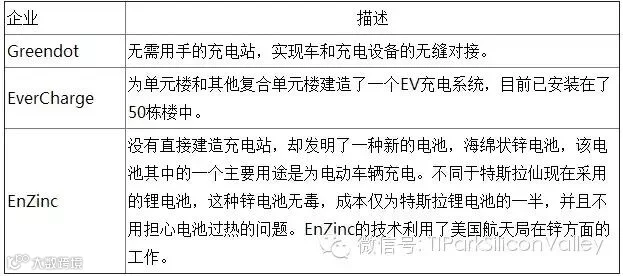
城市与交通领域中有2家创业企业专注于电动汽车,尤其是致力于使充电更简单和便捷。

The assumption about startups coming out of San Francisco is that they’re all trying to be the next Facebook or Angry Birds—an app for the general public that’s not necessarily solving a pressing world problem but whose strategy is to go viral and then figure out revenue later.
That wasn’t the case with the 35 San Francisco competitors during the final Challenge Cup stop.
Entrepreneurs who pitched are teaching autistic individuals how to do presentations and, in the process, stave off some of their social anxieties. They’re employing data to allow superintendents and school leaders to better understand phenomena such as absenteeism and risk of violence plaguing their schools, and to enable parents to make sense of the hundreds upon hundreds of preschool options for their little ones.
Quite a few either have major pilots, million-dollar revenue or recurring deals to their names.
Here are three other trends that emerged across the strong field of competitors:
Tools that enable scientists and doctors to collaborate
Health startups in the San Francisco competition represented a blend of companies tackling specific ailments—like nail fungus infections, using gaming to get patients to manage chronic conditions and even keeping track of seniors via sensors. But several also had a common thread of facilitating sharing between medical and science professionals.
ZappyLab, which had the first-ever successful crowdfunding campaign for a science-research-related venture, is a repository for scientists to stay up to date on protocols for conducting their lab experiments. Right now scientists tend to work on their research in a vacuum, then try to publish their findings in journals. Along the way, they’ll figure out improved methods or gain incremental knowledge without a way to share these strides with peers. ZappyLab fosters that, almost like a gitHub for scientific research, says cofounder Lenny Teytelman.
Past attempts to crowdsource this type of information have failed because the companies haven’t been able to get scientists on board. Teytelman says he managed to do this by first, making smaller tools available to help scientists in their day-to-day lab operations. In turn, this created a community of supporters, who also backed the crowdfunding campaign.
SharePractice is doing something similar for physicians. Cofounder Andrew Brandeis is a doctor by background and says he began by building a resource that he needed: a Yelp for treatments, enabling clinicians to glimpse their peers’ opinions of supplements and other medications and add their own insights.
It’s free for doctors, and so far 10,000 of them are using SharePractice. Brandeis says the startup also takes care to, for each new treatment added to the platform, research what evidence is out there about it so that the doctors’ opinions are tempered by research and factual information about the treatments’ success. The blend makes for something that’s valuable to use in real me. Doctors also are able to link up their social media profile in order to follow recommendations by peers they know and trust.
And the health winner, Kuveda, which provides personalized cancer therapeutics, also has a strong social component to its SaaS platform. Kuveda cuts down on the the time oncologists spend analyzing their patients’ cancers while improving outcomes. As oncologists do this, they get tools to share with other oncologists. Founder Chuck Gershman says the sharing aspect is almost identical to what SharePractice is doing, only his product is specific to cancer cases.
Revolutionizing farming, especially through water-related technologies
California, particularly the Bay Area, would seem a likely place to see farming-related solutions. Not only is California, by far, the largest produce producer in the United States but the state also has endured severe water shortages that threaten agricultural practices.
To help farmers, startup Apitronics enables them to irrigate their fields with precision. In the U.S., almost 80 percent of farmers irrigate by look and feel, guessing about the water usage. Instead, Apitronics has a hardware-software solution that includes digital soil maps and a weather station as well as an app to keep track of it all.
There are other soil probes out in the marketplace that allow farmers to use 20 percent less water, but adoption of them is really low. Apitronics’ differentiator is price and the comprehensive nature of its system, according to the startup’s team, which is heavy on engineering talent.
Also in energy, Aqua Gardens Family Farm is a Northern California aquaponics farm that’s using 90 percent less water to grow crops—its first being lettuce. The water in an aquaponic system is a living organism that emanates from a fish tank and is perpetually cycling through. The fish provide nitrates so that Aqua Gardens does not have to add any chemicals and pesticides to its crops. Plus, the lettuce stays fresh for far longer, about three weeks.
Kirk Miller, vice president of strategy and development, says his farm will be able to produce 4 million heads of lettuce annually. The company is, so far, selling directly to chefs primarily and has distributed 20,00 units of lettuce.
“Eighty percent of every restaurant we’ve talked into by just showing them the lettuce and giving them a sample we’ve sold them,” he says. “We’re creating a whole new standard of produce.”
Solutions to boost electric vehicle adoption
Two of the startups in the crop of cities and transportation startups are in the electric car space and specifically working to make the charging aspect simpler and more accessible.
Green Dot has developed a hands-free charging station for the vehicles that seamlessly connects the car to the power supply. That means the driver can hook up the car and walk away. The Bay Area startup has a prototype and is working with cities on testing it.
Meanwhile, cities and transportation winner EverCharge has created an EV charging system for condos and other multi-unit dwellings. One of the obstacles to widespread consumer adoption of electric cars in the U.S. is this lack of charging stations in cities—especially in big buildings where a substantial number of city residents live. EverCharge is currently in 50 buildings.
Though not directly making electric vehicles or charging stations, EnZinc, in the energy category, has come up with a whole new battery—made out of zinc in a sponge form. One of the major usages for the zinc batteries is in electric cars. Compared to the lithium ion batteries that car makers like Tesla employ now, EnZinc’s batteries are nontoxic, cost almost half the price and don’t carry the risk of overheating. Tesla’s, on the other hand, requires a specialized cooling system so it does not overheat.
EnZinc’s technology capitalizes on work by the U.S. Navy around zinc, the eighth most used material on the planet.
Cofounder Michael Burz says, with electric cars, his team thought that “the ethos of the battery should match the ethos of the electric car,” which his startup’s battery does.
( 本文由1776供稿 清控科创创业研究部翻译 )