
Recently, the China Textile Information Center, in collaboration with Global People magazine, a subsidiary of People's Daily, has launched a special feature titled "Great Power Textiles." This initiative spotlights a group of textile entrepreneurs who demonstrate forward-thinking and practical expertise in management innovation, product innovation, market innovation, and other dimensions.
The Secretariat of the Fabric Product Development Innovation Platform (FCPP) for the textile industry has therefore produced a special series of reports. Using the written word as a medium, these reports showcase the innovative commitment of industry pioneers and pay tribute to every dreamer who drives the high-quality development of China's textile industry.
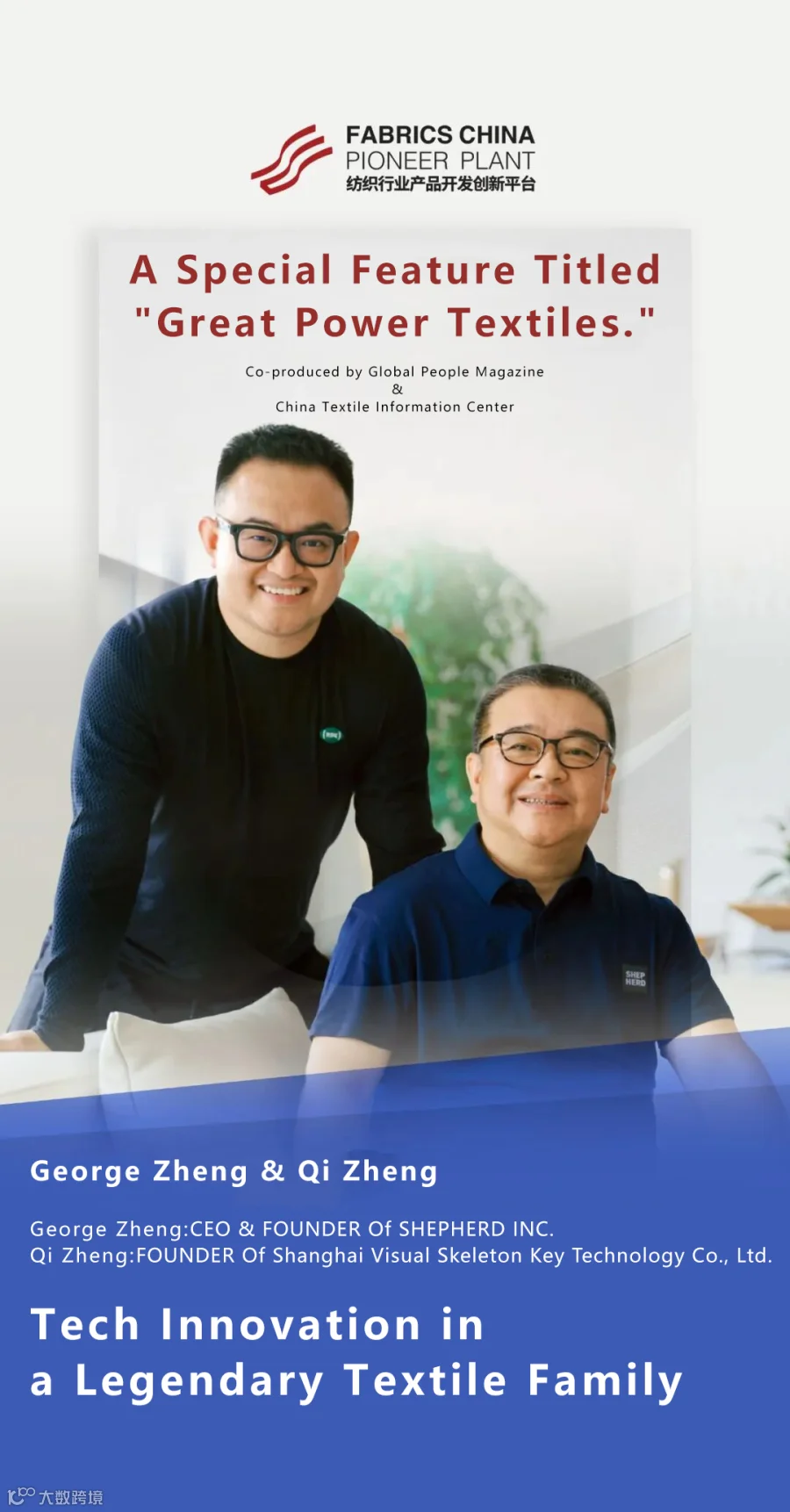
George Zheng
Member of the Communist Party of China. Founder and Chairman of Zhangjiagang Shepherd Garments Co., Ltd., Senior Engineer in Wool Textile Engineering, honored with titles such as "Technical Leader in Wool Textile Engineering" and "Provincial Model Worker". Vice President of the China Knitting Industry Association, Vice President of the Zhangjiagang Textile Association.
Qi Zheng
In late 2019, he founded Shanghai Visual Skeleton Key Technology Co., Ltd., dedicated to the intelligent upgrading of the traditional textile industry. The company has successively launched digital textile products such as VR‑based digital clothing design software and the NAO virtual Textile machine, becoming one of the first R&D technology companies to enter the field of textile digitalization. Driven by artificial intelligence as its core engine, the company is also expanding into areas such as textile automation and intelligent mechanical warehousing.
Amid the development wave of the textile industry, George Zheng of Zhangjiagang Shepherd Garments Co., Ltd. and Zheng Qi of Shanghai Visual Skeleton Key Technology Co., Ltd.—father and son—have built their endeavors on a foundation of expertise and taken innovation as their wings. Through two generations of entrepreneurial practice, they illustrate the path of transformation and upgrading for China’s traditional manufacturing industry.
The father, George Zheng, has been deeply engaged in the wool textile industry for 38 years, from making technological breakthroughs in traditional wool spinning to pioneering outdoor wool fabrics, always remaining rooted in the real economy.
The son, Qi Zheng, returned from overseas studies and using digital technology as his brush, created a virtual textile platform to empower the textile industry.
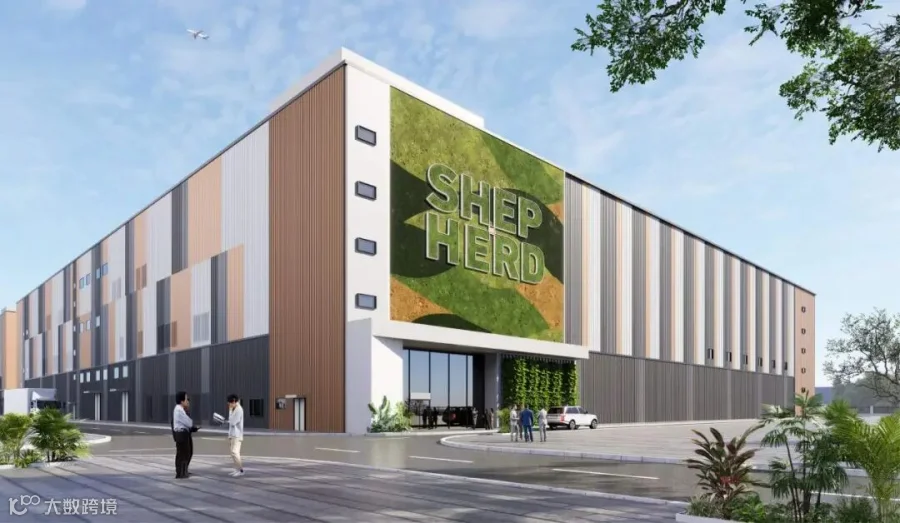
The groundbreaking of the Shepherd Textile (Anhui) Sustainable Fashion Industrial Park in the Wangjiang Economic Development Zone in November 2025 is the ultimate embodiment of the two generations’ expertise, innovation, and technological vision. It stands as a new benchmark for the wool textile industry’s march toward intelligent, green, and high-end development.





Swipe left or right to see more.

In 1987, George Zheng, a graduate of the Wool Textile Engineering program from the former Northwest Institute of Textile Science and Technology, stepped into the wool textile industry and has since forged an inseparable bond with wool. At that time, the domestic wool textile industry was dominated by cotton spinning, while wool products were limited to traditional categories such as suits and sweaters. Moreover, issues like easy shrinkage and difficult care made it hard for this high-quality fiber to gain widespread adoption. As a formally trained professional, he thoroughly mastered the entire chain of wool production—from pasture shearing to finished fabric manufacturing. After internships covering both the worsted and woolen spinning processes, he built a solid professional foundation under the guidance of seasoned industry mentors. This experience also cemented his original aspiration: to make wool "easy to use and easy to care for."
1999 marked a critical turning point in George Zheng's entrepreneurial journey. He resolutely abandoned the traditional woven wool products he had been deeply engaged in for 12 years and shifted his focus to the development of knitted wool, becoming one of the earliest pioneers in China to explore wool fabrics for outdoor sportswear. With no technical references available, he traveled to overseas exhibitions to view samples and bought sample garments to disassemble and analyze. To overcome the challenges of making wool "machine-washable and non-itchy," he visited wool textile technology expert Huang Zhenting in person and repeatedly experimented with anti-shrinkage equipment. Without his own factory, he integrated outsourced resources and personally oversaw every production step from start to finish. Relying on this professionalism and perseverance, he took the lead in introducing Canadian Kroy anti-shrinkage technology and secured the first order of 8,000 wool T-shirts from an American brand. Even without the funds to purchase specialized equipment, he traveled all the way to Guangzhou to source machinery and partnered with peers to rush production—ultimately conquering this formidable challenge on his entrepreneurial path.
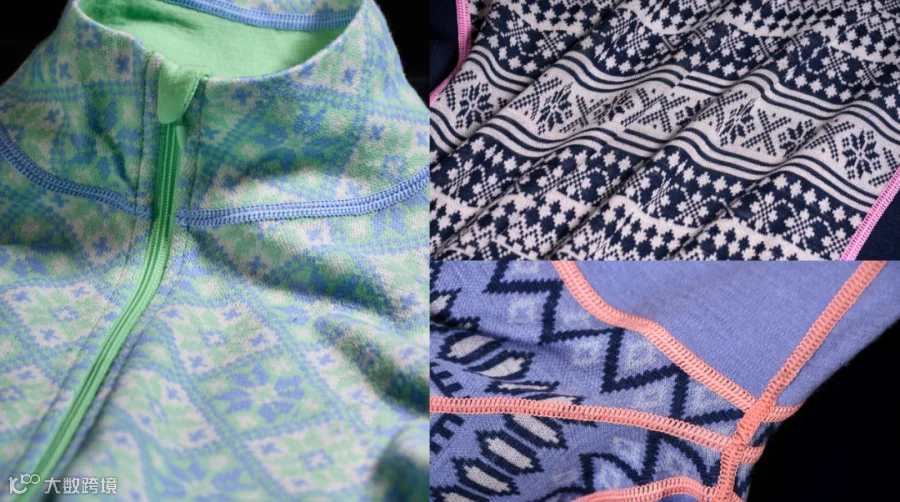
After building his own factory in 2007, George Zheng never stopped innovating. He pioneered a unique spinning technology that integrates cotton spinning, wool spinning, and silk spinning techniques, creating a core competency that is difficult to imitate. For a Norwegian brand, he changed printed fabrics to jacquard weaves, turning the product into a classic in the Nordic market, with annual revenue from that single category exceeding 100 million yuan. He led Shepherd Garments to become a core supplier for numerous global sportswear brands. He has always adhered to the philosophy of "what others don't have, I have; what others have, I make new; what others make new, I make better," rejecting low-price competition and focusing deeply on product R&D. From recycled wool, low-carbon dyeing technologies, to functional fiber blends, he has deeply integrated wool's natural properties with modern technology, achieving a leap from "winter-only" to "suitable for all seasons."
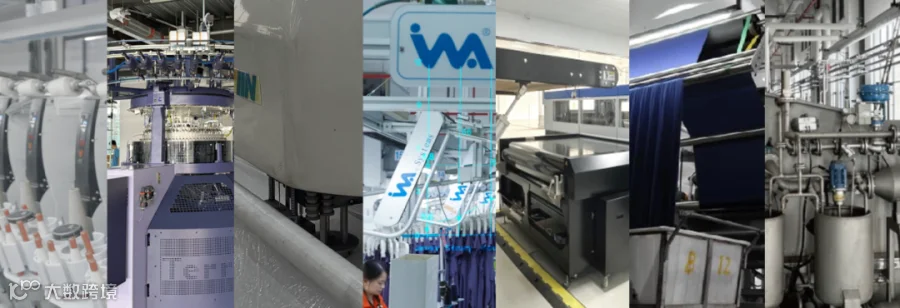
This dedication and innovation have finally crystallized into the grand blueprint of the Shepherd Textile (Anhui) Sustainable Fashion Industrial Park. With a total investment of 900 million yuan and covering an area of 162 mu, this project represents George Zheng’s strategic upgrade toward building a new industrial paradigm of “vertical integration, intelligent collaboration, and green circularity.” The park integrates fabric weaving, dyeing and garment manufacturing, production R&D, and quality inspection. Once completed, it will have an annual production capacity of 10 million garments, 7,200 tons of yarn, and 10,800 tons of fabric, achieving annual sales revenue of 2 billion yuan and creating over 3,000 jobs.


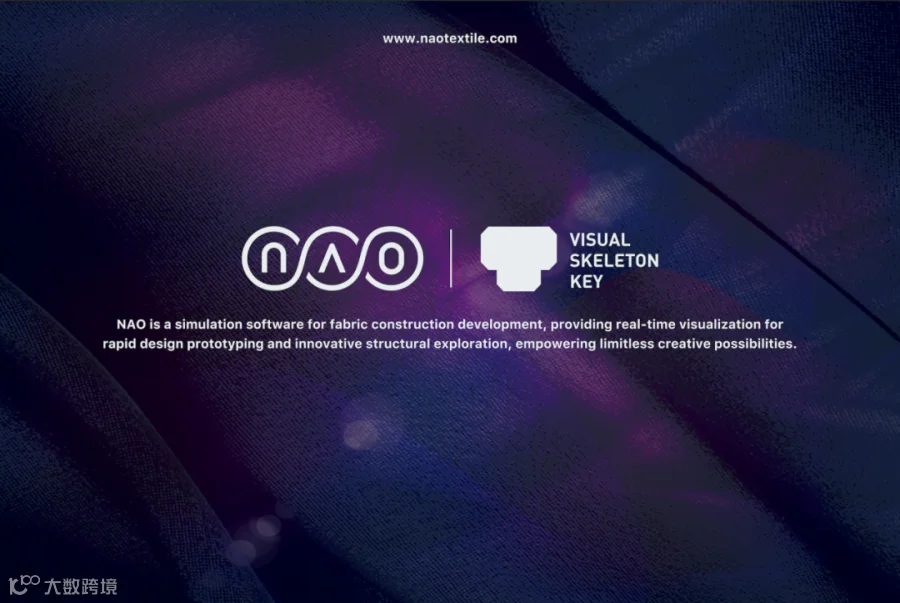
If George Zheng is the “game changer” in the traditional wool textile industry, his son Qi Zheng is the “innovator” in textile digitalization. Having gone abroad to study at the age of 16, he graduated from the University of British Columbia in Canada. With keen insight into the long development cycle of traditional textile fabrics and the difficulty of bringing creative ideas to life, he founded Shanghai Visual Skeleton Key Technology Co., Ltd. in 2019, determined to reshape the textile industry with digital technology. Its core achievement is the NAO virtual loom system.

◎
The NAO virtual textile machine operation interface developed by Qi Zheng's team.
This innovation is a deep integration of the entrepreneurial philosophies of the two generations. Qi Zheng deeply understood the time-consuming and labor-intensive challenges his father faced in fabric development. Under the traditional model, a single round of fabric development would take nearly two months. Qi Zheng led his team to establish an algorithm R&D team, and after many iterations, they created a real-time visualization tool for fabric structure development. This virtual textile machine has built a digital library of raw materials, yarns, fabric structures, and more. It can simulate over 10,000 fabric structures within 12 hours, and the 3D visualization effect allows designers to make intuitive judgments. Satisfactory solutions can directly generate production processes that interface with the loom, shortening the development cycle to just three days, achieving a seamless connection of "design - process - production." This core advantage has astonished the European textile industry.
◎
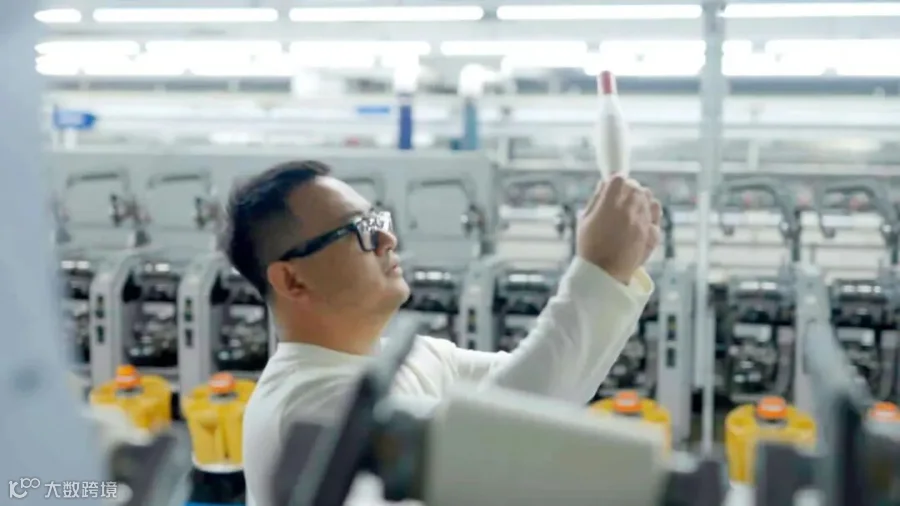
Qi Zheng debugging equipment in the wool spinning workshop.
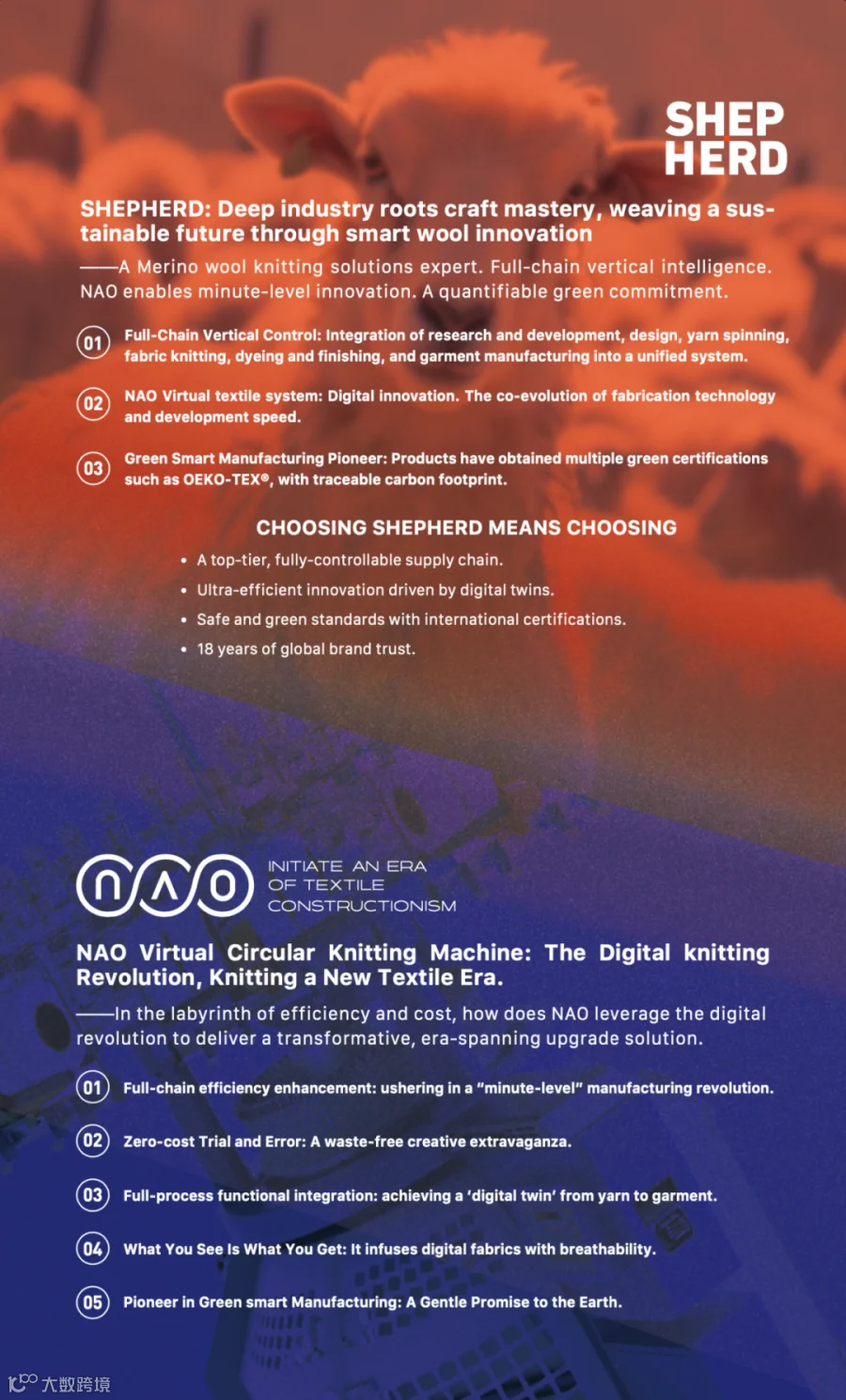
Today, Qi Zheng’s digital technology is also fully empowering the construction of the Shepherd Textile (Anhui) Sustainable Fashion Industrial Park, making this park a model of integration between technology and real industry. Visual Skeleton Key is responsible for the digital and intelligent transformation of the industrial park, deeply integrating the virtual loom system and smart manufacturing system with the park’s production lines to achieve intelligent synergy between R&D and production. All production and inspection processes within the park will be equipped with an intelligent management system, enabling full-process digital monitoring, allowing professional process R&D and advanced digital technology to complement each other perfectly.
◎
NAO Empowers Shepherd.
At the same time, the park closely adheres to the concept of green development, making the recycled wool project a core component. Technologies such as photovoltaic power supply and reclaimed water reuse are adopted to achieve 100% treatment of production wastewater, fully unleashing the environmental value of the wool industry. The entrepreneurial paths of the father and son are in different tracks yet share the same essence at their core. George Zheng takes root in the real economy, revitalizing traditional wool fibers through process innovation; Qi Zheng embraces technology, opening up a new track for the textile industry through digital innovation.
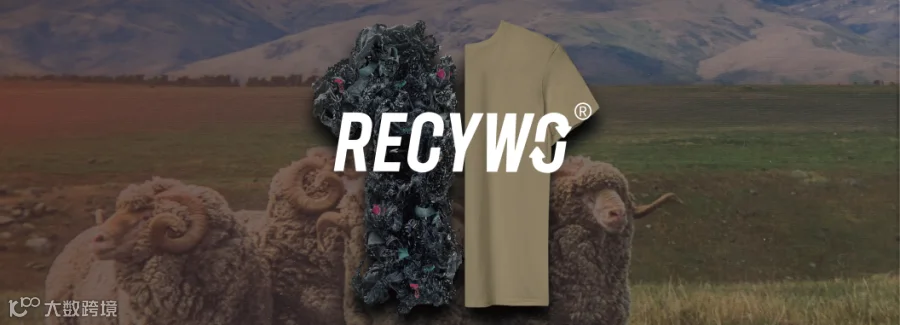

◎
Recycled Wool Project

◎
Photovoltaic Power Project & Water Recycling Technology
From George Zheng to Qi Zheng, the story of these two generations in textiles is a vivid microcosm of the transformation and upgrading of China’s traditional manufacturing industry. They have built a solid foundation with expertise, embraced the times with innovation, and driven development with technology, breathing new life into the century-old wool textile industry in the digital age.