公司加盟 个人加盟 商业合伙人 悬赏征文 关于我们

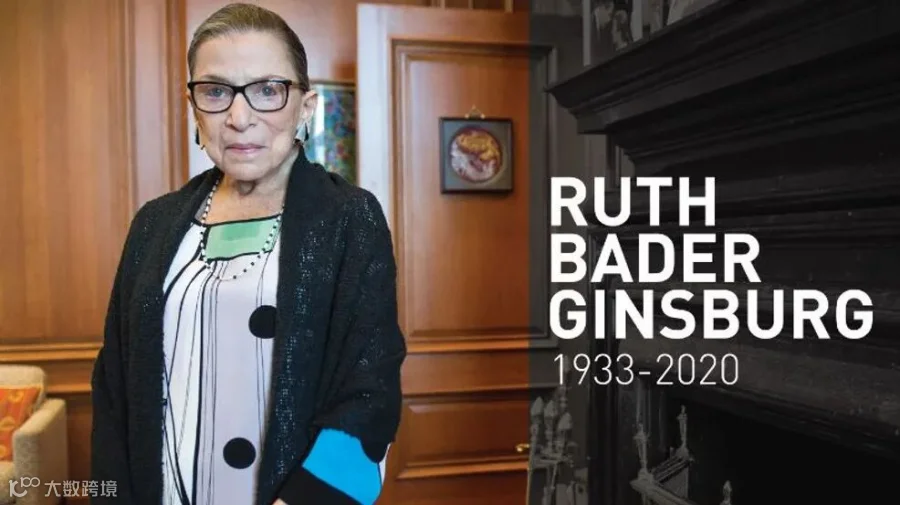
美国最高法院当地时间18日发表声明称,联邦最高法院大法官露丝·巴德·金斯伯格去世。最高法院表示,金斯伯格死于转移性胰腺癌并发症,她在她位于华盛顿的家中去世,家人陪伴在她身边。就在去世前几天,金斯伯格还向孙女克拉拉·斯佩拉说了这样一句话:“我最热切的愿望是,在新总统就任前,我不会被人取代。”然而,这位曾四次击败癌症、87岁仍不愿离开工作岗位的大法官,还是没能完成这一心愿。金斯伯格的去世,将对最高法院和美国产生深远影响。
就在今年5月初,金斯伯格曾因良性胆囊疾病被送入治疗马里兰州巴尔的摩市的约翰斯·霍普金斯医院治疗,引发舆论关注;但第二天,就传来她已经出院的消息。出院前,她甚至还在医院里参加了一场电话口头辩论,主题涉及美国平价医疗法案中的一项规定。
“她恢复得很好,很高兴回家。”美国最高法院在声明中写道,“她未来会回到约翰斯·霍普金斯医院,在接下来的几周门诊随访,最终以非手术的方式移除她体内的结石。”
对金斯伯格来说,生病住院不算什么“新”闻。这位老人迄今已经历过多次住院治疗——1999年,她患上结肠癌,经历了切除手术和放化疗,但在治疗过程中,她没有缺席过任何一次需要履行大法官义务的工作。
在她1米5的身体里可蕴藏着大大的能量:她是美国最高法院第二位女性大法官,也是现任最资深的女大法官;她与希拉里、中国前副总理吴怡一起跻身“福布斯最有影响力女性榜”;她的生平被好莱坞拍成电影《性之基础》,由娜塔莉·波特曼这样的美女兼才女来出演;她还是个“网红”,敢大骂特朗普是个“骗子”,拥有无数脑残粉,“声名狼藉”是粉丝对她的爱称。她就是鲁斯·巴德·金斯伯格,一位天生的“异见者”。
Remembering Ruth Bader Ginsburg
↓↓↓ 上下滑动,查看解说稿 ↓↓↓
“I surely would not be in this room today without the determined efforts of men and women who kept dreams alive, dreams of equal citizenship.” Ruth Bader Ginsburg was the Supreme Court’s feminist icon. Small, soft-spoken, yet fiercely determined, she was an unstoppable force who transformed the law and defied social conventions.
“To her fans she’s known as Notorious R.B.G.” Singing: “Supreme Court’s a boys club. She holds it down, no cares given. Who else got six movies about ’em and still livin’?” Ginsburg was hailed as a crusader for women’s rights. Chanting: “D-I-S-S-E-N-T. We’re Notorious R.B.G.!”
But her legal legacy was even more sweeping. “The projects she brought to the Supreme Court first as the leading women’s rights lawyer of her day, and then as a justice for all those years, I actually think has been kind of misunderstood. She had a really radical project to erase the functional difference between men and women in society.
She wanted to make it clear that there should be no such thing as women’s work and men’s work.” “Mr. Chief Justice, and may it please the court.” In fact, in many of the landmark cases Ginsburg argued before the Supreme Court as a young lawyer for the A.C.L.U., her clients were often men.
One key case involved a man from New Jersey, whose wife died during childbirth. “Stephen Wiesenfeld’s case concerns the entitlement —” He wanted to work less and stay home with his son, but found out only widows, not widowers, were eligible for Social Security payments. “
Ruth Ginsburg went to court on his behalf and said that law, that distinction between mothers and fathers incorporates a stereotyped assumption of what women do and what men do in the family, and is unconstitutional.” “Laws of this quality help to keep women not on a pedestal, but in a cage.” “She won. And that was the kind of case that she brought. And it was really very significant in the march toward the court establishing a jurisprudence of sex equality.”
What inspired Ginsburg to take on such a bold project, and there was little sign of anything radical in the beginning. “Ruth Bader Ginsburg grew up in Brooklyn in a lower, middle-class family. When she was in high school, she was a twirler. You know, a cheerleader with a baton. She was known as Kiki Bader.
And she played a very traditional female role in her high school.” Ginsburg’s mother, who’d been a star student until she was forced to drop out of school to put her brother through college, had big ambitions for her daughter. But the day before Ruth’s high school graduation, her mother died of cancer.
It was that shattering loss, Ginsburg said many years later, that instilled in her the determination to live a life her mother could have only dreamed about. “I pray that I may be all that she would have been had she lived in an age when women could aspire and achieve, and daughters are cherished as much as sons.”
The other pivotal turn in Ginsburg’s path came during college. She earned a scholarship to Cornell, where she met a jovial sophomore who became the love of her life. “He was the first boy I ever knew who cared that I had a brain.” Theirs was not a typical 1950s marriage, but an equal partnership. “
Her husband, Marty, was a fabulous cook, and she was a terrible cook. And Marty did all the cooking.” “In the historic Harvard Yard, you will see your classmates, men from every section of the country.” A year after Marty enrolled at Harvard Law School, Ruth followed, one of only nine women in a class of more than 550, with a new baby girl in tow. “
During their time in law school, Marty became very sick. He had cancer. And she basically took all the notes for him and made it possible for him to graduate on time, while in fact, raising their baby and being a law student herself. Marty recovered and their relationship was very central to her work and her understanding of how it was possible to organize society.”
This understanding turned into a mission after law school, when Ginsburg took on a legal study in Sweden where feminism was on the rise. “Sweden, where everything and everyone works.” Swedish women weren’t choosing between careers and family, and they inspired the young lawyer.
When Ginsburg returned to the U.S., she launched what would become her radical project. As a law professor and leader of the A.C.L.U. Women’s Rights Project, she took on groundbreaking cases to build constitutional protections against gender discrimination. There was a lot of speculation about why a lawyer hailed as a Thurgood Marshall of women’s rights was representing so many men. “
People looking back on that had thought, well, she was kind of trying to sweet talk the court. She was trying to give the court cases and plaintiffs that wouldn’t get those nine old guys very upset and kind of, you know, sneak in a doctrine of sex discrimination. And actually, that’s not accurate.
She happened to have male clients because they were making claims that were traditionally, were women’s claims. And she wanted to just shake up the preconceived notions when it came to raising families and providing for them and working in the economy. Everybody should be on equal footing.”
The legal crusade quickly unleashed profound changes in the law and daily life, but Ginsburg’s own rise to the federal bench took decades, and a lot of lobbying by her husband, a prominent tax attorney, with key old boys club connections.
After getting passed over three times, President Carter nominated Ginsburg to be a federal judge in 1980. “The framers had in mind as the way to protect individual rights and liberty.” People were surprised that the A.C.L.U. activist turned out to be a very moderate judge, a centrist who often sided with conservatives, praised judicial restraint, and slammed Roe v. Wade for going too far, too fast. “I am proud to nominate for associate justice of the Supreme Court, Judge Ruth Bader Ginsburg.”
Some feminist leaders were concerned when President Clinton tapped Ginsburg for the High Court. “She will be able to be a force for consensus building on the Supreme Court.” But Justice Ginsburg quickly pleased supporters and skeptics alike with her opinions in landmark cases, like the Virginia Military Academy. “May it please the court. V.M.I., the Virginia Military Institute, was established by the Commonwealth of Virginia in 1839.” “V.M.I. was age-old military academy run by the state of Virginia, was men only.” “Stand! Attention!” “
It emphasizes competition. It emphasizes standing up to stress. It emphasizes the development of strong character in the face of adversity.” "The question was, did it violate the Constitution to bar women from this school that was entre into the political establishment of the state of Virginia.” Justice Ginsburg believed that omitting women was a constitutional violation.
And she ultimately convinced all but one justice, Scalia, to take her position. “The opinion of the court in two cases, the United States against Virginia, will be announced by Justice Ginsburg.” “State actors may not close entrance gates based on fixed notions concerning the roles and abilities of males and females.”
“Women will now be walking on the campus of the Virginia Military Institute.” “I think she would say it was the case she was happiest about in her tenure on the court.” “V.M.I. superintendent promises that female cadets will be treated the same as male cadets.” “She used an analysis that increased the level of scrutiny that courts in the future have to give to claims of sex discrimination. I think she found that an extremely satisfying outcome.”
Ginsburg’s opinions helped solidify the constitutional protections she’d fought so hard to establish decades earlier. And her grit helped keep her on the bench through colon cancer, pancreatic cancer and the death of her beloved partner. “Justice Ginsburg, even though her husband died yesterday after a battle with cancer, was on the bench.”
Ginsburg battled on through it all, unrelentingly tough, but still a consensus builder. She famously forged friendships with right-leaning justices, including Justice Scalia. “You know, what’s not to like? Except her views of the law, of course.”
Their shared love for opera actually inspired a composer to write a new one, about them. Singing: “We are different, we are one.” “Do you like how you were portrayed in the opera?” “Oh, yes. Especially in the scene where I rescue Justice Scalia, who is locked in a dark room for excessive dissenting.” [laughter] But in her later years, as the court moved to the right, Ginsburg grew bolder in her dissents. “She was not in a position to control the outcome of events.
But she was in a position to stake her claim for what the outcome should have been. And she was very strategic and very powerful in using that opportunity.” The opportunity that made her into a rock star came in 2013, when the court struck down a key part of the Voting Rights Act.
“Ginsburg wrote a lengthy, scathing dissent.” “She was pretty candid in her displeasure with the court’s decision.” “Hubris, pride, is a fit word for today’s demolition of the Voting Rights Act.” Ginsburg’s fiery dissent inspired law students to lay her words to a beat and turn the 80-year-old justice into the Notorious R.B.G. Singing: “
Now I’m in the limelight, because I decide right, court has moved right, but my dissents get cites.” Suddenly, Ginsburg went viral. Children’s books to bumper stickers. Halloween costumes to a Hollywood biopic. “What did you say your name was?” “Ruth Bader Ginsburg.” Even her fitness trainer was a sensation. “Justice is blind, but you know man meat when you see it.”
When asked about retirement plans, Ginsburg balked. “There was a senator who announced with great glee that I was going to be dead within six months. That senator, whose name I’ve forgotten, is now himself dead.” [laughter] Ginsburg’s stardom only grew after she criticized then-candidate Donald Trump during the 2016 presidential race. “Ginsburg said, ‘I can’t imagine what the country would be with Donald Trump as our president.’” Ginsburg apologized for her remarks, but instead of retreating, she was emboldened. “As a great man once said, that the true symbol of the United States is not the bald eagle, it is the pendulum.
And when the pendulum swings too far in one direction, it will go back.” Notorious R.G.B. became a badge of the Trump resistance, and keeping her on the bench became part of the cause. “Health scare for Supreme Court Justice Ruth Bader Ginsburg.” “News tonight about the health scare for Supreme Court Justice —” “Ruth Bader Ginsburg, she was hospitalized.” “And those ribs you busted?” “Almost repaired.”
After all the spills, surgeries and bouts with cancer, what was it that kept her going? Ginsburg said it was her job on the bench, which she still found exhilarating. But perhaps most of all, it was her radical project, which Ginsburg said was still far from complete. “People ask me, ‘When will you be satisfied with the number of women on the court?’ When they are nine.”
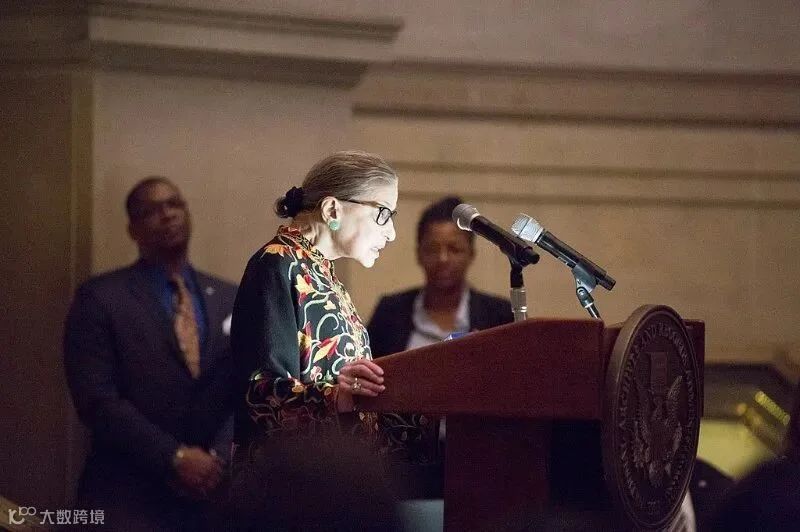 提起这位大法官,很多人都觉得她是工作狂,即便摔断了3根肋骨,可是她硬撑到第二天早上才去医院,只住了一晚上院,又任性地跑回家开始办公了,里夫利称她为“邪恶的化身”。
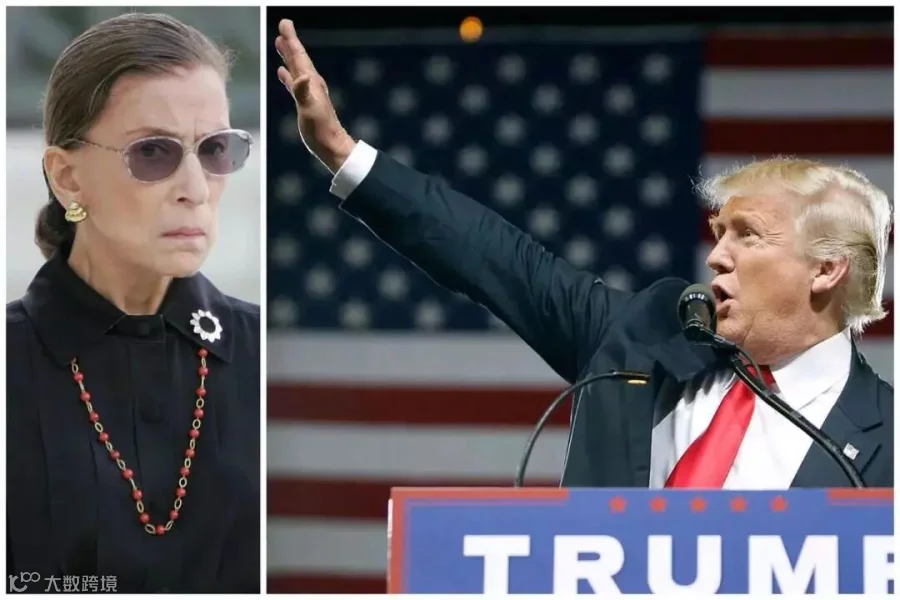
怀尔斯称她为“最卑鄙无耻的人类”,特朗普是她头号反对者:“她是脑子被枪打了吗?简直是最高法院的耻辱!”
萨维奇总结得最全面:“女巫!恶棍!女魔头!反美主义者!”
民众口中却是另一番评价:“如果世上真有超级英雄,必然是金斯伯格的样子!”“我们不顾一切保护金斯伯格!”
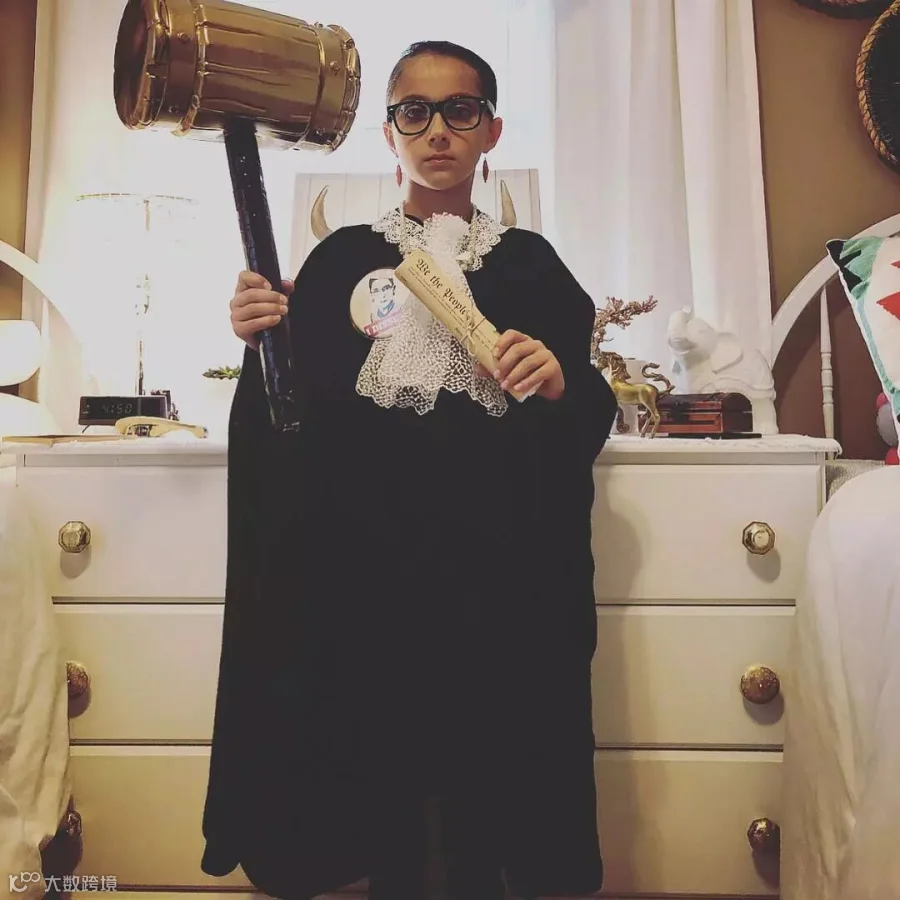
连8岁女孩都以她为榜样:“我爱她,因为她与偏见、不平等做斗争。”
无论毁誉,这位福布斯最具影响力女性,TIME最具影响力人物,普林斯顿、哈佛荣誉博士,此生注定不平凡。
提起这位大法官,很多人都觉得她是工作狂,即便摔断了3根肋骨,可是她硬撑到第二天早上才去医院,只住了一晚上院,又任性地跑回家开始办公了,里夫利称她为“邪恶的化身”。
怀尔斯称她为“最卑鄙无耻的人类”,特朗普是她头号反对者:“她是脑子被枪打了吗?简直是最高法院的耻辱!”
萨维奇总结得最全面:“女巫!恶棍!女魔头!反美主义者!”
民众口中却是另一番评价:“如果世上真有超级英雄,必然是金斯伯格的样子!”“我们不顾一切保护金斯伯格!”
连8岁女孩都以她为榜样:“我爱她,因为她与偏见、不平等做斗争。”
无论毁誉,这位福布斯最具影响力女性,TIME最具影响力人物,普林斯顿、哈佛荣誉博士,此生注定不平凡。





 浩信税务师事务所