[1] 我们通过对不同情况下的关键指标进行平均,来显示这些指标与它们的历史相关的地方。图中显示的值1表示该指标相对于历史的峰值,0表示低谷。时间轴以年为单位显示,0大致代表了这个国家在其鼎盛时期的时间(当时各指标的平均值处于峰值)。在本节的其余部分中,我们将更详细地介绍经典模型的每个阶段。虽然图表显示了产生全球储备货币的国家,但我们也将大量参考中国,尽管它从未建立储备货币,但它是几个世纪以来的主要帝国。
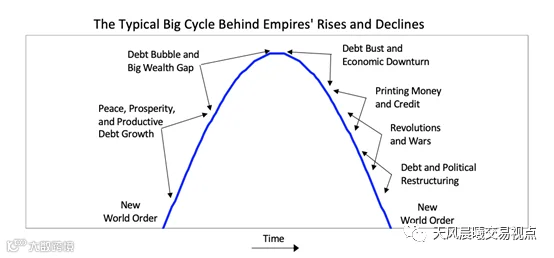
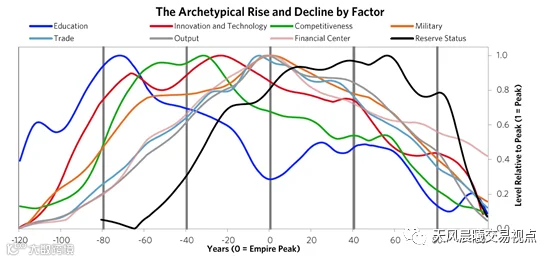
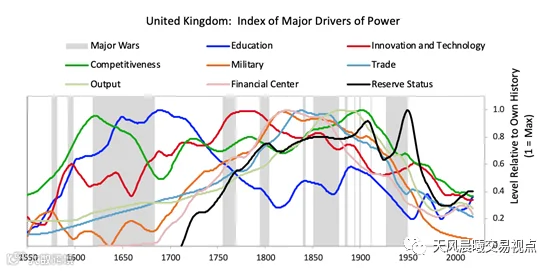
[2] 一个很好的揭示了荷兰爱国主义运动盛行的例子: EncyclopediaBritannica, The Patriot movement, https://www.britannica.com/place/Netherlands/The-18th-century#ref414139
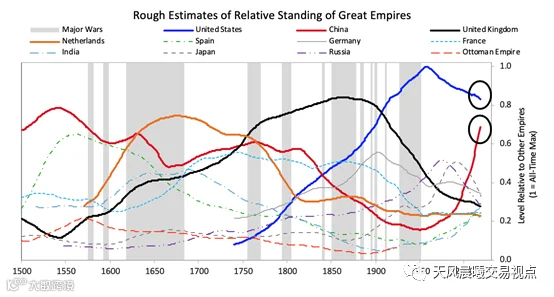
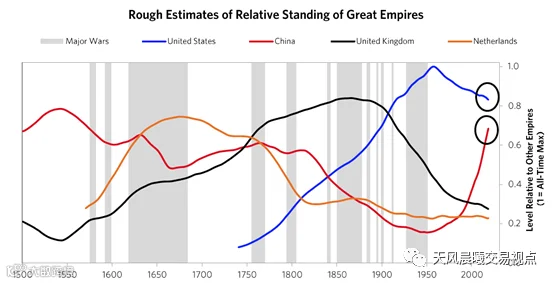
[3] 尽管大部分人认为美国崛起发生在二战后,它实际上是从这里开始的,并在两次世界大战中持续。崛起的种子实际上早在19世纪就通过美国的教育、创新、竞争力和经济产出自我强化的过程中就出现了。
[4] 根据内部模型粗略估计
[5] 根据内部模型粗略估计
[6] 根据内部模型粗略估计
[7] 在本文中,当谈到“荷兰盾”时,我们通常指的是阿姆斯特丹银行使用的荷兰盾钞票,而不是实物硬币(也称为“荷兰盾”)。
[8] Encyclopedia Britannica, Eighty Years’ War, https://www.britannica.com/event/Eighty-Years-War
[9] Encyclopedia Britannica, The Anglo-Dutch Wars, https://www.britannica.com/event/Anglo-Dutch-Wars
[10] Israel, Dutch Primacy in World Trade, 1585-1740, 219
[11] Encyclopedia Britannica, The Anglo-Dutch Wars, https://www.britannica.com/event/Anglo-Dutch-Wars
[12] Encyclopedia Britannica, The Dutch War, https://www.britannica.com/event/Dutch-War
[13] Israel, The Dutch Republic: Its Rise, Greatness, and Fall1477-1806, 824-825
[14] Encyclopedia Britannica, The Anglo-Dutch Wars, https://www.britannica.com/event/Anglo-Dutch-Wars
[15] 在此期间,荷兰的对外投资普遍增加。对英国资产的投资提供了很高的实际回报。例如,荷兰人购买英国东印度公司的股票,伦敦金融城向荷兰投资者出售定期年金(债券)。获得进一步的描述, seeHart, Jonker, and van Zanden, A Financial History of the Netherlands,56-58.
[16] Hart, Jonker, and van Zanden, A Financial History of theNetherlands, 20-21
[17] Quinn & Roberds, “Death of a Reserve Currency,” 13
[18] Encyclopedia Britannica, The Anglo-Dutch Wars, https://www.britannica.com/event/Anglo-Dutch-Wars
[19] Encyclopedia Britannica, The Anglo-Dutch Wars, https://www.britannica.com/event/Anglo-Dutch-Wars
[20] Encyclopedia Britannica, The Anglo-Dutch Wars, https://www.britannica.com/event/Anglo-Dutch-Wars
[21] de Vries & van der Woude, The First Modern Economy, 455
[22] de Vries & van der Woude, The First Modern Economy, 126
[23] de Vries & van der Woude, The First Modern Economy, 685-686
[24] de Vries & van der Woude, The First Modern Economy, 455
[25] de Vries & van der Woude, The First Modern Economy, 455-456& https://www.britannica.com/event/Anglo-Dutch-Wars
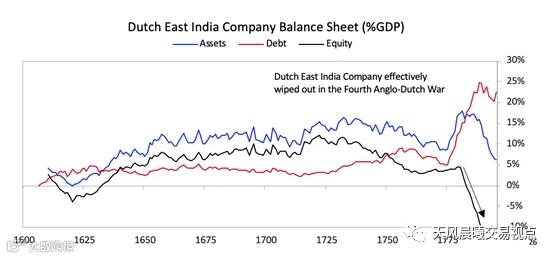
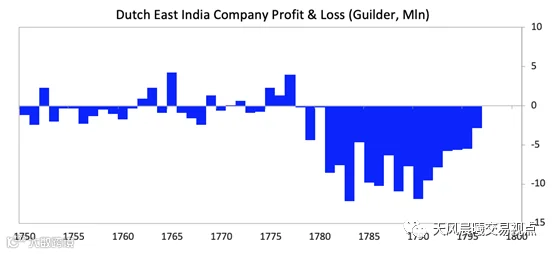
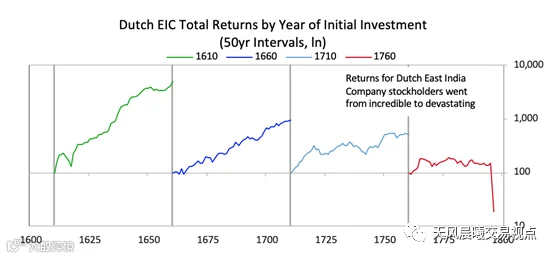
[26]此图表仅显示了荷兰东印度公司以“按国家/地区”报告的财务结果,例如荷兰。它不包括其在亚洲业务的收入和债务的一部分,但包括其在亚洲取回并在欧洲销售的商品的收入。
[27] Quinn & Roberds, “Death of a Reserve Currency,” 17
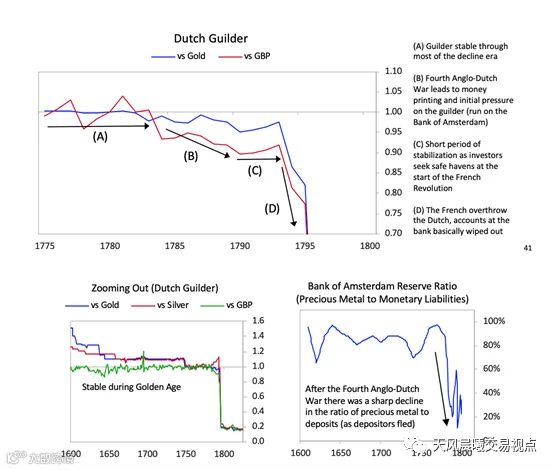
[28] 在这种情况下,“荷兰盾”是指从阿姆斯特丹银行拿到的贬值的银行存款,而不是实物硬币。For details on the run, see Quinn & Roberds, “Death of a ReserveCurrency,” 16.
[29] Quinn & Roberds, “Death of a Reserve Currency,” 17-18
[30] Quinn & Roberds, “Death of a Reserve Currency,” 16
[31] Quinn & Roberds, “Death of a Reserve Currency,” 34
[32] Quinn & Roberds, “Death of a Reserve Currency,” 15-16
[33] 阿姆斯特丹银行领先于时代,使用复式记账法代替了真实的“纸币”。See Quinn& Roberds, “The Bank of Amsterdam Through the Lens of MonetaryCompetition,” 2
[34] Quinn & Roberds, “Death of a Reserve Currency,” 19, 26
[35] Quinn & Roberds, “Death of a Reserve Currency,” 19-20
[36] Quinn & Roberds, “Death of a Reserve Currency,” 16
[37] Quinn & Roberds, “Death of a Reserve Currency,” 24
[38] de Vries & van der Woude, The First Modern Economy, 685-686
[39] Encyclopedia Britannica, The Dutch East India Company, https://www.britannica.com/topic/Dutch-East-India-Company; also see de Vries & van der Woude, The First Modern Economy,463-464
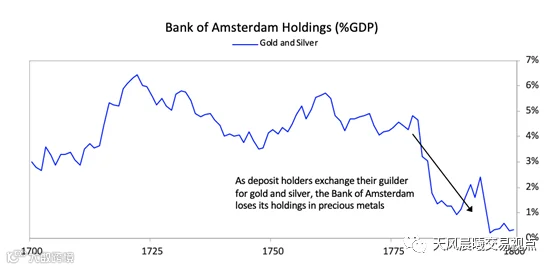
[40] Historical data suggests that by 1795, bank deposits were trading ata -25% discount to actual coin. Quinn & Roberds, “Death of a ReserveCurrency,” 26.
[41] 注:为了全面反映阿姆斯特丹银行储户可能的经济状况,我们假设,在银行关门时,储户每人都得到了按比例分配的仍存放在银行金库中的贵金属(这大约是全额担保金额的20%,也就是贬值幅度达80%)。
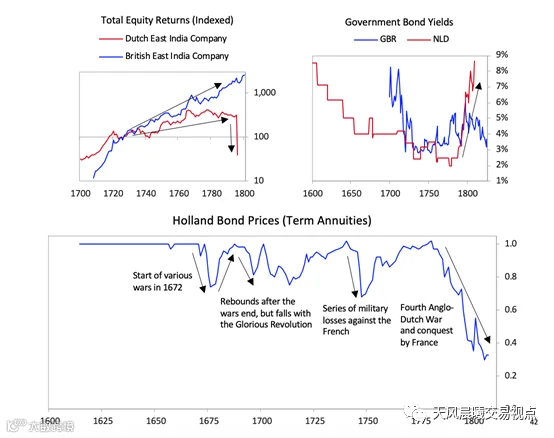
[42] Gelderblom& Jonker, "Exporing the Market for Government Bonds in the DutchRepublic (1600-1800)," 16
[43] For example, see Catherine Schenk, The Decline of Sterling:Managing the Retreat of an International Currency, 1945–1992, 37 (hereafterreferred to as Schenk, Decline of Sterling)
[44] See Schenk, Decline of Sterling, 39
[45] For an overview of the convertibility crisis and devaluation, seeSchenk, Decline of Sterling, 68-80; Alec Cairncross & BarryEichengreen, Sterling in Decline: The Devaluations of 1931, 1949, and1967, 102-147 (hereafter referred to as Cairncross & Eichengreen, Sterlingin Decline).
[46] Schenk, Decline of Sterling, 44
[47] Schenk, Decline of Sterling, 31
[48] Alex Cairncross, Years of Recovery: British Economic Policy1945-51, 124-126
[49] Schenk, Decline of Sterling, 63
[50] Schenk, Decline of Sterling, 48
[51] Schenk, Decline of Sterling, 62
[52] As quoted in Schenk, Decline of Sterling, 62-63
[53] Ibid
[54] Schenk, Decline of Sterling, 66-67
[55] For more detail, see Cairncross & Eichengreen, Sterling inDecline, 139-155
[56] See also Cairncross & Eichengreen, Sterling in Decline,151-155 for a discussion of other contributing factors
[57] Schenk, Decline of Sterling, 39, 46; for furtherdescription, see https://eh.net/encyclopedia/the-sterling-area/
[58] 为了进一步说明这些政策和其他协调政策, see CatherineSchenk, “The Retirement of Sterling as a Reserve Currency After 1945: Lessonsfor the US Dollar?”
[59] John Singleton & Catherine Schenk, “The Shift from Sterling tothe Dollar, 1965–76: Evidence from Australia and New Zealand,” 1162
[60] For more detail on the dynamics of the Sterling Area,see Catherine Schenk, Britain and the Sterling Area, 1994
[61] As quoted by Schenk, Decline of Sterling, 156
[62] Schenk, Decline of Sterling, 174
[63] For fuller coverage of this, see Schenk, Decline of Sterling, 273-315
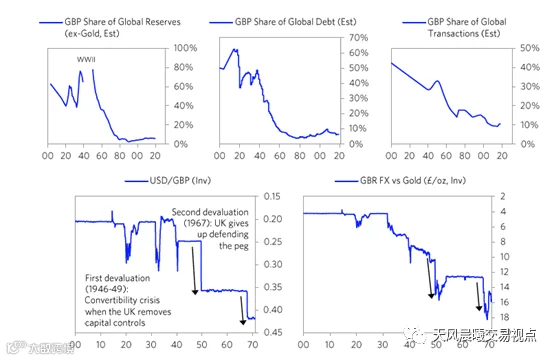
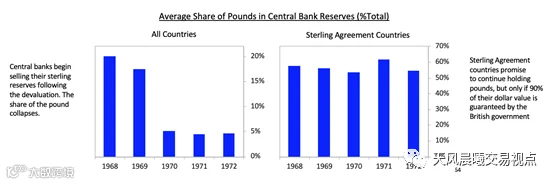
[64] Data fromSchenk, "The Retirement of Sterling as a Reserve Currency After 1945:Lessons for the US Dollar?," 25