

许多人仍在 LangGraph 里手搓 agent 循环。Deep Agents 给出了一个更高层的答案——而且比你预想的更 opinionated。
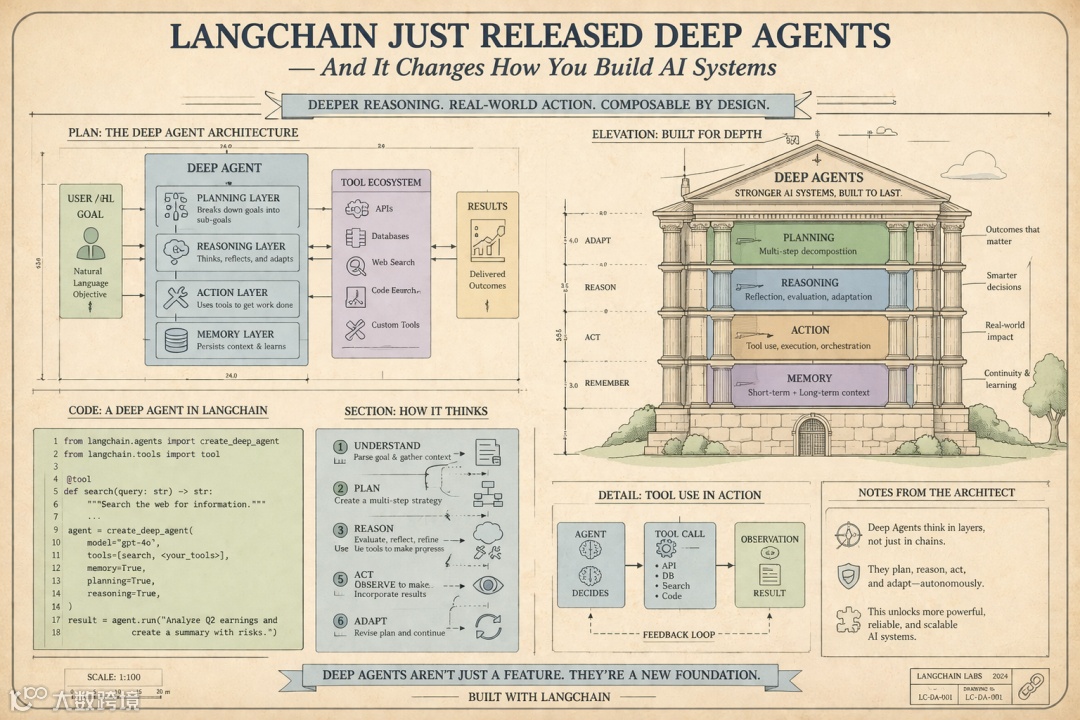
几乎所有认真构建 agent 的团队,我都看到同一个模式在重复上演。
先是用 LangChain 的 chains。做简单 pipeline 没问题。等任务一复杂——需要 tool calls、需要 loop、需要处理 variable-length outputs——chains 就不够用了。于是转向 LangGraph,然后在真正开始解决问题之前,就已经在写 state schemas、conditional edges 和 graph compilation 逻辑了。
并不是说 LangGraph 不好。它非常强大。但它是一个 runtime(低层原语),而大多数人却把它当成 application framework 来用。LangChain 注意到了这一点,deepagents 就是他们的答案。
Deep Agents 究竟是什么
直说吧,“deep agents” 听起来可能泛指很多东西。
deepagents 是一个独立的 Python 库(用 pip install deepagents 安装),构建在 LangChain 和 LangGraph 之上。LangChain 文档把它称为一个 “agent harness”:它提供与其他框架相同的核心 tool-calling loop,但把一组关键能力内置好了,你就不用每次都重造轮子。
核心函数是 create_deep_agent()。最简单的用法:
   from deepagents import create_deep_agent

def get_weather(city: str) -> str:
    """Get weather for a given city."""
    return f"It's always sunny in {city}!"
agent = create_deep_agent(
    tools=[get_weather],
    system_prompt="You are a helpful assistant",
)
agent.invoke(
    {"messages": [{"role": "user", "content": "What is the weather in Mumbai?"}]}
)
就这样,一个函数。底层由库来处理 LangGraph graph、state management、streaming 和 context window management——这些你都不需要碰。
但真正的亮点在于它默认内置了什么。
五个让它与众不同的能力
1. 内置规划:write_todos
每个 deep agent 都自动拥有一个 write_todos 工具。面对复杂任务时,agent 会用它把工作拆成离散步骤,跟踪它们的状态(pending、in_progress、completed),并在任务推进中动态调整计划。
这点很关键,因为这不只是 prompt 技巧——to-do 列表会持久化在 agent state 中。agent 可以回访、更新,并在整个会话生命周期内引用它。你不需要手动提示模型 “think step by step”。这种结构被烘焙进了 harness。
2. 一个虚拟文件系统
这点最让我意外。Deep agents 默认带了一组 filesystem 工具:ls、read_file、write_file、edit_file、glob 和 grep。
为什么 agent 需要 filesystem?为了做 context management。
LLM 的 context window 是有限的。长时间的调研、跑代码、或处理大型工具结果时,会话历史很容易爆炸式增长。Deep agents 的做法是把大内容 offload 到虚拟 filesystem,而不是都塞进 context window。
当某个工具结果超过 20,000 tokens 时,库会自动把它保存到配置好的 backend,并在上下文中用文件路径引用和 10 行预览替代原文。agent 之后可在需要时 read_file 或 grep 该文件。这是智能的 context compression——既不是 chunking,也不是粗暴的 truncation,而是有目的的 offloading 与按需 retrieval。
filesystem 的 backend 可选:内存(默认)、本地磁盘、用于跨 thread 持久化的 LangGraph Store,或像 Modal、Daytona 这样的 sandboxed 环境。backend 是可插拔的。
3. Subagent Spawning
harness 内置了一个 task 工具,让主 agent 可以为隔离的子任务 spawn 专门的 subagents。
为什么这比听起来更重要?在长时间调研里,如果一个单一 agent 处理一切,它的上下文会被中间步骤、搜索结果和半成品挤满。Subagents 是个优雅的解法:主 agent 把特定子任务委派给一个干净上下文的新 agent 实例。subagent 自主运行、完成工作,只把一个总结返回给主 agent。主 agent 的上下文保持干净。
你可以配置自定义 subagents,拥有各自的 tools 和 system prompts:
   from deepagents import create_deep_agent, Subagent

code_reviewer = Subagent(
    name="code-reviewer",
    system_prompt="You are an expert code reviewer. Analyze code for bugs, style, and performance.",
    tools=[read_file_tool],
)
agent = create_deep_agent(
    tools=[internet_search],
    subagents=[code_reviewer],
    system_prompt="You are a research and engineering assistant.",
)
默认 subagent(一个带 filesystem 工具的通用型)始终可用,无需额外配置。
4. 自动 Context Compression 与 Summarization
这正是该库在长时间任务中体现价值的地方。
当 agent 的上下文达到模型 context window 限制的 85%,且已无内容可再 offload 到 filesystem 时,harness 会触发自动 summarization。一个 LLM 会生成结构化摘要——会话意图、已产出的 artifacts、下一步计划——并用该摘要替换工作内存中的完整历史。原始消息则保存到 filesystem 作为权威记录,必要时 agent 仍能找回具体细节。
结果就是,deep agents 能在复杂任务上无限期运行而不触碰 context 限制——这在用原生 LangGraph 时通常需要你手动工程化实现。
5. 跨会话的长期记忆
默认情况下,agent state 只存在于单一 thread 内。但如果用带 LangGraph Store 的 CompositeBackend 进行配置,agent 就能在会话与 threads 之间持久化记忆。
存放在 /memories/ 路径(或你自定义位置)的文件,会在 agent 重启后依然存在,并可从任意会话 thread 访问。这使你可以构建一个能记住你的偏好、代码库约定,或数天研究进展的 agent。
   from deepagents import create_deep_agent
from deepagents.backends import CompositeBackend, StateBackend, StoreBackend
from langgraph.store.memory import InMemoryStore

store = InMemoryStore()
backend = CompositeBackend(
    routes={"/memories/": StoreBackend(store=store)},
    default=StateBackend(),
)
agent = create_deep_agent(
    tools=[...],
    backend=backend,
    memory=["path/to/AGENTS.md"],  # persistent context file
)
它在 LangChain 生态中的定位
这部分容易让人困惑,值得明确说说。
LangChain 是提供构件的框架:models、tools、prompts、chains。它是基础层。
LangGraph 是一个 runtime,用于可持久的、有状态的、基于 graph 的 agent 执行。它处理 persistence、streaming、interrupts 和复杂的 conditional flows。它是 engine。
Deep Agents 是构建在两者之上的 harness。它不是 LangGraph 的替代品——底层一切都用的 LangGraph。它提供的是更高层的 API 和 opinionated defaults,这样你就不用每次都从零实现 planner、filesystem 层、context compression 和 subagent 基础设施。
这么想:LangGraph 给你的是 engine 和 transmission。Deep Agents 给你的是一辆车。
对直截了当的 agent,LangChain 的 create_agent 可能就够了。对复杂、长时间、多步骤、且有大 context 需求的任务,deepagents 的抽象成本才真正值回票价。
构建一个 Research Agent:真正的 Quickstart
这是一个实用例子——一个能搜索网页并产出结构化报告的 research agent:
   import os
from typing import Literal
from tavily import TavilyClient
from deepagents import create_deep_agent

tavily_client = TavilyClient(api_key=os.environ["TAVILY_API_KEY"])
def internet_search(
    query: str,
    max_results: int = 5,
    topic: Literal["general", "news", "finance"] = "general",
    include_raw_content: bool = False,
):
    """Run a web search and return results."""
    return tavily_client.search(
        query,
        max_results=max_results,
        include_raw_content=include_raw_content,
        topic=topic,
    )
research_instructions = """You are an expert researcher.
Your job is to conduct thorough research and then write a polished report.
Use internet_search to gather information.
Write your findings to files as you go to avoid losing context.
Use write_todos to plan your research steps before starting.
"""
agent = create_deep_agent(
    model="anthropic:claude-sonnet-4-6",  # default model
    tools=[internet_search],
    system_prompt=research_instructions,
)
result = agent.invoke({
    "messages": [{
        "role": "user",
        "content": "Research the current state of agentic AI frameworks in 2025 and write a structured report."
    }]
})
print(result["messages"][-1].content)
运行后会发生什么:
agent 调用
write_todos来规划研究步骤它执行搜索,并把大的结果自动 offload 到虚拟 filesystem
如果任务复杂,它会 spawn 一个 subagent 处理特定部分
按需回读相关文件并综合出最终报告
全程由 harness 管理上下文,模型不会触达 window 极限
这些基础设施你一行都没写——harness 自带了。
Deep Agents CLI
还有一件值得知道的事:deepagents 也提供了一个基于同一 SDK 的命令行 agent。
   pip install deepagents
deepagents  # launches the interactive CLI agent
这是一个能在终端里运行的 coding agent——想想 Claude Code 或 Aider,但它是基于 Deep Agents SDK 构建的。它支持交互模式、非交互管道模式(用于脚本的 -n 标志)、自定义 skills,以及持久化 memory。你可以教会它你的项目约定,它会在会话间记住这些。
这意味着支撑你生产级 research agent 的同一 SDK,同时也开箱即用地提供了一个可用的开发者工具。
什么时候该用(以及不该用)
deepagents 适用于:
-
任务需要规划,并由多个步骤完成 -
工具结果很大,需要在长会话中进行管理 -
你想要 subagent 委派,但不想自己搭基础设施 -
需要跨会话 threads 的持久化 memory -
你在构建 coding agent 或自主研究系统
继续用 LangChain 的 create_agent 或原生 LangGraph 当:
-
你的 agent 很简单:一两次 tool calls、短回复 -
你需要对 graph topology 有极细粒度控制 -
你已经深度投入自定义的 LangGraph workflow,不想被 opinionated defaults 约束
该库在自己的文档里也很诚实:简单的 agent 就用更简单的工具。
为什么这不只是又一个框架发布
时机值得一提。
Agentic AI 正处在拐点。基础模式——tool calling、ReAct loops、简单 RAG——已人尽皆知。业内现在在攻克的,是如何让 agent 在 long-horizon 任务上更可靠:需要规划、大上下文、持久化和委派的任务。
每个做生产级 agent 的团队,都不得不从零工程化解决这些同样的问题。Context management 策略、subagent 模式、memory 架构——这些在不同组织里被一遍遍用略微不同的形式重造。
deepagents 是 LangChain 的一个押注:这些解法足够通用,可以标准化。所谓 agent harness——有主见的默认、内建的基础设施、可插拔 backends——就是把话题从 “怎么搭管道?” 转向 “我们真想让 agent 做什么?” 的一次尝试。
能否成功要看这些默认在生产中是否扛打。但从设计方向看,这是对的。
开始上手
pip install deepagents tavily-python
设置你的 API keys:
   export ANTHROPIC_API_KEY="your-key"
export TAVILY_API_KEY="your-key"
export LANGSMITH_TRACING=true  # optional, for debugging
export LANGSMITH_API_KEY="your-key"
完整文档——包括 backends、subagents、sandboxes、human-in-the-loop,以及 CLI——见 docs.langchain.com/oss/python/deepagents。
如果你现在在做任何严肃的 agent 项目,花一个下午弄懂 deepagents 在你的技术栈里处于什么位置,都是值得的——即使你不会立刻用上它。
在用 Deep Agents 做项目吗?尤其欢迎做 research automation、financial analysis 或 coding workflows 的同学留言分享。