

转载来源:环境模拟与污染控
版权归原作者所有,如有侵权请联系后台处理
文章1:中国水泥行业地市级生态效率解析
原文信息
原文标题:
The eco-efficiency evaluation in China's cement industry: A city-level study
作者:
Yihan Wang, Mao Xu, Xiaojun Lv, Zongguo Wen*, Chen Chen
原文链接:
https://doi.org/10.1016/j.scitotenv.2022.161132
发表期刊:Science of the Total Environment
发表时间:2023.3
关键词:水泥行业;能耗;排放;企业层面数据库;数据包络分析;莫兰指数
引用信息:
Yihan Wang, Mao Xu, Xiaojun Lv, Zongguo Wen, Chen Chen, The eco-efficiency evaluation in China's cement industry: A city-level study, Science of The Total Environment, Volume 865, 2023, 161132, ISSN 0048-9697
主要研究结果
1.水泥工业产能分布梳理:
水泥产能分布集中度较高,呈现突出的空间异质性,如产量最集中的五个省份(广东、江苏、山东、四川、安徽)占全国面积11%,熟料和水泥产量分别占全国的31.0%和32.3%。
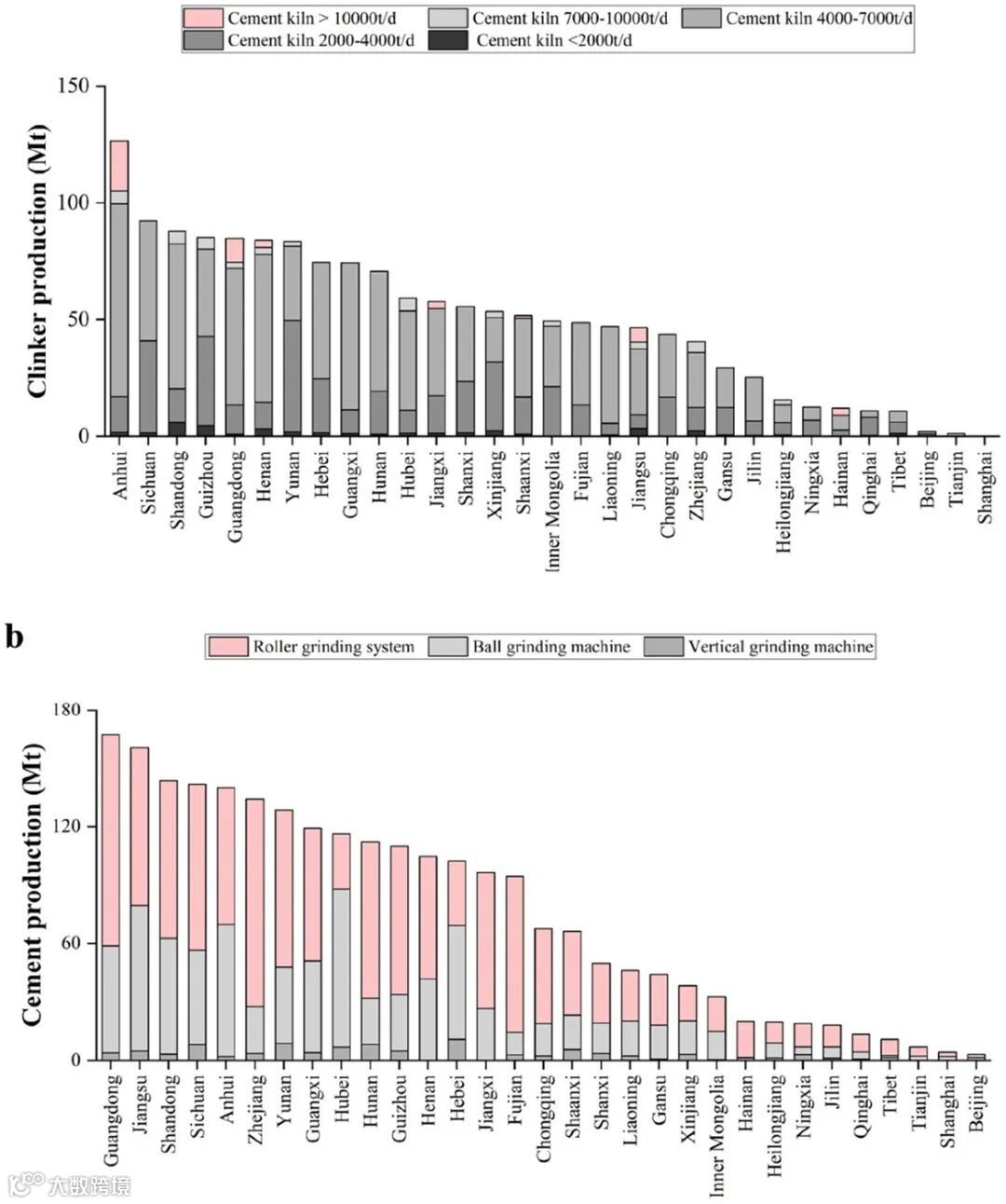
Fig.1 Provincial distributions of (a) clinker and (b) cement production in 2019.
2.生态效率评估结果:
大多数地市的熟料生产工序生态效率值介于0.7-0.8之间,水泥生产工序生态效率值介于0.65-0.8之间,表明中国各地市水泥行业绿色水平总体接近。
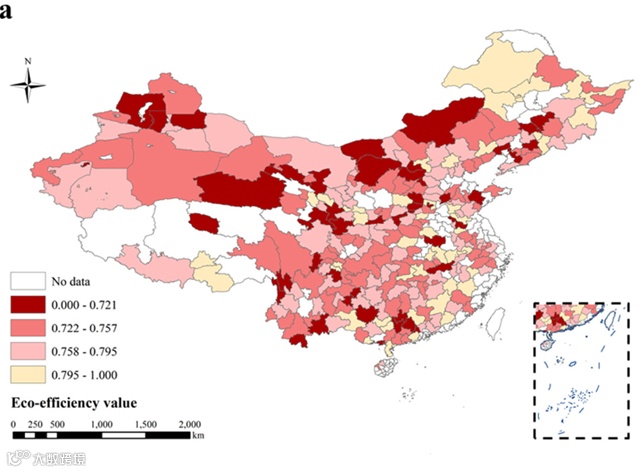
Fig.3 The eco-efficiency values of (a) clinker calcination processes
3.水泥行业生态效率与能耗/排放绝对量关联解析:
中国各地市水泥行业的生态效率与能耗/排放绝对量存在不一致性,莫兰指数分别为0.153与0.045,表明高能耗/排放地区未必为生态效率低的地区,论证了采用生态效率这一综合指标评估绿色生产水平的必要性。
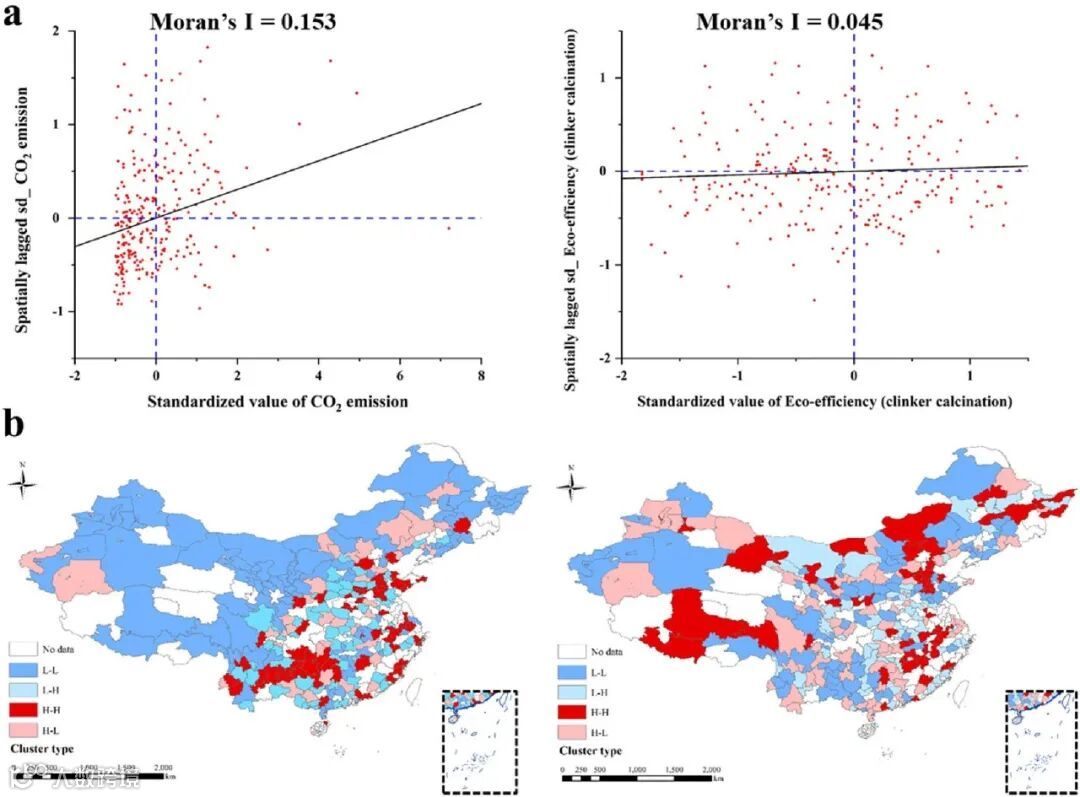
Fig.4 The spatial autocorrelation analysis results in CO2 emission amount and eco-efficiency of the clinker calcination process. (a) The scatterplot of the Moran's I indexes; (b) The cluster type of each city.
原文摘要
To implement strict environmental targets in China's cement industry into small regions, one should evaluate the city-level eco-efficiency that provides comprehensive instruction. This study establishes a plant-level database with 4000+ production lines located in 341 cities, calculates the energy consumption and CO2, SO2, NOx, and PM emissions, evaluates the eco-efficiency in each city via Slacks-based Measure, and verifies the spatial features of these indicators. Results show that the energy consumption and emissions of the industry are highly concentrated, with ~10 % of the land area contributing to 28.4 %–34.6 % of the total amounts in 2019. The average eco-efficiency value of the clinker calcination and cement grinding processes are 0.761 and 0.714, but the city clusters having low eco-efficiency values are inconsistent with the ones having large energy consumption and emission amounts. The results can contribute to the implementation of the targets such as carbon peaking and pollution cap in China's cement industry.
文章2:中国热电行业实现碳达峰目标的区域差异
原文信息
原文标题:
The regional discrepancies in the contribution of China’s thermal power plants toward the carbon peaking target
作者:
Yihan Wang, Zongguo Wen*, Xiaojun Lv, Junming Zhu
原文链接:
https://doi.org/10.1016/j.apenergy.2023.120922
发表期刊:Applied Energy
发表时间:2023.5
关键词:热电;区域差异;企业数据;碳达峰;协同效益分析
引用信息:
Yihan Wang, Zongguo Wen, Xiaojun Lv, Junming Zhu, The regional discrepancies in the contribution of China’s thermal power plants toward the carbon peaking target, Applied Energy, Volume 337, 2023, 120922, ISSN 0306-2619
主要研究结果
1.中国热电行业生产及碳排放现状解析:
热点行业碳排放呈现较高的空间聚集性,排放量前五的省级行政区(山东、内蒙古、江苏、广东与山西)占全行业排放38.9%。
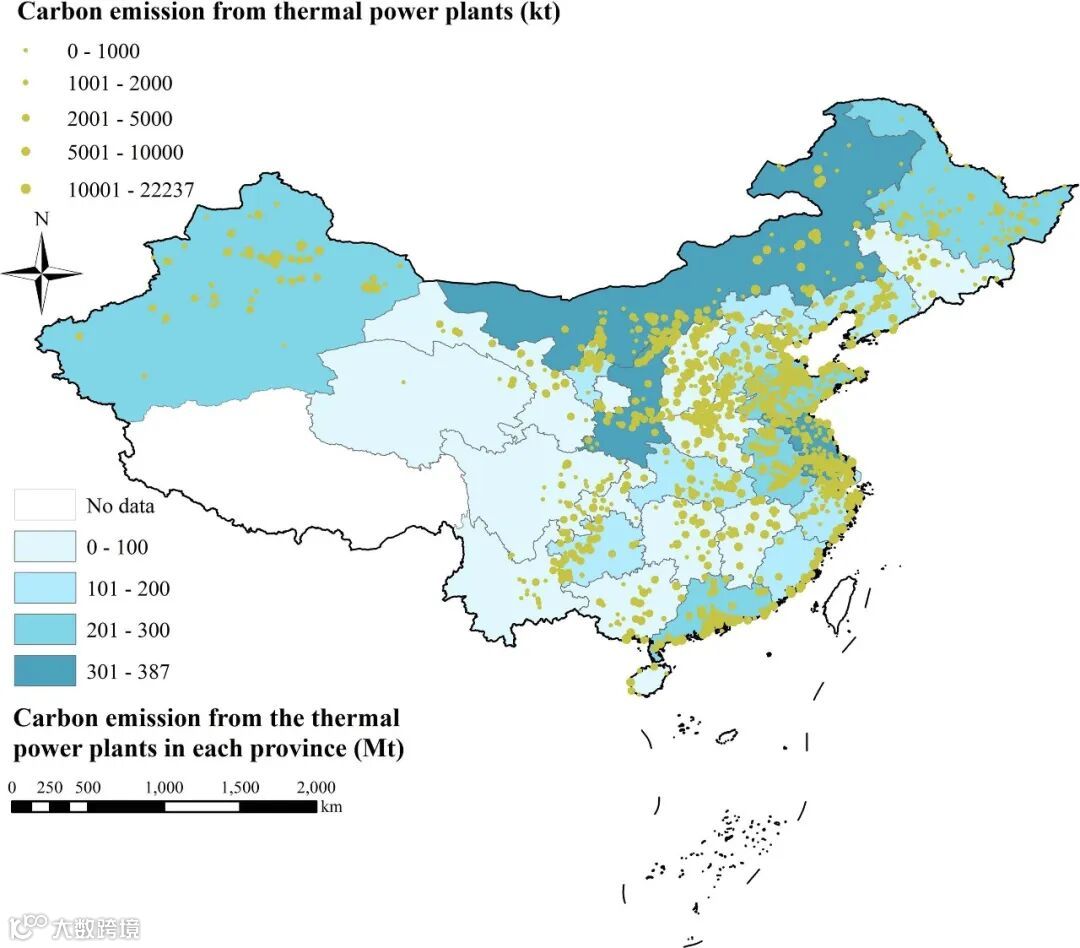
Fig.1 The spatial distributions of the carbon emission of the thermal power plants in 2019.
2.中国热电行业实现碳达峰目标的预期时间:
基于研究提出的热电行业减排路线预测各地市达峰时间,发现298个地市中有130个地市的热点行业预计在2025年前实现碳达峰、74个地市在2025-2030年间实现达峰,有94个地市有在2030年无法达峰的可能。需基于各地市热电行业实际情况制定差异化的碳达峰目标。
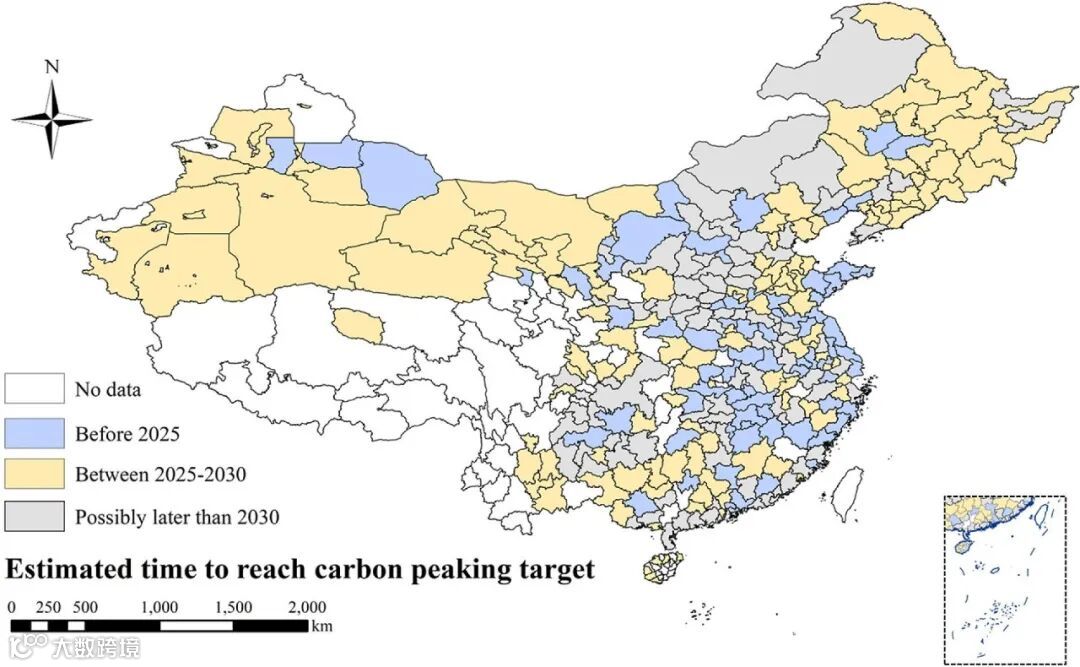
Fig.4 The estimated time to reach the carbon peaking target of the thermal power plants in each city.
3.中国热电行业实现碳达峰目标的协同效益评估:
中国热电行业2020-2035年间的能耗水平受产能持续增加影响会进一步增加,节能净效益为负;二氧化硫、氮氧化物和烟粉尘等大气污染排放指标受超低排放改造措施的持续推进影响,预计将在2020-2035年间持续下降,实现减污降碳协同增效。
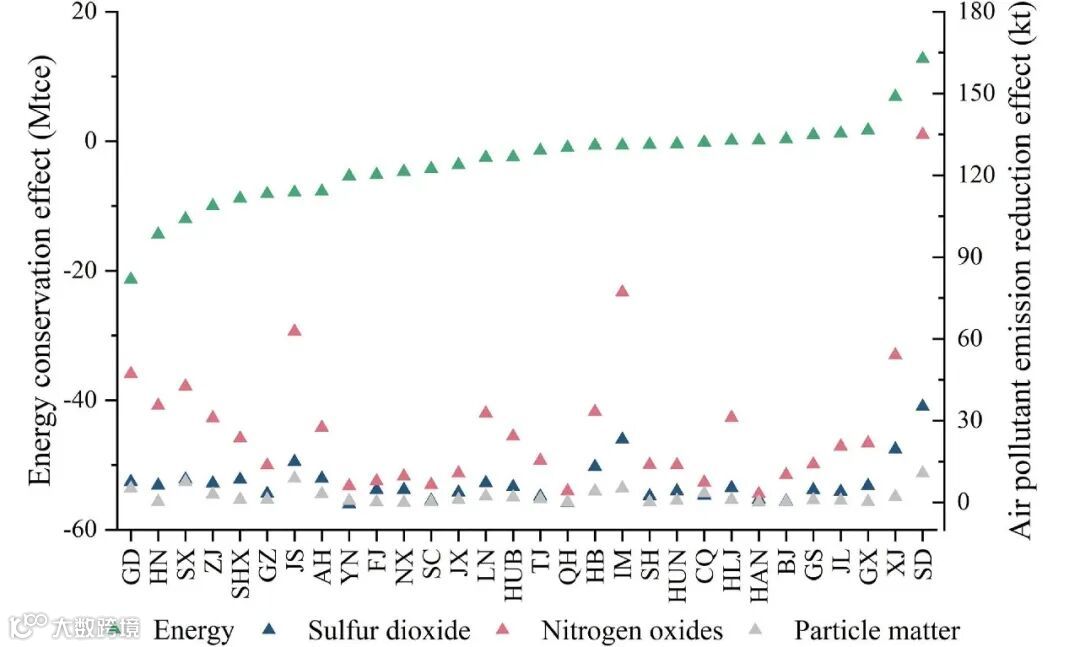
Fig. 5. The energy conservation and air pollutant emission reduction co-benefits of the decarbonization strategy of the thermal power plants in each province.
原文摘要
China’s thermal power sector accounted for 45 % of total carbon emissions. Significant regional discrepancies exist between the plants to reach the carbon peaking target, which was overlooked in current research. This study investigates the regional discrepancies of the thermal power plants towards the carbon peaking target firstly. A thermal power plant database with ∼ 4500 power units in 298 cities to evaluate the emission reduction potential, expected carbon peaking period, and co-benefits. Results show that the carbon emission of the sector will experience a 7.2 % rise between 2019 and 2035, but the emission intensity decline by 27.6 g CO2/kWh. Nearly-one-third of the cities have risks not reaching the carbon peaking target before 2030, while most cities can reduce air pollutant emission. This study reveals the inconsistency between spatial carbon emissions and reduction potential of the thermal power plants and proposes several policy suggestions to the whole sector’s decarbonization.
文章3:中国钢铁行业碳及污染物减排的共生效益及冲突关系的空间异质性解析
原文信息
原文标题:
The spatial heterogeneity of synergy and trade-off linkages between carbon and air pollutant mitigations in China's steel industry
作者:
Yihan Wang, Zongguo Wen*, Xiaojun Lv, Yuan Tao, Junming Zhu
原文链接:
https://doi.org/10.1016/j.jclepro.2023.138166
发表期刊:
Journal of Cleaner Production
发表时间:2023.9
关键词:钢铁行业;共生效益和冲突关系;碳和污染物减排;不确定性分析;生产单元
引用信息:
Yihan Wang, Zongguo Wen, Xiaojun Lv, Yuan Tao, Junming Zhu, The spatial heterogeneity of synergy and trade-off linkages between carbon and air pollutant mitigations in China's steel industry, Journal of Cleaner Production, Volume 418, 2023, 138166, ISSN 0959-6526,
主要研究结果
1.中国各地市钢铁行业的碳及污染物排放现状:
中国钢铁行业排放的空间分布高度集中,产能最高的五个地市贡献了全行业29.2%的碳排放,35.1%的二氧化硫排放,29.9%的氮氧化物排放以及36.2%的烟粉尘排放。
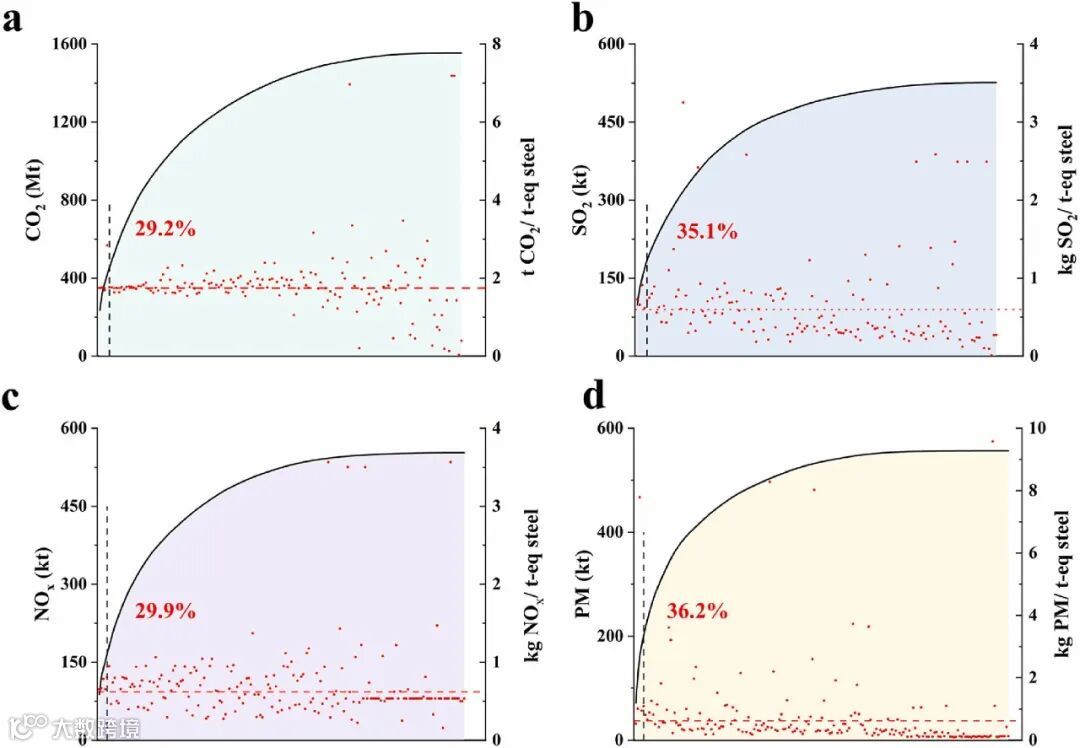
Fig.3 Emissions of a CO2, b SO2, c NOx, and d PM of the steel industry of each city
2.中国钢铁行业碳及污染物减排预测:
预计在2019-2035年间,中国钢铁行业可实现42.6%, 27.7%, 71.9%, 和73.8%的二氧化碳、二氧化硫、氮氧化物和烟粉尘减排。炼焦、烧结与炼铁工序可实现各项减排目标的共生效益;球团与炼钢工序形成减排目标间的冲突关系。
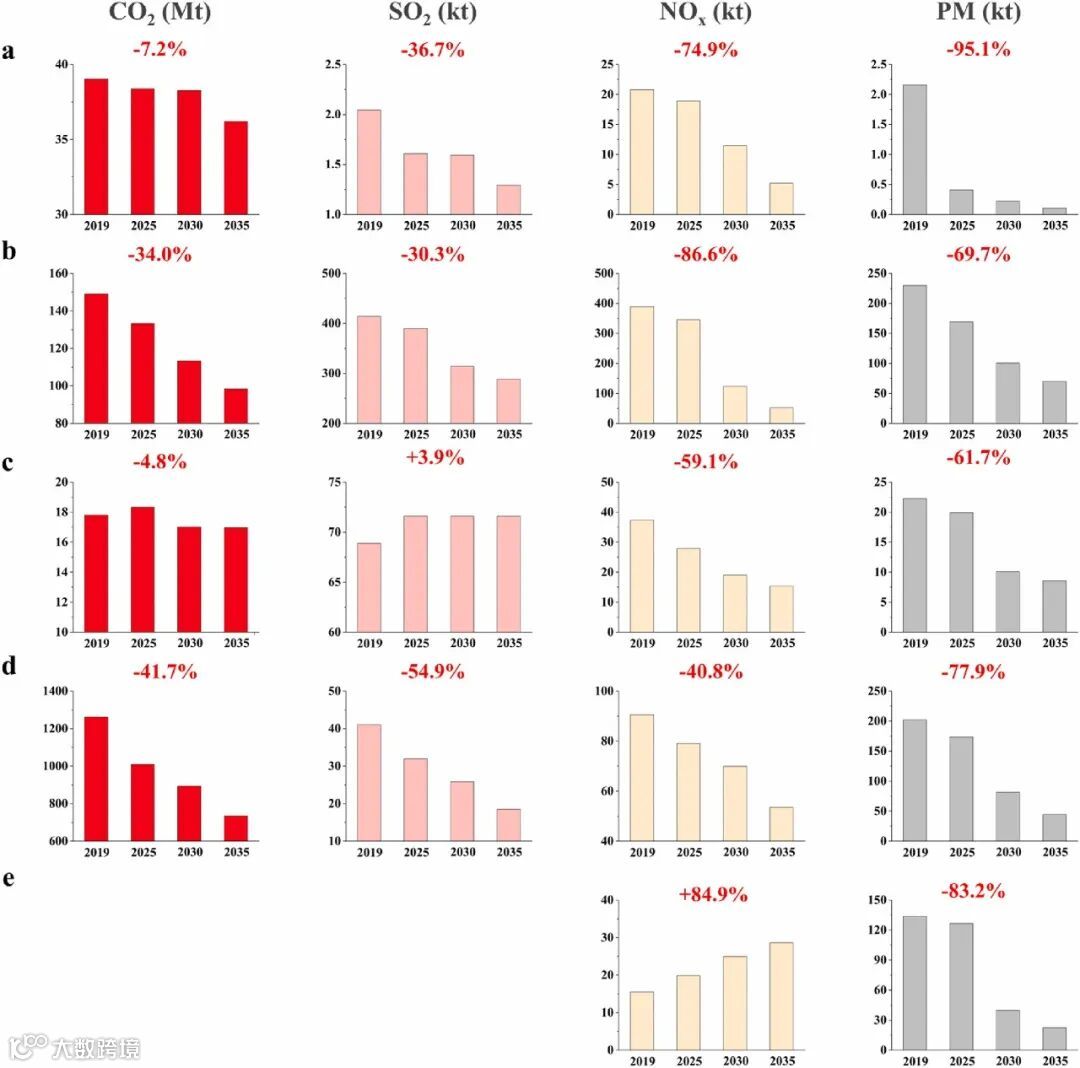
Fig.4 Emissions of CO2, SO2, NOx, and PM of each process in steel industry. a Coking process. b Sintering process. c Pelleting process. d Ironmaking process. and e Steel making process.
3.2019-2035年中国钢铁行业各地市碳及污染物减排潜力:
在具有钢铁行业产能的地市中,有138个可实现碳和污染物减排的共生效益,但共生效益程度差异显著;同时,11个地市存在碳和污染物减排的冲突关系。
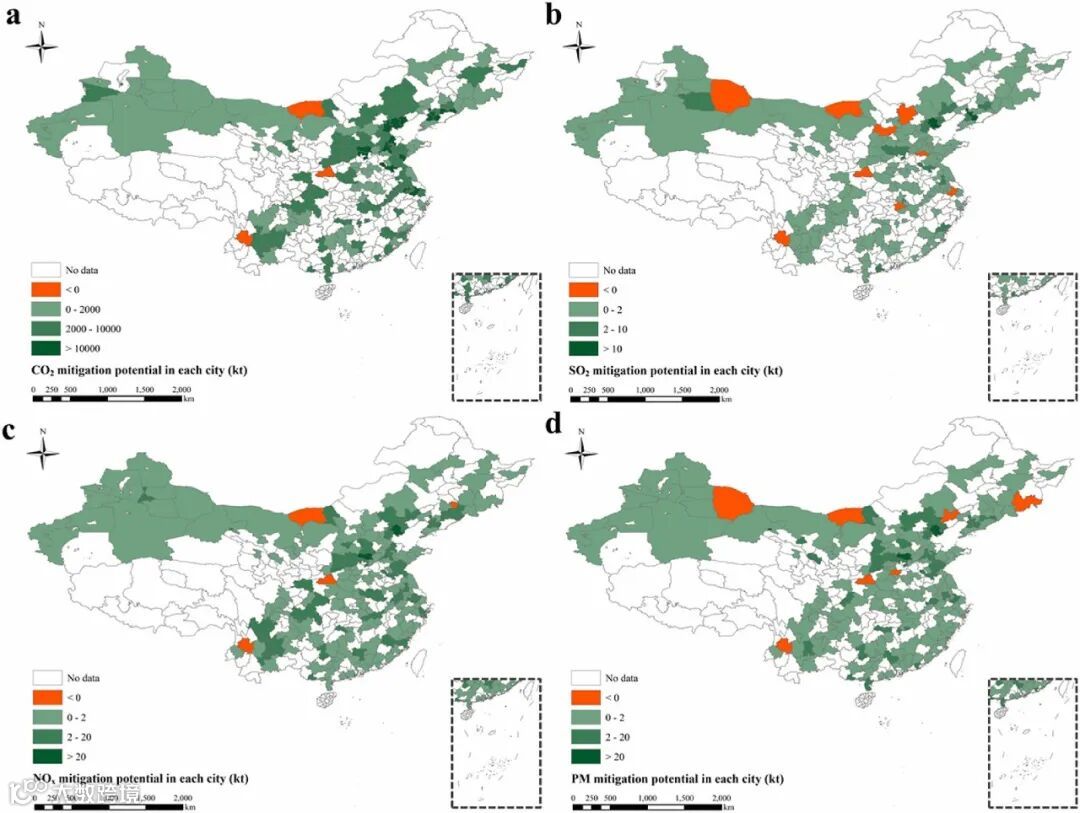
Fig.5 Mitigation potentials of the steel industry in each city during 2019–2035. a-d present the mitigations of CO2, SO2, NOx, and PM in each city.
原文摘要
The linkages between CO2 and air pollutant mitigations in the steel industry, including synergies and trade-offs, have significant spatial heterogeneities. Previous research has only investigated the linkages at the industrial level and overlooked the spatial heterogeneity features, which hinders the precise decision making on mitigation strategies. This study quantifies the linkages between CO2, SO2, NOx, and PM mitigations across cities in China's steel industry. A database of 3689 steel production units is established to calculate the emissions. Then, the linkages of mitigation targets of each city are quantified by setting the tailored mitigation pathways in 2019–2035. The results show that the emissions are highly spatially heterogeneous, as the top five contributing cities account for 27.7–33.2% of the total emissions of China's steel industry, but their emission efficiencies are not necessarily worse than the average. The mitigation pathways cause two-sided relationships, as 138 cities will earn mitigation co-benefits to varying degrees, but other 11 cities show the trade-offs. In addition, the mitigation pathway will lead to the highest economic costs as 51.2 billion CNY/a, bringing heavy economic burdens to some cities. This study enriches the co-mitigation management theory and supports the formulation of spatially differentiated mitigation targets and measures.
第一作者简介

王奕涵
清华大学环境学院博士毕业生,主要研究方向为能源与环境系统工程分析。
通讯作者简介

温宗国
清华大学环境学院长聘教授,循环经济产业研究中心主任。主要研究方向为固废资源化与循环经济、能源与环境系统工程。