


明代制瓷业非常发达,被誉为唐代和宋代以后中国制瓷业的第三个历史高潮。特别是明代的景德镇,已发展成为天下窑器所聚的全国性瓷业中心。其彩瓷生产的突飞猛进,揭开了数千年来陶瓷史上崭新的也是最为光辉灿烂的一页。明朝的彩瓷以青花、釉里红、釉上五彩、釉上彩和釉下彩相结合的青花五彩品种最为著称。到了大明成化年间,景德镇的制瓷业再度复兴,并取得了超越前代的艺术成就。成化一代,彩瓷色调尚淡雅,画风细腻严谨。在这其中,成化年间青花五彩器流传极少,青花五彩是以釉下青花作为一种色彩而与釉上多种彩相结合的瓷器装饰技法,其由成化斗彩发展而来。但又与成化斗彩有明显不同,即它并不以青花为主色,只把青花作为组成整个画面的一种色彩而与红、黄、绿等色处于同等地位。本文主要介绍一件大明成化年制宫廷茶膏五彩罐。
Ming Dynasty porcelain industry is very developed, known as the third historical climax of China's ceramic industry after the Tang and Song Dynasties. In particular, Jingdezhen in the Ming Dynasty has developed into a national porcelain industry center gathered by the world's kilns. The rapid development of its color porcelain production has opened a new and most brilliant page in the history of ceramics for thousands of years. The Ming Dynasty's colorful porcelain is most famous for its blue and white varieties, which are composed of blue and white, glazed red, glazed multicolored, and the combination of glazed and underglazed colors. In the Chenghua period of Daming Dynasty, Jingdezhen's porcelain industry revived again and achieved artistic achievements beyond previous generations. Chenghua generation, color porcelain tone is still elegant, exquisite and rigorous painting style. Among them, the blue-and-white multicolored wares were seldom circulated in Chenghua years. Blue-and-white multicolored wares were decorated by the combination of blue-and-white under glaze as a kind of color and various colors on glaze. It was developed from Chenghua Dou-cai. However, it is obviously different from Chenghua Dou Cai, that is, it does not take blue and white as the main color, but only takes blue and white as a color of the whole picture and is in the same position as red, yellow and green. This paper mainly introduces a five-color pot of Daming Chenghua annual palace tea paste.
宫廷茶膏五彩罐
Court Tea Paste Multicolored Cans
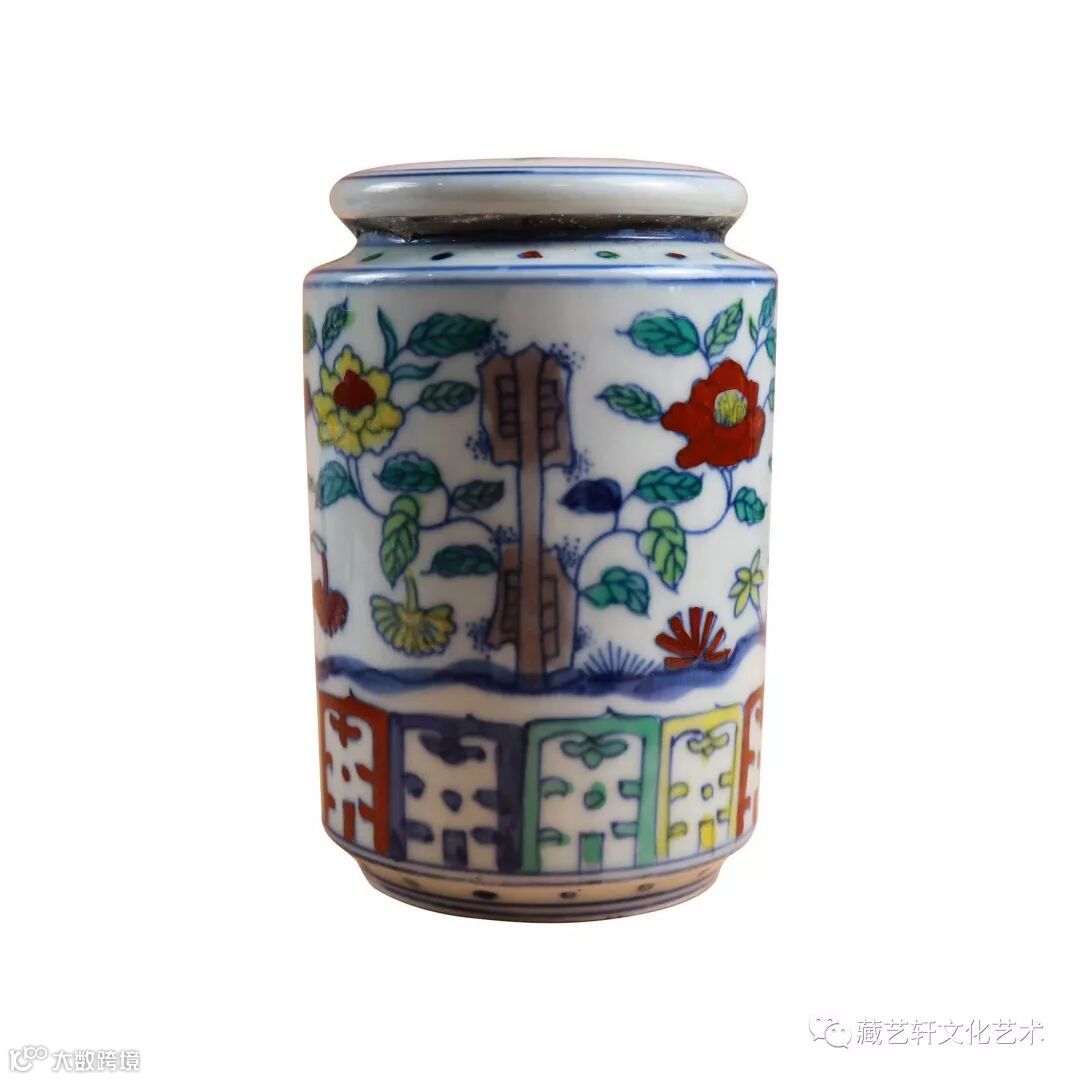
重(W):323g 高(H):10.2cm
编号(NO.):WES-2019-009-686
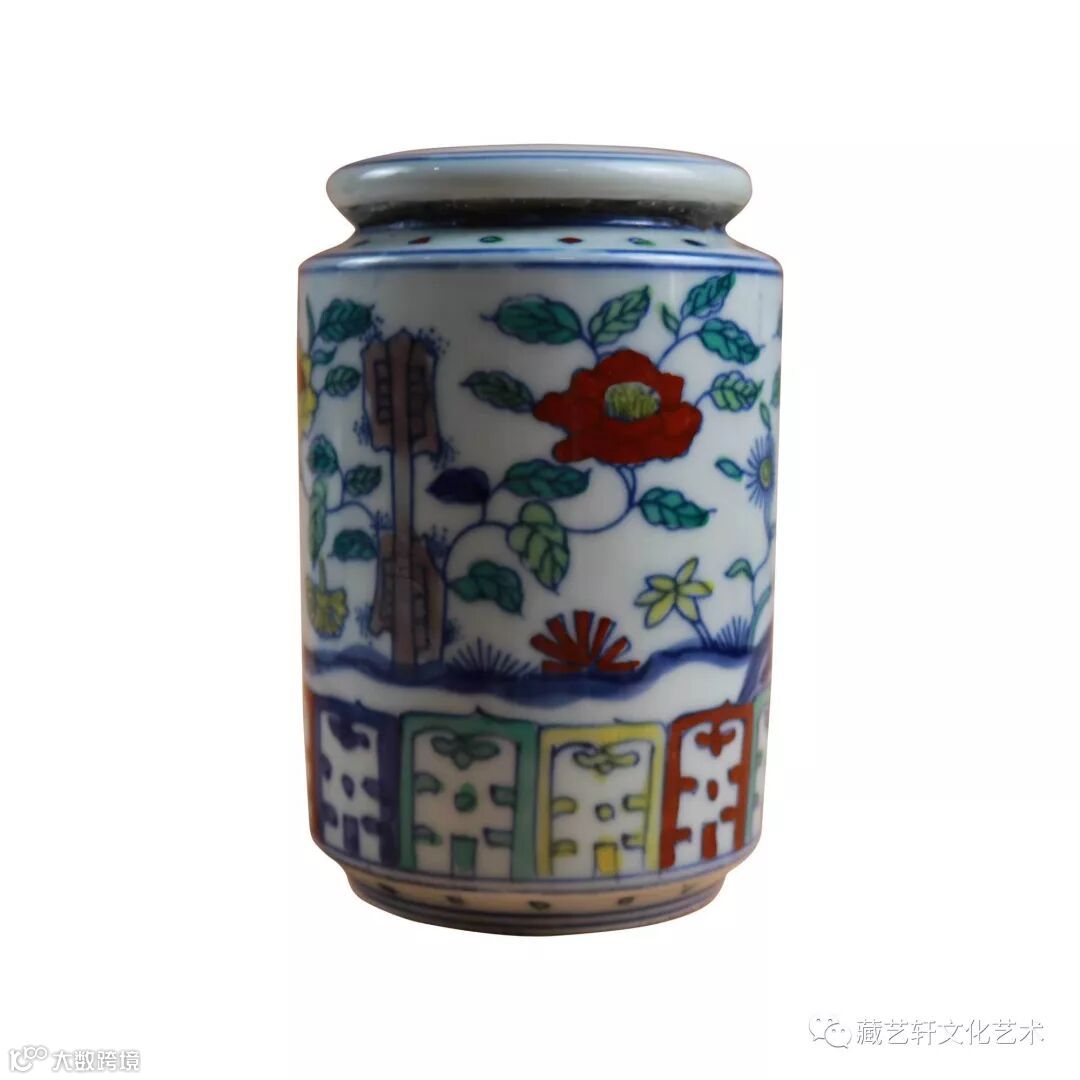
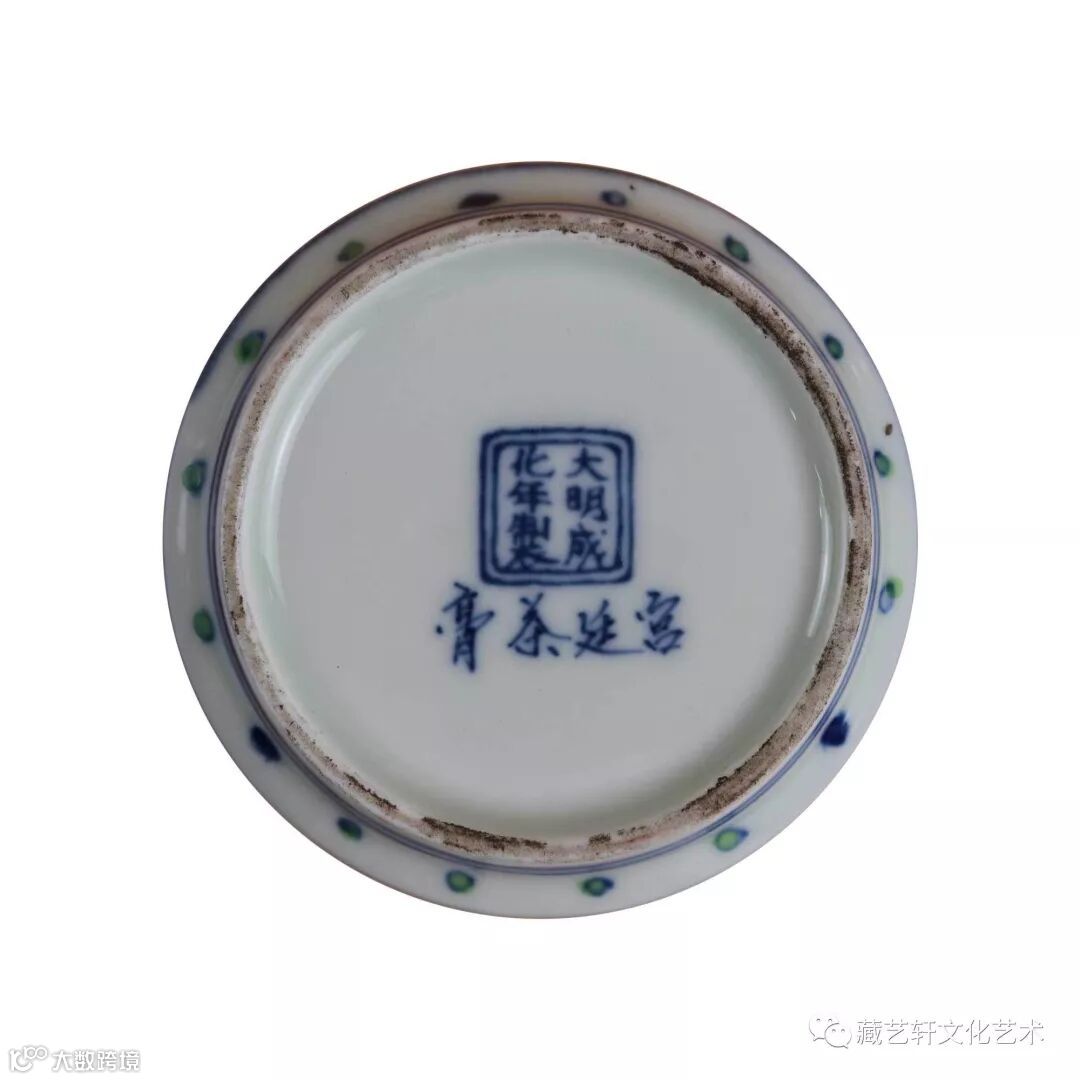
此件大明成化年制宫廷茶膏五彩罐色泽鲜艳明亮,纹饰寓意丰富。罐盖图案为折枝花卉图,罐身上部为花卉图,图中花卉种类繁多,生机勃勃,展现出田园风光的美好。纹饰线条流畅,运笔恣肆而不失神韵,青花纹饰与花卉图协调自然,布局合理,很好的展现出花卉的争奇斗艳,田园风光的画面给人意蘊无穷之美感,艺术观赏价值极佳。此罐底款为大明成化年制,落款下方有“宫廷茶膏”四字。宫廷茶膏为皇家茶膏的别称,作为茶叶的深加工产品,是茶叶所含有益物质的高度浓缩。因其对原料较为挑剔、制作工艺复杂、出品率低,为稀缺珍贵之物,一直在宫廷延传,市场几无流通。
This Daming Chenghua annual palace tea paste multicolor jar has bright color and rich decorative implications. The canned cover is a broken branch flower pattern, and the upper part of the canned body is a flower pattern. There are many kinds of flowers in the canned cans, which are full of vitality and show the beauty of the countryside scenery. The decorative lines are fluent, the brushwork is free and unconstrained without losing its charm. Blue and white decoration is in harmony with the flower map naturally, the layout is reasonable, and it shows the floral rivalry very well. The pictures of pastoral scenery give people an infinite sense of beauty, and the artistic appreciation value is excellent. The bottom of the pot is Daming Chenghua Annual System, under which there are four words "palace tea paste". Palace tea paste is the nickname of royal tea paste. As a deep-processing product of tea, it is a highly concentrated beneficial substance contained in tea. Because of its finicky raw materials, complex manufacturing process and low yield, it is a rare and precious thing. It has been passed on in the court and the market has hardly circulated.
此罐为大明成化年制五彩罐,用作保存宫廷茶膏。宫廷茶膏只供皇室使用,足以证明此五彩罐的价值。此罐器形小巧玲珑,轻盈秀丽,胎质细腻,釉汁润泽。通体以釉下青花为基础,釉上五彩图案相结合。绘画之线条并非如明早期官窑或清代官窑那般工致细密,然则古拙有力,运笔恣肆而不失神韵。此大明成化年制五彩罐,年代久远,历经多少朝代,仍能保存完好,实属不易。器型规格工整,胎质细腻,釉色饱满,五彩鲜艳,极具收藏价值。
The pot is an annual multicolor pot made in Daming Chenghua and used for preserving palace tea paste. The palace tea paste is only used by the Royal family, which proves the value of the multicoloured pot. The pot is small and exquisite in shape, light and beautiful, with exquisite texture and moist glaze juice. The whole body is based on the blue and white under the glaze and combines the five-color patterns on the glaze. The lines of painting are not as delicate as those of official kilns in the early Ming Dynasty or Qing Dynasty, but they are clumsy and powerful, and they are free to use their brushes without losing their charm. This Daming Chenghua year-old multi-color pot, with a long history, after how many dynasties, can still be preserved intact, it is not easy. With neat specifications, exquisite texture, full glaze and bright colors, it has great collection value.
成化斗彩在瓷器史上的巅峰地位,自然与成化皇帝的品位与喜好密不可分。朱见深自小喜欢书画古玩,尤其酷爱瓷器,这给他离奇曲折、惊心动魄的生活增添了一点儿乐趣。提到古瓷器中的斗彩,许多人自然会想到明代成化斗彩鸡缸杯,它的名气最为响亮,也弥足珍贵。1949年,香港大收藏家仇炎之先生拣了个大漏,以1000多港币买了一对成化斗彩鸡缸杯,一时传为藏界美谈。其中一只在1999年的苏富比拍卖会上以2917万港币成交,再一次刷新当年纪录,成化斗彩也名声大噪。在故宫收藏的成化斗彩价值十亿美元。
Chenghua Dou Cai's peak position in the history of porcelain is inseparable from Chenghua emperor's taste and preference. Zhu Jianshen was fond of painting and calligraphy antiques since childhood, especially porcelains, which added a little fun to his strange, winding and exciting life. When it comes to fighting colors in ancient porcelain, many people naturally think of the Chenghua Colour Fighting Cockpot Cup in the Ming Dynasty, which is the most famous and precious. In 1949, Mr. Qiu Yanzhi, a great collector in Hong Kong, picked up a big leak and bought a pair of Chenghua Colourful Cockpit Cups for over HK$1,000, which was passed down as a good talk in Tibetan circles. One of them was sold at the Sotheby's auction in 1999 for HK$29.17 million. Cheng Hua's battle lottery is also famous for renewing the catalogue of his age. Chenghua Dou Cai collection in the Palace Museum is worth billions of dollars.
征集范围
精品陶瓷:历代窑口及各代官窑器,高古瓷等;
翡翠玉器:高古玉、明清玉、和田玉、籽料、翡翠等;
名家字画:历代名家字画、油画、水粉画、古代字画、近现代字画、古籍善本等;
杂项古玩:竹木雕刻、田黄寿山石、鸡血石、紫砂、金银铜器、印章、钱币等;
公司官网:http://www.cangyixuan.com/

微信:藏艺轩文化

协助更多藏友出手

看了就要关注我,喵呜~