A Brief Overview of the Development of Silk Dyeing and Printing in Guangdong
As a key subsequent process in silk weaving, silk dyeing and printing in Guangdong was historically concentrated mainly in the Pearl River Delta region, including Guangzhou, Foshan, Nanhai, and Shunde. Its origins can be traced back to the Han Dynasty, two thousand years ago. Silk fragments, printed silk fabrics, and a bronze printing block unearthed in 1983 from the tomb of the Nanyue King Wen in Xianggangshan, Guangzhou, indicate that as early as the 1st century BCE, Guangdong had already mastered bronze-block printing technology.
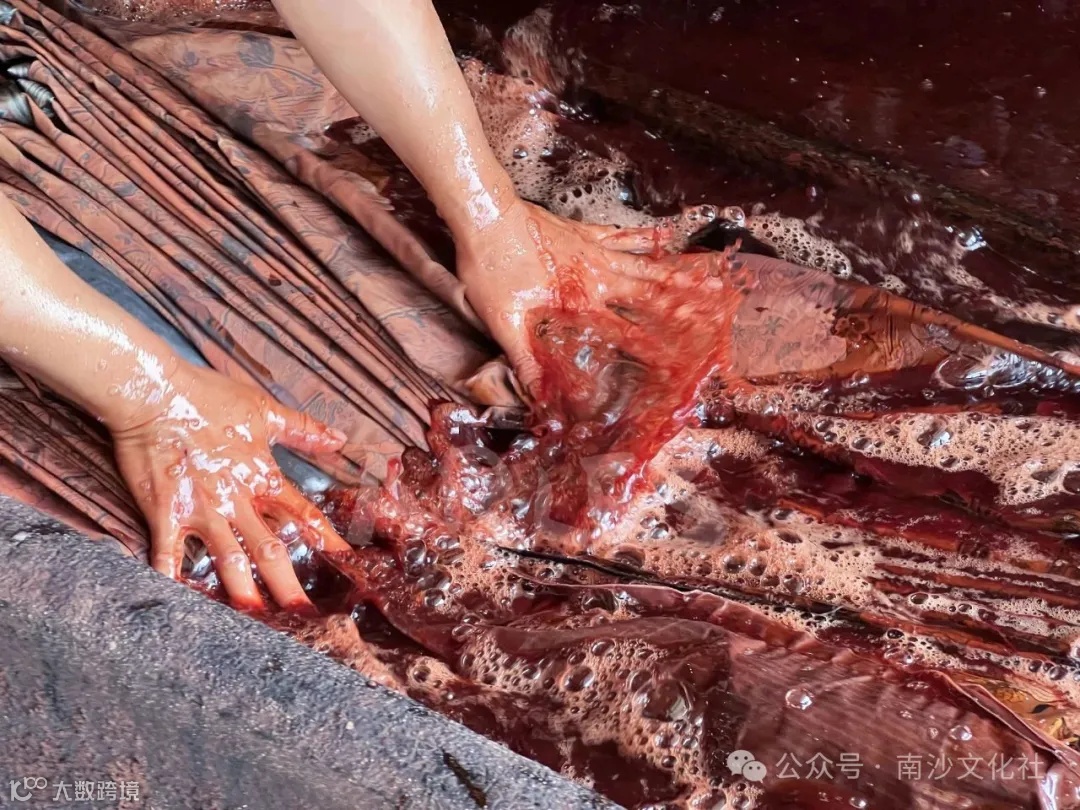
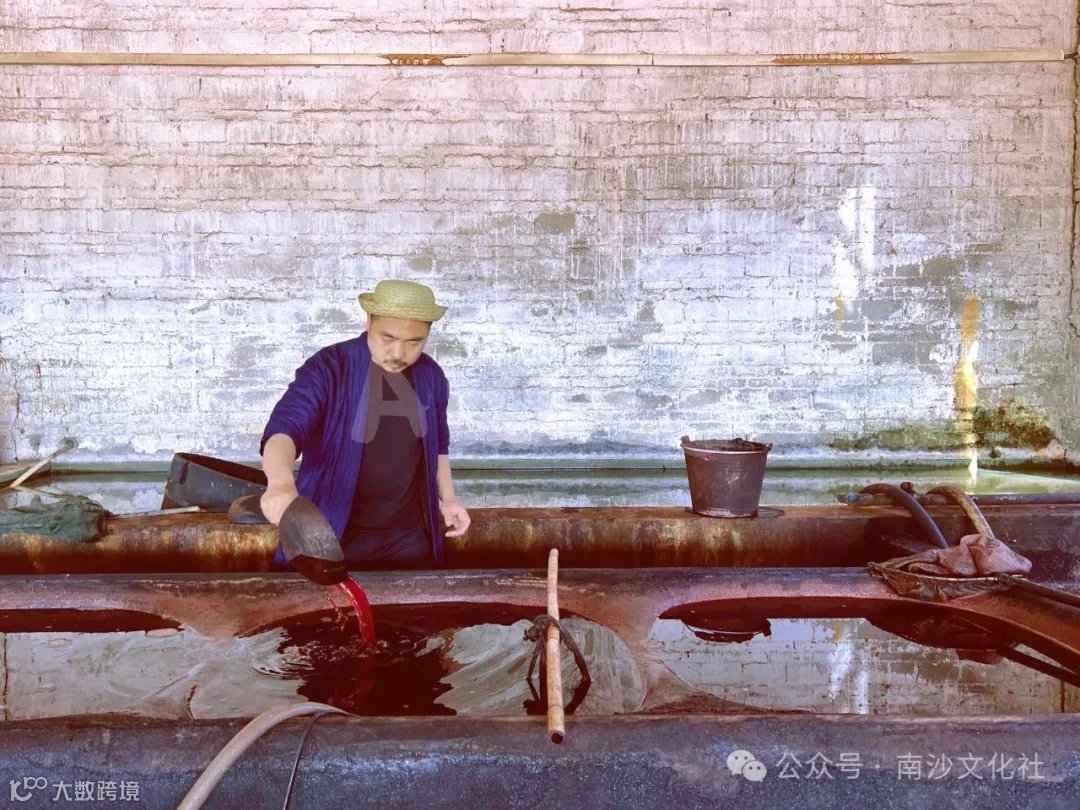
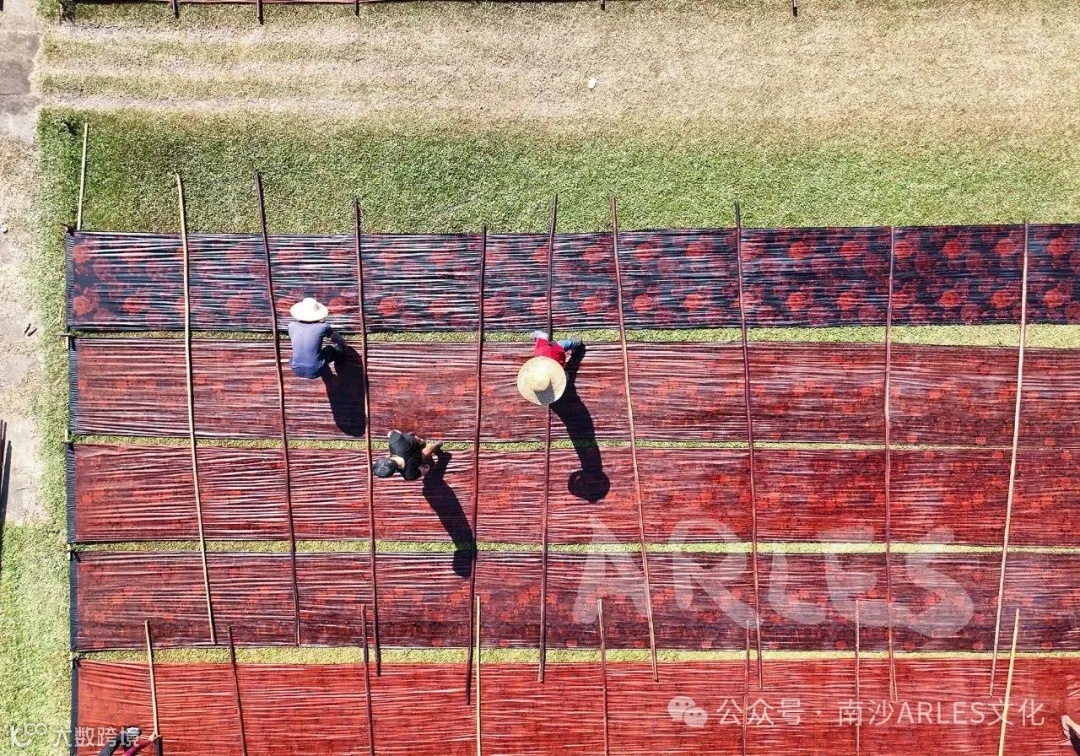
During the Yongle period of the Ming Dynasty (1403–1424), Guangdong began producing gambiered plain silk (Liangchou) using natural dyes, and it was exported overseas as a distinctive local product renowned far and wide. By the Daoguang period of the Qing Dynasty (1821–1850), plain-weave fabric bases were being woven in Nanhai and then processed through sun-gambiering to produce black silk fabric (Heijiaochou). In 1909, Foshan already had nine sun-gambiering workshops employing about 200 workers, with products mainly sold to Europe, America, India, Southeast Asia, and other regions, and particularly popular among overseas Chinese communities as well as those in shipping and fishing industries.
In the early years of the Republic of China, Nanhai County pioneered the creation of "Liangsha" (gambiered gauze, also known as Xiangyunsha) featuring openwork patterns with twisted eyes. Subsequently, Nanhai, Shunde, Guangzhou and other places established workshops for weaving plain grey gauze and sun-gambiering, forming various business models such as "weave and sell," "gambier and sell," and "integrated weaving, gambiering and selling," which propelled the production of Liangsha and Liangchou in the Pearl River Delta into a period of prosperity.
The 1920s (1922–1925) marked the peak period of Liangsha Chou (gambiered silk fabric) production. At that time, in areas such as Xiqiao in Nanhai and Lunjiao in Shunde, there were thousands of silk weaving factories distributed across the region, most of which also engaged in sun-gambiering. They possessed over 30,000 looms and more than 500 sun-drying sites, employing some 30,000 to 40,000 workers, with an annual output of 2 to 2.5 million bolts of Liangsha Chou. However, in the 1930s, impacted by the global economic crisis and the rise of rayon, the European and American markets shifted toward artificial silk, leading to a sharp decline in Guangdong's silk industry. By 1949, most silk weaving and sun-gambiering factories in Foshan were either shut down or operating at half capacity, workers had left, and the industry was on the verge of collapse.
It is worth noting that the sun-gambiering industry long remained subordinate to silk weaving and never developed into an independent trade. Despite its long history and unique techniques, it was consistently documented only as a part of silk weaving. Consequently, the modern silk dyeing and printing industry in Guangdong (excluding sun-gambiering) emerged relatively late and developed more slowly than in the Jiangsu–Zhejiang–Shanghai region. The lack of an adequate supply of grey silk (other than the base fabrics used for Liangsha Chou), along with limitations in equipment and technology, further constrained the independent development of the dyeing and printing industry. It was not until the 1940s that Guangzhou saw the emergence of specialized silk scouring and dyeing factories of considerable scale with clear historical records.
As the editorial team of this column, we consistently uphold an open, inclusive, and neutral stance. We are well aware that in a multicultural context, truth often emerges from dialogue and the clash of diverse perspectives. Therefore, we do not position ourselves as arbiters of views, but rather as “presenters” and “connectors” of ideas. Our core mission is to build a platform for equal and rational exchange, bringing together insightful opinions from scholars across different fields and backgrounds. Here, you may find articles with opposing viewpoints placed side by side, or encounter completely different interpretations of the same issue. We believe that such juxtaposition itself holds power — it rejects a single narrative, encourages readers to move beyond habitual thinking, and fosters independent reflection through comparison and discernment. “The sea is vast because it admits all rivers.” We cherish every rigorous and sincere scholarly voice, whether from tradition or modernity, East or West. We envision this platform as a “free market of ideas,” where high-quality academic dialogue inspires new questions and directions for exploration.
— Editorial Department, Nansha Culture Society
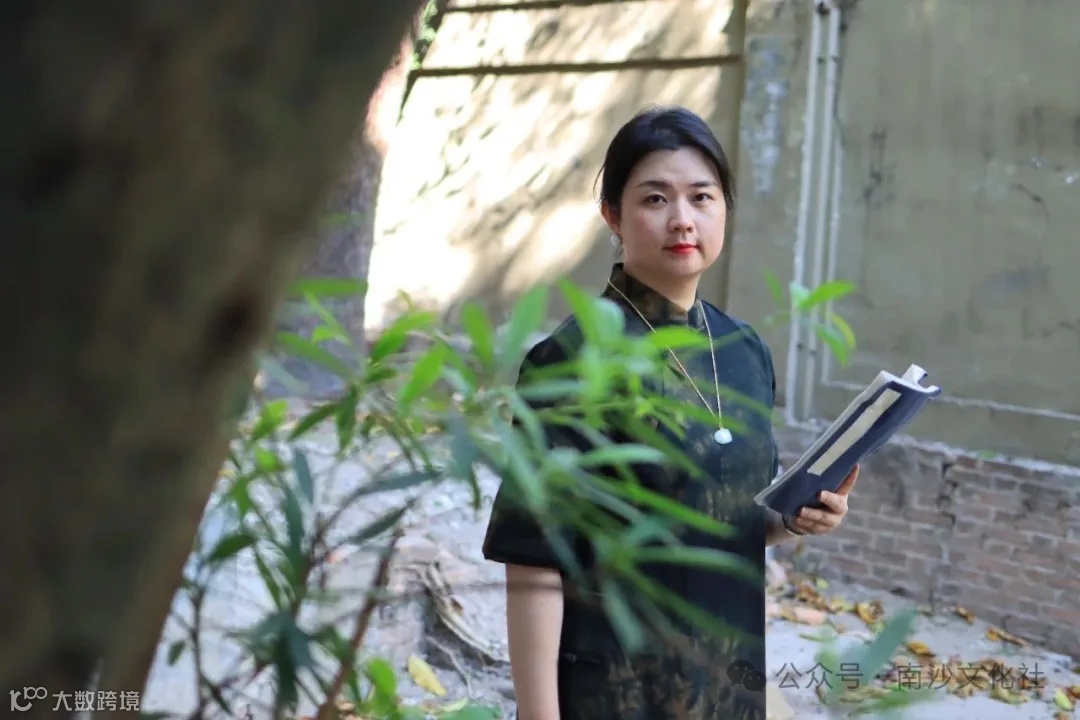
NALANGE CHRONICLES
Editor-in-Chief: Wang Xuan
Photographer: Xiao Tie
Calligrapher: Zhi Ming
Costumes: WURAY MIRACLE, YUNSHA STAR RHYME
Dedicated to promoting Xiangyunsha silk as China’s intangible cultural heritage.
Email: 1399229194@qq.com