Step 13 of Dyeing and Finishing: Washing
I. Wǔ Treatment and Base Fabric Characteristics
The base silk fabric that has not undergone the wǔ treatment (commonly known as "Red Cloud Sha"), after being processed with river mud, transforms on its surface: the front side turns black while the back side remains brownish-tan, completing its transition into Xiangyun Sha. Due to the presence of yarn pores in the base fabric structure, river mud penetration can easily lead to unsatisfactory dual-color effects on both sides. Therefore, base fabrics are often selected from those with small, twisted-eye or openwork patterns. This helps control the range of mud penetration, ensuring the finished product achieves the characteristic front-black, back-brown appearance.
II. Washing Process Flow
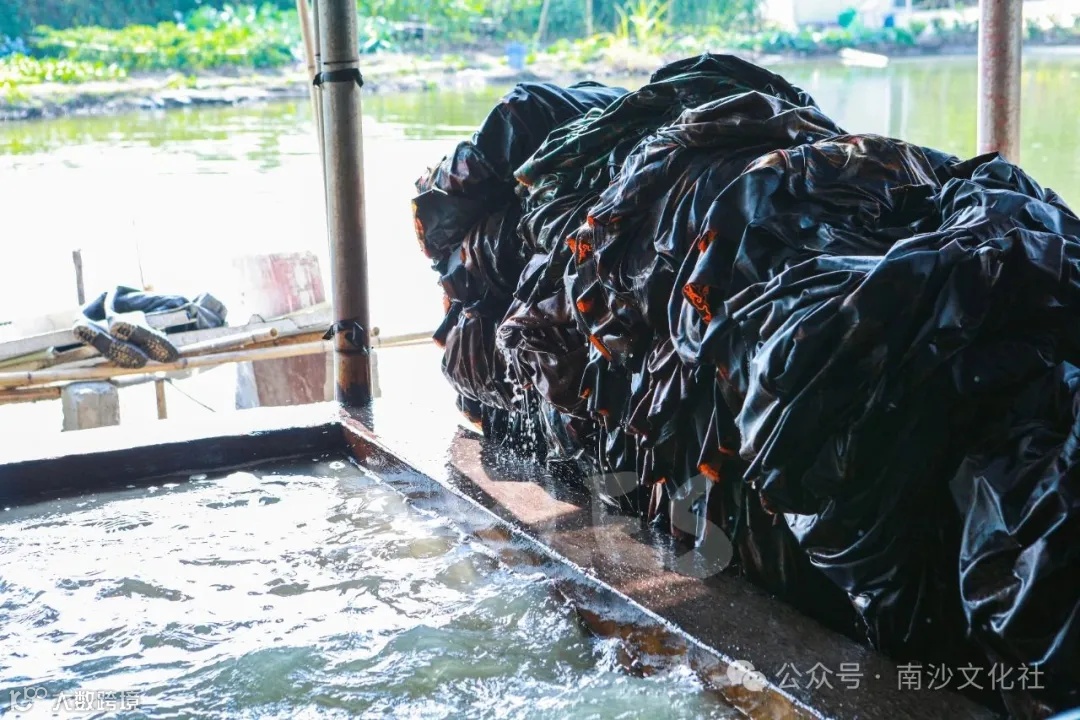
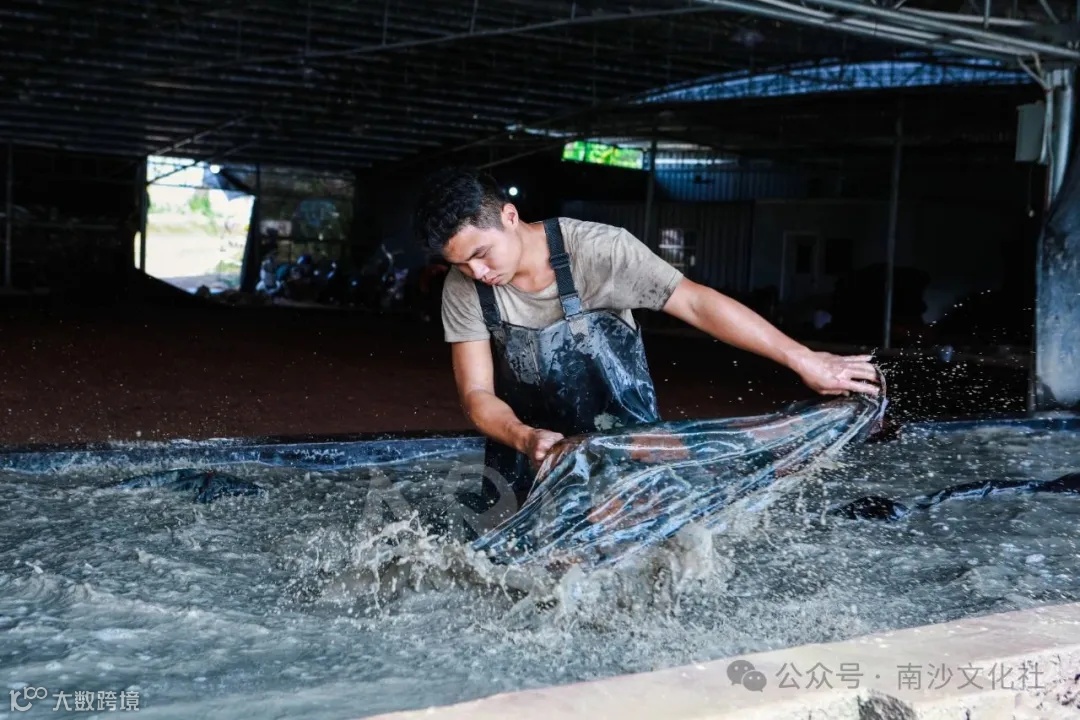
The silk fabric that has completed the wǔ treatment requires thorough washing. A team of 5-6 workers transports the fabric to a creek or river dock near the sun-drying field. Operatives stand knee-deep in the river water to perform the cleaning. The standardized washing action involves tossing the entire bolt of fabric into the water and then vigorously lifting and lowering it along its width direction. This utilizes hydraulic force to scour off the adhering river mud. This process renders the silk surface jet-black and clean, with a smooth, slippery hand feel and no residual mud stains.
III. Sun-Drying and Final Color Development
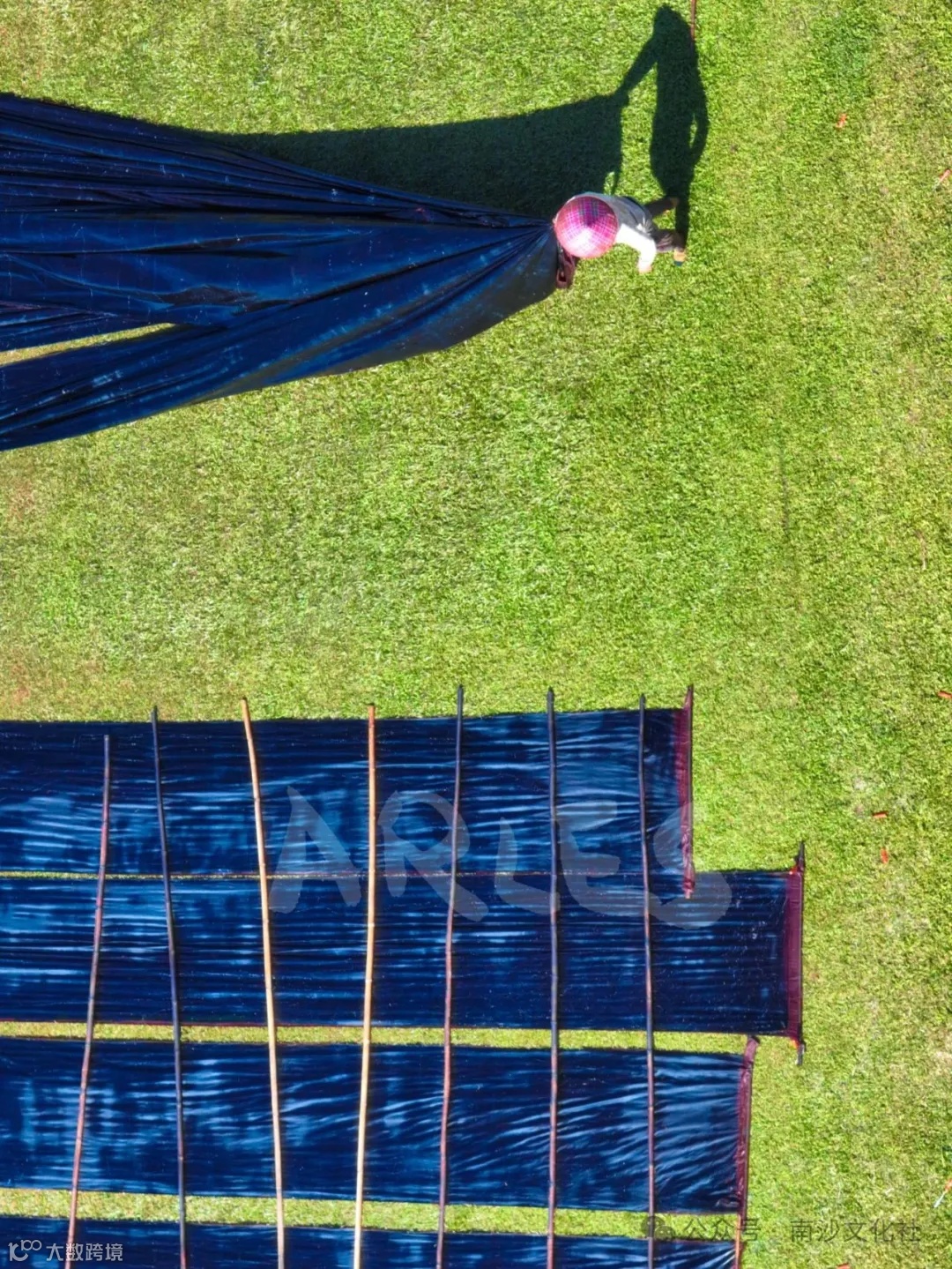
The washed silk fabric is transported via cart to a grassy area where the morning dew has evaporated and is laid flat for sun-drying. Natural drying takes advantage of the period in the early morning when sunlight intensity is relatively weak, requiring approximately two hours. Upon completion of this stage, the final appearance of the silk surface—a deep, black, and lustrous sheen—is achieved. This serves as the core quality hallmark of the finished Xiangyun Sha product.

NALANGE CHRONICLES
Editor-in-Chief: Wang Xuan
Photographer: Xiao Tie
Calligrapher: Zhi Ming
Costumes: WURAY MIRACLE, YUNSHA STAR RHYME
Dedicated to promoting Xiangyunsha silk as China’s intangible cultural heritage.
Email: 1399229194@qq.com