Step 7 in Dyeing and Finishing: Boiling the First Batch of Silk
The Critical Process in Gambiered Guangdong Silk Production: Silk Boiling
During the dyeing and sun-drying process of Gambiered Guangdong Silk (also known as Liangsha Silk), boiling the silk is a crucial step. Its purpose, timing, methods, and key considerations are as follows:
Timing of Silk Boiling
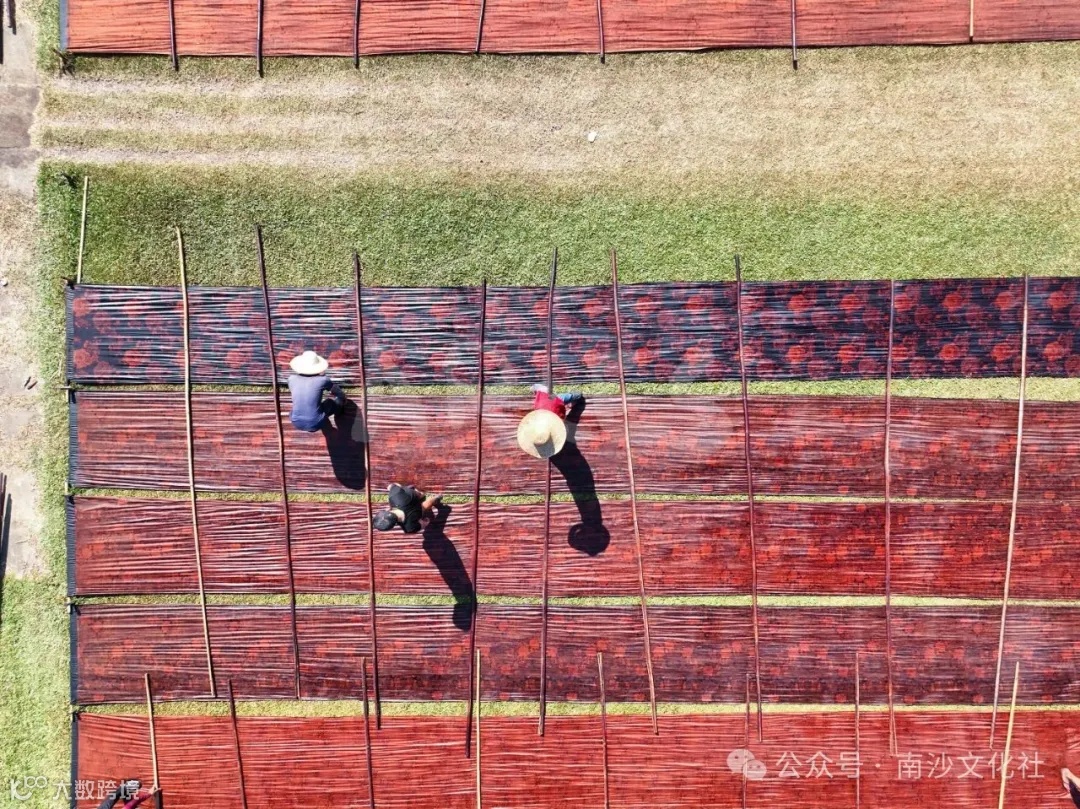
The boiling process is conducted when the dyeing and sun-drying process is approximately halfway completed. The specific rule is as follows: If a total of 40 rounds of dyeing and sun-drying are planned, boiling is performed after the 20th round. If 30 rounds are planned, it is carried out after the 15th round. The same principle applies to other quantities.
Purpose of Silk Boiling
Unclogging the "Weave Pores": After repeated dyeing and sun-drying, Shuliang juice can clog the pores formed by the interweaving of the warp and weft threads (known as the "weave pores"). Boiling the silk effectively loosens these pores.
Balancing Shuliang Liquid Absorption: It promotes the seepage of excess juice from areas that have absorbed too much Shuliang liquid, while allowing areas with insufficient absorption to absorb more, resulting in a more uniform dyeing effect.
Removing Residual Starch: It cleanses starch impurities adhering to the greige silk.
Optimizing Subsequent Processes: It prepares the silk for the subsequent critical step of "sealing with Shuliang liquid," ensuring the greige silk can absorb the dye more fully and evenly.
Term for the First Boiling: This initial boiling process is specifically called "Boiling the First Batch."
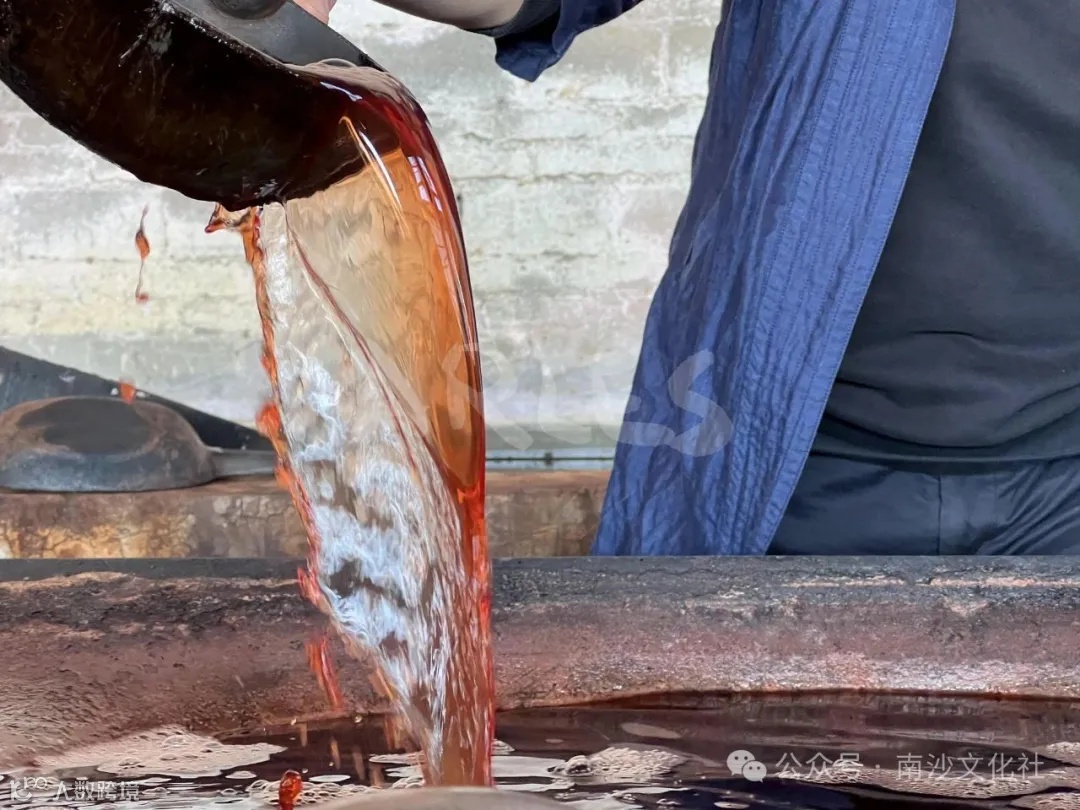
Method of Silk Boiling
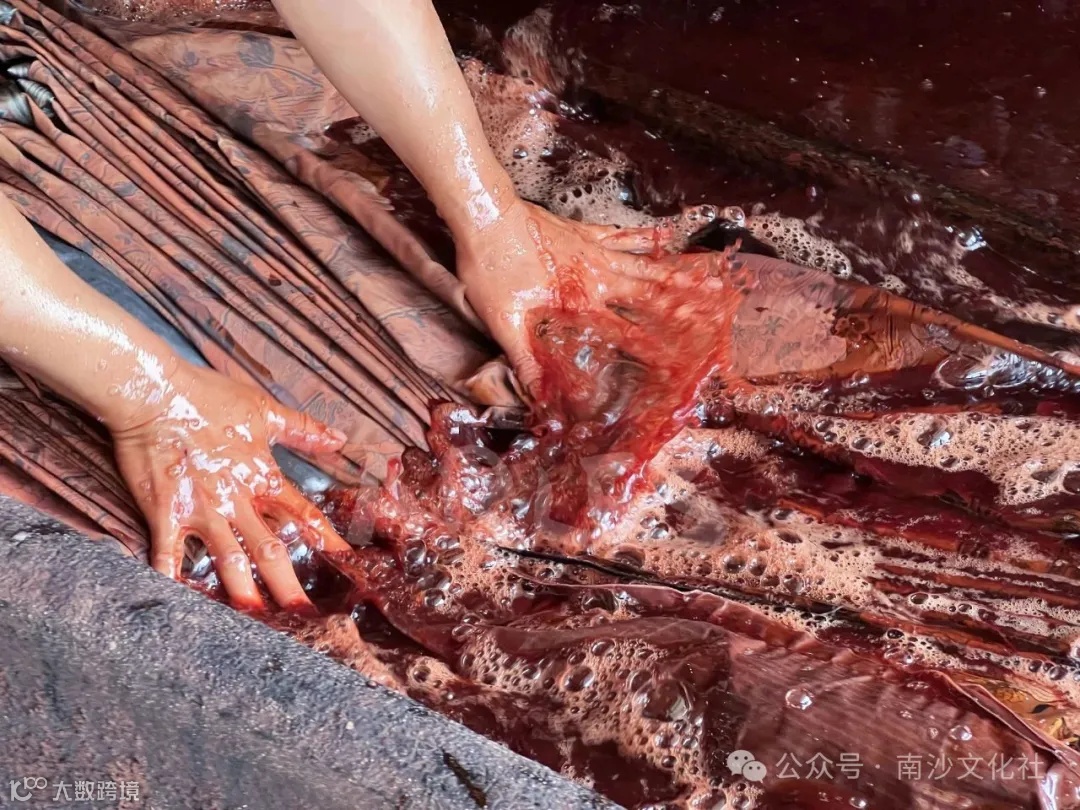
Container and Solution: Workers place the greige silk into a large copper pot. The pot contains "triple-filtered water" (water with a specific ratio).
Water Temperature Control: The water temperature must be maintained between 40°C and 50°C. Temperature control does not rely on a thermometer but entirely on the worker's handfeel and experience, using the standard of "not feeling hot to the touch."
Boiling Duration: The boiling process lasts for 4 to 5 minutes.
Key Operation: During boiling, the greige silk must be constantly turned to ensure even heating, thorough boiling, and to make the silk bolt soft and pliable.
Post-Boiling Treatment: After boiling, workers vigorously place the silk bolt on a wooden frame to allow it to drain naturally. Only after the dehydration is complete can the sun-drying process be continued.
Impact of Silk Boiling on Greige Silk Weight
Overall Weight Gain Trend: Throughout the Gambiered Guangdong silk processing, the greige silk continuously adsorbs dye substances, leading to a consistent increase in weight. The final finished Gambiered Guangdong silk typically weighs approximately 60% more than the initial "scoured silk". The specific rate of weight gain depends on the fabric's structure (e.g., the finished product of style 13370 kimono silk achieved a 62.7% weight gain).
Weight Loss After Boiling: Upon completion of the boiling process, the weight of the greige silk decreases due to the removal of excess shiliang liquid, starch, and other impurities. According to test data from the Foshan Light and Chemical Industry Research Institute in 1965, the greige silk lost approximately 11% of its weight after the "First Boiling" process.
Important Considerations
Iron Pots Prohibited: Iron pots must never be used for boiling silk. This is because the tannic acid abundant in shiliang will undergo a chemical reaction with the iron ions from the pot, leading to discoloration of the greige silk or other adverse effects, severely compromising the quality of the Gambiered Guangdong silk.
Summary
Silk boiling is a critical step performed midway through the dyeing and sun-drying process. Its timing is determined as half of the total planned dyeing and sun-drying cycles. The primary purposes are to unclog the fabric, balance dye absorption, remove impurities, and optimize subsequent dyeing. Key operational aspects are: using a copper pot, maintaining water temperature between 40-50°C (controlled by hand feel), boiling and turning for 4-5 minutes, and allowing natural dehydration. The boiling process causes a weight reduction of approximately 11% in the greige silk (due to impurity removal). The use of a copper pot is mandatory; iron pots are strictly prohibited to avoid the tannin-iron chemical reaction.

NALANGE CHRONICLES
Editor-in-Chief: Wang Xuan
Photographer: Xiao Tie
Calligrapher: Zhi Ming
Costumes: WURAY MIRACLE, YUNSHA STAR RHYME
Dedicated to promoting Xiangyunsha silk as China’s intangible cultural heritage.
Email: 1399229194@qq.com