
Step 12 in Dyeing and Finishing: Guowu (River Mud Treatment)
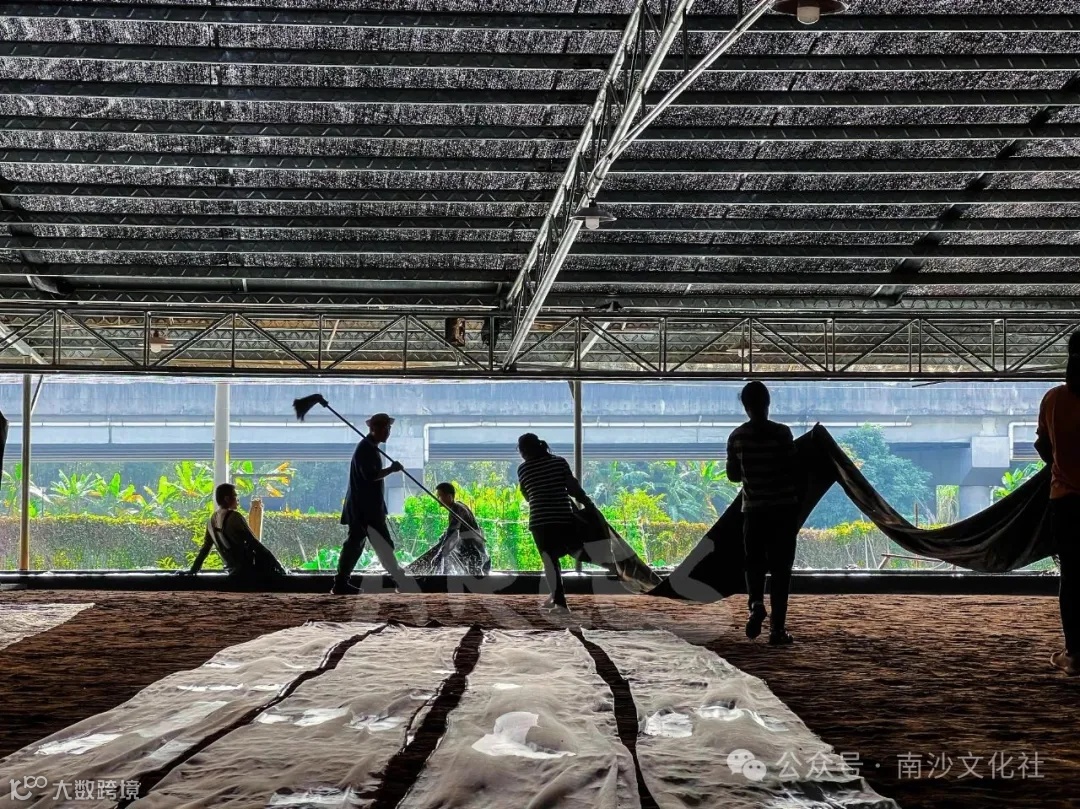
Guowu, also known as "passing through river mud," is the final and most crucial step in producing Gambiered Guangdong Silk (Xiangyunsha). Renowned for its remarkable effects, it is considered the most magical part of the process. Guowu involves using the iron ions present in river mud for mordanting. This step miraculously transforms the base silk fabric into the finished Gambiered Guangdong Silk, characterized by one black side and one brown side.
Evolution of the Operation
Traditional Method: This process had to be completed before sunrise, requiring workers to rise and labor at three or four in the morning.
Modern Method: Nowadays,晒莨厂 (sun-drying workshops) commonly use improved light-shading shelters specifically built for Guowu, allowing this step to be conducted throughout the day.
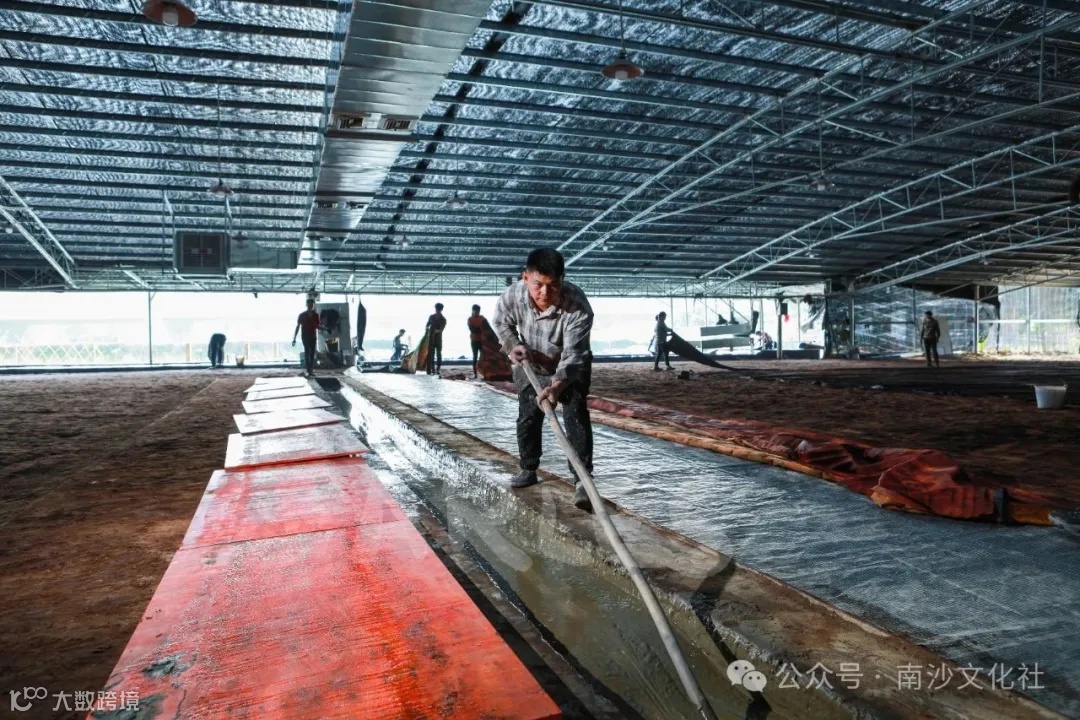
Guowu (River Mud Treatment) Step
Preparing the River Mud
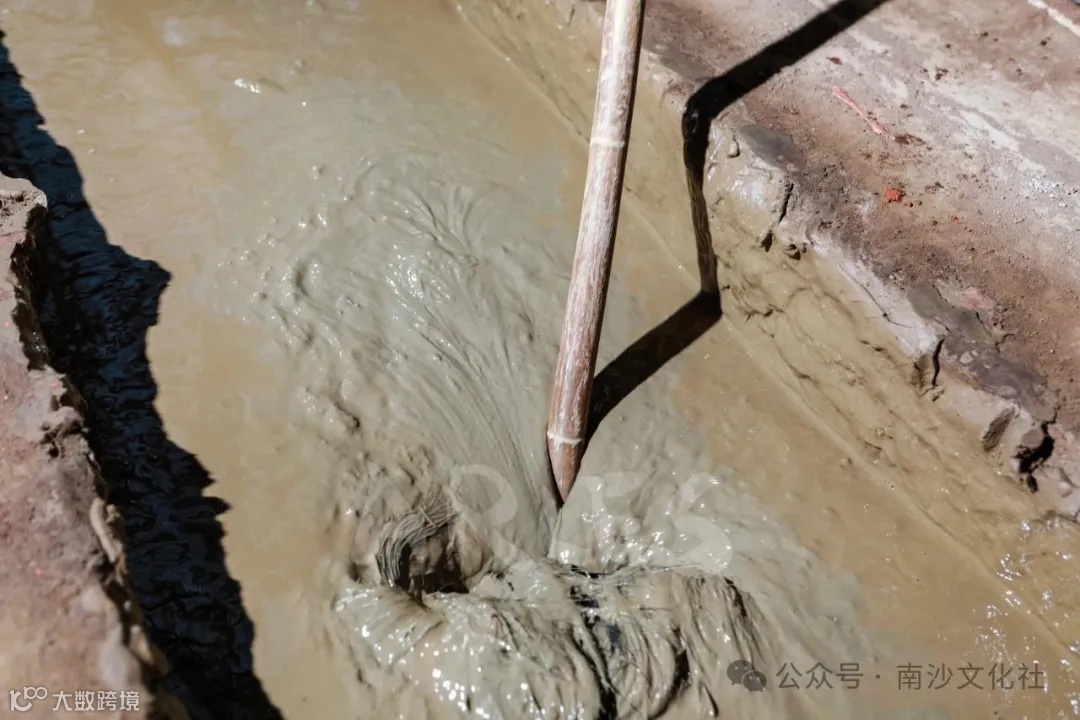
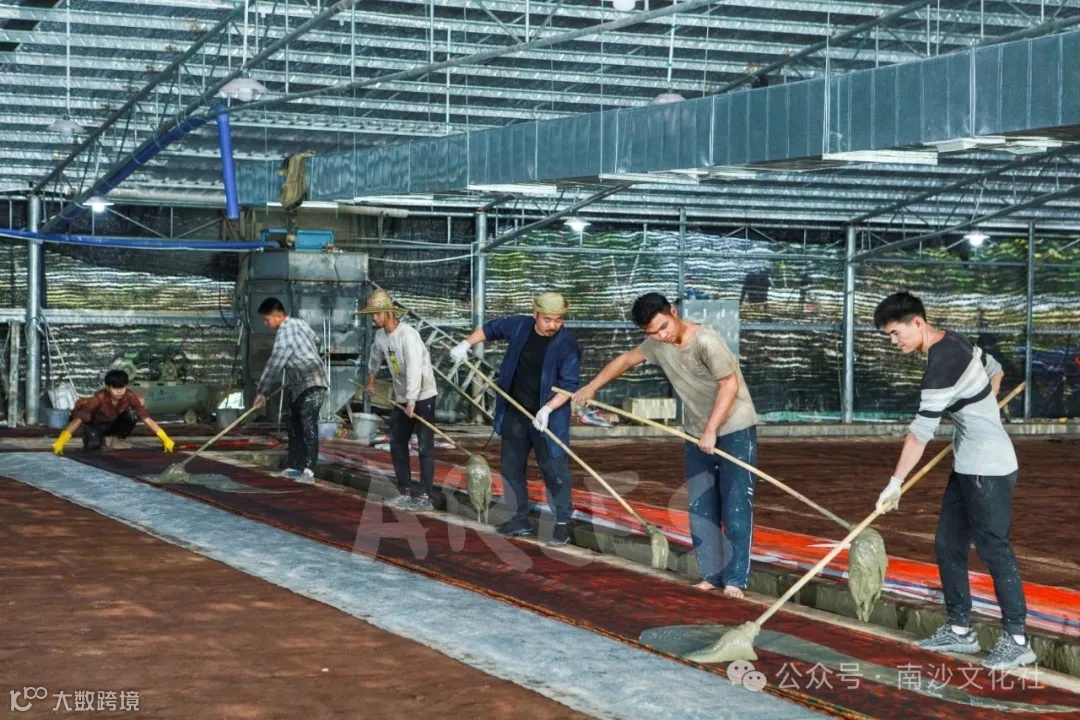
Guowu requires carefully selected river mud, sourced from unpolluted riverbanks. The ideal mud is grayish-black in color, fine and smooth in texture, with a moisture content of approximately 60%. Workers pour the mud into a simple electric mixer located at the end of a concrete trough, where it is stirred to separate impurities such as leaves, branches, shells, and stones. The processed mud is then transferred into the concrete trough, leaving a 5–10 cm gap at the top for ease of operation. Due to the increasing scarcity of high-quality river mud, sun-drying workshops now often recycle used mud by pumping it back from the riverbed for repeated use.
2. Stacking the Base Silk Fabric
After the final round of sun-drying before the Guowu process, the base silk fabric is rolled into cylindrical bundles. Workers unroll these bundles and lay the fabric flat, face-up, on the long, pre-cleaned concrete strips on either side of the mud-treatment trough. The fabric pieces must be stacked neatly, straight, and evenly, with their edges and corners aligned. One stack is placed on each side of the trough, with an equal number of pieces per stack (approximately 20–30 bolts). The stacks should be positioned about 40 centimeters away from the edge of the trough to provide workers with sufficient standing and operating space.
3. Applying the River Mud
Workers for the mud application are divided into two groups, each responsible for one side of the stacked silk fabric. Each group is further split into two teams: the mud-applying team and the lifting-and-moving team. Workers from the mud-applying team stand approximately every 3 meters along the concrete trough, using cotton mops to scoop river mud from the trough and evenly apply it onto the silk fabric. Immediately afterward, they use scrapers to spread the mud uniformly across the surface. Both the applying and spreading motions must be performed in straight, back-and-forth lines, avoiding any curved movements or leaving tool marks. The end goal is to form a thin, even layer of river mud that completely covers the fabric surface, with no visible gaps or uncovered areas. This process is physically demanding, as the mops become heavy after absorbing the mud and require repeated dragging across the fabric.
4. Mordanting Process
After the river mud is evenly applied and smoothed, 5 to 6 workers collaborate to gently fold the silk fabric in half along its central longitudinal axis. Working in unison, they lift the fabric together with coordinated effort, moving in synchronized steps to avoid tearing the mud layer or dropping the fabric to the ground. Once carried to the designated spreading area, the fabric is laid flat and evenly on the grass. It must then be spread out under shaded conditions for about half an hour, ensuring sufficient contact between the river mud and the gambier (dye) to initiate a chemical reaction that results in darkening through mordanting.

NALANGE CHRONICLES
Editor-in-Chief: Wang Xuan
Photographer: Xiao Tie
Calligrapher: Zhi Ming
Costumes: WURAY MIRACLE, YUNSHA STAR RHYME
Dedicated to promoting Xiangyunsha silk as China’s intangible cultural heritage.
Email: 1399229194@qq.com