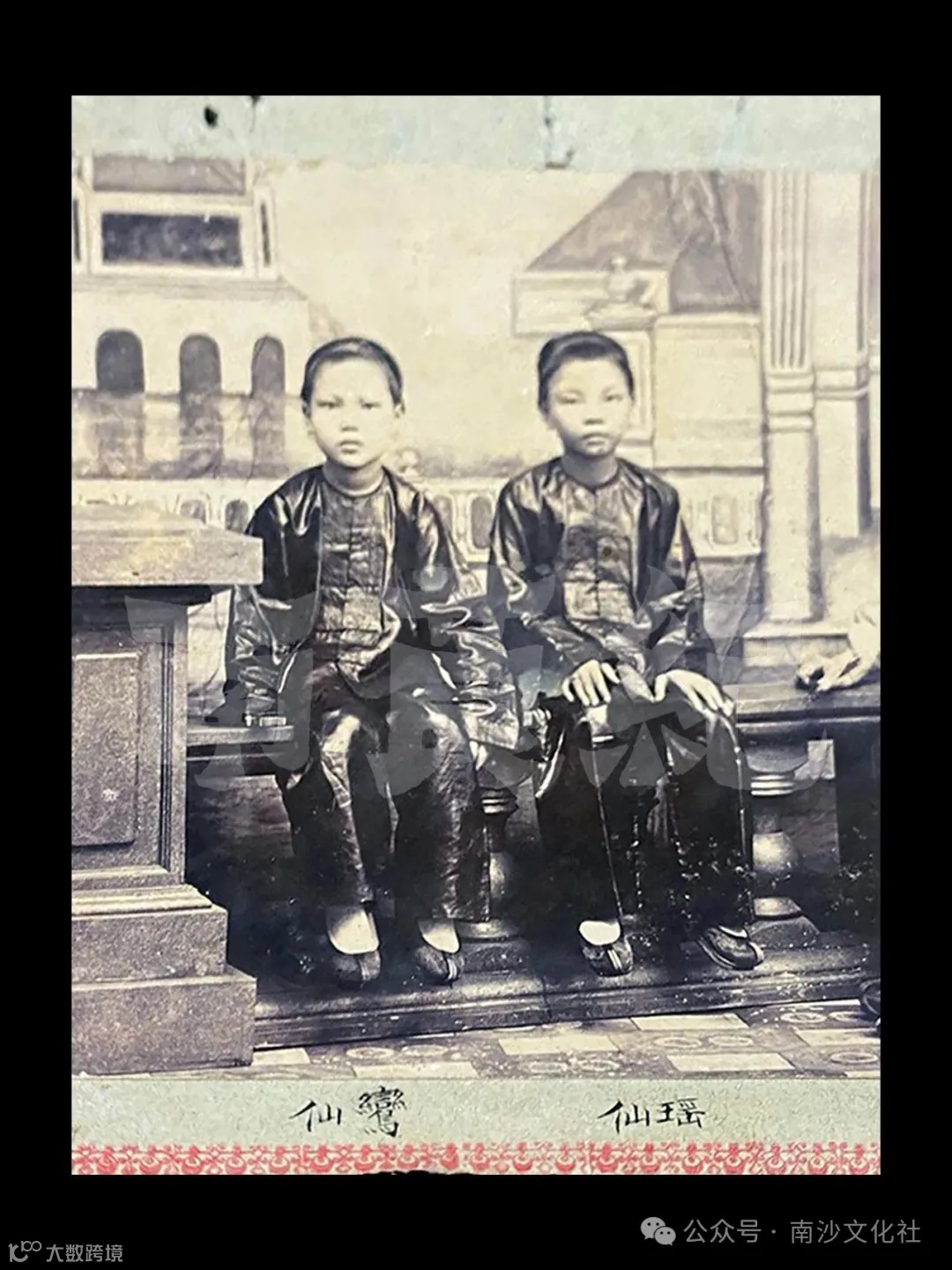
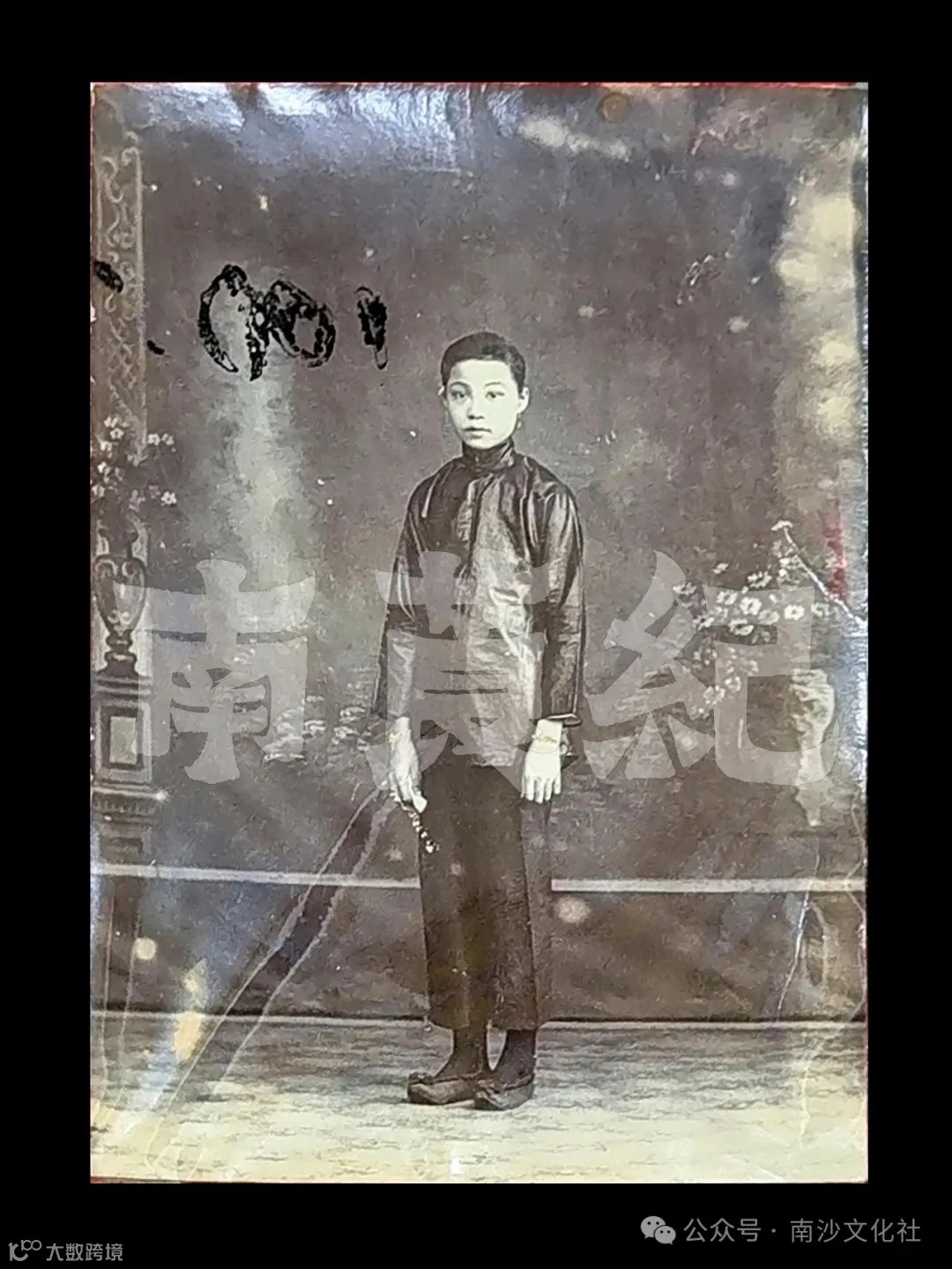
▲Visual materials of young girls wearing gambiered Guangdong gauze in the Foshan-Shunde area during the Republican era.
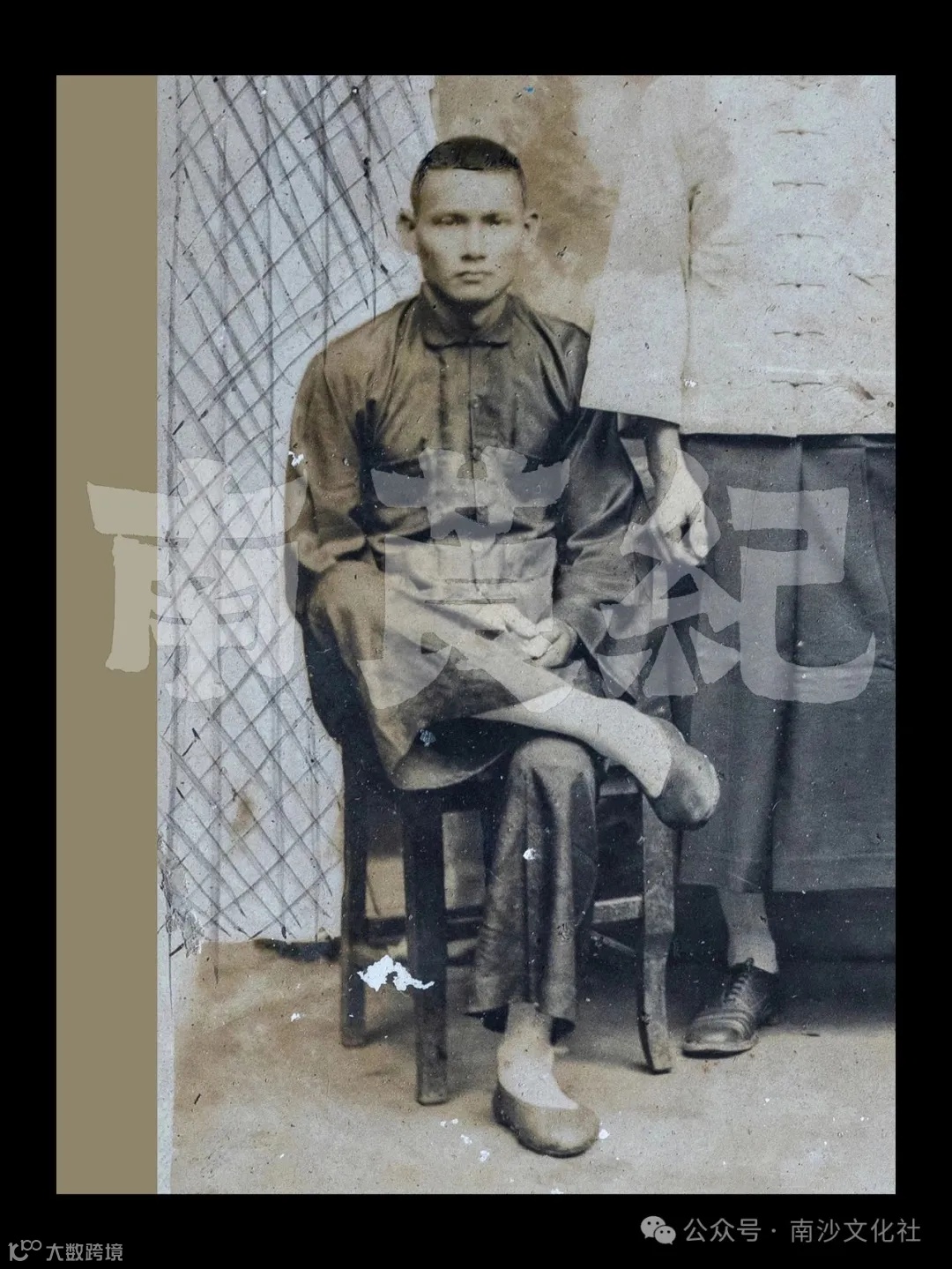
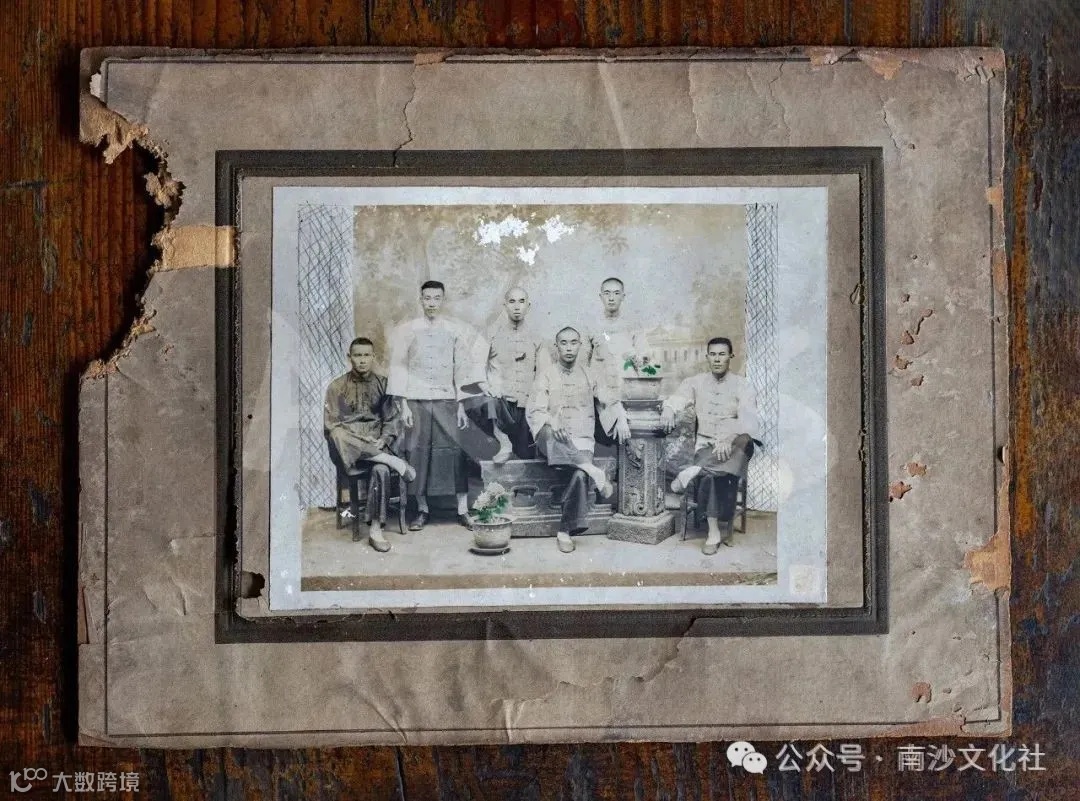
▲Visual materials of men wearing gambiered Guangdong gauze in Nansha, Guangzhou during the Republican era.
Upon careful examination, I identified that the man on the left in the photograph is wearing a full set of gambiered Guangdong gauze attire, while the other five are all wearing gambiered Guangdong gauze trousers. The luster and drape of the fabric, along with the clearly visible crease marks on the trousers, suggest that these garments were treasured items, reserved for important occasions. This aligns closely with the description in the Panyu County Gazetteer, which states that men commonly wore Tang-style shirts and trousers: “The top is a short, standing-collar, button-down jacket, often featuring four outer pockets and two or three inner hidden pockets; the bottoms are wide-leg trousers reaching mid-calf.” This photograph thus serves as strong evidence that by the 1930s, gambiered Guangdong gauze had already become a form of respectable attire in daily life in Nansha.
Looking at the overall image, the Western-style studio setting, the composed postures of the figures, and their solemn expressions all indicate how highly they regarded this portrait. This further confirms that, within the social context of the time, gambiered Guangdong gauze was already seen as a symbol of status worthy of being recorded with such gravity.
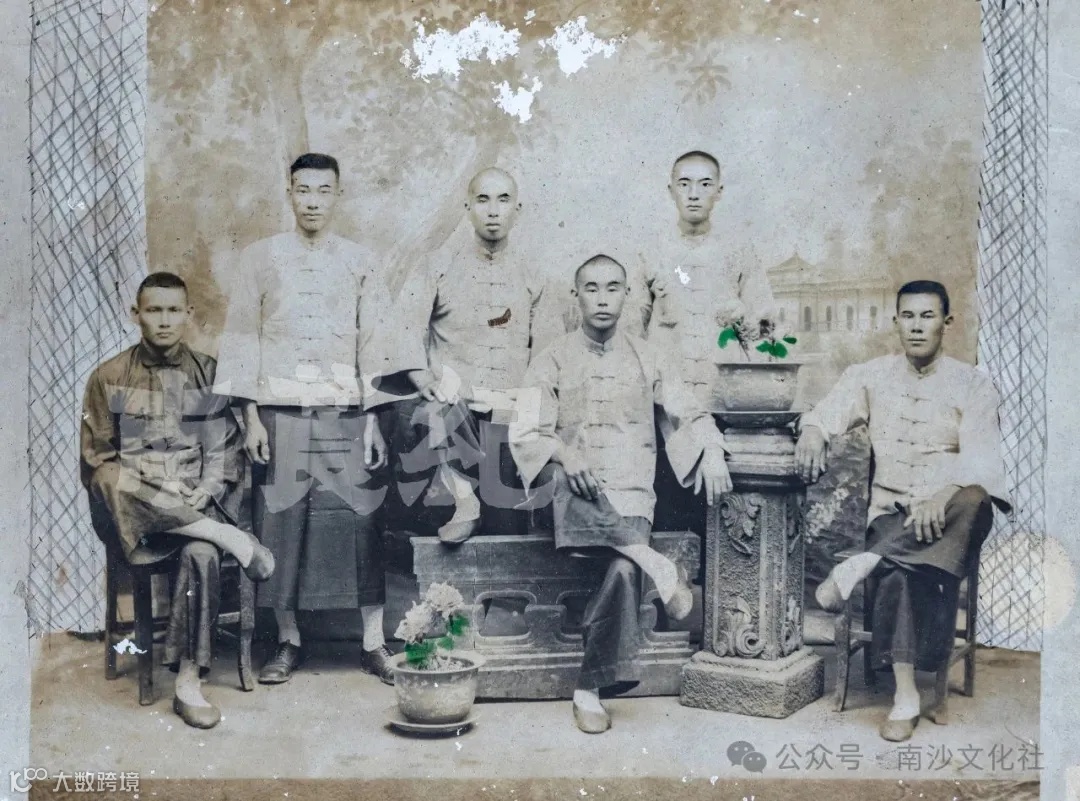
The discovery of this photograph not only pushes back the confirmed history of wearing gambiered Guangdong gauze in Nansha to over ninety years ago, but also reveals profound historical and cultural significance in multiple dimensions:
I. Confirming the Local Consumption and Production Tradition of Gambiered Guangdong Gauze in Nansha
The fact that local Nansha residents are depicted wearing gambiered Guangdong gauze indicates that Nansha already possessed a mature production craft and consumer market for this fabric at the time, reflecting considerable local economic strength and aesthetic standards.
II. Providing Precious Visual Material for the Study of Costume History and Material Culture
The styles, textures, and ways of wearing the garments in the photograph offer authentic examples for the study of men’s daily formal attire in the Pearl River Delta region during the Republican era, while also embodying the fusion of traditional craftsmanship and modern aesthetics.
III. Witnessing Nansha’s Early Openness and Cultural Integration
The use of a Western-style photographic studio itself hints at Nansha’s receptiveness to foreign influences in the early twentieth century, presenting a local landscape where agricultural traditions coexisted with the process of modernization.
IV. Revealing the Deeper Significance of Gambiered Guangdong Gauze as a Cultural Symbol
Gambiered Guangdong gauze is not merely a fabric; it is a symbol of Lingnan life memories and the flourishing of traditional handicrafts. The “people” and the “dignity of life” behind the clothing in this photograph lend warmth to history, allowing us to appreciate the power of micro-narratives within local history.
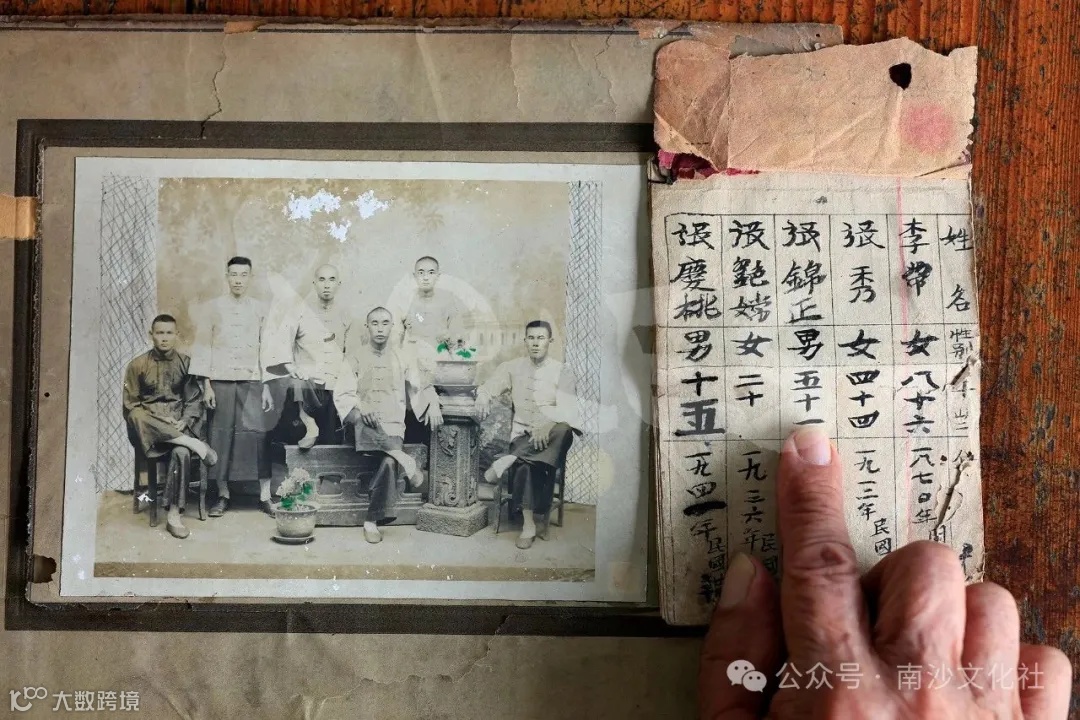
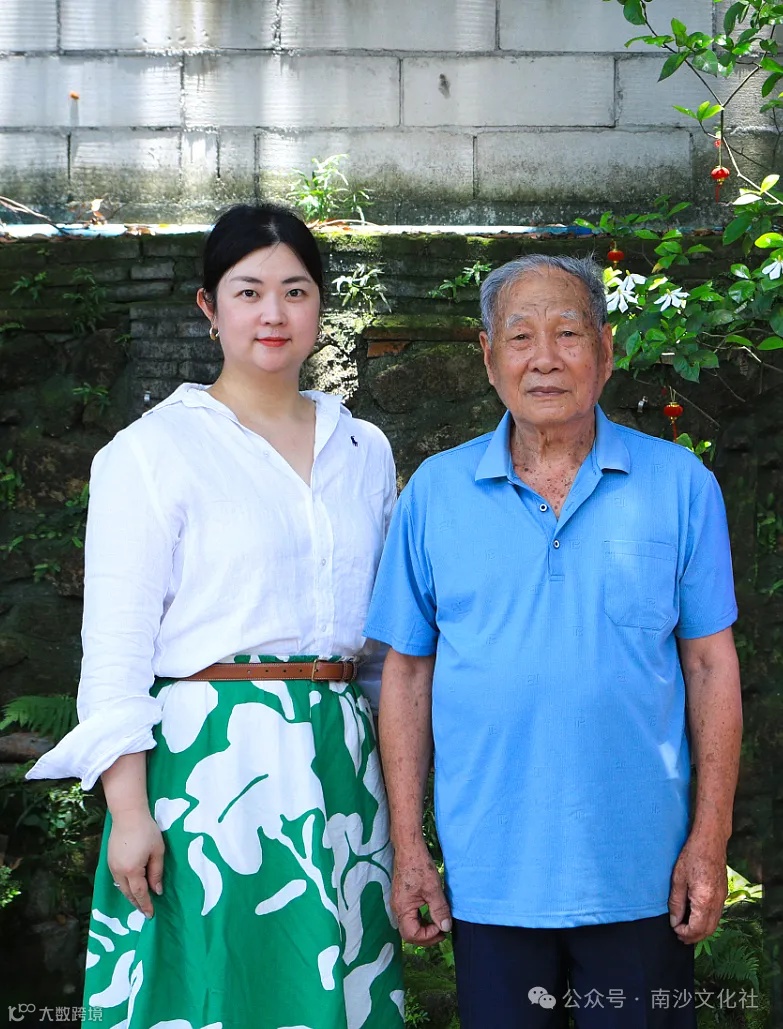
▲The first person from the right in the photograph is Zhang Jinzheng, the father of Teacher Zhang Qingtu.
The image of the “Six Gentlemen of Tingjiao” transcends a mere record of attire, serving as a testament to the convergence of Nansha’s regional culture, economic life, and the process of modernity. Yet what moves me most deeply is that gambiered Guangdong gauze has never been merely a fabric, but rather an important symbol of the Lingnan way of life and the flourishing of traditional handicrafts. What strikes me most in this image are the vivid individuals behind the garments and the authentic dignity of life they once embodied. It affirms for me that history does not reside solely in grand narratives, but is also found in the crease of a trouser leg, in a solemn group portrait, and in the unbroken perseverance of generations of artisans in a single place.
NALANGE CHRONICLES
Editor-in-Chief: Wang Xuan
Photographer: Xiao Tie
Calligrapher: Zhi Ming
Costumes: WURAY MIRACLE, YUNSHA STAR RHYME
Dedicated to promoting Xiangyunsha silk as China’s intangible cultural heritage.
Email: 1399229194@qq.com