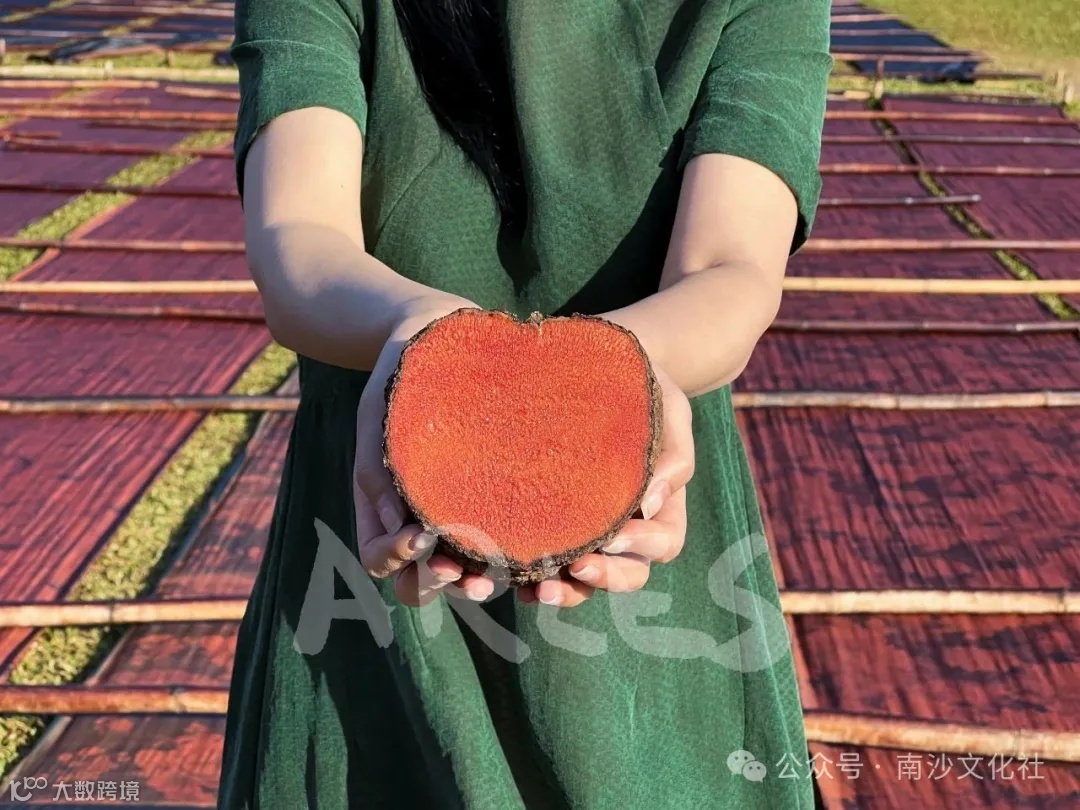
Shuliang (known in traditional Chinese medicine as "Hong Haier") has medicinal properties such as stopping bleeding, activating blood circulation, clearing heat, and resolving stasis. Its juice also serves as a natural dye, imparting unique qualities to gambiered Guangdong gauze. Rich in tannin, Shuliang has strong astringent properties and effectively inhibits various bacteria, fungi, and microorganisms, while remaining harmless to human cells at safe concentrations. As a result, fabrics dyed and finished with Shuliang are mold-resistant, antibacterial, and deodorizing.
The Qing dynasty scholar Qu Dajun recorded in New Accounts of Guangdong: "Shuliang produced in the Beijiang region is of the highest quality. The white variety is unsuitable; only the red one should be used. The red Shuliang is rich in mucilage, which fishermen use to dye fishing nets, making ramie fabric tougher and more durable, resistant to both fresh and salt water, and less prone to decay. The juice of Shuliang is originally red but turns black upon contact with water. Fish belong to the element of fire yet are drawn to water; water is associated with the color black, which aligns with the nature of fish. Thus, once the fishing nets are dyed black, fish are more easily drawn to gather."
Shuliang, also known as Shulang, is an essential material in the process of sunning and dyeing. It is a perennial twining vine with heart-shaped leaves featuring striped veins, and its vine resembles that of the yam. Its tuber is fleshy and enlarged, oblong or irregularly round in shape, with a brownish-gray outer skin and a reddish-brown interior covered in wart-like protrusions. When freshly cut, it exudes a red mucus. Shuliang grows in sunny sparse forests or shrublands in mountain valleys and is distributed across Sichuan, Yunnan, Guizhou, Hubei, Guangxi, Guangdong, Fujian, Jiangxi, Zhejiang, and other regions. Among these, the best-quality Shuliang comes from Lübu in Zhaoqing, Liubu in Gaoyao, Guangdong, as well as Longzhou and the Shiwanda Mountains in Guangxi.
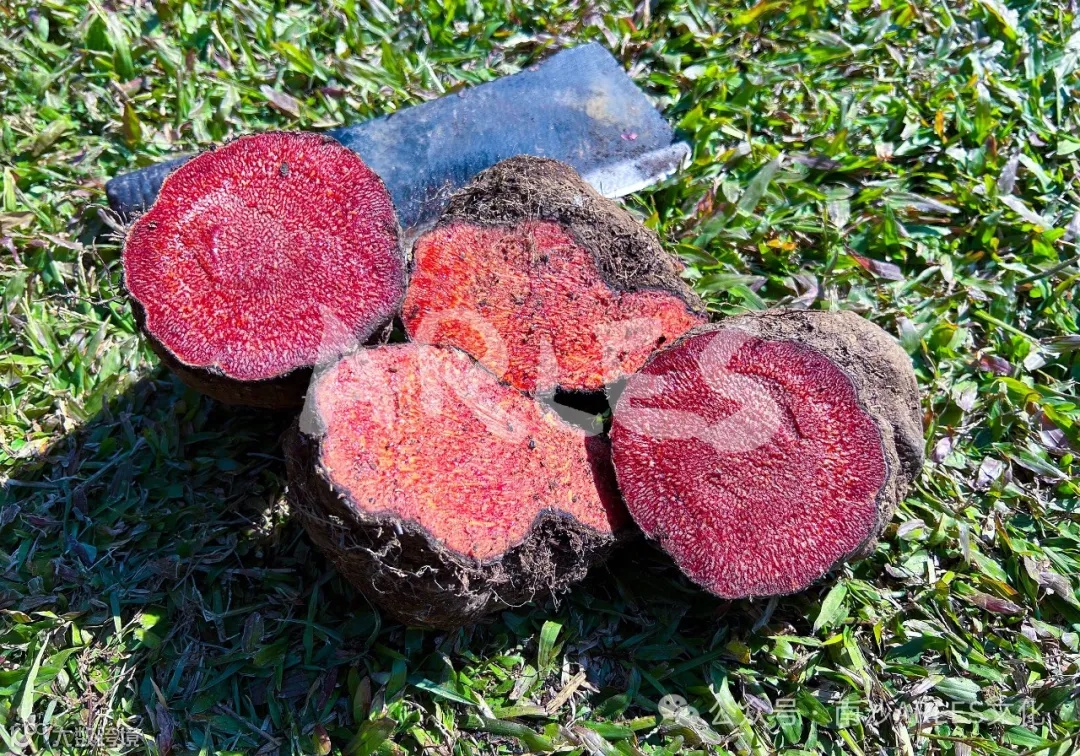
The main component in the tuber is tannic acid. As early as the Northern and Southern Dynasties, there were records in China of a similar plant known as "Yuyuliang." In the Tang dynasty, Su Gong mentioned "Zhe Kui" and believed it could not be used medicinally. The use of Shuliang as a dye has a very long history. In the Northern Song dynasty, Shen Kuo wrote in Dream Pool Essays: "Zhe Kui is extremely abundant in the south. Its exterior is black, and its interior red, resembling Polygonum multiflorum. When cut open, its texture looks like betel nut, and its juice is the color of red ochre. People in the south use it to dye leather for boots." This closely resembles the Shuliang used today in the production of gambiered Guangdong gauze. Li Shizhen also noted in Compendium of Materia Medica: "People in Fujian use Zhe Kui in dye vats, as it takes color easily." In the early Qing dynasty, Fang Yizhi recorded: "This plant is called Chuliangteng. It resembles the yam, with fruits like small melons, and can be used to dye kudzu cloth." In 1931, a piece of hemp fabric from the Eastern Jin dynasty was unearthed from an ancient tomb in Dadao Mountain, western Guangzhou. The fabric had different colors on each side—one side blackish-brown and the other red. Based on its appearance, it was determined to have been processed with Shuliang, though its exact composition has yet to be confirmed. These historical records and physical artifacts all attest to the long history of using Shuliang to soak and dye fabrics.
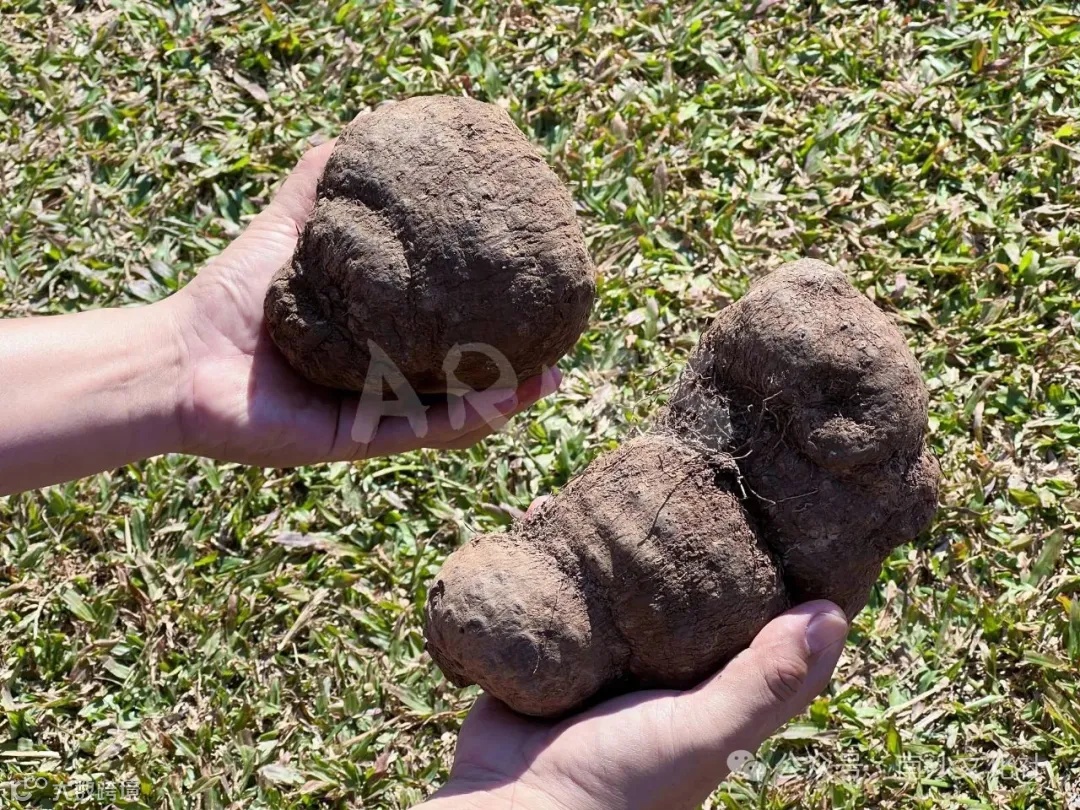
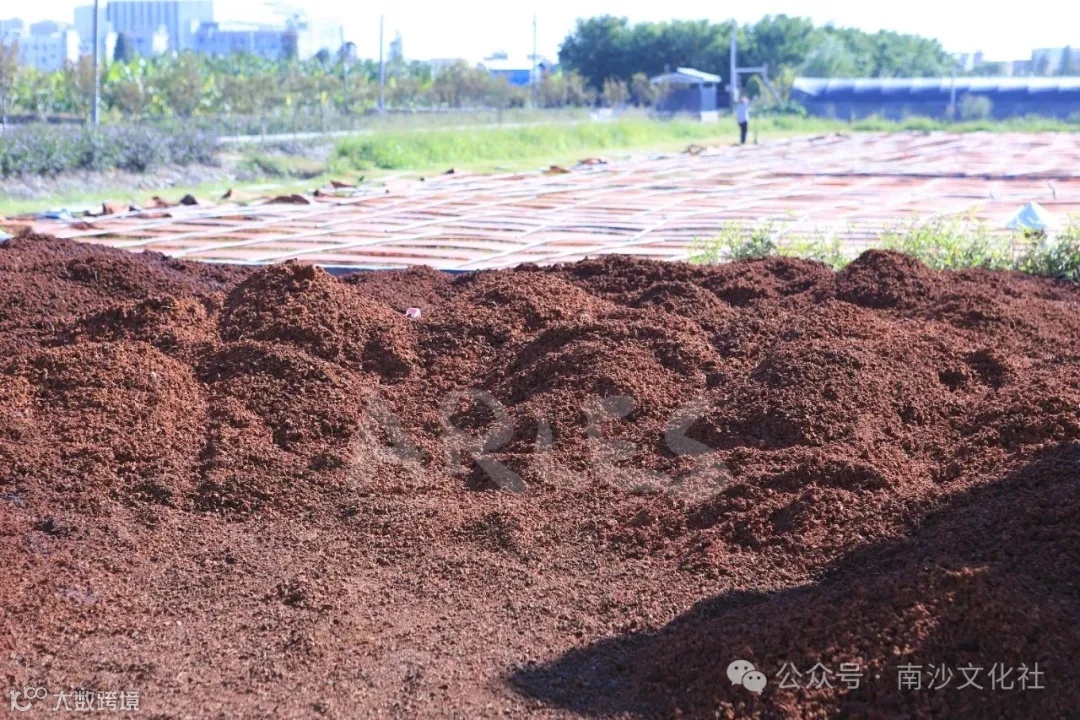
Sun-dyeing workshops generally source Shuliang locally. Due to the large quantities used, they often purchase it by the ton and store it in cool, shaded areas. In the past, extracting juice from Shuliang relied on manual slicing and grinding, which was time-consuming and labor-intensive. Today, electric juicers are commonly used. Before juicing, the tubers must be washed to prevent sand and soil from mixing in.
It is known that the quality of silk produced in Guangdong is inferior to that from Jiangsu and Zhejiang. Garments made from local plain greige silk and satin tend to pill easily, and even after dyeing, the appearance is unsatisfactory. As a result, plain greige silk from Guangdong must undergo the sun-dyeing process before it is suitable for tailoring. Currently, most sun-dyeing workshops choose Shuliang produced in Liubu, Gaoyao, Guangdong, because the Shuliang from this area has a lighter reddish color, allowing for repeated sun-dyeing (typically 25 to 30 times), resulting in better final product quality. A few workshops use the darker red Shuliang from Guangxi, which generally reaches a deep color after about twenty sun-dyeing cycles, requiring fewer rounds of processing and yielding fabric of slightly lower quality.
NALANGE CHRONICLES
Editor-in-Chief: Wang Xuan
Photographer: Xiao Tie
Calligrapher: Zhi Ming
Costumes: WURAY MIRACLE, YUNSHA STAR RHYME
Dedicated to promoting Xiangyunsha silk as China’s intangible cultural heritage.
Email: 1399229194@qq.com