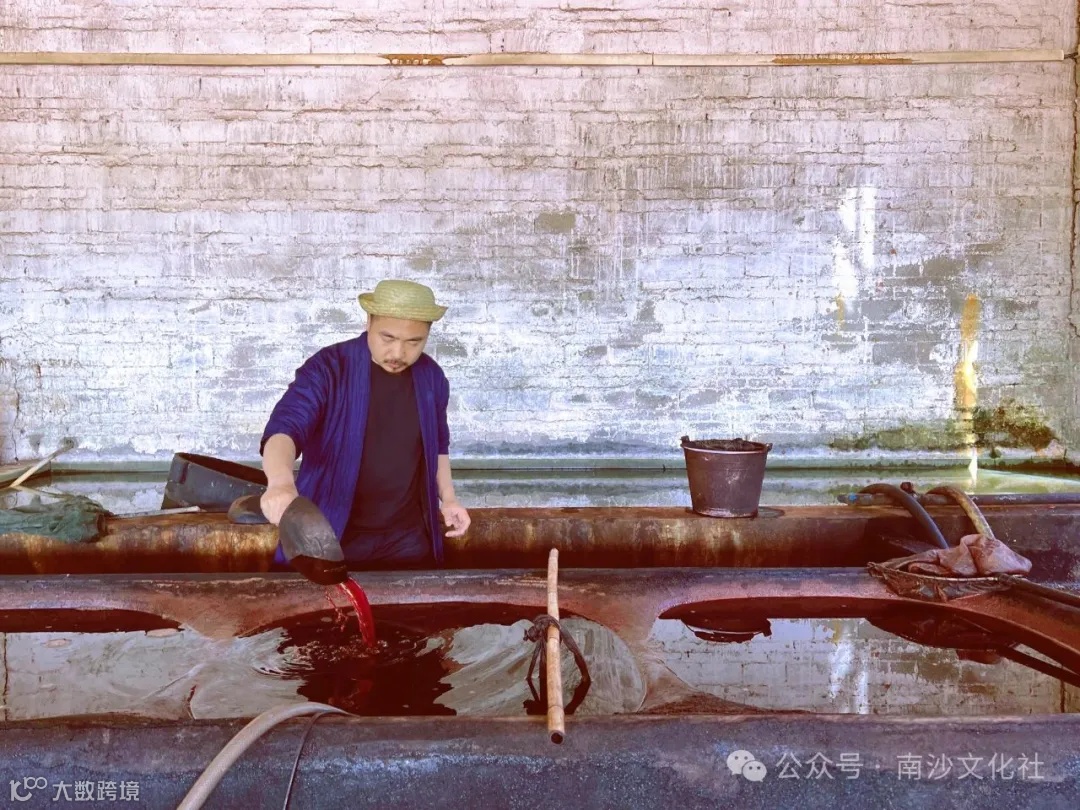
Lingnan Sights in Classical Poetry: The Gambiered Garment
Feng Xun (1792–1867), a poet from Panyu, wrote:
“The gambiered jacket, narrow and piled with silk,
A casual fit, a smile upon the face.
Half asleep, half awake, in a fragile dream,
The purest words come — ‘Lychees are here.’”
Huang Zhuqu (1875–1908), a poet from Sanshui, also described:
“A few households by the water, a riverside village,
At dusk, an ancient post road through level woods.
A lass in gambiered cloth, a lass punting a boat,
Glides into the lotus blooms, leaving no trace behind.”
Chen Kun (1821–?), a poet from Qiantang, recorded in his Miscellaneous Poems of Lingnan:
“The sweltering heat brings sweat like broth wherever you go;
Even linen cloth cannot ease the chill of June.
If you wish your beloved to pass the exams early,
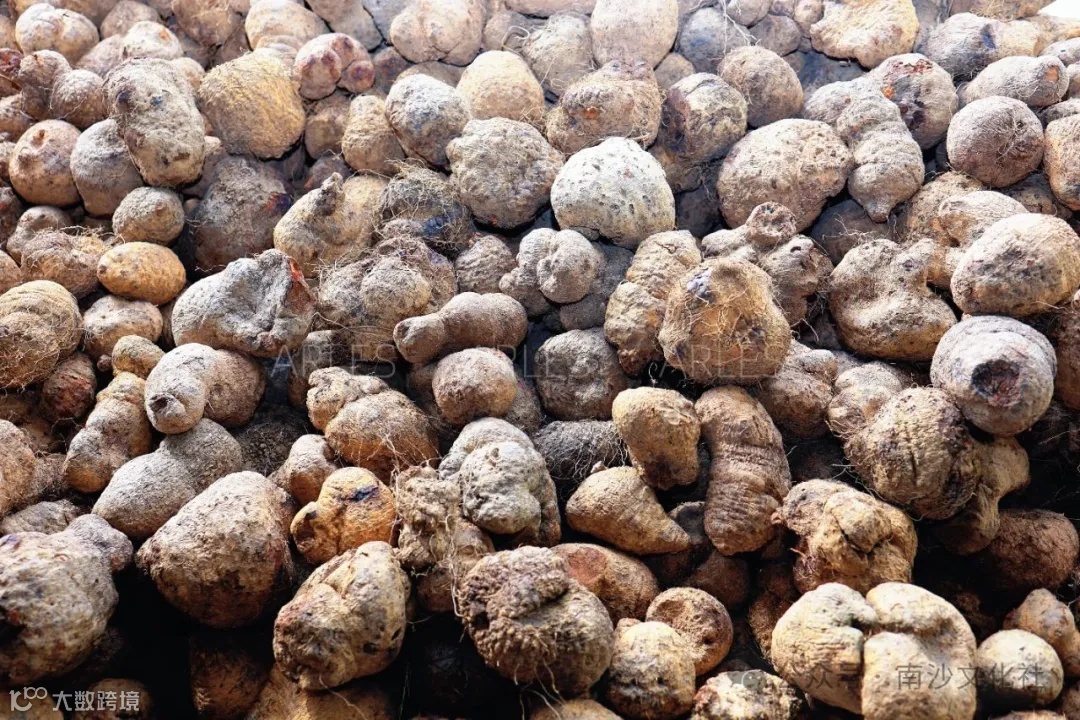
You must trade willow juice for gambiered dye.”
He added in a note: “In recent years, people also use gambiered dye on coarse cloth to make undergarments that wick away sweat; they work very well in the summer months.”
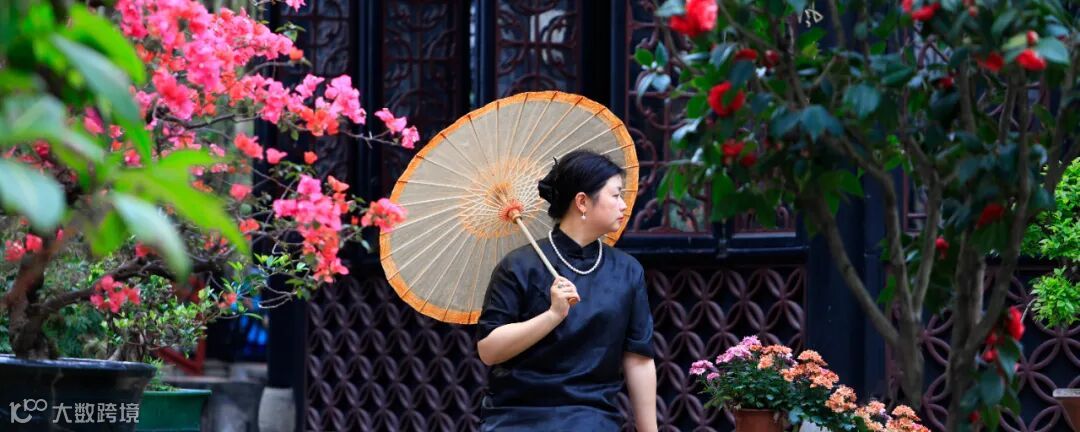
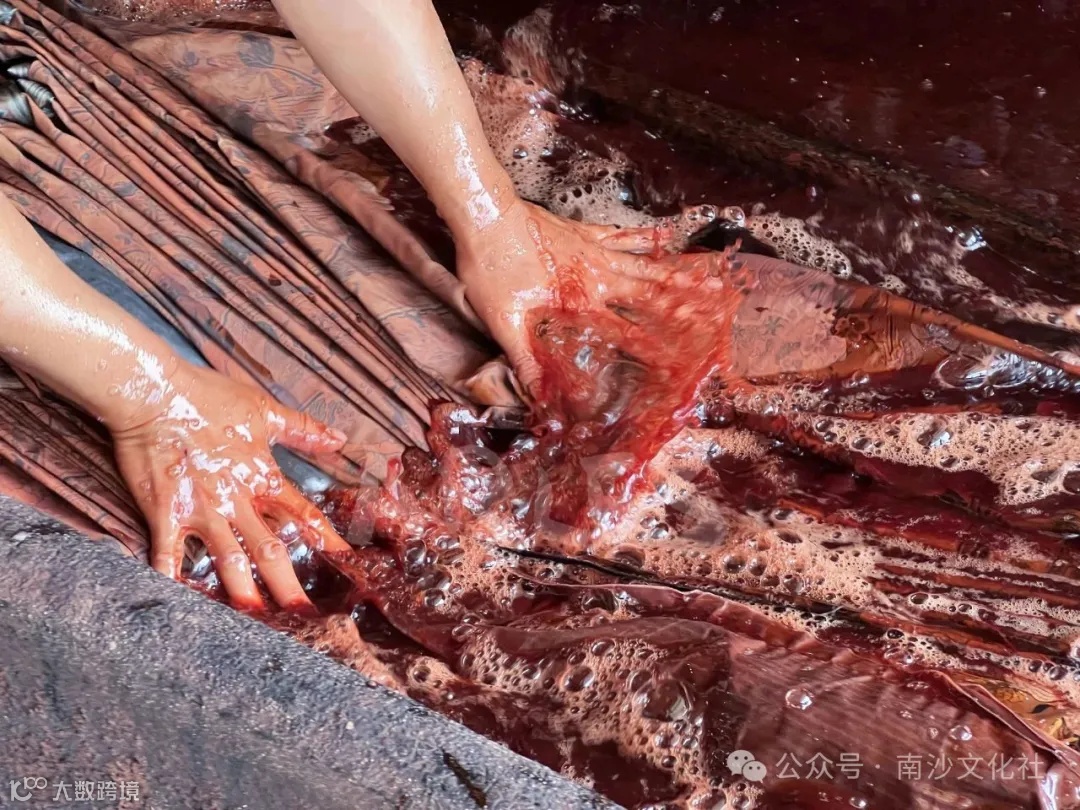
These poems and records, written by literati from different periods and regions, vividly depict the use of gambiered cloth in folk clothing and the social customs of the time. In Feng Xun’s poem, the “gambiered jacket” sketches the simplicity and ease of everyday attire in the Qing dynasty. Huang Zhuqu’s “lass in gambiered cloth” gliding a boat through lotus blossoms reveals how deeply this fabric was woven into the life of the water towns. Chen Kun not only highlights the practical benefits of gambiered cloth — its sweat-absorbing, cool comfort — but also documents, through his own annotation, its actual use as a summer fabric.
Thus, from the late Ming to the late Qing, the traditional craft of gambiered dyeing not only persisted in the Lingnan region but also remained deeply embedded in folk life and in the view of the literati, never fading away. These poetic works are not only treasures of literary creation but also important testimonies to the history of textiles and the transmission of folk culture.
As the editorial team of this column, we consistently uphold an open, inclusive, and neutral stance. We are well aware that in a multicultural context, truth often emerges from dialogue and the clash of diverse perspectives. Therefore, we do not position ourselves as arbiters of views, but rather as “presenters” and “connectors” of ideas. Our core mission is to build a platform for equal and rational exchange, bringing together insightful opinions from scholars across different fields and backgrounds. Here, you may find articles with opposing viewpoints placed side by side, or encounter completely different interpretations of the same issue. We believe that such juxtaposition itself holds power — it rejects a single narrative, encourages readers to move beyond habitual thinking, and fosters independent reflection through comparison and discernment. “The sea is vast because it admits all rivers.” We cherish every rigorous and sincere scholarly voice, whether from tradition or modernity, East or West. We envision this platform as a “free market of ideas,” where high-quality academic dialogue inspires new questions and directions for exploration.
— Editorial Department, Nansha Culture Society
NALANGE CHRONICLES
Editor-in-Chief: Wang Xuan
Photographer: Xiao Tie
Calligrapher: Zhi Ming
Costumes: WURAY MIRACLE, YUNSHA STAR RHYME
Dedicated to promoting Xiangyunsha silk as China’s intangible cultural heritage.
Email: 1399229194@qq.com