薯莨染色历史记载
Historical Records of Dyeing with Dioscorea Cirrhosa (Shuliang)
The historical development of dyeing techniques using Dioscorea cirrhosa (commonly known as shuliang or "Chinese yam root") is clearly traceable. Its range of application gradually expanded over time, and the craftsmanship became increasingly sophisticated. Below is a summary based on historical documents and archaeological findings.
I. Song Dynasty: Earliest Clear Records
In the Northern Song Dynasty, Shen Kuo documented the use of Dioscorea cirrhosa for dyeing in his Dream Pool Essays (Mengxi Bitan):
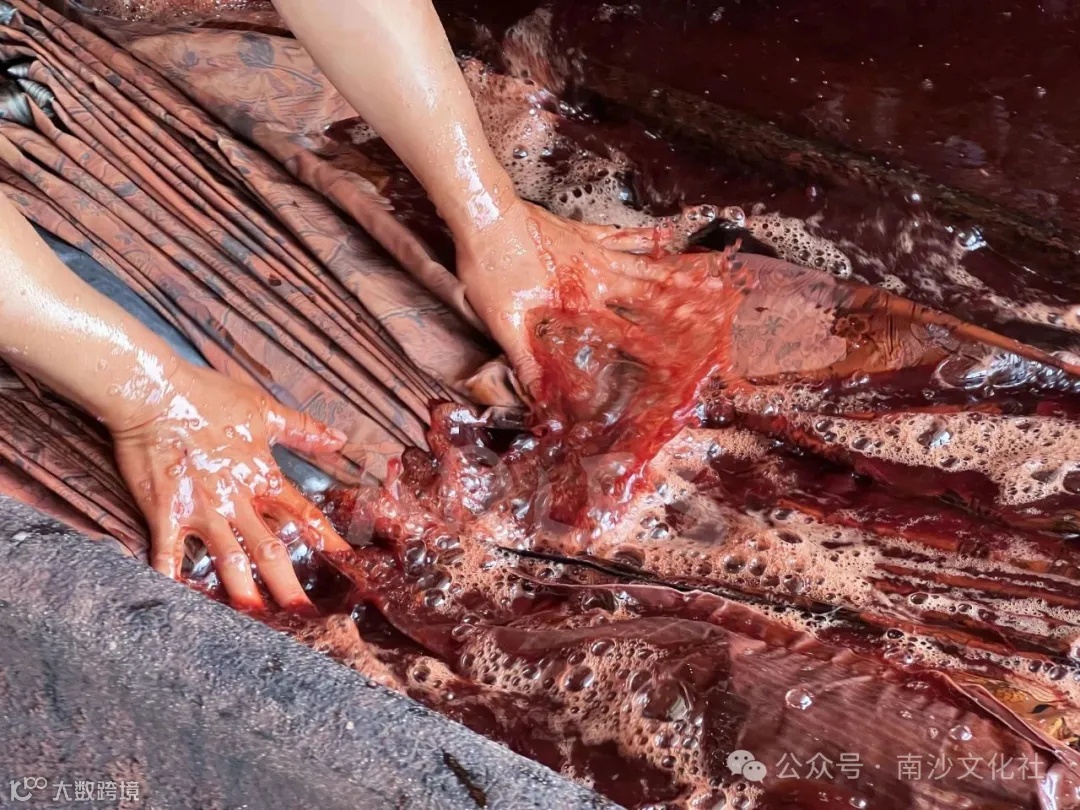
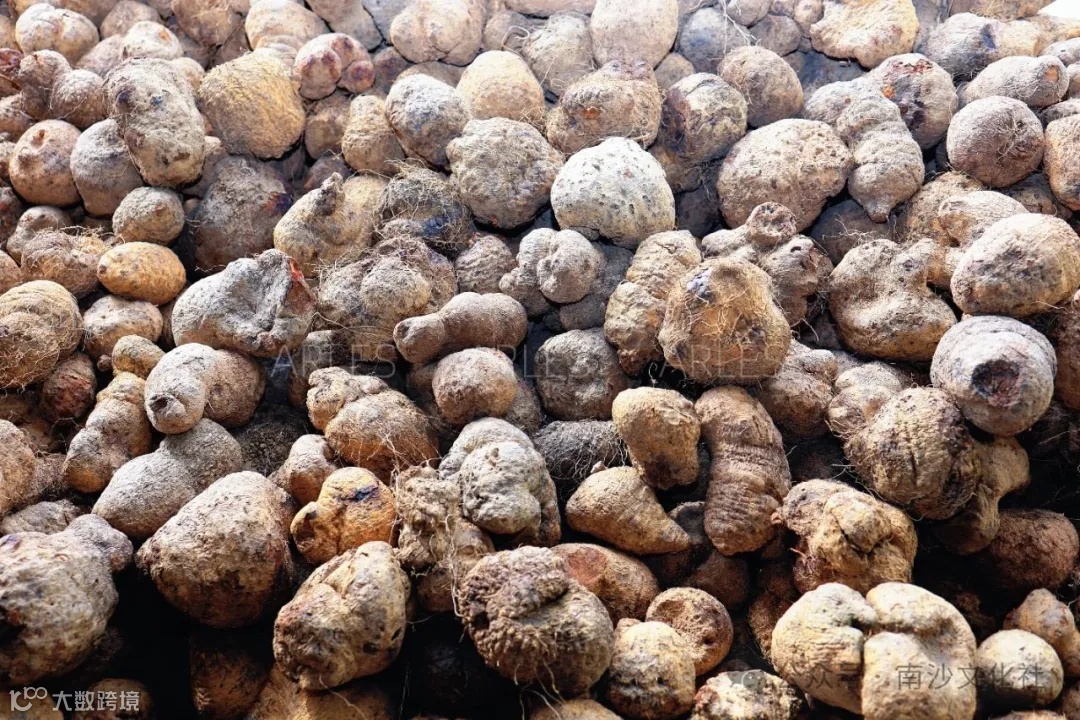
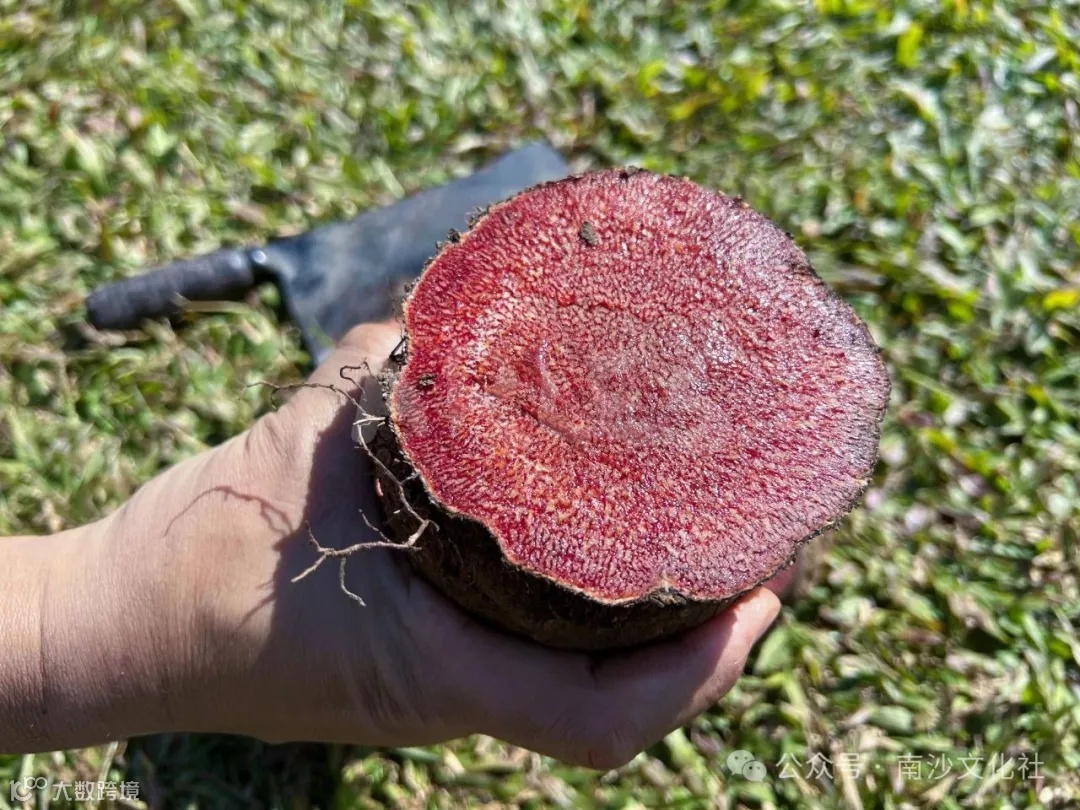
"Today, zhe kui (shuliang) is extremely abundant in the southern regions. Its skin is black, its flesh red, resembling the root of Polygonum multiflorum (Chinese knotweed). When cut open, it reveals red and white patterns like those of a betel nut. It produces a juice as red as ocher, which the southerners use to dye leather for making boots."
The text notes that in Fujian and Lingnan (present-day Guangdong and Guangxi areas), the use of shuliang to dye leather was already widespread. However, whether shuliang was used earlier for dyeing textiles or leather remains to be verified.
II. Ming Dynasty: Expanded Uses and Process Evolution
In the Ming Dynasty, the dyeing functions of shuliang were further recorded:
Li Shizhen, in his Compendium of Materia Medica (Bencao Gangmu), wrote:
"Zhe kui – the people of Fujian put it into indigo vats, claiming it helps the color adhere more easily."
This suggests that shuliang may have been used as a mordant or dyeing assistant in the cloth dyeing process.
The General Gazetteer of Fujian (Bamin Tongzhi) also records:
"Shu lang – its vine is like that of a yam, its root resembles Polygonum multiflorum, with black skin and red flesh. It is used for dyeing."
This clearly lists shuliang as a dyestuff.
II. Qing Dynasty: Widespread Application and the Emergence of the "Sun-Gambiering" Process
In Qing Dynasty local gazetteers, records of dyeing with Dioscorea cirrhosa (shuliang) became more abundant, covering areas such as Taiwan, Fujian, Guangdong, Hainan, Hunan, and Guangxi:
Kangxi Era Gazetteer of Taiwan County: "The fruit of shu lang is as large as a taro; its skin is black, its flesh red. It is used to dye cloth, making it water-resistant and firm."
Qianlong Era Gazetteer of Yongchun Prefecture: "Shu lang, with a vine like that of a yam, can be used to dye black."
Xianfeng Era Gazetteer of Kavalan Subprefecture, Taiwan: "Coastal fishing households use shu lang to dye their clothes, giving them an ocher color that does not stain when exposed to water."
Daoguang Era Gazetteer of Qiongzhou Prefecture mentions that "shi liang" (another name for shuliang) can be used for dyeing.
Guangxu Era Gazetteer of Xinning County records that "it is used to dye fishing nets, which will not decay when immersed," indicating that dyeing nets with shuliang prevents rot and enhances durability.
Guangxu Era Gazetteer of Beiliu County explicitly states that "shuliang is used for dyeing cloth by sun exposure," where "sun exposure" had already become a procedural step, possibly pointing to the early form of the later "sun-gambiering" technique.
IV. Archaeological Findings: Possible Evidence from an Eastern Jin Tomb
The inaugural issue of the Journal of Archaeology (1931) recorded that a batch of linen fabric was unearthed from an Eastern Jin tomb dated to the second year of the Taining era (324 CE) in Guangdong. The fabric had "one side painted with vermilion, the other side brown" and featured a checkered pattern.
Chen Weiji, in his History of Chinese Textile Science and Technology, speculated that this fabric might have been finished with shuliang. If this speculation is correct, the history of shuliang dyeing could be pushed back to the Eastern Jin Dynasty, nearly 1,000 years earlier than the earliest written records. However, since the excavated artifacts have been lost and the archaeological methods of the time were not systematic, this record remains an isolated piece of evidence. At present, it is still impossible to confirm that shuliang dyeing and finishing techniques existed as early as the Jin Dynasty.
Key Takeaways:
The technology of dyeing with Dioscorea cirrhosa (shuliang) is clearly documented from the Song Dynasty onward. During the Ming Dynasty, it was used as a dyestuff or auxiliary agent. In the Qing Dynasty, it became widespread along the southeastern coast, and the "sun-gambiering" process emerged. Although archaeological clues suggest an even earlier origin, there is no conclusive evidence to support its emergence as early as the Jin Dynasty. Its developmental trajectory—from dyeing leather to dyeing cloth, and from practical applications (fishing nets, boots) to apparel—reflects the accumulation and transmission of ancient folk wisdom.
As the editorial team of this column, we consistently uphold an open, inclusive, and neutral stance. We are well aware that in a multicultural context, truth often emerges from dialogue and the clash of diverse perspectives. Therefore, we do not position ourselves as arbiters of views, but rather as “presenters” and “connectors” of ideas. Our core mission is to build a platform for equal and rational exchange, bringing together insightful opinions from scholars across different fields and backgrounds. Here, you may find articles with opposing viewpoints placed side by side, or encounter completely different interpretations of the same issue. We believe that such juxtaposition itself holds power — it rejects a single narrative, encourages readers to move beyond habitual thinking, and fosters independent reflection through comparison and discernment. “The sea is vast because it admits all rivers.” We cherish every rigorous and sincere scholarly voice, whether from tradition or modernity, East or West. We envision this platform as a “free market of ideas,” where high-quality academic dialogue inspires new questions and directions for exploration.
— Editorial Department, Nansha Culture Society
NALANGE CHRONICLES
Editor-in-Chief: Wang Xuan
Photographer: Xiao Tie
Calligrapher: Zhi Ming
Costumes: WURAY MIRACLE, YUNSHA STAR RHYME
Dedicated to promoting Xiangyunsha silk as China’s intangible cultural heritage.
Email: 1399229194@qq.com