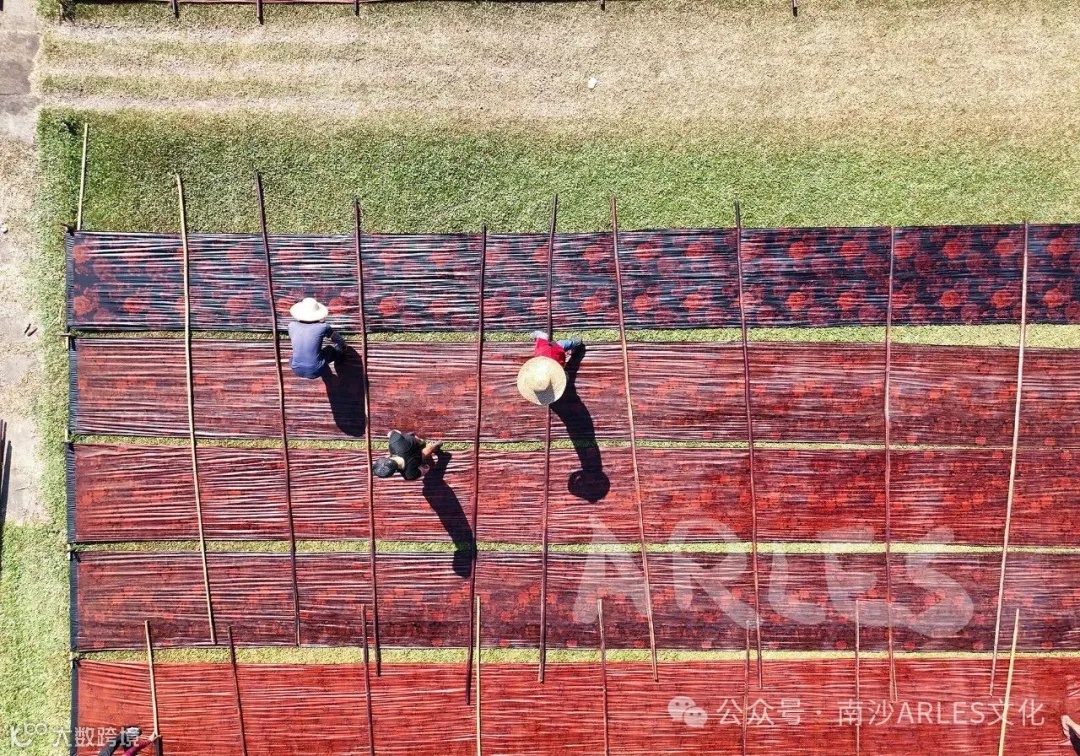
During the Qing Dynasty, larger market towns in Panyu County already had small dyeing workshops, as well as individual artisans who traveled through villages carrying their tools to dye clothes and fabrics. From the Qing Dynasty to the Republican era, the sun-softening (shailiang) and bleaching industries in Shiqiao were among those with a significant number of practitioners. Yam-based fabric (Shuliang cloth) was a specialty of Shiqiao. The process of dyeing fabric with yam juice was divided into two categories: one used silk as the raw material, primarily produced in Foshan and Nanhai; the other used white calico as the raw material, mainly produced in Shiqiao, and was known as "Shiqiao Liang cloth." Liang cloth, also called "bamboo cloth," was affordable, durable, and suitable for wearing during labor.
The sun-softening industry in Shiqiao began in the early 19th century and reached its peak around 1930. By then, the number of manufacturers in Shiqiao had grown to over 120, employing more than 1,000 people, with an annual production of 600,000 bolts of yam-based fabric. At the beginning of the Japanese occupation, the industry declined sharply. After the war, the sun-softening industry recovered, and the number of manufacturers increased to 60. Villages near Shiqiao, such as Shaxu and Luojia, also established sun-softening factories. Some manufacturers even set up factories in Conghua, Huaxian, Nanhai, and other counties.
In the late 1940s, the annual production once reached as high as one million bolts. However, due to changes in consumer demand, the black-blue and ochre-colored yam-based fabrics fell out of fashion, leading to oversupply. Manufacturers gradually found themselves in difficulty, and many closed down. By 1949, fewer than 50 manufacturers remained in Shiqiao.
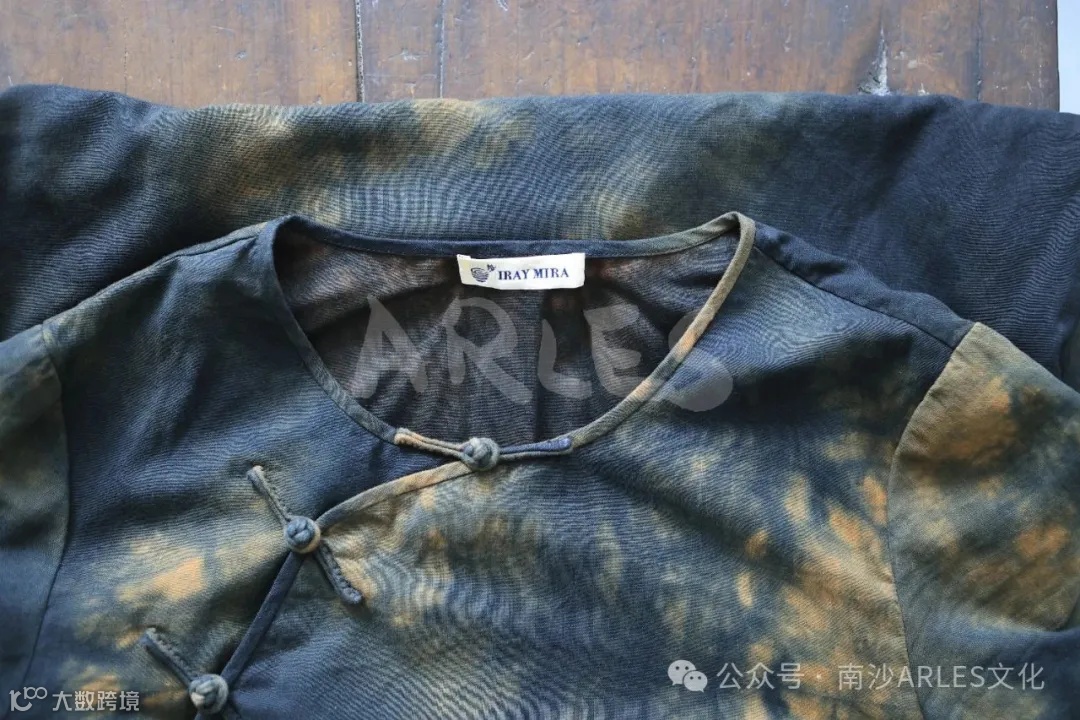
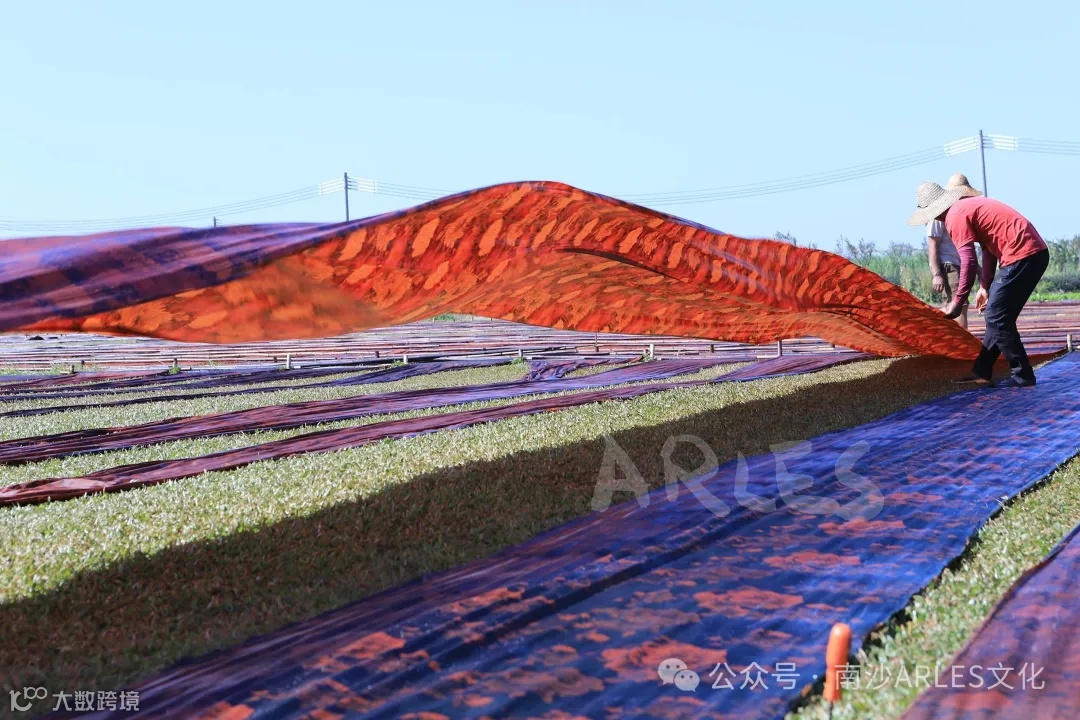
▲Shuliang cloth
After 1949, the People's Government supported the revival of the industry through bank loans, processing orders, and other forms of assistance. By 1951, there were over 70 manufacturers in both the bleaching and sun-softening (shailiang) industries, employing more than 700 workers. In 1952, these businesses formed a joint-operations cooperative, engaging in unified purchasing and sales while maintaining independent accounting. During the transformation of private industries and commerce in 1956, the operation was restructured into a public-private joint venture known as the Sun-Softening Factory, which incorporated the former Datong Printing and Dyeing Factory. This new entity handled multiple operations, including bleaching, printing and dyeing, and sun-softening. By 1964, the sales of yam-based fabric (Shuliang cloth) had declined steadily, eventually leading to the complete cessation of its production.
From the early 1960s, the focus shifted to the development of the dyeing and finishing industry. Initially, the industry processed low-grade fabrics such as Da Cheng blue, grass green, wool blue, and stone black cloth. As equipment and technology gradually improved, the variety of processed fabrics also increased. In 1968, the Sun-Softening Factory was renamed the Panyu Dyeing and Finishing Factory. Through technological and equipment upgrades, the factory established a dyeing and finishing production line capable of processing fabrics with widths of up to 120 centimeters. To address industrial wastewater pollution, a treatment facility was built with a capacity to purify 200 cubic meters of industrial wastewater per hour.
In 1986, the factory, in collaboration with the Foreign Trade Textile Import and Export Company and Hong Kong's Weiye Industrial Company, jointly invested in the establishment of the "Panda Dyeing and Finishing Factory." The total investment amounted to 10 million Hong Kong dollars, which was used to import 20 sets of advanced equipment. By 1991, the two factories employed 350 workers, with an annual production of 10 million meters of dyed and finished fabrics, an output value of 98 million yuan, and tax payments and profits exceeding 5 million yuan.
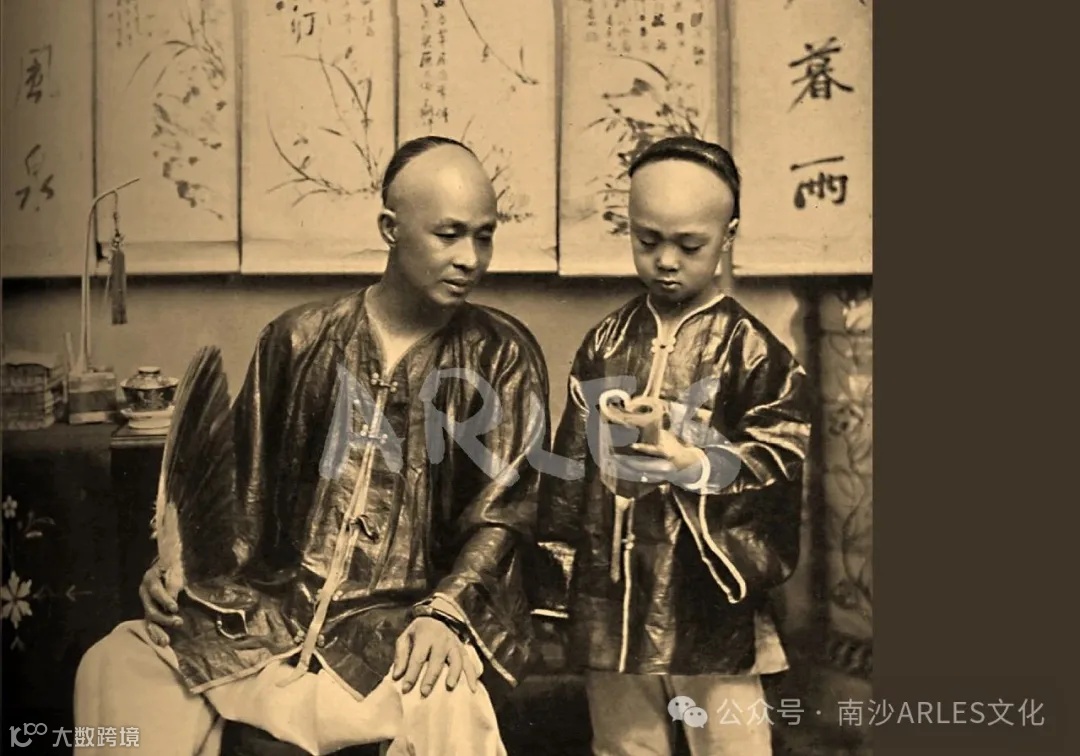
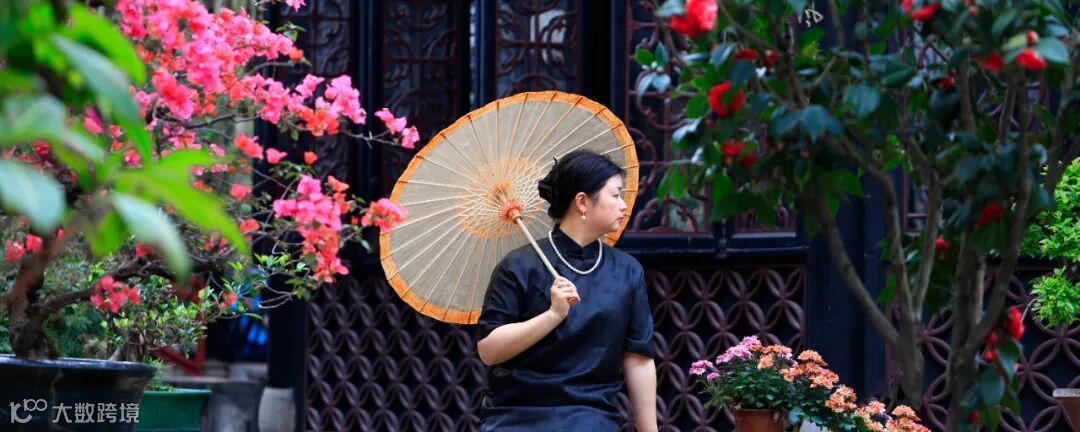
▲Wealthy families of Lingnan attired
in Gambiered Guangdong gauze in the old days.
If you're intrigued by the intricate beauty of Gambiered Guangdong Gauze and wish to explore it further, we have a curated space just for that. Simply leave a comment below or send us a private message with "NanshaXiangyunsha" to find your way into our WeChat cultural community.

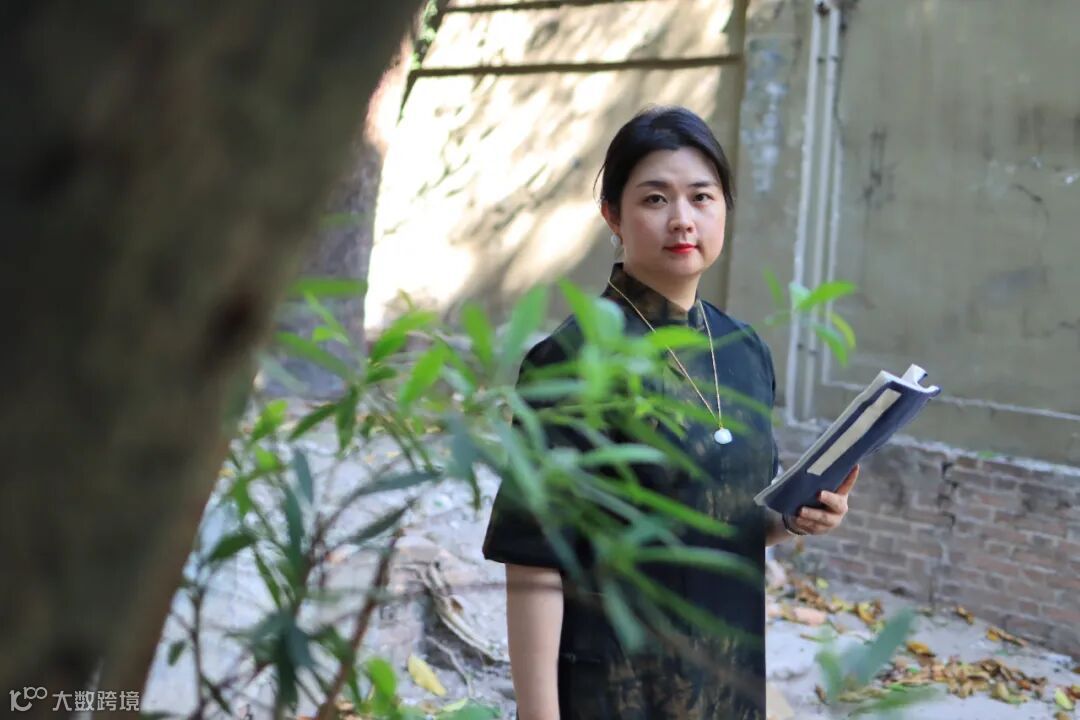
NALANGE CHRONICLES
Editor-in-Chief: Wang Xuan
Photographer: Xiao Tie
Calligrapher: Zhi Ming
Costumes: WURAY MIRACLE, YUNSHA STAR RHYME
Dedicated to promoting Xiangyunsha silk as China’s intangible cultural heritage.
Email: 1399229194@qq.com