


关注我们
Available online:6 May 2020
Shiv Nadar University
导读
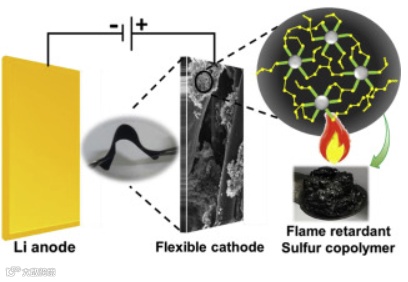
在此,作者研究了一种共价键硫(∼83%w/w)阻燃可持续共聚物,作为一种适用于热带地区锂硫电池实际应用的安全阴极材料。本征阻燃性能优异,比容量可观,容量保持性好,为设计安全、可持续的锂硫电池正极材料提供了一种新的策略。
关键词
磷腈,锂硫电池,硫共聚物阴极,阻燃剂,无卤电极
背景简介
1. 锂硫电池优缺点
尽管吸引人,但由于硫的绝缘性质、(室温下为5 × 10 30 S cm -1 ),以及硫/多硫化物会逐渐溶解到电解液中,致使锂硫电池的循环稳定性和自发自放电行为较差。与锂离子电池类似,锂-硫电池也可能会因为较高的可燃硫含量而出现安全问题。且硫和电解液固有的可燃性特性仍然是人们关注的焦点,目前还没有引起足够的重视。
2. 硫/多硫化物逐渐溶解、
导电性差及可燃的解决办法
迄今为止,基于硫的化学和物理限制、分离器(层间)和粘结剂的改性、极性有机/无机结构的引入以及与多孔导电填料的共混,在很大程度上解决了溶解和导电问题。
最近,将阻燃剂(FR)添加剂/电解质作为一种有潜力的方法,主要是为了提高锂硫电池的安全性。通常,由于其与电池的一些成分不相容,外部FR助剂的物理混合可能会降低电池性能。此外,卤素添加剂是不可取的,因为它们对环境和人类健康构成重大威胁。
文章介绍
作者所设计的共聚物具有良好的阻燃性能,同时对极性和杂原子骨架的多硫化锂具有良好的吸附性能。此外,非晶态共聚物骨架可以减缓嵌锂/脱锂过程中的体积膨胀。这有望保持电池的结构完整性,以获得稳定的性能。采用碳布作为集电器来解决活性材料的电阻率问题。这消除了通常需要添加外部导电纳米填料的需求,从而提供了一种更简单、经济的制造方法。目前的工作涉及一个可持续的易用材料设计的阴极,以减轻可燃性问题,而不影响锂-硫电池的性能。
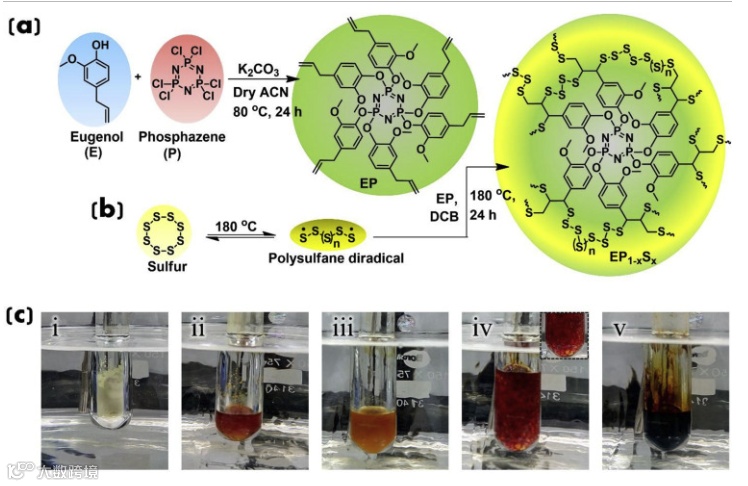
图1.合成过程
Schematic and visualization of copolymer synthesis:
(a, b) Synthetic strategy followed to prepare EP monomer and EP1-xSx copolymers;
(c) digital images during synthesis of EP10S90 at different stages- (i) sulfur at room temperature, (ii) polymeric sulfur radical at 180 °C, (iii) addition of EP in polymeric S at 180 °C, reaction mixture (iv) after 30 min (inset shows a zoom-in image indicating liberation of H2S leading to volume expansion and successful co-reaction) and (v) after completion of reaction, 24 h (drastic colour change and no bubble formation indicates completion of reaction). (For interpretation of the references to colour in this figure legend, the reader is referred to the Web version of this article.)
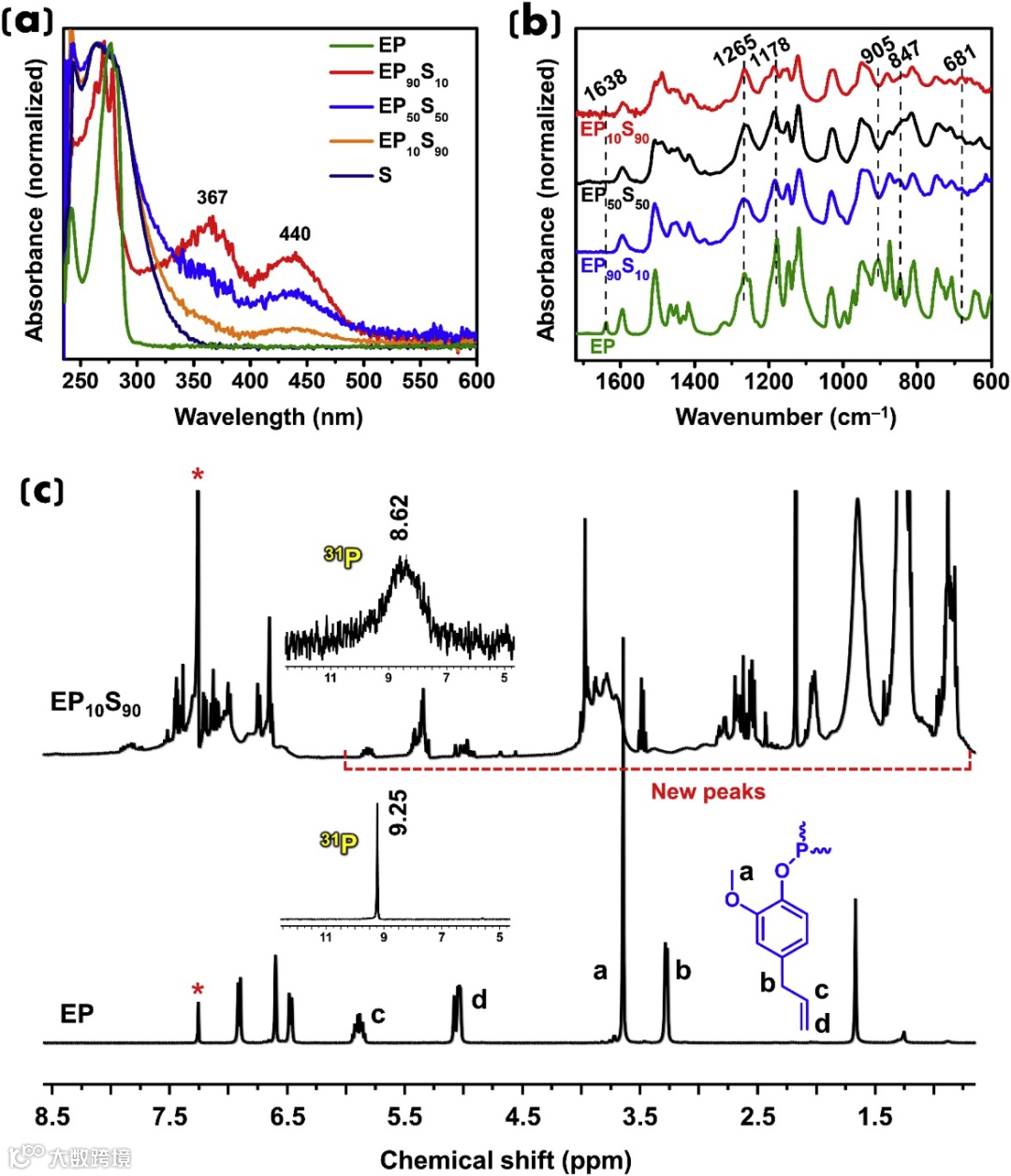
图2.光谱表征
Spectroscopic characterizations:
(a) Normalized UV–vis absorption spectra of sulfur, EP and different EP1-xSx copolymers;
(b) FTIR spectra of EP and different EP1-xSx copolymers (normalized at PN at 1265 cm−1);
(c) stacked 1H NMR spectra of EP and EP10S90 copolymer (*CHCl3 signal).
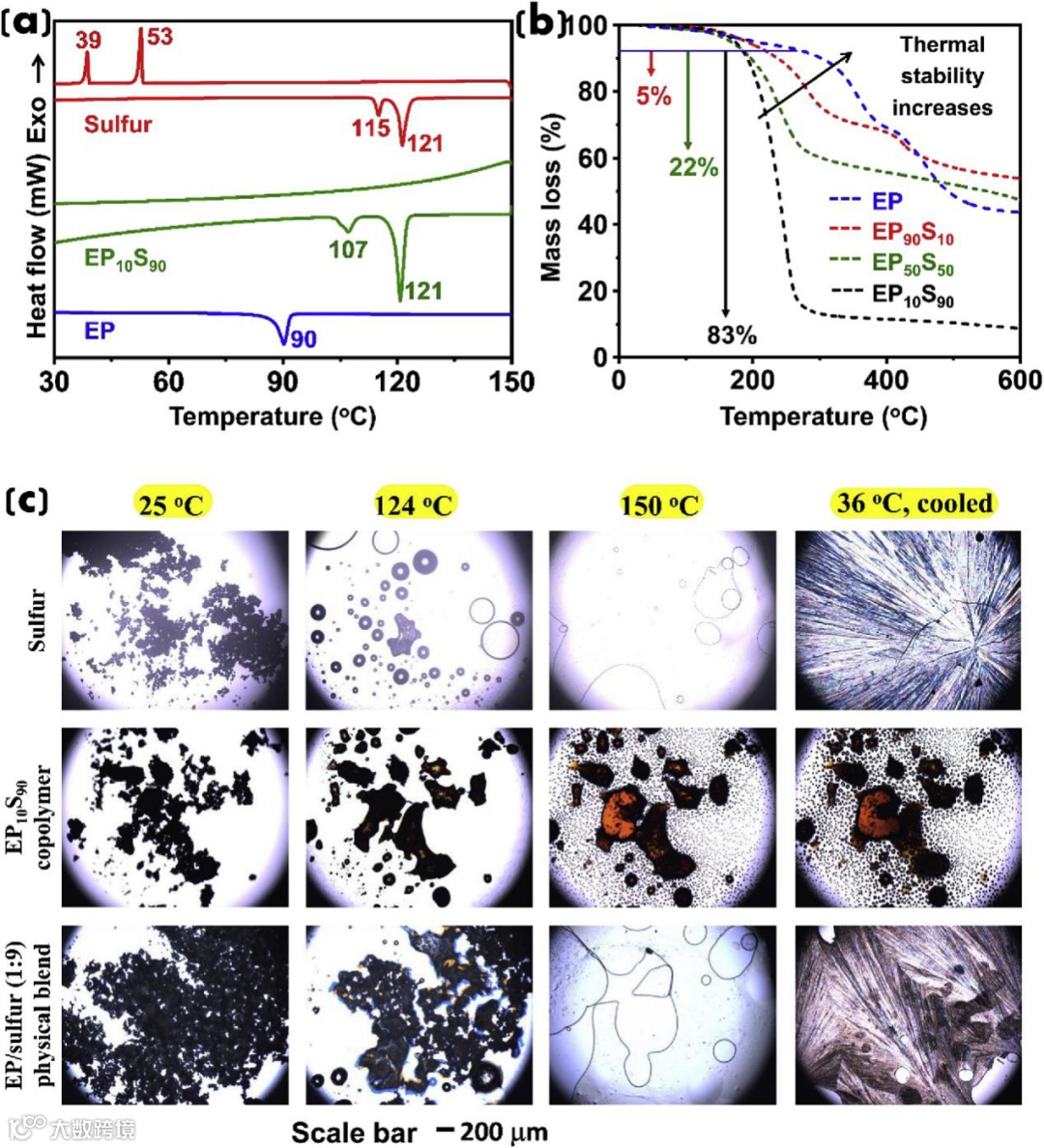
图3. 共聚物的热特性
Thermal characteristics of copolymers:
(a) DSC thermograms of sulfur, EP10S90 and EP, with heating and cooling cycle;
(b) TGA profiles of EP monomer and EP1-xSx copolymers;
(c) HSM of elemental sulfur, EP10S90 copolymer and physical blend of EP and sulfur heated to a temperature of 150 °C and then cooled to 36 °C.
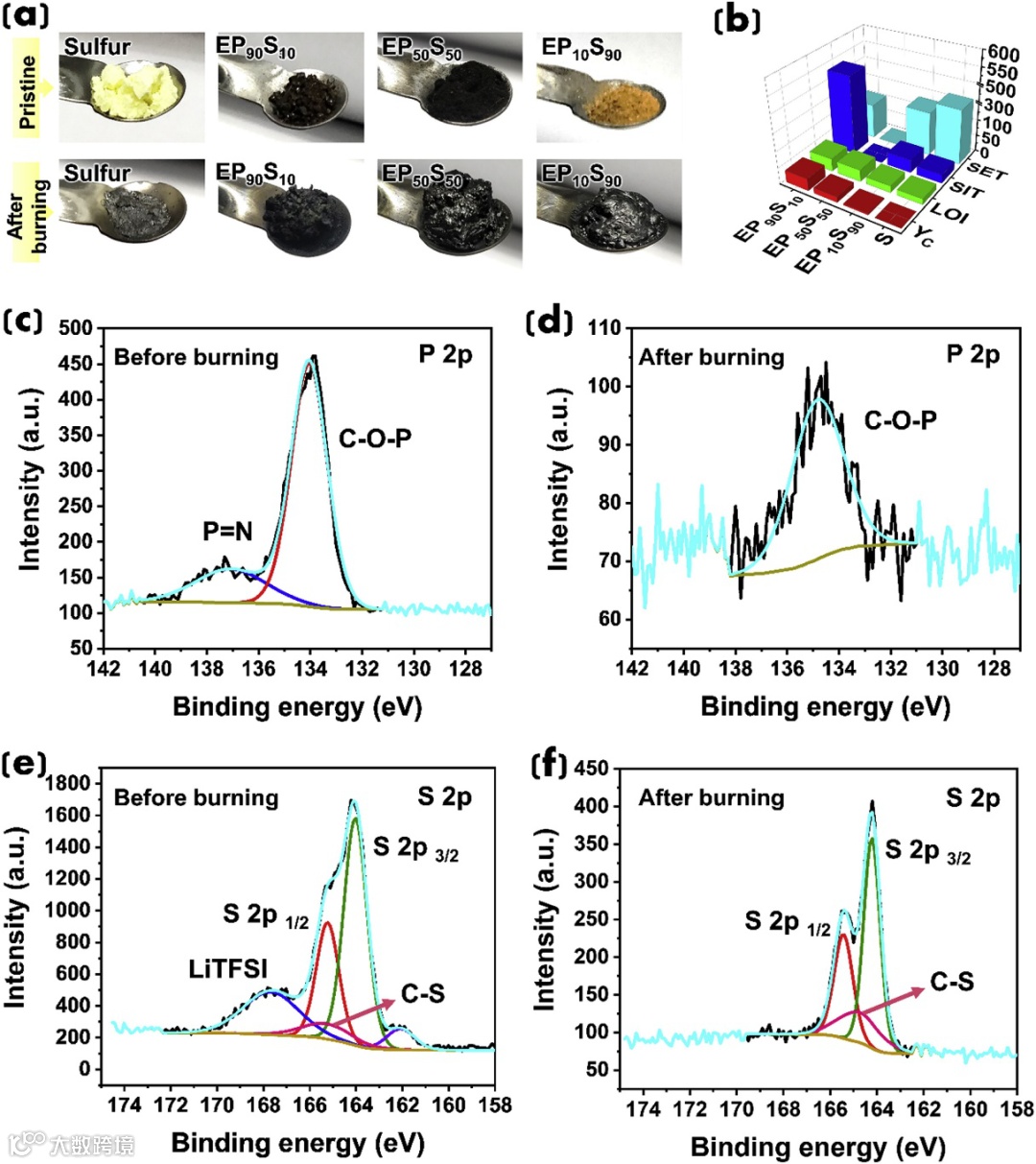
图4. 共聚物的可燃性
Flammability characteristics of copolymers:
(a) optical images of elemental sulfur and EP1-xSx copolymers before and after burning;
(b) relative flammable parameters;
(c, d) high-resolution P 2p XPS spectra of EP50S50 electrode before (c) and after burning (d);
(e, f) high-resolution S 2p XPS spectra of EP50S50 electrode before (e) and after burning (f).
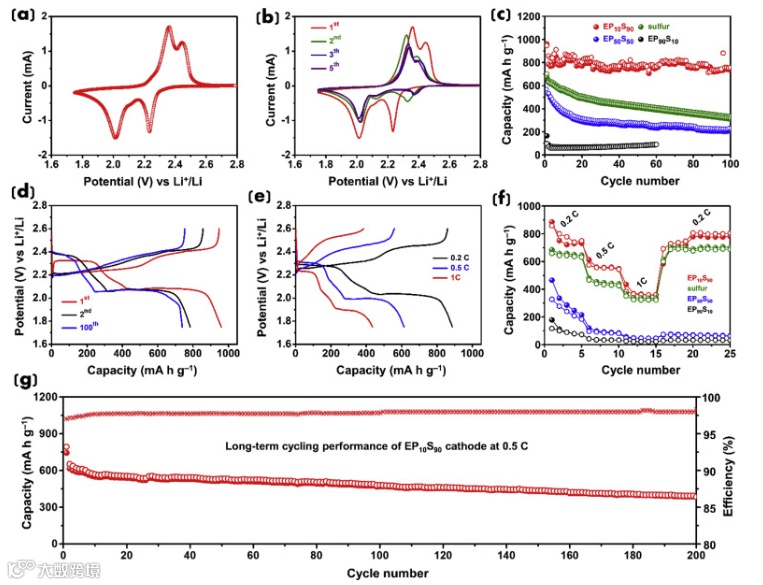
图5.EP10S90 /碳布正极的电化学性能
Electrochemical performance of EP10S90/carbon cloth cathode:
(a) First cycle CV curve at a scan rate of 50 μV s−1;
(b) CV curves for first, second, third and fifth cycles at 50 μV s−1;
(c) comparison of galvanostatic cycling performance of pure sulfur, EP10S90, EP50S50 and EP90S10 cathodes at 0.2C;
(d) charge-discharge profiles of EP10S90 cathode at 0.2C;
(e) charge-discharge profiles of EP10S90 copolymer at different current rates;
(f) comparison of rate performance of pure sulfur, EP10S90, EP50S50 and EP90S10 cathodes at different current rates;
(g) long-term cycling performance of the EP10S90 cathode at 0.5C. Hollow circles represent discharge capacity and filled circles represent charge capacity.
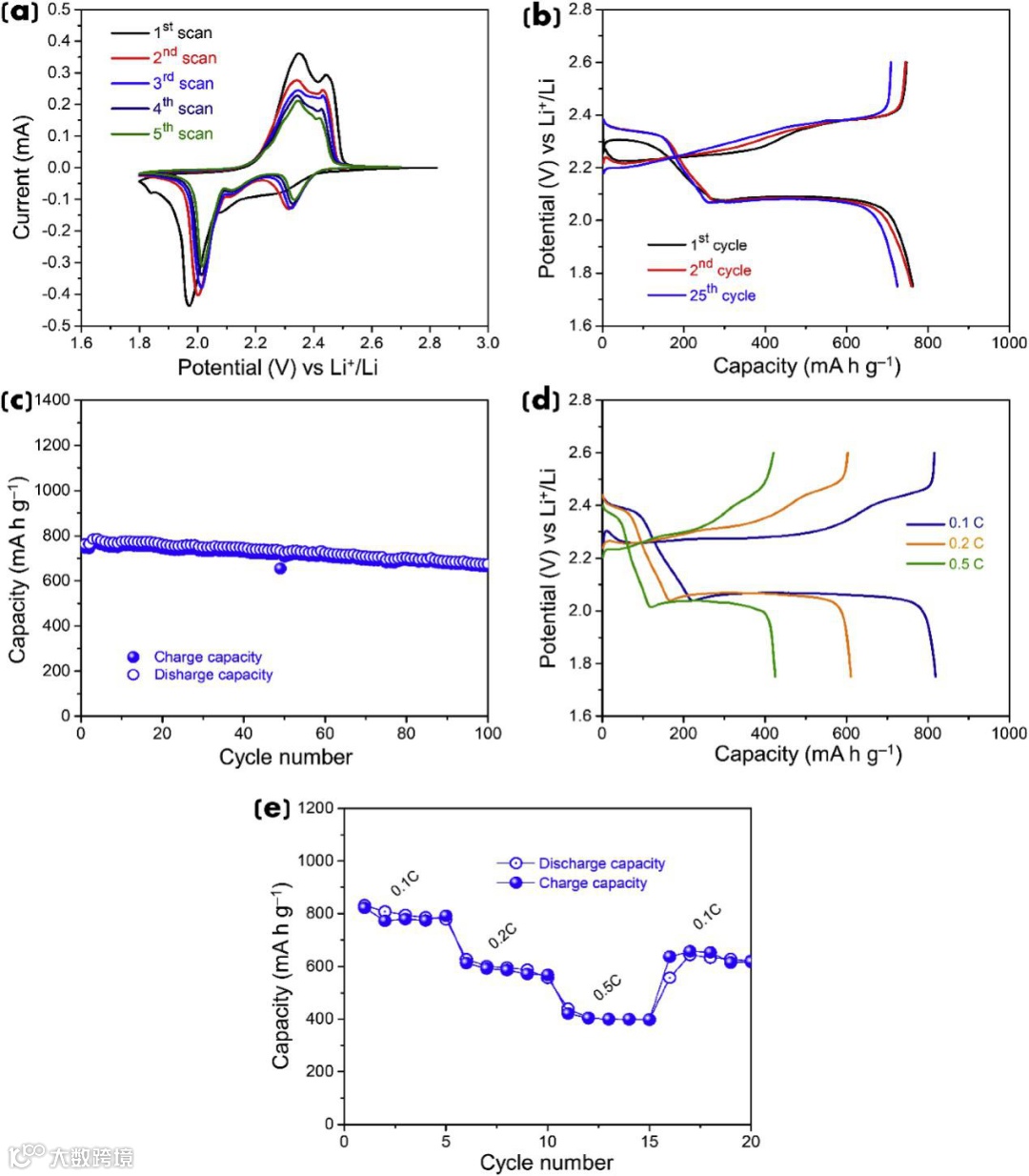
图6.EP10S90 /铝箔正极的电化学性能
Electrochemical performance of EP10S90/aluminium foil cathode:
(a) initial five cycle CV profiles at 20 μV s−1;
(b) charge-discharge profiles at 0.1C;
(c) cycling performance at 0.1C;
(d) charge-discharge profiles at different current rates;
(e) rate performance at different current rates.
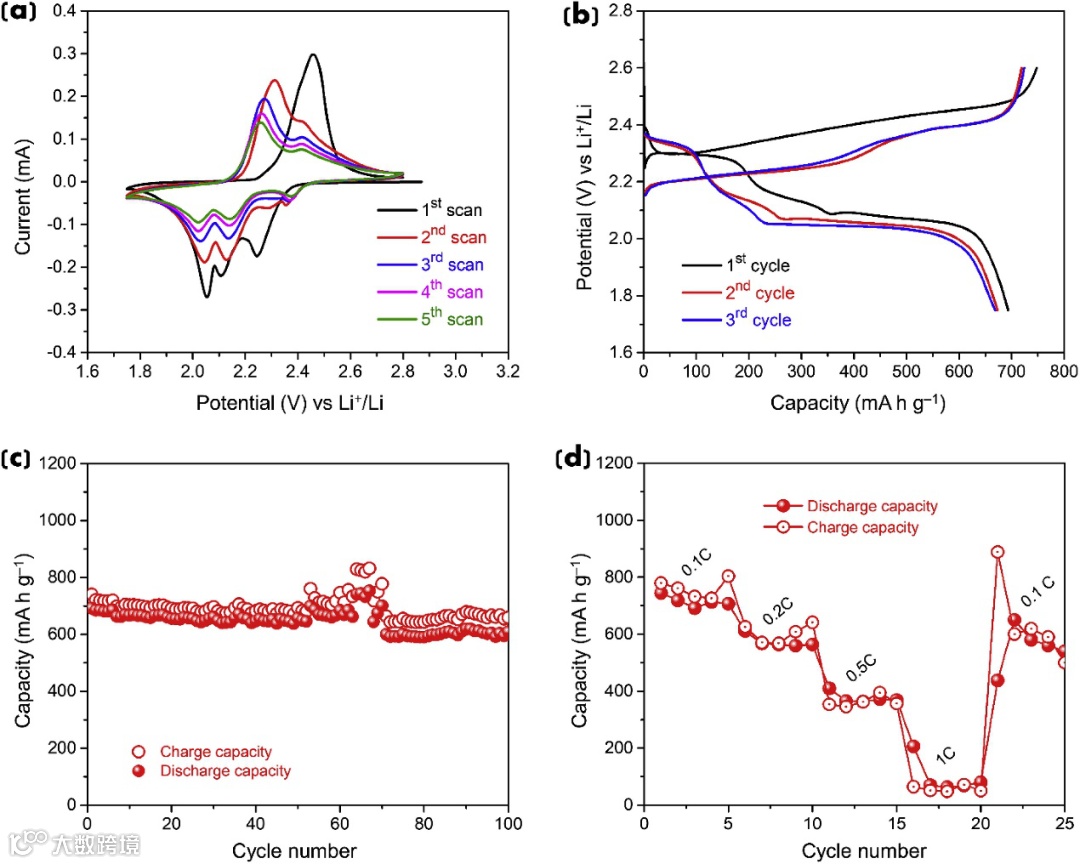
图7. EP10S90/碳布正极的锂硫电池在70°C下的电化学性能:
Electrochemical performance Li–S batteries containing EP10S90/carbon cloth cathode at 70 °C:
(a) initial five cycles CV profiles at 20 μV s−1 scan rate;
(b) first, second and third cycle charge-discharge profiles at 0.1C;
(c) cycling performance at 0.1C;
(d) rate performance at different current rates.
文章链接:
https://www.sciencedirect.com/science/article/abs/pii/S2405829720301690

版权声明:
1) 本文仅代表原作者观点,不代表本平台立场,请批判性阅读。
2) 本文内容若存在版权问题,请联系我们及时处理。
3) 如作者对该文章有误解误读,请联系我们进行修改,欢迎各位老师进行批评指正。
4) 本文版权归科学材料站公众号所有,翻版必究。
投稿请联系contact@scimaterials.cn