
大数跨境

Nat Catalysis:高空间分辨表征异相界面催化加氢研究进展

Nat Catalysis:高空间分辨表征异相界面催化加氢研究进展 科学材料站
2020-09-28
0
导读:该工作成功实现了在结构明确的Pd/Au(111)双金属模型催化剂表面上巯基氯硝基苯选择性加氢反应过程的十纳米级高空间分辨拉曼光谱研究,确定了加氢反应的活性位点,并获得Pd/Au界面处氢溢流的直接光谱证


文章信息

利用纳米级空间分辨拉曼光谱实现Pd/Au催化加氢中的活性位点可视化
第一作者:殷昊
通讯作者:Renato Zenobi,Jeremy O. Richardson,郑丽清,李剑锋
单位:苏黎世联邦理工学院,厦门大学

研究背景

确定表界面催化反应过程中活性位点和活性物种的空间分布对于理解催化剂表面构效关系十分重要。例如,催化加氢反应中常见的氢溢流现象,会显著影响活性位点的催化特性,进而直接改变反应的选择性和转化率。
同时,催化加氢和氢溢流主要发生在催化剂的特定位置,其空间尺寸往往仅有(亚)纳米级,常规光学表征方法受光学衍射限制,其空间分辨率仅在亚微米尺度。因此,在反应条件下,实现催化活性位点和氢溢流区域的纳米级空间分辨的光谱可视化,并获得表面分子的化学信息仍然是一个挑战。

文章简介

近日,苏黎世联邦理工学院Renato Zenobi教授,Jeremy O. Richardson教授,郑丽清博士和厦门大学李剑锋教授合作在国际顶级期刊Nature Catalysis (影响因子:30.471) 上发表题为“Nanometre-scale spectroscopic visualization of catalytic sites during a hydrogenation reaction on a Pd/Au bimetallic catalyst”的研究工作。
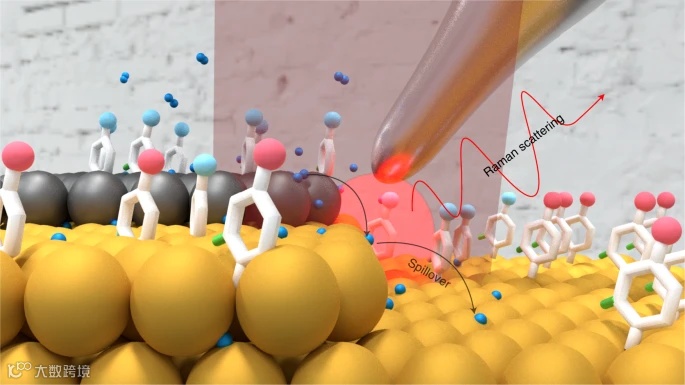
该工作成功实现了在结构明确的Pd/Au(111)双金属模型催化剂表面上巯基氯硝基苯选择性加氢反应过程的十纳米级高空间分辨拉曼光谱研究,确定了加氢反应的活性位点,并获得Pd/Au界面处氢溢流的直接光谱证据。拉曼光谱成像结果表明,活性位点不仅位于Pd位点上,而且距离Au/Pd界面约20 nm内的Au(111)表面同样具有加氢活性。结合密度泛函理论,阐明了界面氢转移的热力学机制以及反应选择性本质原因。
该工作表明TERS是一种可提供纳米级空间分辨表面形貌与化学信息的界面催化研究新方法,可以加深对双金属界面氢分子解离以及活性氢表面迁移的理解,揭示氢溢流现象对活性位点的调控作用。


本文要点

要点一:利用针尖增强拉曼光谱技术对加氢反应活性位点实现了光谱可视化,在10 nm空间分辨尺度下揭示了表面结构与催化活性的关系。
要点二:光谱分析结合形貌表征,该工作获得了Pd/Au界面氢溢流的直接光谱证据。研究发现,加氢反应不仅位于Pd位点,而且在相邻的Au位点(15-30 nm内)同样具有加氢活性。密度泛函理论计算进一步阐明氢溢流过程的热力学以及反应选择性的本质原因。
要点三:研究表明针尖增强拉曼光谱能提供纳米尺度空间分辨率的化学信息,是分子水平上研究界面催化作用的有力分析技术,为研究催化反应中局部结构-反应性关系提供了一种有效的研究手段。

文章链接

Nanometre-scale spectroscopic visualization of catalytic sites during a hydrogenation reaction on a Pd/Au bimetallic catalyst
https://www.nature.com/articles/s41929-020-00511-y
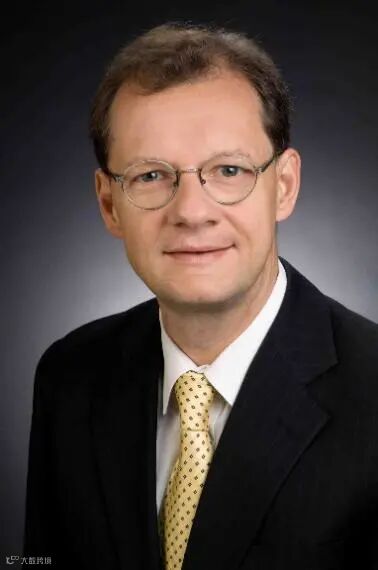
Prof. Dr. Renato Zenobi , Professor of Analytical Chemistry, ETH Zurich
Renato Zenobi, a Swiss scientist in Analytical Chemistry, is a full professor in the department of Chemistry and Applied Biosciences at ETH Zurich. Born in Zurich in 1961, he received a M.S. degree from the ETH Zurich in 1986, and a Ph.D. at Stanford University in the USA in 1990. This was followed by two postdoctoral appointments at the University of Pittsburgh (1990 - 1991) and at the University of Michigan (1991). Renato Zenobi returned to Switzerland in 1992 as a Werner Fellow at the EPFL, Lausanne, where he established his own research group. He became assistant professor at ETH Zurich in 1995, was promoted to associate professor in 1997, and to a full professor in 2000.  He was the chairman of the Organic Chemistry Laboratory in 2002-2003 and 2011-2012, served as the president of ETH’s university assembly (Hochschulversammlung, HV) in 2006-2008, and of the lecturer’s conference (Konferenz des Lehrkörpers, KdL) at ETH Zurich in 2006-2010. Prof. Zenobi was a visiting professor at the Barnett Institute (Boston) in 2004/2005, and at the Institute Curie (Paris) in 2010.  In 2010 he was appointed as the Associate Editor of Analytical Chemistry (American Chemical Society). He chaired the 2014 International Mass Spectrometry Conference in Geneva, Switzerland.
Prof. Zenobi’s research areas include laser-based analytical chemistry, electrospray and laser-assisted mass spectrometry, ambient mass spectrometry, and near-field optical microscopy and spectroscopy. He has made important contributions to the understanding of the ion formation mechanism in matrix-assisted laser desorption/ionization (MALDI) mass spectrometry, and to ambient ionization methods. He is a pioneer in the development of tip-enhanced Raman spectroscopy (TERS), an analytical tool for the surface analysis at the nanoscale.

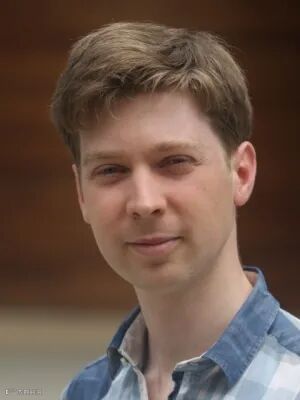
Prof. Dr. Jeremy Richardson, ETH Zurich
Jeremy Richardson was born in Cardiff and studied at Cambridge University where he also took his Ph.D. under the supervision of Prof. Stuart Althorpe.  He was a postdoc and Humboldt Research Fellow in Friedrich-Alexander University Erlangen-Nürnberg in the group of Michael Thoss and a Junior Research Fellow at Durham University.  In September of 2016 he moved to ETH Zürich as the Assistant Professor of the Laboratory of Physical Chemistry in Theoretical Molecular Quantum Dynamics.  He is the 2018 winner of the Robin Hochstrasser Young Investigator Award.
Research area:
Prof. Richardson’s research areas include theoretical quantum molecular dynamics, ring-polymer molecular dynamics, semiclassical instanton theory, quantum-mechanical tunneling in water clusters, nonadiabatic quantum dynamics with classical trajectories, and nonadiabatic rate theory.


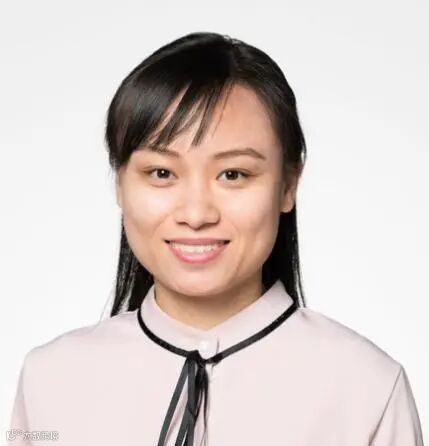
郑丽清, 苏黎世联邦理工学院博士后研究员
2012年本科毕业于福州大学;2015年硕士毕业于南京大学;2019年在苏黎世联邦理工学院Renato Zenobi教授课题组获得理学博士学位,目前在瑞士苏黎世联邦理工学院从事博士后研究。主要研究领域为针尖增强拉曼光谱、异相催化、分子开关、二维聚合物、荧光共振能量转移、纳米催化,和基于金属纳米颗粒的比色分析等。以第一作者身份在 J. Am. Chem. Soc.、Angew. Chem. Int. Ed.、Chem. Sci. 、Chem. Commun. 等国际高水平学术刊物上发表论文。

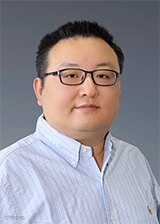
李剑锋 厦门大学 教授、博士生导师、杰青
2003年本科毕业于浙江大学;2010年在厦门大学获得博士学位;2011-2014年分别在瑞士伯尔尼大学和瑞士苏黎世联邦理工学院从事博士后研究。主要研究领域为核壳纳米结构、表面等离激元、表面增强拉曼光谱、表面增强荧光光谱、电化学、界面光电催化、食品环境公共安全领域的拉曼光谱快速检测等。以第一作者或通讯作者身份在Nature、Nature Nanotechnology、Nature Energy、Nature Mater.、Nature Protoc.、Nature Commun.、Science Adv.、J. Am. Chem. Soc.、Angew. Chem. Int. Ed.、Chem. Rev. 等国际高水平学术刊物上发表论文100余篇,被SCI他引6000余次,授权专利5项,撰写英语书章节4部。曾获基金委“杰出青年基金”、中组部“万人计划”领军人才、国家自然科学奖二等奖、全国百篇优秀博士论文奖、基金委“优秀青年基金”、中国青年科技奖。


添加官方微信 进群交流

SCI二氧化碳互助群

SCI催化材料交流群

备注【姓名-机构-研究方向】

说明

🔹本文内容若存在版权问题,请联系我们及时处理。

🔹欢迎广大读者对本文进行转发宣传。

🔹《科学材料站》会不断提升自身水平,为读者分享更加优质的材料咨询,欢迎关注我们。

投稿请联系contact@scimaterials.cn

致谢

感谢本文作者对该报道的大力支持。

【声明】内容源于网络
0
0
科学材料站
内容 0
粉丝 0
科学材料站
总阅读0
粉丝0
内容0